

Anubias is one of the slowest aquarium plants, so “not growing” is often normal. But if weeks pass with no new leaves, something in the setup is usually holding it back. Here is how to check.
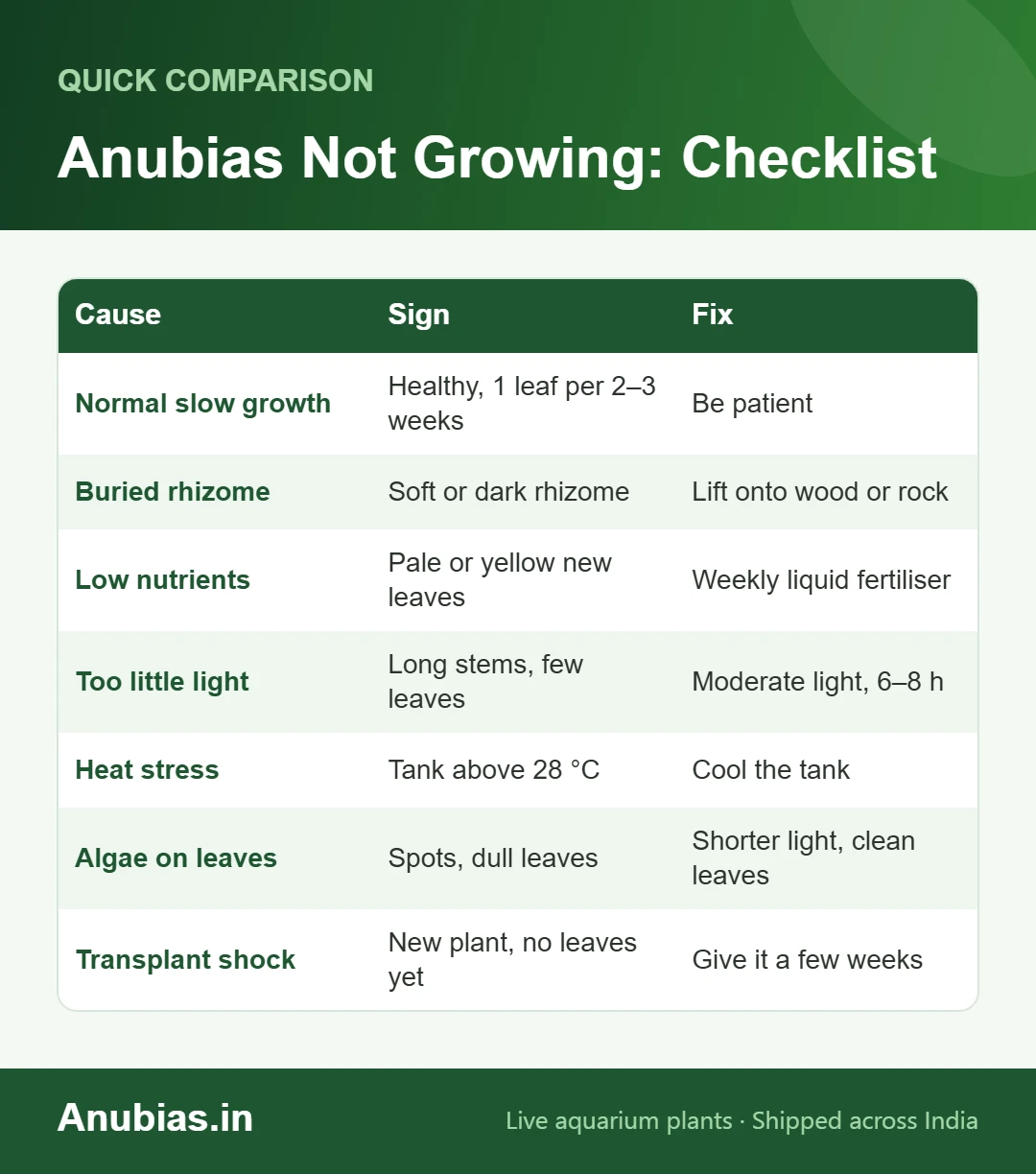
Quick answer: Anubias normally grows slowly, about one new leaf every 2–3 weeks in a low-tech tank, so first make sure it is truly stalled. If it is, the usual causes are a buried rhizome, too few nutrients in tanks with little fish waste, too little or too much light, water above 28°C, algae covering the leaves, or shock after planting. Keep the rhizome on wood or rock, add a weekly liquid fertiliser, give moderate light for 6–8 hours and keep the tank at 22–28°C.
1. It is just slow
Healthy Anubias in a low-tech tank produces roughly one leaf every 2–3 weeks; miniature and variegated types grow even slower. Look for a small new leaf unfurling at the tip of the rhizome. How fast Anubias grows.
2. The rhizome is buried
A rhizome buried in gravel or soil can rot and stop producing leaves. Lift it out and tie or glue it to wood or rock. Can you bury the rhizome?.
3. Not enough nutrients
Lightly stocked tanks often lack nutrients. Pale new leaves are a clue. Add a complete liquid fertiliser weekly. Fertiliser schedule for Anubias.
4. Light is wrong
Very dim tanks slow growth, but strong, long lighting mostly grows algae on Anubias leaves. Aim for low to moderate light for 6–8 hours a day. Light hours guide.
5. The tank is too warm
Anubias does best at 22–28°C. In Indian summers tanks can run hotter; improve ventilation and surface agitation. Heat-tolerant plants and cooling tips.
6. Algae is covering the leaves
Algae blocks light on slow-growing leaves. Shorten the photoperiod and gently wipe or trim badly affected leaves. How to remove algae.
7. It is still settling in
New plants often pause or lose a leaf while adjusting to your water. Give them a few weeks before changing anything. Why new plants melt.
More Anubias troubleshooting:
A two-minute check before you change anything
Before adjusting lights, dosing or moving the plant, run through this quickly. Most people who think their Anubias has stalled discover it is fine.
- Press the rhizome. Firm and green under the surface means a living plant. Soft or hollow means rot, which is the only urgent problem on this list.
- Look at the growing tip. A tiny pale cone or a rolled leaf means growth is happening, just slowly.
- Check the roots. White or pale roots reaching towards wood or substrate mean the plant is investing in itself before making leaves.
- Count the leaves and write it down. Anubias growth is far too slow to judge by memory. A note on your phone today gives you a real answer in six weeks.
- Run a finger over a leaf. If it feels rough or fuzzy, algae is your actual issue, not growth.
If the rhizome is firm and a tip is visible, the correct action is to do nothing for two months.
What to change first, and what to leave alone
When something genuinely needs fixing, order matters. Changing several things at once means you never learn which one worked.
Fix first: anything mechanical. Unbury a buried rhizome, move the plant out of dead flow, and clean algae off leaves by hand. These are one-time corrections with immediate benefit and no risk.
Fix second: temperature, if your water is sitting above 30°C for weeks. A clip fan across the surface and a shorter photoperiod through the Indian summer will restore growth better than any fertiliser.
Fix last: dosing and lighting. These are the changes people reach for first and they are the ones most likely to cause algae on a slow-growing plant.
Leave alone entirely: the plant’s position, once you have chosen a good one. Repeated moving is a common reason an otherwise healthy Anubias never seems to get going.
Plants in this guide
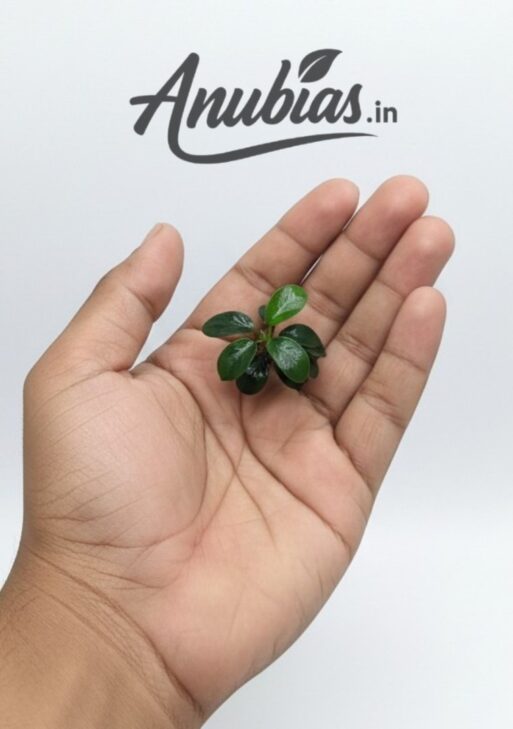
Price range: ₹ 90 through ₹ 250
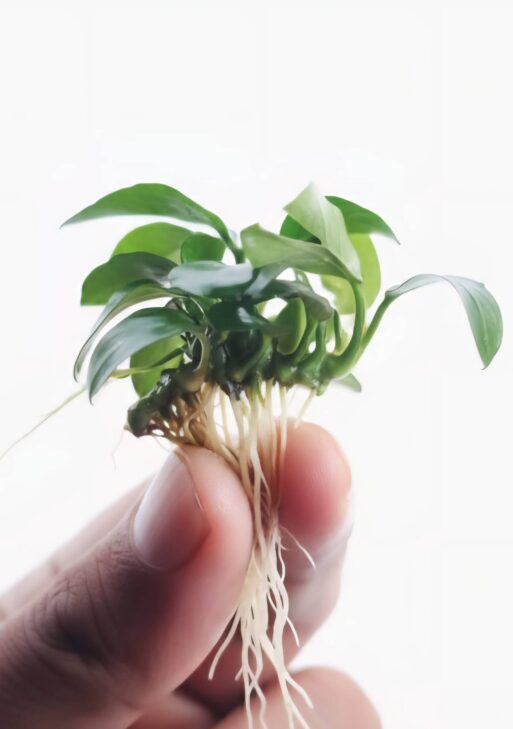
Price range: ₹ 90 through ₹ 250
Price range: ₹ 90 through ₹ 250

₹ 250
Frequently asked questions
How long does Anubias take to grow a new leaf?
In a typical low-tech tank, about 2–3 weeks per leaf; faster with good light, fertiliser and CO2.
Does Anubias need fertiliser to grow?
Not always, but in tanks with few fish a weekly liquid fertiliser helps it keep growing.
Can I make Anubias grow faster?
Moderate light, regular liquid fertiliser and stable 22–28°C water help, but it will always be a slow plant.
Shop healthy Anubias plants on Anubias.in.
How do I tell a dormant Anubias from a dying one?
Check the rhizome, not the leaves. A dormant plant has a firm, green rhizome and holds its existing leaves for months without adding new ones, while a dying plant has a soft, browning rhizome that may smell when lifted. Leaves yellowing one at a time while the rhizome stays hard is normal ageing, not death.
Will dividing the rhizome encourage new growth?
Sometimes, because each divided section grows from its own tip, so two pieces can produce two new leaves in the time one plant made one. Only divide a plant with a long, healthy rhizome and at least three or four leaves per section. Dividing a struggling plant makes things worse, not better.
Is a new leaf that comes out smaller than the old ones a problem?
Usually it means the plant is still rebuilding after a move, a division or a spell of heat, and later leaves will return to full size. Persistently small new leaves across several months point to low nutrients or too little light reaching the plant. Give it two or three more leaves before concluding anything.
Black tufts on the leaves? See how to clear black beard algae from Anubias.