
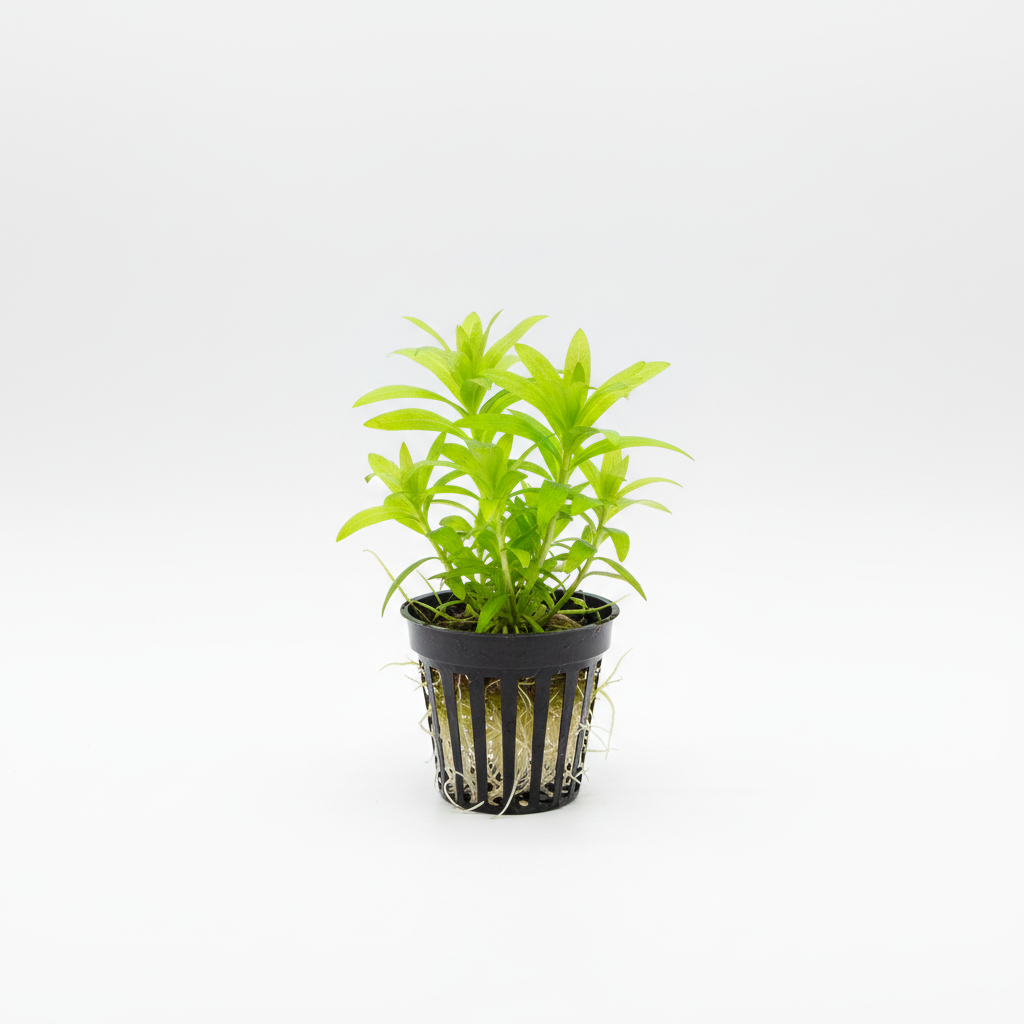
Description
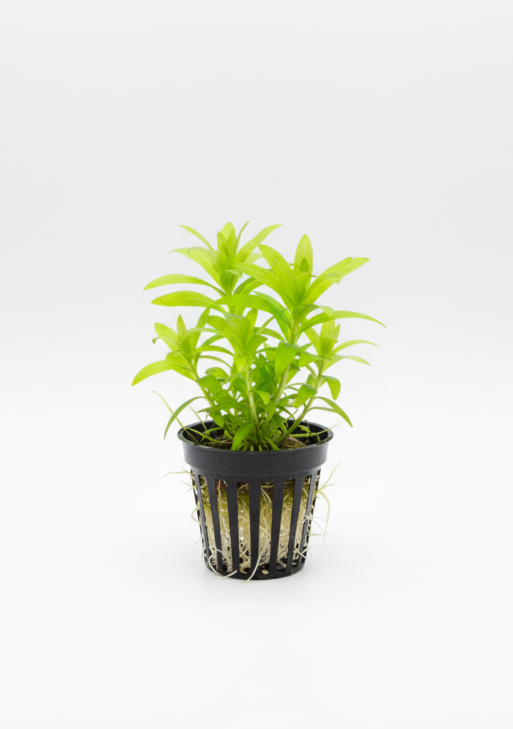
Tonina fluviatilis is a South American stem plant with star-shaped whorls of narrow, pale-green leaves that give a high-tech aquascape a soft, delicate texture unlike any Rotala or Ludwigia. It is a soft-water specialist from the blackwater streams of Brazil and demands acidic, low-mineral water, high light and steady CO2. It is a plant for experienced aquascapers with RO water and a buffering aquasoil, not for low-tech or hard-water tanks, and we say so plainly because it will not survive in most untreated Indian tap water.
Tonina fluviatilis at a glance
| Scientific name | Tonina fluviatilis |
|---|---|
| Family | Eriocaulaceae |
| Origin | Northern South America (Brazil, Venezuela, Guyana); blackwater streams and sandy wetlands |
| Difficulty | Hard |
| Light | High |
| CO2 | Required |
| Temperature | 22–28 °C |
| pH | 5.0–6.5 |
| Growth rate | Medium |
| Height/size | 15–40 cm tall; stems 3–5 cm wide |
| Placement | Midground to background |
| Propagation | Stem cuttings; side shoots |
How to plant Tonina fluviatilis
- Rinse the portion in dechlorinated, soft water. Tonina stems are brittle; hold them low on the stem and never squeeze the whorls.
- Strip the lowest 2–3 cm of leaves from each stem.
- Plant each stem 3 cm deep with fine tweezers, 2–3 cm apart, in a tight group. Tonina looks best as a dense cluster of stars.
- Place it directly under the light in the midground or background, away from taller plants that would shade it.
- Keep flow gentle and do not move the stems once planted; it resents disturbance.
Plant it only in a nutrient-rich, acidic aquasoil. Inert sand or gravel does not buffer pH and leaves the plant starved; Tonina is a heavy root feeder in the wild.
Tonina fluviatilis care: light, CO2, fertiliser and water
Light: high light, roughly 70 PAR or more at the plant, keeps the whorls tight and the stems compact. Under medium light the internodes stretch, the whorls open out and the plant slowly weakens.
CO2 is essential. Tonina fluviatilis needs a steady 25–30 ppm throughout the photoperiod. Fluctuating CO2 shows within days as stunted, deformed tips. Pair CO2 and lights on the same timer and inverter so one never runs without the other.
Fertiliser: dose a complete liquid fertiliser daily with ample iron and micronutrients. Keep nitrate moderate (5–10 ppm) and phosphate and potassium plentiful. Tonina is sensitive to nutrient gaps and shows them at the tips first.
Indian conditions: this is the crux. Tonina needs very soft, acidic water: GH 0–4, KH 0–2, pH 5.0–6.5. Hard municipal and borewell water (GH 10 and above, KH 6 and above) kills it within weeks, with stunted, twisted, whitening tips as the warning sign. You need RO water with minimal remineralisation and a fresh, pH-buffering aquasoil. It also prefers water under 28 °C; summer heat requires a chiller or strong fan cooling in most Indian cities. If you cannot provide soft water, choose Pogostemon Octopus or Rotala instead.
Growth, trimming and propagation
In the right conditions Tonina grows 2–4 cm a week. Trim when the stems reach the height you want, cutting just above a whorl and leaving at least 8–10 cm in the substrate. The base produces side shoots, though slowly; density comes mainly from replanting tops.
Replant the tops gently and leave them undisturbed for two weeks to root. Keep the group small and tight rather than spreading it across the tank. One portion becomes a full midground cluster in three to four months of stable conditions.
Where to use it in an aquascape
Tonina fluviatilis is a midground or background plant for 2 ft (60–70 litre) and larger high-tech tanks running RO water; in 3 ft and 4 ft tanks (120–250 litres) a star-studded cluster between red and green groups is a classic Dutch and nature-style feature. It belongs in soft-water showcase tanks, not community tanks on tap water.
Pair it with other soft-water plants: Ludwigia senegalensis, Rotala macrandra ‘Pink’ and fine green stem plants. A low carpeting plant in front and Anubias nana on wood complete the layout. Suitable fish are soft-water species such as tetras, apistogrammas and otocinclus, with Amano shrimp for algae control.
Avoid any fish that nibble or dig; the brittle stems break easily.
Common problems and fixes
- Tips stunted, twisted or whitening: water too hard or CO2 unstable. Switch to RO water, use a buffering aquasoil and hold CO2 steady.
- Stems stretch and whorls open: light too low. Raise intensity.
- Melt after planting: transplant shock, worsened by parameter changes. Keep conditions stable and wait two weeks for new whorls.
- Lower leaves brown: shading or nutrient shortage. Trim, thin and dose daily.
- Algae on whorls: light outrunning CO2. Shorten the photoperiod to 6–7 hours and add shrimp.
- Decline in summer: water above 28 °C. Cool the tank before the heat arrives.
What you receive
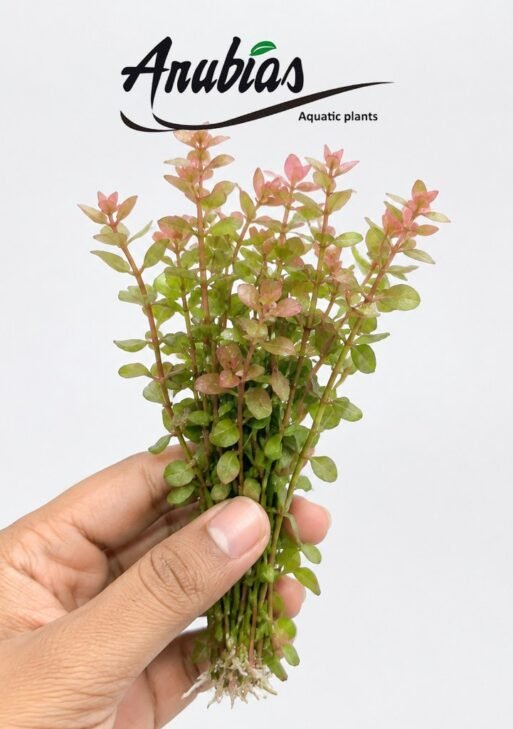
You receive one healthy portion of Tonina fluviatilis in the size you select (Small or Standard), similar to the photo. It is checked before packing, wrapped moist and shipped across India from Surat. Live-arrival guarantee: record one continuous unboxing video within 4 hours of delivery and we refund or replace any plant that arrives damaged.
FAQ
Does Tonina fluviatilis need CO2?
Yes. It needs steady injected CO2 at 25–30 ppm and high light. Without CO2 it declines within weeks.
Is Tonina fluviatilis good for beginners?
No. It needs very soft acidic water, high light, CO2 and stable conditions. It is one of the more demanding stem plants in the hobby.
Can Tonina fluviatilis grow in hard water?
No. It needs GH 0–4 and KH 0–2. In hard Indian tap water the tips stunt and the plant dies; use RO water and a buffering aquasoil.
How fast does Tonina fluviatilis grow?
Medium, 2–4 cm a week in a well-run soft-water tank.
Tonina fluviatilis vs Pogostemon Octopus: which should I choose?
Pogostemon Octopus gives a similar whorled look and grows in hard water without CO2. Choose Tonina only if you run RO water, high light and CO2.
Why are the tips of my Tonina turning white and twisted?
Almost always hard water or fluctuating CO2. Soften the water, stabilise CO2 and dose micronutrients; new growth recovers once parameters are right.
Not sure what fits your tank? Plan it with our free AI tank planner.












There are no reviews yet.