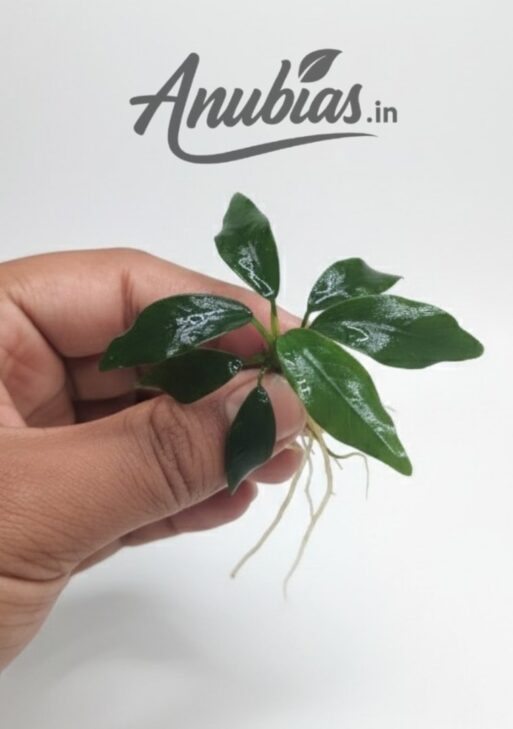

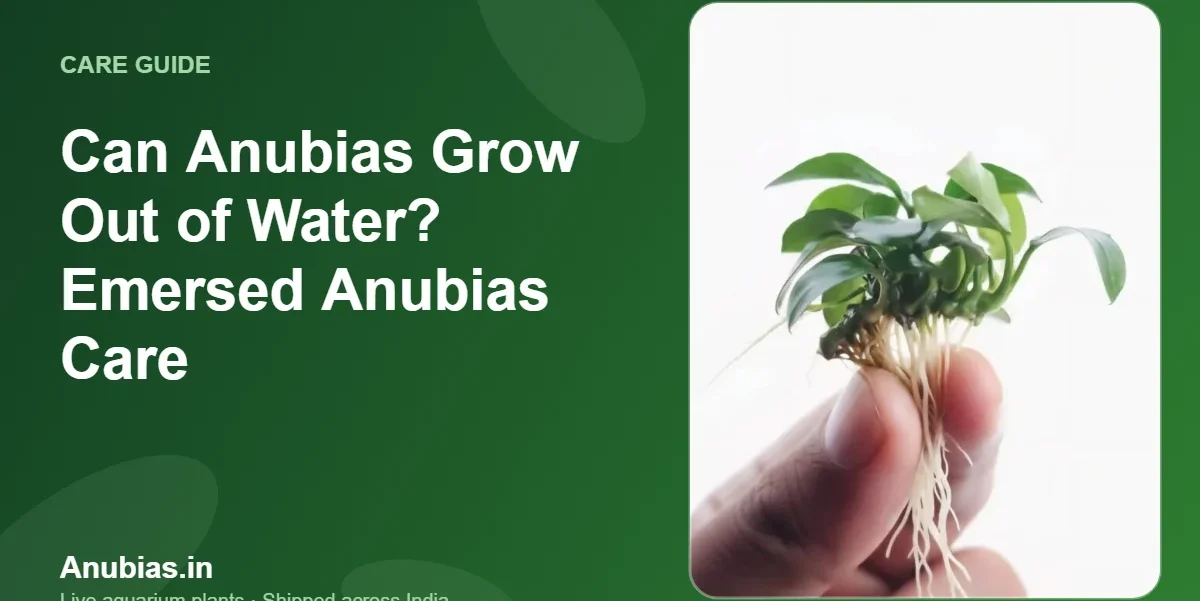
Anubias is best known as an aquarium plant, but in nature it often grows with its leaves above the water on shaded riverbanks. That means you can grow it emersed in paludariums, terrariums, riparium setups, bowls on a windowsill or even with just its roots in water. This guide explains how Anubias grows out of water, what it needs, and how to move it between emersed and submerged life.
Quick answer: Yes, Anubias can grow out of water. It grows emersed (leaves in air) as long as humidity stays high (ideally 70% or more), roots or rhizome stay moist, light is bright but indirect, and temperature stays around 22–30 °C. Emersed Anubias usually grows faster than submerged plants. In dry room air, leaves dry out and brown, so use a closed or humid setup.
Where Anubias grows out of water
- Paludariums and riparium tanks: rhizome attached at the waterline with leaves in humid air.
- Closed terrariums: planted in moist sphagnum moss or on wet wood.
- Jars and vases: roots in water, leaves above, in a humid bathroom or kitchen.
- Nurseries: many Anubias are grown emersed commercially because they grow faster and stay free of algae.
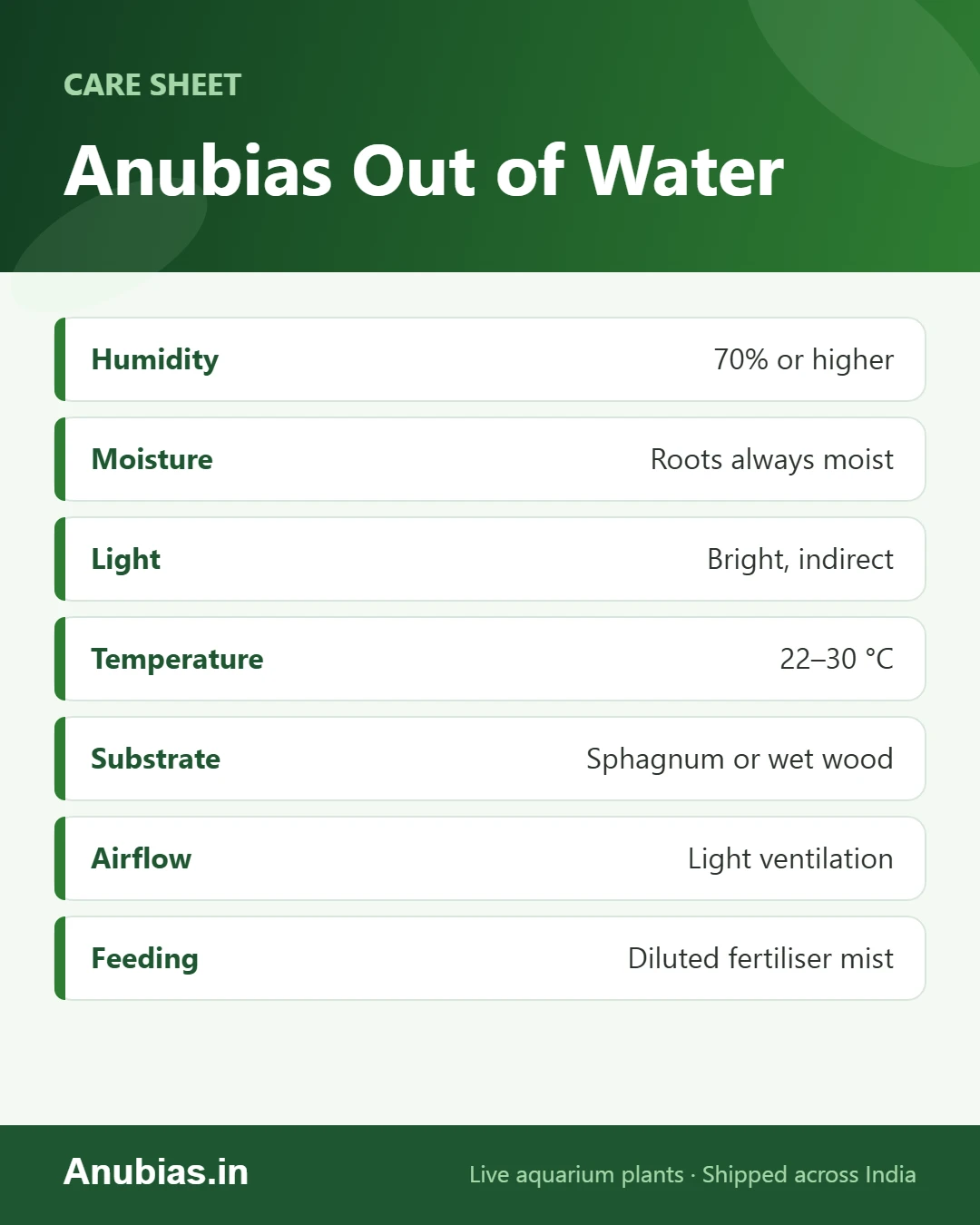
What emersed Anubias needs
| Need | Recommendation |
|---|---|
| Humidity | 70% or higher; closed or partly covered setup |
| Moisture | Roots moist at all times; rhizome not sitting in stagnant mud |
| Light | Bright indirect light or an LED; avoid direct sun |
| Temperature | 22–30 °C |
| Substrate | Sphagnum moss, wet wood, or open aroid-style mix |
| Airflow | A little ventilation to prevent mould |
| Feeding | Very diluted liquid fertiliser mist every few weeks |
Does Anubias grow faster out of water?
Yes, usually. In air, Anubias gets carbon dioxide easily and more light reaches its leaves, so emersed plants often produce leaves noticeably faster than submerged ones. Emersed leaves are also often larger, thicker and slightly different in shape. That is why many nurseries grow Anubias out of water and why some plants drop a few leaves after they arrive and go underwater.
Moving Anubias between emersed and submerged
- From emersed to aquarium: attach it to hardscape underwater and expect some older leaves to yellow over a few weeks as the plant grows new submerged leaves. Remove dying leaves gradually.
- From aquarium to emersed: raise humidity first. Place the plant in a closed container, keep the leaves misted for 2–3 weeks, then slowly open the lid to lower humidity.
- In both directions, keep the rhizome firm and uncovered, and avoid moving the plant again until new leaves appear.
Growing Anubias out of water in Indian homes
- Summer and dry winters: indoor humidity can drop below 40%, which browns leaf edges; use a lidded tank or glass jar.
- Monsoon: humidity is naturally high, so open setups work well, but add airflow to stop mould.
- Windowsills: morning light is fine; strong afternoon sun through glass scorches Anubias leaves.
Common problems
- Brown, crispy leaf edges: humidity too low.
- Soft, black rhizome: sitting in waterlogged, airless mud; move it to moss or wood.
- White fuzz on wood or moss: mould from stagnant air; increase ventilation.
- Pale leaves: too little light or nutrients; move closer to light and mist diluted fertiliser.
Plants in this guide
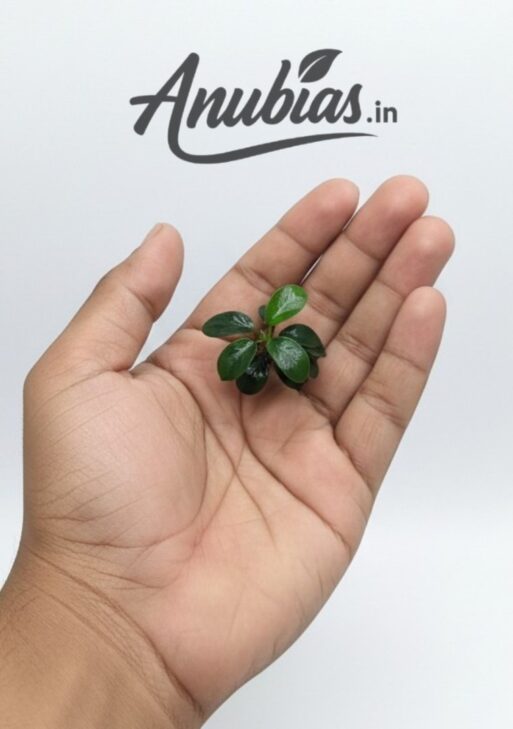
Price range: ₹ 90 through ₹ 250
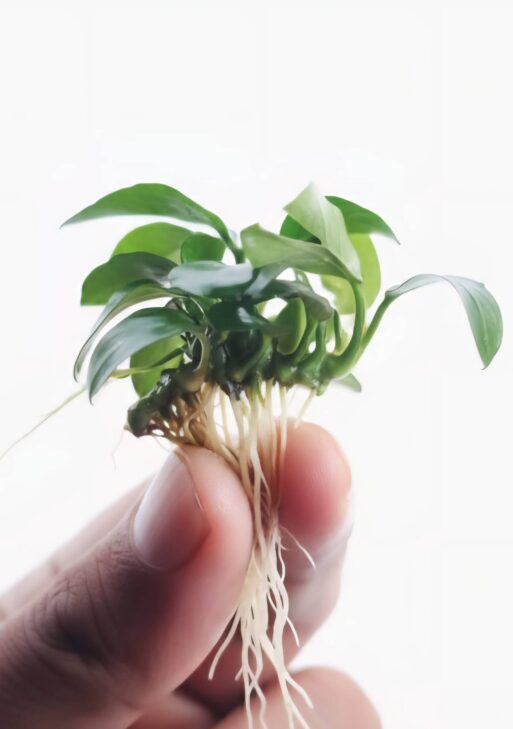
Price range: ₹ 90 through ₹ 250
Price range: ₹ 90 through ₹ 250

₹ 250
Frequently asked questions
Can Anubias live in a vase with only its roots in water?
Yes, for a long time, as long as the rhizome stays above the water line, water is changed weekly, and the room is not very dry.
Which Anubias varieties grow best emersed?
Anubias Nana, Barteri var. glabra and Coffeefolia grow very well out of water. Variegated types also grow emersed but more slowly.
Will Anubias flower out of water?
Emersed Anubias flowers more often than submerged plants. Read about Anubias flowering.
Start your paludarium or jar garden with our Anubias collection, shipped across India with a live-arrival guarantee, and read the full Anubias care guide.