
Description
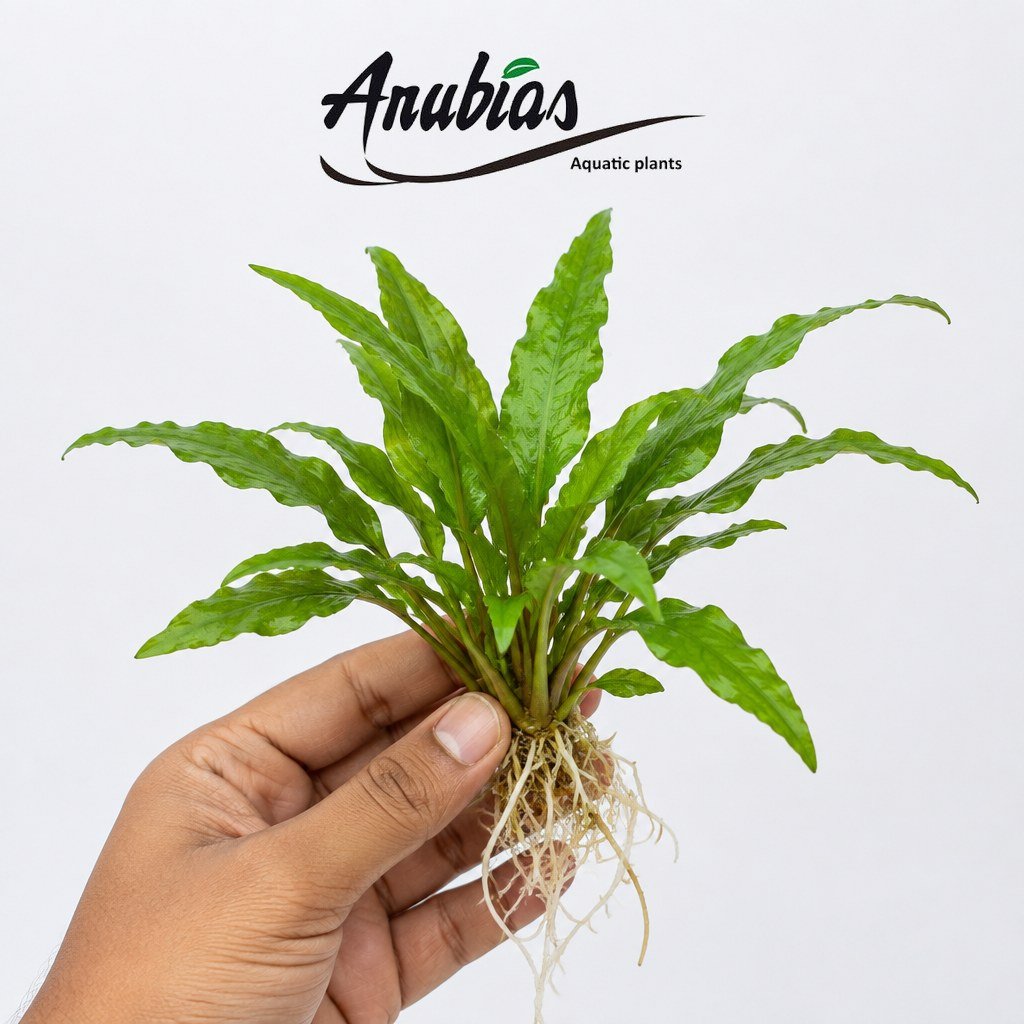
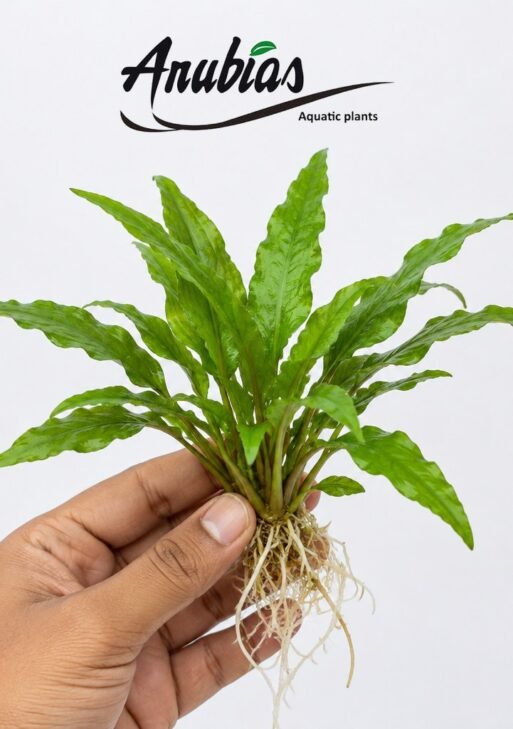
Cryptocoryne wendtii ‘Green’ is the green form of the most popular cryptocoryne in the hobby, a Sri Lankan rosette plant with wavy, slightly crinkled olive-green leaves that forms a neat midground clump and spreads slowly by runners. It roots in substrate, thrives in low to moderate light, needs no CO2 and tolerates hard Indian tap water better than almost any other rooted plant. Cryptocoryne wendtii suits beginners setting up a low-tech tank, and aquascapers who want a reliable, long-lived midground that never needs replacing.
Cryptocoryne wendtii green at a glance
| Scientific name | Cryptocoryne wendtii ‘Green’ (water trumpet) |
|---|---|
| Family | Araceae |
| Origin | Sri Lanka; shaded streams and seasonally flooded forest margins |
| Difficulty | Easy |
| Light | Low to moderate |
| CO2 | Not required |
| Temperature | 22–28 °C; tolerates up to 30 °C |
| pH | 6.0–8.0 |
| Growth rate | Slow to moderate |
| Height/size | 10–20 cm tall; rosettes 8–15 cm across |
| Placement | Midground; foreground in larger tanks |
| Propagation | Runners, division of the rhizome |
How to plant cryptocoryne wendtii
Crypts are heavy root feeders that must be planted in substrate; they cannot be tied to wood or rock like anubias.
- Prepare a substrate at least 5 cm deep. Aquasoil is best; sand or gravel works well with root tabs.
- Rinse the plant, trim the roots to 3–4 cm and remove any yellow or damaged outer leaves.
- Dig a small hole with tweezers or a finger and set the roots in it so the crown, where the leaves emerge, sits level with the substrate. Burying the crown rots it; planting too shallow lets it float.
- Firm the substrate around the roots and press a root tab in nearby.
- Space plants 8–10 cm apart to leave room for the rosettes and runners to fill in.
Then leave it alone. Crypts hate being moved, and most melt is triggered by disturbance, not by water.
Cryptocoryne wendtii care: light, CO2, fertiliser and water
Light. Low to moderate light is ideal. Under low light the leaves grow taller and a plainer green; under moderate light they stay compact with a slight bronze tint along the midrib. Strong light is unnecessary and encourages algae on the slow-growing leaves. A 6–8 hour photoperiod is plenty.
CO2. Not needed. Cryptocoryne wendtii is one of the best plants for a no-CO2 tank. With CO2 it grows a little faster and larger, but it is never required.
Fertiliser. Feed the roots. A root tab under each clump every two to three months is the single most useful thing you can do for crypts, especially in sand or gravel. A weekly liquid fertiliser with iron adds the rest. Yellowing between the leaf veins is an iron shortage.
Water. Hard Indian tap water suits it well; wendtii is one of the few crypts that likes alkaline, mineral-rich water. It copes with summer heat up to 30 °C better than most plants, and monsoon power cuts of a day or two do no harm. What it dislikes is sudden change: large water changes with water of a different temperature or hardness are the classic cause of crypt melt. Keep to steady weekly 25–30% changes with temperature-matched water.
Growth, trimming and propagation
Expect a settling period. Many new crypts melt back partly or fully in the first two to four weeks as they adjust from emersed to submerged growth; the roots remain alive and new leaves emerge from the crown within a month. After that, growth is slow and steady, and a single plant becomes a clump of rosettes over six to twelve months.
Trim by removing old outer leaves at the base when they yellow or collect algae. There is no need to cut the plant back otherwise.
Propagation is automatic: the plant sends runners under the substrate and daughter rosettes appear 5–10 cm away. Once a daughter has four or five leaves and its own roots, cut the runner and lift it with a finger under the roots to replant elsewhere.
Where to use it in an aquascape
Cryptocoryne wendtii green is the dependable midground. In nano tanks of 1 ft (15–20 litres) a single plant becomes the focal point beside a stone. In 2 ft tanks (60–90 litres) a row of three along the middle hides the base of background plants; in 3 ft tanks (120–200 litres) and larger it can be used in groups of five or more as a low-maintenance foreground.
It pairs naturally with other cryptocoryne forms such as wendtii red and bronze for a mixed crypt bed, with Anubias nana and Java fern on hardscape above it, and with stem plants behind. Together these make a complete low-tech, no-CO2 tank.
It is safe with shrimp, which graze the leaves, and with all community fish including bettas, tetras, rasboras, corydoras, gouramis and dwarf cichlids. Its deep roots even tolerate mild diggers; only goldfish and large cichlids uproot it.
Common problems and fixes
- Crypt melt after planting. Leaves go transparent and dissolve within days. Cause: adjustment to new conditions. Fix: remove the mush, leave the roots in place and wait; new leaves follow within a month.
- Melt in an established tank. Cause: a big water change, a temperature swing or a change in fertiliser. Fix: keep changes small and regular; the plant recovers from the roots.
- Yellow leaves with green veins. Cause: iron shortage. Fix: root tabs and weekly iron-rich liquid fertiliser.
- Holes in old leaves. Cause: potassium shortage. Fix: a complete liquid fertiliser with potassium.
- Green spot algae on old leaves. Cause: too much light for the growth rate. Fix: shorten the photoperiod, remove the worst leaves, add nerite snails.
- Plant floating up. Cause: planted too shallow before the roots took hold. Fix: replant with the crown at substrate level and weigh down with a stone.
What you receive
One healthy cryptocoryne wendtii green plant of the size you select (Small or Standard), rooted and similar to the photo. Each plant is checked before packing, packed moist and shipped across India from Surat. ₹99 shipping, free on orders of ₹999 or more.
Live-arrival guarantee: record one continuous unboxing video within 4 hours of delivery and we will refund or replace a plant that arrived damaged.
FAQ
Does cryptocoryne wendtii need CO2?
No. It is one of the best plants for a no-CO2 tank. CO2 makes it slightly faster and larger but is never required.
Is cryptocoryne wendtii good for beginners?
Yes. It tolerates low light, hard water and heat. The only thing to expect is some melt in the first weeks, which it recovers from.
Why is my cryptocoryne melting?
Crypt melt is the plant shedding leaves after a change in conditions. Leave the roots in place and new leaves grow back within a month.
Can cryptocoryne wendtii grow in sand or gravel?
Yes, in sand or gravel at least 5 cm deep with a root tab every two to three months.
How fast does cryptocoryne wendtii grow?
Slowly to moderately. A new leaf every one to two weeks once settled, and a clump of rosettes within six to twelve months.
Cryptocoryne wendtii green vs red: what is the difference?
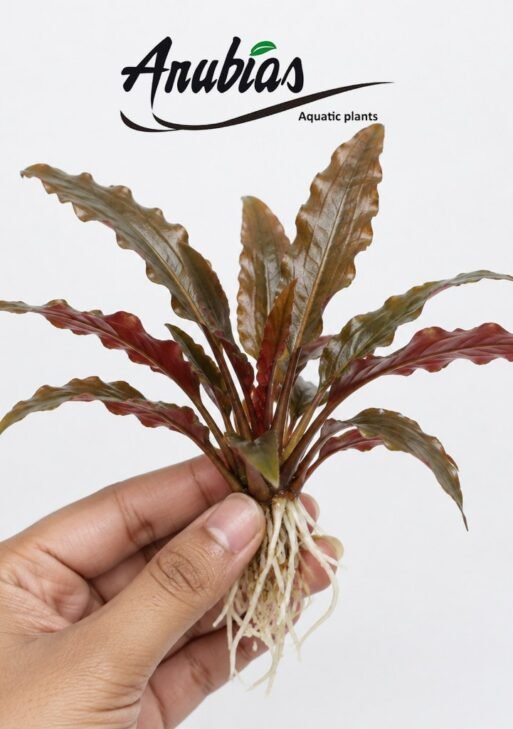
Green has olive-green wavy leaves and stays slightly more compact; red has bronze-red leaves and wants a little more light and iron for colour. Care is otherwise identical.
Not sure what fits your tank? Plan it with our free AI tank planner.













There are no reviews yet.