
Description
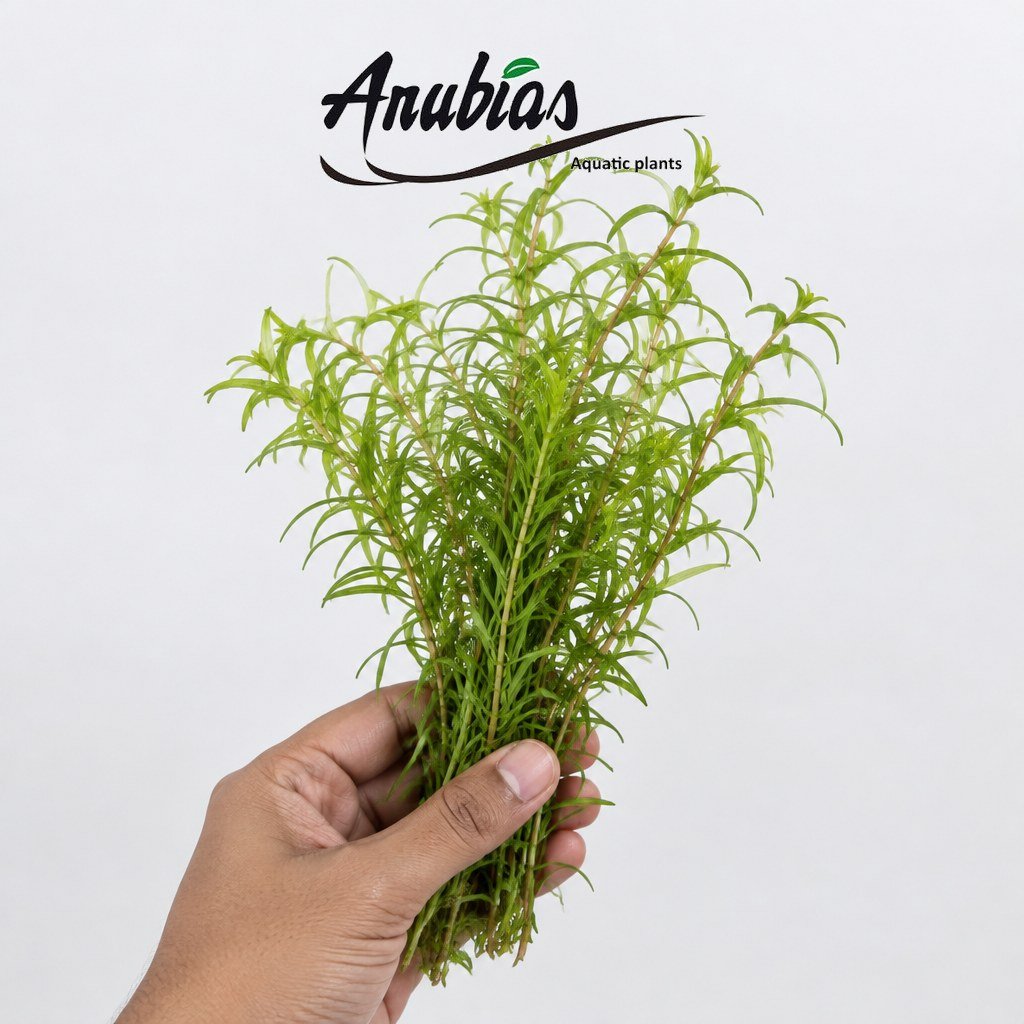
Najas roraima (Najas sp. ‘Roraima’) is a fine-leaved, fast-growing stem plant from the Roraima region on the Brazil–Venezuela border, with slender, slightly toothed leaves that take on a reddish-brown tint under strong light. It is a flexible plant: it can be planted in the substrate, left to float, or wedged among hardscape, and it grows with or without CO2. It suits beginners who want quick green cover and shrimp keepers who want a dense, fine-textured thicket.
Najas roraima at a glance
| Scientific name | Najas sp. ‘Roraima’ |
|---|---|
| Family | Hydrocharitaceae |
| Origin | Roraima region, northern Brazil and southern Venezuela |
| Difficulty | Easy |
| Light | Medium to high (high for reddish tones) |
| CO2 | Optional |
| Temperature | 20–30 °C |
| pH | 6.0–7.5 |
| Growth rate | Fast |
| Height/size | 20–50 cm; stems branch freely |
| Placement | Background, midground or floating |
| Propagation | Stem cuttings; fragments root on their own |
How to plant Najas roraima
Najas stems are brittle and snap easily – that is how the plant spreads in nature – so handle it gently and do not worry about a few broken pieces; each one grows.
- Planted. Push small bunches of three to five stems 3–4 cm into the substrate with tweezers, 4–5 cm apart. Najas roots lightly from the nodes.
- Floating. Simply drop a portion on the surface. It grows as a floating thicket that shrimp and fry love; thin it when it shades the plants below.
- Wedged. Tuck stems into gaps in wood or rock; they root and fill the space in weeks.
- Substrate. Any – soil, sand or gravel – because the plant feeds mainly from the water column.
- Light. Medium light is enough; stronger light brings out the reddish-brown colour.
Najas roraima care: light, CO2, fertiliser and water
Light. Medium light (0.4–0.6 W per litre LED) gives steady green growth; high light turns the tips reddish-brown and keeps the stems compact.
CO2. Optional. Najas grows well without it; with CO2 it grows very fast and needs thinning weekly.
Fertiliser. A weekly complete liquid fertiliser is all it needs. Being a fast water-column feeder, it strips nitrate and phosphate from the water, which helps keep algae down in new tanks.
Water. Hard Indian tap water is tolerated, though the plant is at its best in soft to moderately hard water. Summer temperatures to 30 °C are fine. Monsoon power cuts are harmless – the plant has no CO2 dependence and floats if the filter stops.
Growth, trimming and propagation
Expect 3–5 cm of growth a week in medium light, more with CO2. Trim by pinching stems to the height you want and replanting or floating the tops. Thin floating masses by removing half every week or two; a dense floating raft blocks light to everything beneath.
Propagation takes care of itself: every fragment with a node grows into a new plant. To make a new group, cut 10 cm tops and plant or float them. Because it spreads so readily, never let trimmings go into a drain or pond – dispose of them in the dustbin so they cannot escape into local waterways.
Where to use it in an aquascape
- Shrimp and breeding tanks (1–2 ft / 30–60 cm, 20–80 L): floated or wedged as cover for shrimplets and fry; it is one of the best plants for this purpose.
- Low-tech community tanks (3 ft / 90 cm, 150–200 L): a background thicket behind Cryptocoryne and Java fern; its fine texture contrasts with broad leaves.
- New tank start-up: plant it heavily in the first months to outcompete algae, then replace it gradually with slower stem plants as the tank matures.
Fish: guppies, endlers, tetras, rasboras, bettas, Corydoras and all dwarf shrimp. Goldfish will eat it.
Common problems and fixes
- Stems breaking apart. Natural brittleness; replant the pieces or let them float.
- Taking over the tank. Thin weekly; remove floating rafts before they shade the substrate.
- Pale, thin growth. Nutrient shortage in a lightly stocked tank; dose liquid fertiliser.
- Stays green, no red. Light too weak; raise intensity or float the plant closer to the light.
- Melting after arrival. Rare, but if it happens the nodes regrow within one to two weeks.
- Trapping debris. Dense thickets collect mulm; shake the plant gently during water changes.
What you receive
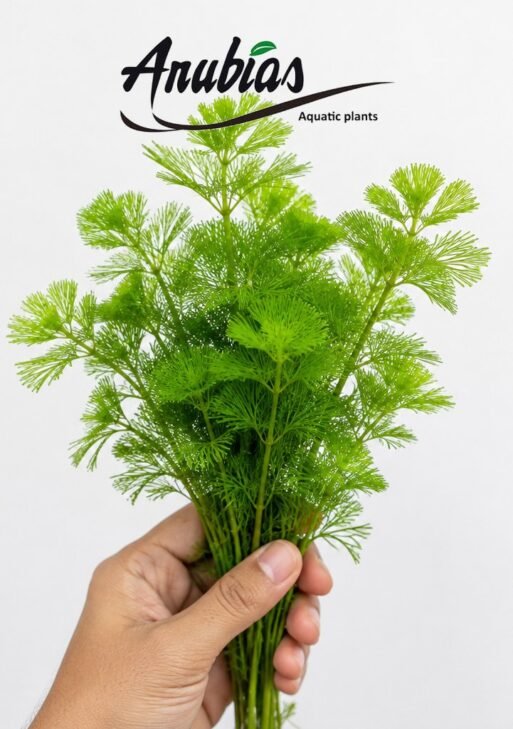
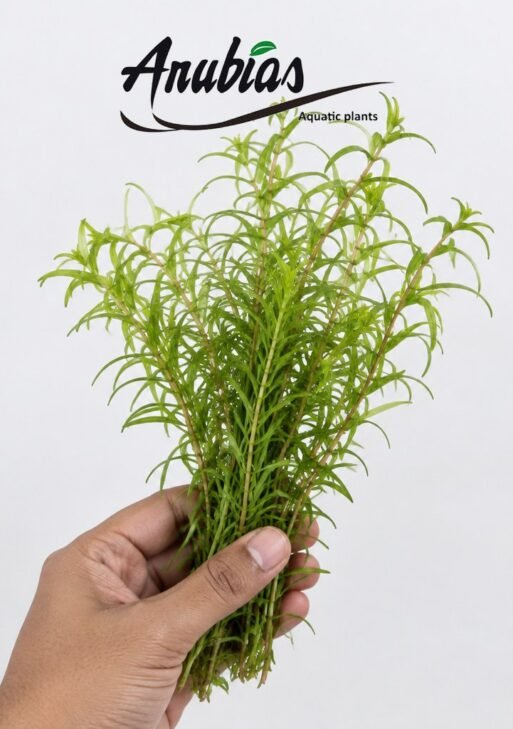
One healthy portion of Najas roraima in the size you select – Small or Standard – similar to the plant in the photo. Checked before packing, packed moist and shipped across India from Surat. Live-arrival guarantee: record one continuous unboxing video within 4 hours of delivery and, if the plant arrived damaged, we refund or replace it.
FAQ
Does Najas roraima need CO2?
No. It grows fast without CO2 and without special substrate.
Is Najas roraima good for beginners?
Yes. It is among the easiest plants we sell – plant it, float it or wedge it, and it grows.
Can Najas be left floating?
Yes. It grows well as a floating thicket and is excellent cover for shrimp and fry. Thin it regularly so it does not shade the plants below.
How fast does it grow?
3–5 cm a week in medium light, faster with CO2 and strong light.
Why does it break so easily?
Brittle stems are how Najas spreads – each fragment with a node becomes a new plant. Handle gently and replant the pieces.
Najas roraima vs guppy grass (Najas guadalupensis)?
Both are easy, fast Najas. ‘Roraima’ has slightly finer leaves and turns reddish-brown under strong light; guppy grass stays green. Care is the same.
Not sure what fits your tank? Plan it with our free AI tank planner.










There are no reviews yet.