
Description
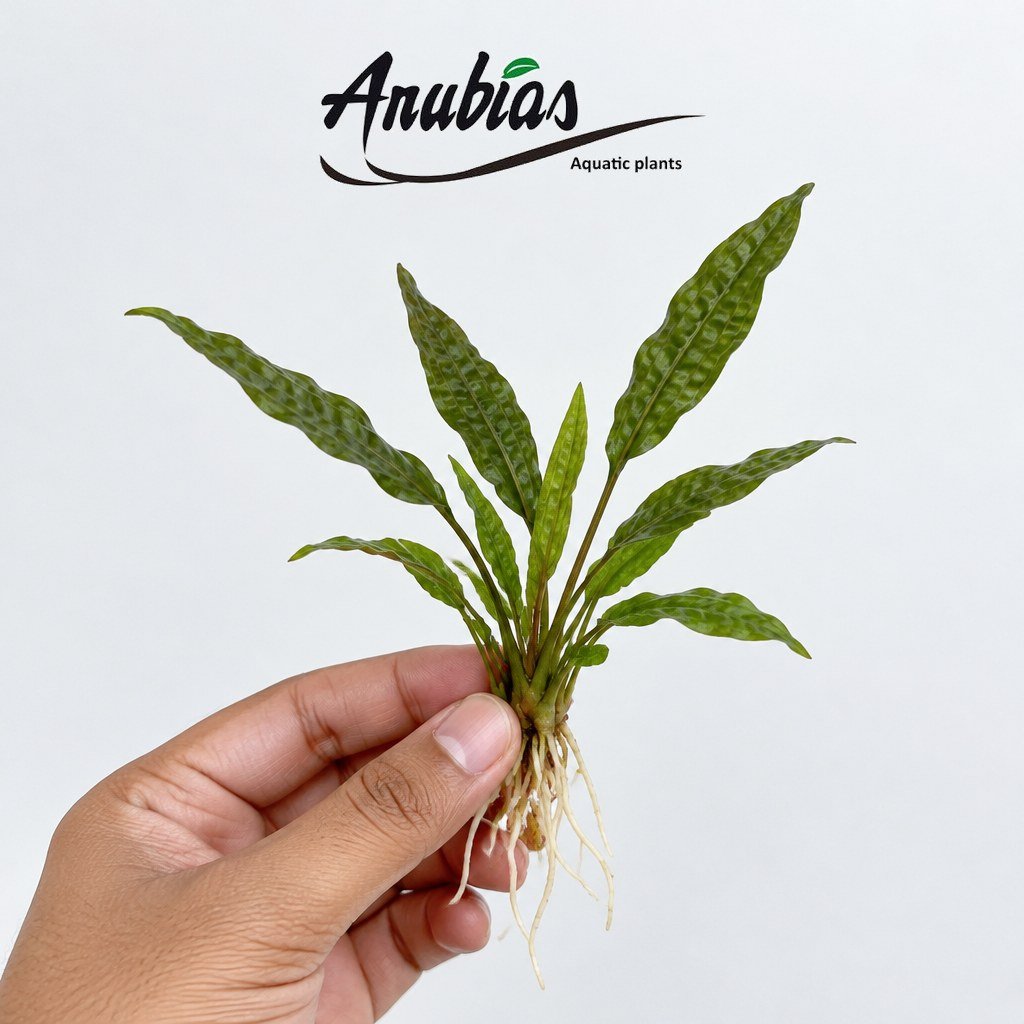
Cryptocoryne cognatoides is an Indian native crypt from the Western Ghats of Maharashtra, with narrow, bright-green leaves that grow 15–30 cm tall and form loose, grassy clumps. It is one of the lesser-known Indian cryptocorynes, closely related to Cryptocoryne spiralis but shorter and finer, and it shares the family’s tolerance for hard water and warm temperatures. If you want a midground or background crypt that looks like it came straight out of a Western Ghats stream, Cryptocoryne cognatoides is a rewarding and easy choice.
Cryptocoryne cognatoides at a glance
| Scientific name | Cryptocoryne cognatoides (closely allied to Cryptocoryne cognata) |
|---|---|
| Family | Araceae |
| Origin | India (Western Ghats, Maharashtra); seasonal streams and wet rock pools |
| Difficulty | Easy |
| Light | Low to medium |
| CO2 | Optional |
| Temperature | 22–30 °C |
| pH | 6.5–8.0 |
| Growth rate | Moderate |
| Height/size | 15–30 cm tall, leaves 5–10 mm wide |
| Placement | Midground; background in nano tanks |
| Propagation | Runners |
How to plant Cryptocoryne cognatoides
- Rinse the plant and remove leaves that are soft, yellow or transparent. Trim the roots to 2–3 cm.
- Separate the clump into single rosettes or pairs and plant them 5–6 cm apart.
- Use tweezers to bury the roots fully while keeping the crown at the substrate surface.
- Place a root tab under each plant in sand or gravel. Aquasoil needs nothing extra at first.
- Give it gentle to moderate flow and leave it alone; crypts settle fastest when undisturbed.
Cryptocoryne cognatoides care: light, CO2, fertiliser and water
Light. Low to medium. In its native streams the plant grows under forest shade for much of the year, so it is comfortable under a basic LED. Medium light keeps it compact; strong light without CO2 invites algae on the narrow leaves.
CO2. Optional. The plant is healthy in low-tech tanks and spreads faster with CO2.
Fertiliser. Root tabs every three months in inert substrate, or aquasoil, with a weekly liquid fertiliser. Potassium deficiency shows as yellow leaf tips; iron deficiency as pale new growth.
Water. Adapted to Indian conditions: hard, alkaline tap water with a pH of 7.5–8 is fine, and it also grows in soft water. Stability is what matters, so make moderate weekly changes rather than large irregular ones.
Indian conditions. Tolerates 28–30 °C summers; keep the surface moving for oxygen. Monsoon power cuts of a few hours do not harm it. In the wild the species survives a dry season partly emersed, so it is a resilient plant.
Growth, trimming and propagation
After a few weeks of settling, Cryptocoryne cognatoides produces a new leaf every one to two weeks and runners within two to three months. A single plant becomes a clump of several rosettes within half a year.
Trim by removing old outer leaves at the base. Do not cut leaves to length. Thin crowded clumps by lifting daughter plants.
Propagate by separating daughter plants with four or five leaves and replanting them 5–6 cm apart.
Where to use it in an aquascape
At 15–30 cm it is a midground plant in 2–3 ft (60–150 litre) tanks and a background plant in 1–1.5 ft (20–40 litre) nanos. Its fine, grassy leaves give a riverbank feel and bridge the gap between a low foreground and taller background crypts. It is a natural fit for a Western Ghats biotope with sand, laterite-coloured stones and leaf litter.
Combine it with shorter and taller species from our Cryptocoryne collection (Cryptocoryne parva in front, Cryptocoryne spiralis behind), Anubias nana and Java fern on hardscape, and a carpeting plant at the front.
Ideal fish include Western Ghats natives such as dawkinsia barbs, Dario, Badis, danios and hillstream loaches, as well as all community fish and shrimp. Avoid diggers.
Common problems and fixes
- Melt after planting. Normal for crypts. Remove dissolved leaves, keep the roots in and wait two to four weeks for new growth.
- Yellow leaf tips. Potassium deficiency. Dose potassium or an all-in-one fertiliser.
- Pale new leaves. Iron deficiency. Add chelated iron.
- Hair algae on leaves. Light too strong or flow too weak. Shorten the photoperiod, improve circulation and add Amano shrimp.
- Floating out of the substrate. Roots were too short or the substrate too coarse. Replant deeper and hold with a pebble until rooted.
- Melt in an established tank. A parameter shock, usually a large water change at a different temperature. Restore stability; the roots regrow leaves.
What you receive
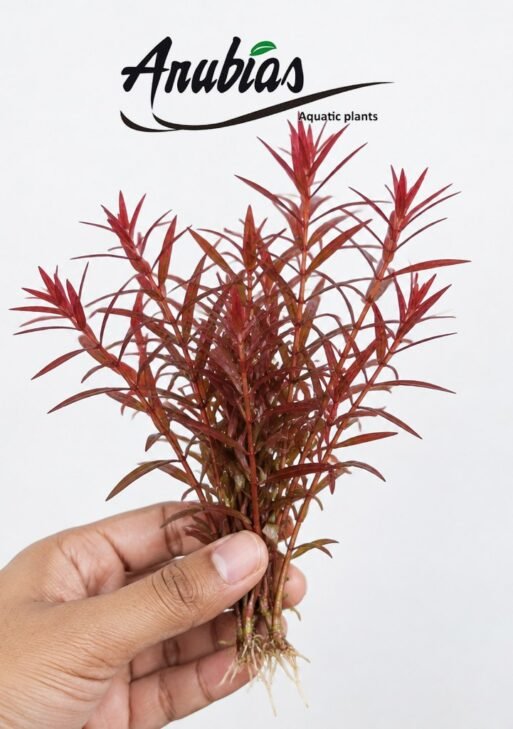
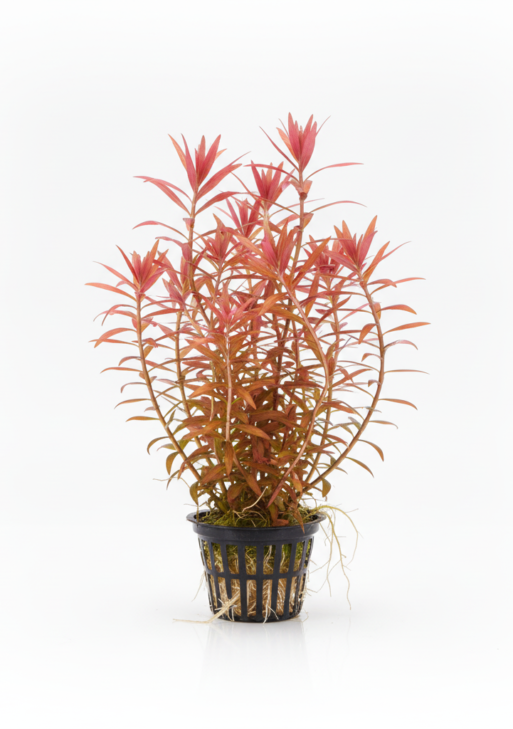
You receive one healthy Cryptocoryne cognatoides plant in the size you select (Small or Standard), similar to the one in the photo. It is checked before packing, wrapped moist and shipped across India from Surat. Live-arrival guarantee: record one continuous unboxing video within 4 hours of delivery and we refund or replace any plant that arrives damaged.
FAQ
Does Cryptocoryne cognatoides need CO2?
No. It grows well without CO2 under low to medium light. CO2 speeds spreading but is not required.
Is Cryptocoryne cognatoides good for beginners?
Yes. It is an Indian native that tolerates hard water, heat and basic lighting, and it recovers reliably from the initial melt.
Can Cryptocoryne cognatoides grow in sand?
Yes. Plant it in sand with a root tab under each rosette, replaced every three months.
How big does Cryptocoryne cognatoides get?
Usually 15–30 cm tall with leaves under 1 cm wide, making it a midground plant in most tanks and a background plant in nanos.
How fast does Cryptocoryne cognatoides grow?
Moderate. After settling it produces a leaf every one to two weeks and spreads by runners into a clump within six months.
Cryptocoryne cognatoides vs Cryptocoryne spiralis: what is the difference?
Both are Indian natives with narrow leaves and identical care. Cognatoides is shorter (15–30 cm) and finer, suited to the midground; spiralis is taller (25–50 cm) and better at the back.
Not sure what fits your tank? Plan it with our free AI tank planner.













There are no reviews yet.