
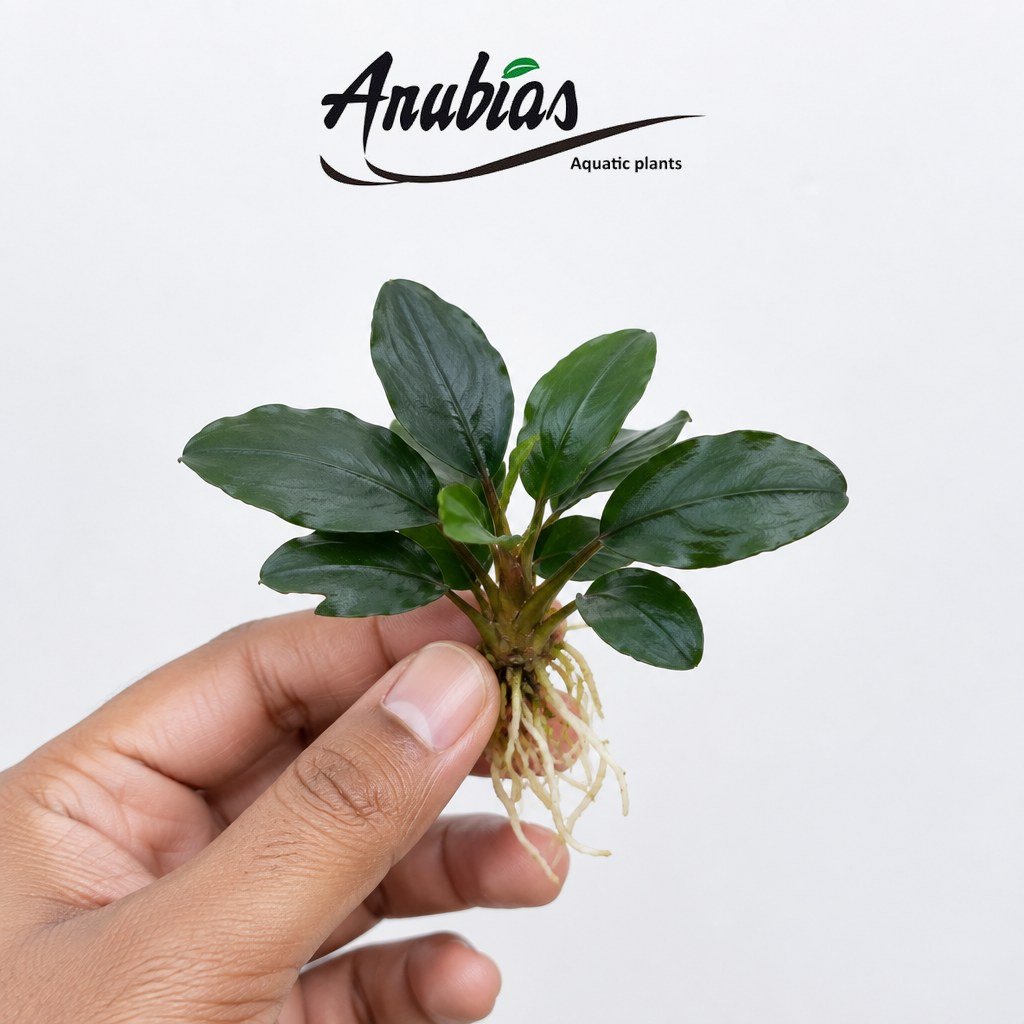
Description
Lagenandra nairii compact is a small, slow-growing form of Lagenandra nairii, a marsh aroid found only in the streams of Kerala in the Western Ghats, with neat oval to lance-shaped green leaves on short stalks above a creeping rhizome. It is the lagenandra for the midground of smaller tanks: it needs no CO2, grows in low light and hard tap water, and takes 30 °C Indian summers in its stride. Lagenandra nairii compact suits beginners, low-tech community tanks, nano aquascapes and anyone building a South Indian biotope with native plants.
Lagenandra nairii compact at a glance
| Scientific name | Lagenandra nairii ‘Compact’ (compact form of Lagenandra nairii) |
|---|---|
| Family | Araceae |
| Origin | Southern India (Western Ghats, Kerala), endemic; stream margins |
| Difficulty | Easy |
| Light | Low to medium |
| CO2 | Not required |
| Temperature | 22–30 °C |
| pH | 6.0–7.5 |
| Growth rate | Slow |
| Height/size | 8–15 cm submerged |
| Placement | Foreground to midground; paludarium |
| Propagation | Rhizome division |
How to plant Lagenandra nairii compact
Treat it like a small cryptocoryne: roots in the substrate, rhizome at the surface.
- Rinse the plant and trim damaged roots. Wash your hands afterwards, as lagenandra sap contains irritant calcium oxalate crystals.
- Use a substrate at least 4 cm deep, preferably aquasoil or gravel with root tabs; the plant feeds mainly through its roots.
- Bury the roots with tweezers and let the rhizome rest on or just at the surface. A buried rhizome rots.
- Space plants 8–10 cm apart for a group or clump planting.
- In a paludarium, plant it in wet soil at the waterline with leaves in humid air.
Pick the final spot before planting; lagenandras stall for weeks after every move.
Lagenandra nairii compact care: light, CO2, fertiliser and water
Light. Low to medium light. The plant keeps a tight, compact shape under moderate light and still grows in the shade of taller plants. Strong light only encourages algae on the long-lived leaves.
CO2. Not required. Lagenandra nairii compact grows slowly without injection and only marginally faster with it.
Fertiliser. A root tab near the roots every two to three months and a weekly dose of complete liquid fertiliser cover its needs. Iron keeps the new leaves green; potassium prevents holes in the old ones.
Water. Like other Western Ghats lagenandras it tolerates 30 °C summer water and hard tap water, making it a dependable choice for Indian tanks without chillers. It survives monsoon power cuts without trouble. Keep parameters stable with weekly 25–30% water changes, as sudden swings can trigger leaf melt.
Growth, trimming and propagation
A new leaf appears every three to five weeks. Leaves last many months. Remove old or algae-coated leaves at the base of the stalk. The plant slowly spreads as the rhizome creeps, forming a low clump over a year or so.
Propagate by rhizome division. When the rhizome has several leaves along its length, cut it into pieces each with at least two or three leaves and some roots, then replant. Side shoots can be separated once rooted. Emersed in a paludarium it grows faster and divides more readily.
Where to use it in an aquascape
Its small size makes Lagenandra nairii compact a midground plant for nano tanks of 1.5 ft (around 40 litres) and a foreground to midground plant for 2–4 ft tanks (60–250 litres). Plant a group of three to five in front of wood or rock for a low, bushy clump that needs no trimming, or tuck single plants between stones.
Pair it with Anubias nana and Java fern on hardscape, cryptocorynes for a mixed aroid midground, and a carpeting plant in front. For a Kerala stream biotope, combine it with Lagenandra meeboldii and Lagenandra toxicaria with Dawkinsia barbs, danios and hillstream loaches.
It is safe with all community fish and shrimp and tough enough for goldfish and smaller cichlids. Cherry and Amano shrimp graze the leaves clean.
Common problems and fixes
- Melt after planting. Emersed-grown leaves dissolve in the first weeks. Keep the rhizome in place and the water stable; new leaves follow within a month or two.
- Rhizome rot. Rhizome buried too deep. Lift, cut away the rot and replant shallower.
- Pale new leaves. Iron shortage. Dose micronutrients and add a root tab.
- Holes in old leaves. Potassium deficiency or age. Dose potassium and remove the oldest leaves.
- Algae on leaves. Too much light for a slow grower. Reduce lighting and add nerite snails or Amano shrimp.
- No growth after a move. Normal. Stop disturbing it and feed the roots.
What you receive
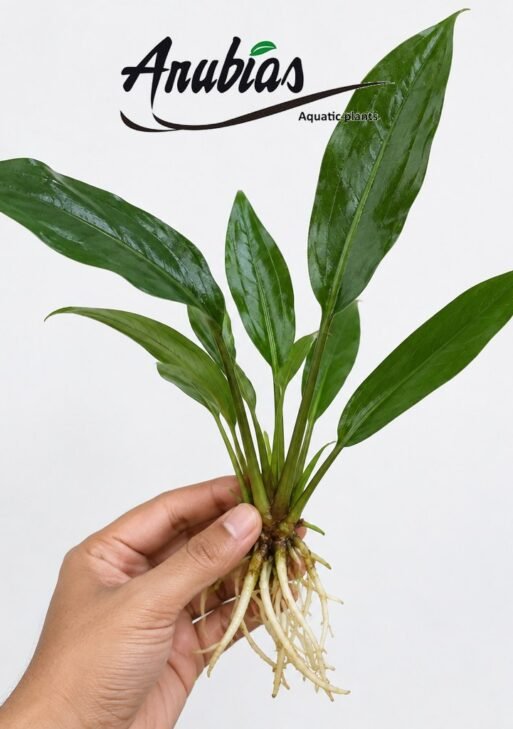
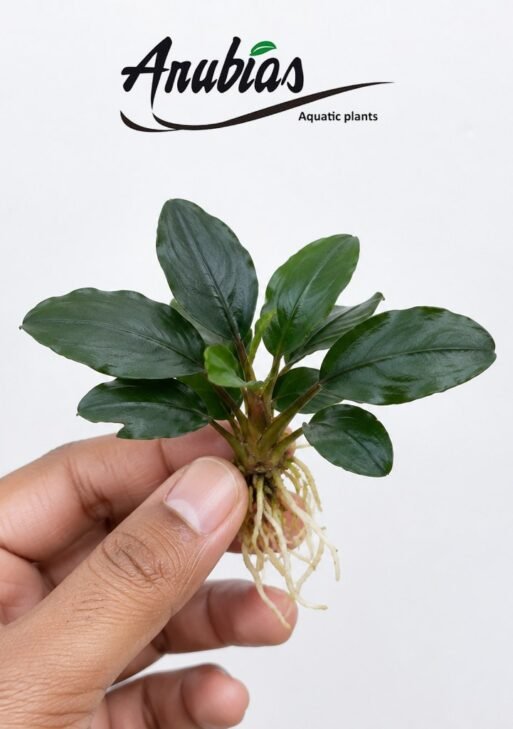
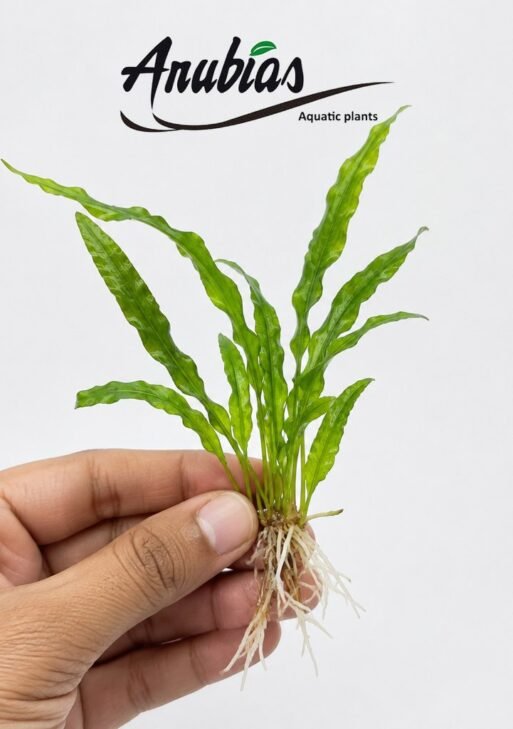
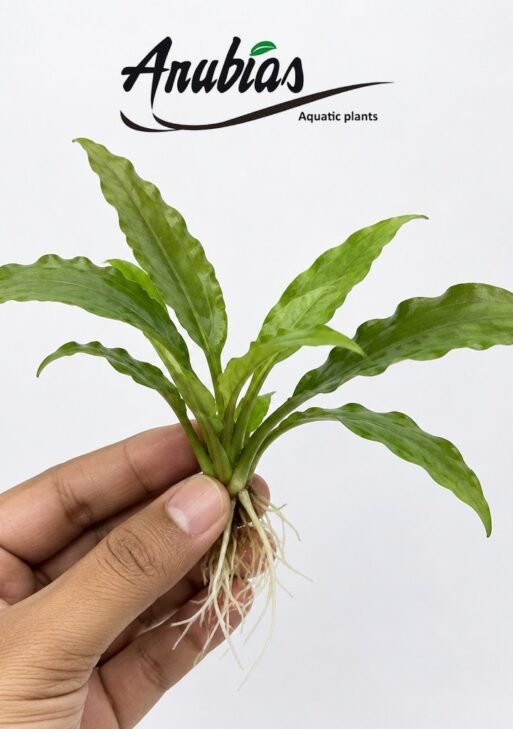
One healthy Lagenandra nairii compact plant of the size you select (Small or Standard), similar to the photo. Each plant is checked before packing, packed moist and shipped across India from Surat. ₹99 shipping, free on orders of ₹999 or more.
Live-arrival guarantee: record one continuous unboxing video within 4 hours of delivery and we will refund or replace a plant that arrived damaged.
FAQ
Does Lagenandra nairii need CO2?
No. Lagenandra nairii compact grows well without CO2 in a low-tech tank. Injection makes only a small difference to this slow grower.
Is Lagenandra nairii good for beginners?
Yes. It tolerates low light, hard water, warm summers and most fish, and needs only a root tab now and then.
How big does Lagenandra nairii compact grow?
Submerged it stays at 8–15 cm, which makes it one of the few lagenandras small enough for nano tanks and foregrounds.
How fast does Lagenandra nairii grow?
Slowly, around one new leaf every three to five weeks. A group fills out into a clump over a year.
Lagenandra nairii vs Cryptocoryne parva: which is better for a small tank?
Both are small, slow and easy. Lagenandra nairii compact has broader, oval leaves and handles heat better; Cryptocoryne parva is finer and lower and spreads by runners. They work well planted together.
Is Lagenandra nairii safe for shrimp?
Yes. Shrimp graze its leaves without harm. The sap can irritate human skin, so wash your hands after handling.
Not sure what fits your tank? Plan it with our free AI tank planner.
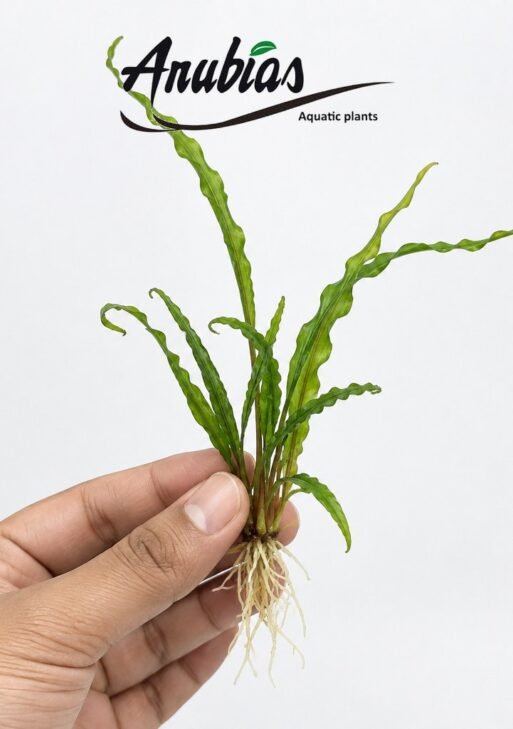
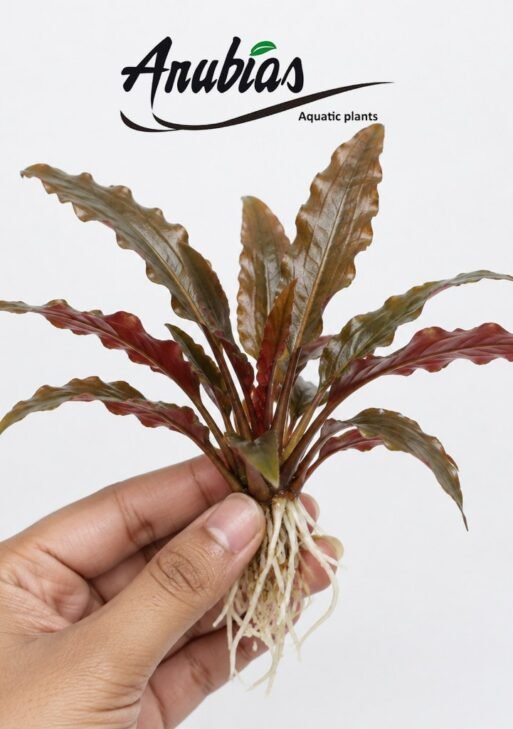
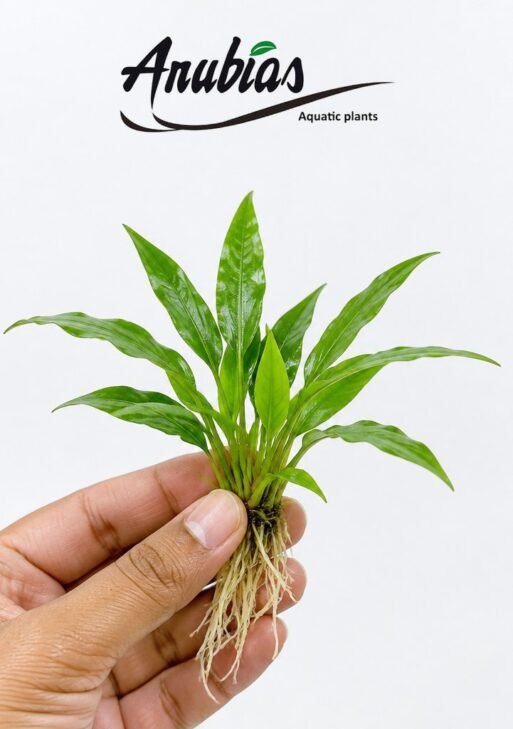











There are no reviews yet.