
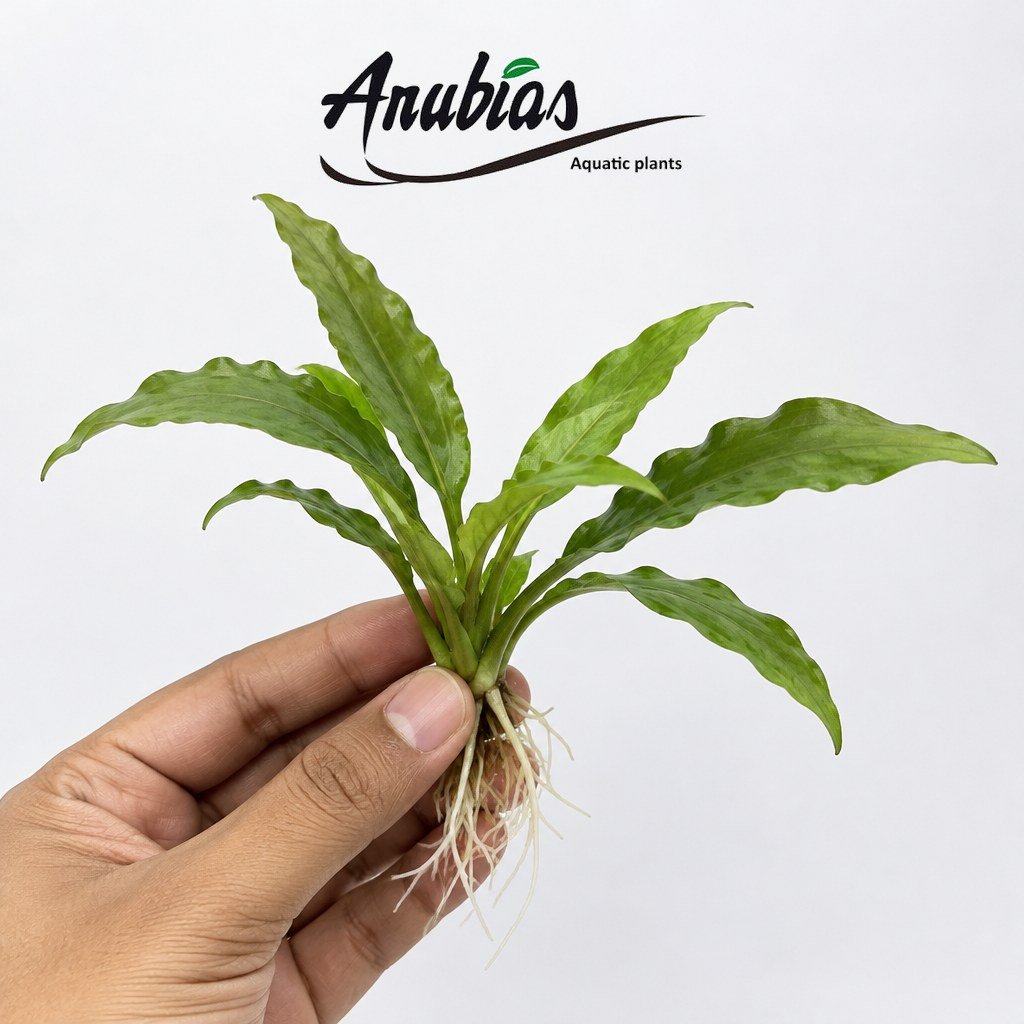
Description
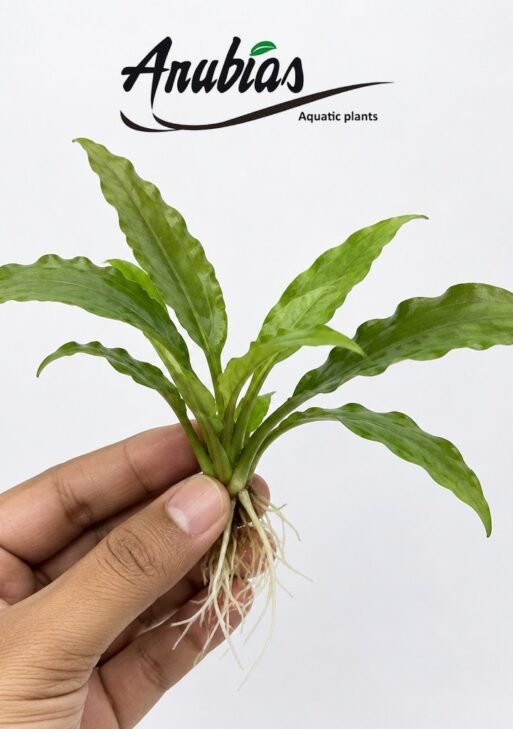
Cryptocoryne spiralis ‘Broad Leaf’ is a wider-leaved form of the Indian native Cryptocoryne spiralis, with strap-like leaves roughly twice the width of the standard type and the same gentle ripple along the edges. It grows 25–45 cm tall, forms substantial clumps and has all the toughness of the species: hard water, warm temperatures and no CO2 are no problem. For a background plant with more presence than narrow-leaved crypts but the same easy care, Cryptocoryne spiralis broad leaf fills the gap.
Cryptocoryne spiralis ‘Broad Leaf’ at a glance
| Scientific name | Cryptocoryne spiralis (broad-leaved form) |
|---|---|
| Family | Araceae |
| Origin | India (peninsular streams and wetlands); cultivated selection |
| Difficulty | Easy |
| Light | Low to medium |
| CO2 | Optional |
| Temperature | 22–30 °C |
| pH | 6.5–8.0 |
| Growth rate | Moderate |
| Height/size | 25–45 cm tall, leaves 2–3 cm wide |
| Placement | Background; midground in 4 ft and larger tanks |
| Propagation | Runners |
How to plant Cryptocoryne spiralis ‘Broad Leaf’
- Rinse the plant and remove any leaves that are torn, yellow or transparent. Trim roots to about 3 cm.
- Because the leaves are wide, give each rosette 8–10 cm of space so the clump does not shade itself.
- Push the roots into the substrate with tweezers and leave the crown exposed.
- Place a root tab under each plant in gravel or sand; broad-leaved crypts are heavy root feeders.
- Choose a spot with moderate flow at the back or side of the tank and leave the plant undisturbed.
Cryptocoryne spiralis care: light, CO2, fertiliser and water
Light. Low to medium light. The broad leaves catch light efficiently, so this form does well even under a basic fixture. Under medium light the plant is more compact with bronze-tinted new leaves; under low light it grows taller and plain green. Strong light without CO2 leads to green spot algae on the wide leaf surfaces.
CO2. Optional. The plant grows well in low-tech tanks. With CO2 the leaves reach their maximum width and the clump thickens faster.
Fertiliser. Root tabs every two to three months in inert substrate, or aquasoil, plus a weekly liquid fertiliser. Large leaves make deficiencies obvious: pinholes mean potassium, pale new leaves mean iron.
Water. Indian tap water, hard and alkaline, is close to its native conditions. It tolerates soft water too. Keep changes moderate and regular; sudden swings cause melt.
Indian conditions. Handles 28–30 °C summers. Keep the surface moving for oxygen. Monsoon power cuts of a few hours do not affect it.
Growth, trimming and propagation
After the first month, expect a new leaf every one to two weeks and runners within two to three months. The clump becomes dense and tall within six to twelve months.
Trim by removing old outer leaves at the base. Do not cut leaves partway. Thin the clump occasionally so light reaches inner rosettes.
Propagate by lifting daughter plants with four or more leaves and replanting them 8–10 cm apart.
Where to use it in an aquascape
A background plant for tanks from 2 ft (60–80 litres) up, and a midground feature in 4 ft (300 litre) and larger tanks. Its wide, rippled leaves give a fuller screen than narrow crypts, so three or four plants cover the back glass of a 2 ft tank. It works in jungle, nature-style and Indian river biotope layouts.
Plant narrower species from our Cryptocoryne collection in front for contrast, attach Anubias nana and Java fern to hardscape, and finish with a carpeting plant in the foreground. Fine-leaved stem plants beside it highlight the broad leaves.
It suits all community fish and shrimp. The wide leaves offer shelter for fry and resting spots for bristlenose plecos, and they withstand gouramis, angelfish and medium barbs.
Common problems and fixes
- Melt after planting. Normal for crypts. Trim dissolved leaves, keep roots in place and wait two to four weeks.
- Green spot algae on leaves. Light too strong or phosphate too low. Reduce the photoperiod, dose phosphate and add nerite snails.
- Pinholes in older leaves. Potassium deficiency. Dose potassium.
- Pale or yellow new leaves. Iron shortage. Add chelated iron.
- Inner rosettes losing leaves. The clump is shading itself. Thin it out and replant the daughter plants elsewhere.
- Melt in a settled tank. A sudden parameter change. Fix the cause; the roots regrow leaves.
What you receive
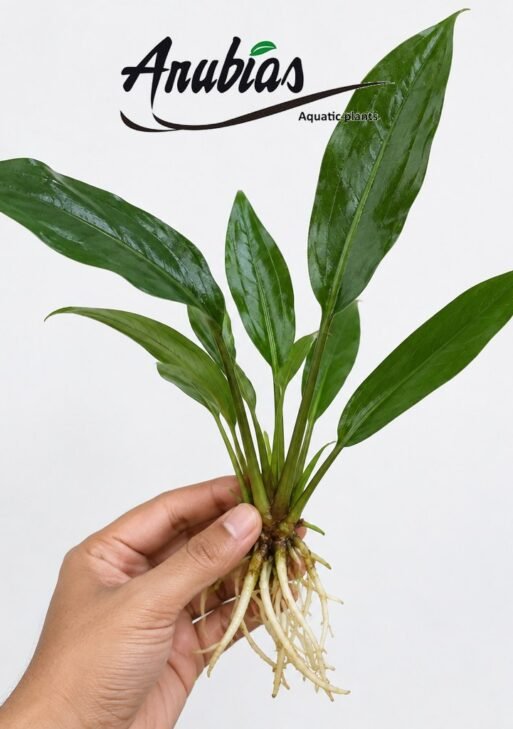
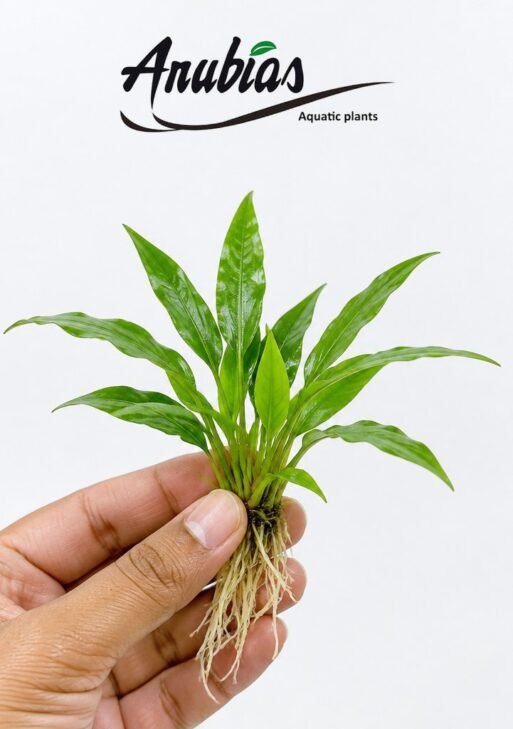
You receive one healthy Cryptocoryne spiralis ‘Broad Leaf’ plant in the size you select (Small or Standard), similar to the one in the photo. It is checked before packing, wrapped moist and shipped across India from Surat. Live-arrival guarantee: record one continuous unboxing video within 4 hours of delivery and we refund or replace any plant that arrives damaged.
FAQ
Does Cryptocoryne spiralis ‘Broad Leaf’ need CO2?
No. It grows well without CO2 under low to medium light. CO2 gives wider leaves and a faster-thickening clump but is optional.
Is Cryptocoryne spiralis ‘Broad Leaf’ good for beginners?
Yes. It is an Indian native tolerant of hard water, heat and basic lighting, and it needs no trimming beyond removing old leaves.
Can Cryptocoryne spiralis ‘Broad Leaf’ grow in gravel?
Yes. Push a root tab into the gravel under each plant every two to three months.
How is ‘Broad Leaf’ different from regular Cryptocoryne spiralis?
The leaves are about twice as wide (2–3 cm instead of 1–1.5 cm), giving a fuller, more solid background. Height, colour and care are the same.
How fast does Cryptocoryne spiralis ‘Broad Leaf’ grow?
Moderate. After a month of settling it produces a leaf every one to two weeks and spreads by runners into a dense clump within six to twelve months.
What tank size does Cryptocoryne spiralis ‘Broad Leaf’ need?
At least a 2 ft (60 litre) tank that is 40 cm or taller, so the 25–45 cm leaves have room. In shallower tanks the leaves trail along the surface.
Not sure what fits your tank? Plan it with our free AI tank planner.












There are no reviews yet.