
Description
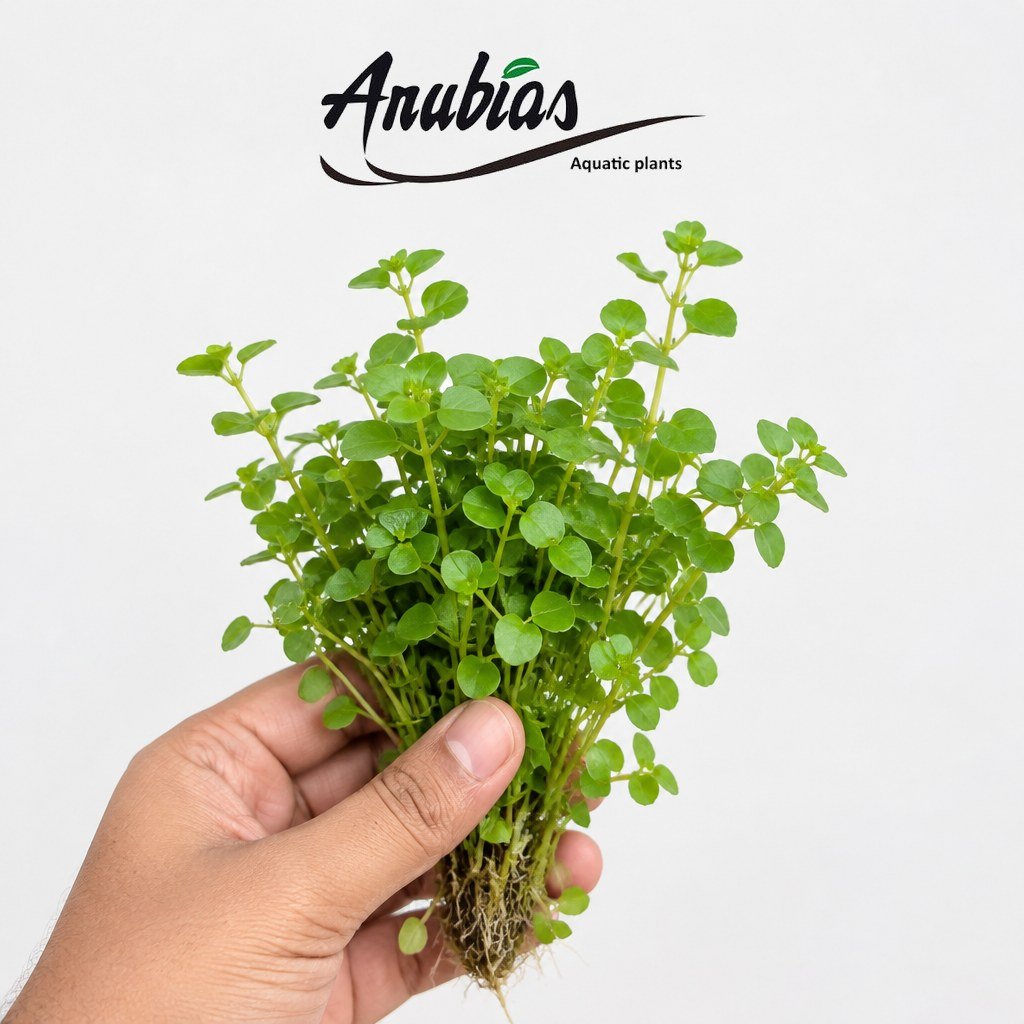
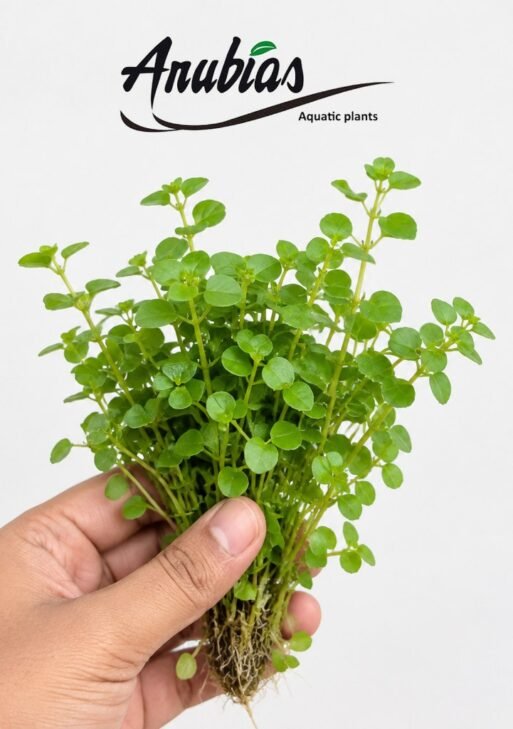
Lindernia rotundifolia ‘Green’ is a small, round-leaved stem plant native to India, Sri Lanka and tropical Africa, with neat pairs of bright-green leaves set closely along upright stems. It is easy, compact and happy without CO2, which makes it a good midground plant for nano tanks and low-tech setups where larger stems would overwhelm the layout. Beginners get a forgiving plant that tolerates Indian tap water; aquascapers get a tidy, small-leaved filler for the space between carpet and background.
Lindernia rotundifolia at a glance
| Scientific name | Lindernia rotundifolia ‘Green’ |
|---|---|
| Family | Linderniaceae |
| Origin | India, Sri Lanka, Southeast Asia and tropical Africa |
| Difficulty | Easy |
| Light | Low-medium to high |
| CO2 | Optional |
| Temperature | 20–30 °C |
| pH | 6.0–7.8 |
| Growth rate | Medium to fast |
| Height/size | 10–30 cm tall; stems 2–3 cm wide |
| Placement | Midground; background in nano tanks |
| Propagation | Stem cuttings; side shoots |
How to plant Lindernia rotundifolia
- Rinse the portion in dechlorinated water and trim any soft stem ends.
- Strip the leaves from the lowest 2 cm of each stem.
- Plant each stem 2–3 cm deep with tweezers, 2 cm apart, in a tight group. Small-leaved stems look best planted densely.
- Place it in the midground, in front of taller stems, where it gets direct light.
- Keep flow gentle for the first week; it roots quickly and also throws roots from the nodes.
Any substrate works. In sand or gravel, dose liquid fertiliser; in aquasoil it needs little extra to establish. If stems arrive with emersed-grown leaves, plant them anyway; submerged leaves replace them within two weeks.
Lindernia rotundifolia care: light, CO2, fertiliser and water
Light: under low-medium light Lindernia rotundifolia grows upright with slightly longer internodes. Medium to high light keeps the leaves tightly spaced and the stems compact, and the plant may creep along the substrate before turning upwards. It is not fussy; a basic LED is enough for healthy growth.
CO2 is optional. It grows well in low-tech tanks, more slowly and a little looser. With CO2 at 15–25 ppm it is dense and quick.
Fertiliser: a complete liquid fertiliser once or twice a week. Yellowing older leaves mean nitrogen is short; pale new leaves mean iron is short. It is a modest feeder compared with large Hygrophilas.
Indian conditions: as a native species it copes with hard tap and borewell water (GH 8–18), summer temperatures of 30–32 °C and monsoon power cuts of several hours. It is one of the safer small stems for a tank without CO2 or a chiller anywhere in the country.
Growth, trimming and propagation
Lindernia rotundifolia grows 2–5 cm a week. Trim when the stems reach the height you want, cutting just above a node and leaving 5–8 cm in the substrate. The base branches into side shoots and the group becomes a dense, rounded clump. Trimming the tops regularly keeps it low and bushy for the midground.
Replant the tops beside the group to widen it; they root within days. Replace old bare-based stems with fresh tops every couple of months. One portion fills a midground patch in a 2 ft tank within two months.
Where to use it in an aquascape
Lindernia rotundifolia is a midground plant for 2 ft (60–70 litre) tanks and a background plant for nano tanks of 1 ft to 1.5 ft (20–40 litres). In 3 ft and 4 ft tanks (120–250 litres) a broad patch between the carpet and taller stems gives a neat, small-leaved layer. It fits nature-style layouts, Iwagumi midgrounds and low-tech community tanks.
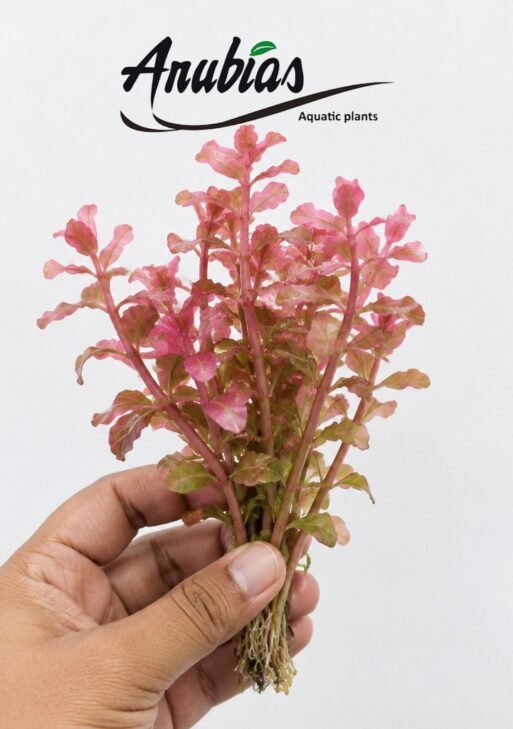
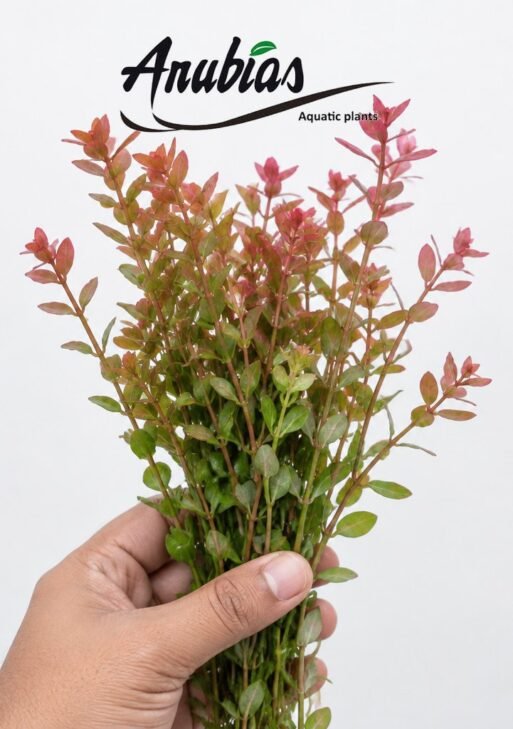
Pair it with a carpeting plant in front, taller stem plants such as Rotala Ceylon or Hygrophila polysperma behind, red Ludwigia Mini Super Red beside it for contrast, and Anubias nana or Java fern on hardscape.
Safe with all small community fish, bettas and shrimp. Goldfish and large cichlids will damage it.
Common problems and fixes
- Stems stretch: low light. Trim short and replant tops; raise intensity if possible.
- Older leaves yellow: nitrogen shortage. Dose fertiliser with nitrate.
- Pale new leaves: iron shortage. Dose a complete micro fertiliser.
- Lower stems bare: shading by a dense top. Thin the group and trim regularly.
- Melt after arrival: some leaf loss in the first week is normal; new tips confirm recovery.
- Algae on older leaves: too long a photoperiod. Keep lights at 6–8 hours.
What you receive
You receive one healthy portion of Lindernia rotundifolia ‘Green’ in the size you select (Small or Standard), similar to the photo. It is checked before packing, wrapped moist and shipped across India from Surat. Live-arrival guarantee: record one continuous unboxing video within 4 hours of delivery and we refund or replace any plant that arrives damaged.
FAQ
Does Lindernia rotundifolia need CO2?
No. It grows well without CO2 under low-medium to medium light. CO2 makes it faster and denser.
Is Lindernia rotundifolia good for beginners?
Yes. It is an easy native plant that tolerates hard Indian water, warm tanks and basic lighting.
How tall does Lindernia rotundifolia grow?
10–30 cm. Regular trimming keeps it at 10–15 cm for the midground.
How fast does Lindernia rotundifolia grow?
Medium to fast, 2–5 cm a week. Trim every three weeks or so.
Can Lindernia rotundifolia grow in sand?
Yes. It grows in sand, gravel or aquasoil with liquid fertiliser.
Lindernia rotundifolia vs Bacopa monnieri: what is the difference?
Both are easy, small-leaved Indian stems. Lindernia has thinner, rounder leaves and grows faster; Bacopa monnieri has thick, fleshy leaves and grows slowly.
Not sure what fits your tank? Plan it with our free AI tank planner.












There are no reviews yet.