
Description
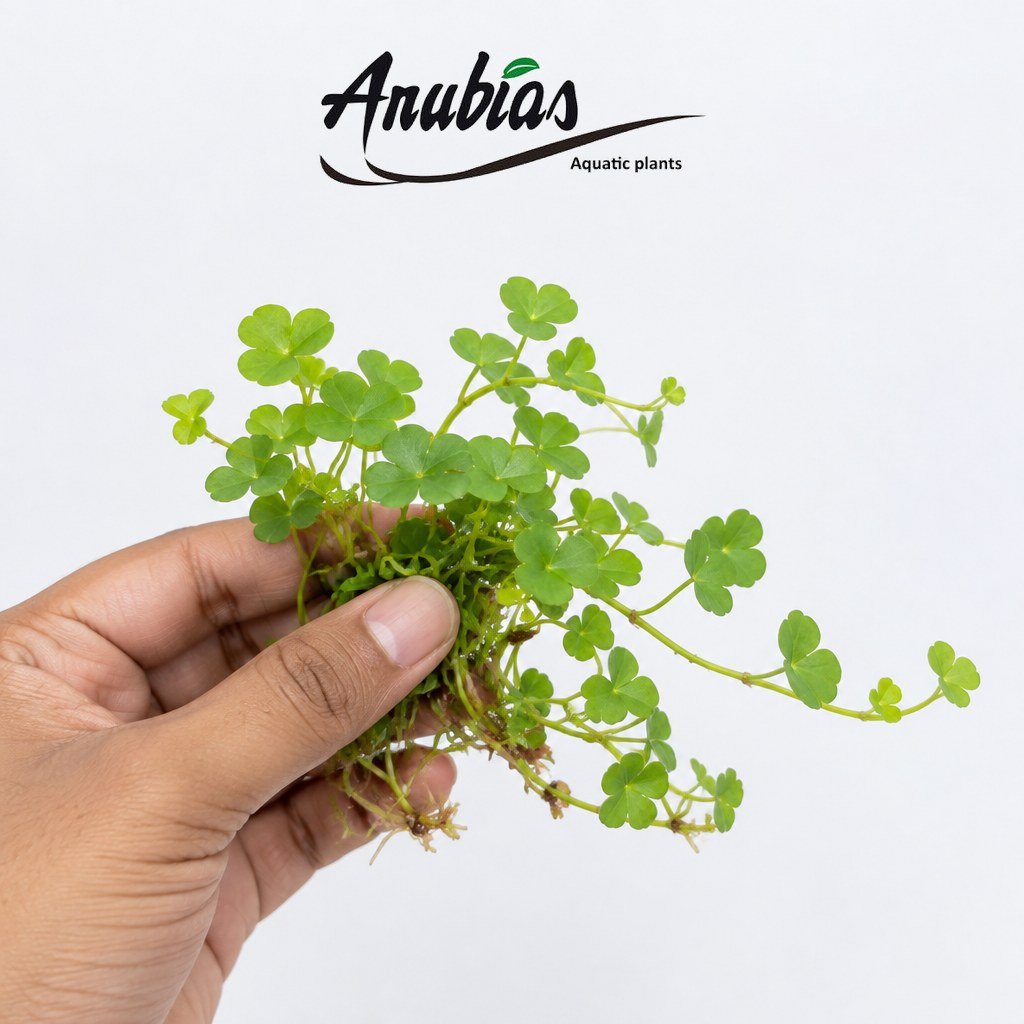
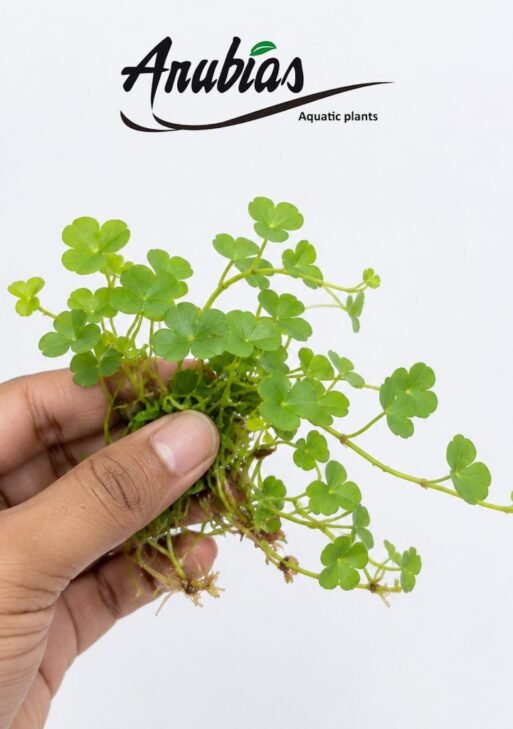
Hydrocotyle tripartita ‘Honda’ is a compact, fast-spreading carpeting plant with small three-lobed clover-like leaves that creep along the substrate on thin runners. Hydrocotyle tripartita is sold in India under a few trade names (‘Japan’, ‘Honda’, ‘Mini’); the ‘Honda’ form offered here is the classic bright-green clover carpet that suits beginners who want a lawn effect without the difficulty of dwarf baby tears. It grows well in medium to high light, tolerates Indian tap water, and fills in quickly once settled.
Use it as a foreground carpet, a mid-ground bush between rocks, or let it drape over driftwood. Because it accepts a wide range of conditions and bounces back from mistakes, it is one of the most forgiving carpet plants you can buy for a planted tank.
Hydrocotyle tripartita ‘Honda’ at a glance
| Scientific name | Hydrocotyle tripartita (trade form ‘Honda’) |
|---|---|
| Family | Araliaceae (formerly placed in Apiaceae) |
| Origin | South-east Asia and Australia |
| Difficulty | Easy to medium |
| Light | Medium to high |
| CO2 | Optional; recommended for a dense, low carpet |
| Temperature | 20–28 °C (tolerates short spells to 30 °C) |
| pH | 5.5–7.5 |
| Growth rate | Fast |
| Height/size | 3–10 cm; leaves roughly 1 cm across |
| Placement | Foreground or midground; also on wood |
| Propagation | Cuttings of runners and side shoots |
How to plant Hydrocotyle tripartita ‘Honda’
- Rinse the portion in tank-temperature water and remove any damaged or melted leaves.
- Separate the portion into 4–8 small clumps, each with a few leaves and a bit of runner. Small clumps spread faster than one large bunch.
- Using tweezers, push each clump into the substrate so the runner sits just below the surface. Space clumps 3–5 cm apart in a staggered grid.
- Fine substrate (aquasoil or 1–3 mm sand or gravel) holds the thin runners best. In coarse gravel, plant deeper and expect slower rooting.
- Alternatively, tie or glue a clump onto driftwood or a rock. The runners will cling and the plant will spill over the edge.
- Leave it undisturbed for the first two weeks. Runners anchor first, then new leaves appear.
Hydrocotyle tripartita ‘Honda’ care: light, CO2, fertiliser and water
Light
Medium light keeps the plant low and bushy. Under weak light it stretches upward, with longer internodes and sparse leaves, and stops behaving like a carpet. A decent LED at 30–50 lumens per litre for 7–8 hours a day is enough; more light produces a tighter mat but also invites algae if nutrients and CO2 are not balanced.
CO2
Hydrocotyle tripartita grows without CO2 injection, but it grows as a loose, upward-leaning mound. With CO2 (around 20–30 ppm) it hugs the substrate, leaves stay small, and the carpet closes in a few weeks instead of a few months. If you run a low-tech tank, a liquid carbon supplement helps a little, but the honest answer is that a flat lawn is much easier with pressurised CO2.
Fertiliser
It feeds from both the water column and the substrate. A weekly all-in-one liquid fertiliser with nitrogen, phosphorus, potassium and traces is sufficient. In nutrient-poor sand, add root tabs under the carpet every two or three months. Yellowing new leaves usually mean iron or general macro shortage.
Water and Indian conditions
Hard tap water of 8–15 dGH is fine; the plant is not fussy about pH. In summer, when tank water in many Indian cities sits at 28–32 °C, growth slows and lower leaves may yellow; a small clip fan over the surface drops the temperature by 2–3 °C. During monsoon power cuts, it survives a day without flow or light, but repeated cuts with CO2 off and lights on can trigger algae on the leaves. Keep the photoperiod consistent and do a 30 percent water change weekly.
Growth, trimming and propagation
Expect visible runners within two weeks and a joined carpet within six to ten weeks under good conditions. Once established it grows fast enough to need trimming every two to three weeks. Trim with curved scissors, cutting the top layer flat and removing any stems that climb above 5 cm; the cut pieces float, so net them out or replant them in bare patches. Every few months, lift and thin the mat, because an old carpet traps debris and the lower layer dies back. Propagation is simple: cut any runner with roots and a few leaves and push it into the substrate.
Where to use it in an aquascape
In a 2-foot tank (around 60–70 litres) a single portion covers the front third in two months. In a 3-foot, 120–150 litre tank, plant two or three portions for an even lawn. It works in nano cubes of 20–30 litres as a draping midground plant rather than a flat carpet.
Pair it with epiphytes on wood such as Anubias nana and Java fern, and put taller stem plants behind it. For a Dutch-style contrast, mix it with other carpeting plants of different leaf shapes, such as Monte Carlo or dwarf hairgrass. It is safe with shrimp, tetras, rasboras and small gouramis; large goldfish and cichlids uproot it.
Common problems and fixes
- Stems growing upward instead of creeping: light is too weak or CO2 is absent. Raise light intensity, add CO2, and trim low to encourage horizontal runners.
- Melting after planting: normal if the plant was grown emersed. Remove melted leaves and wait; new submerged leaves appear in two to three weeks.
- Yellow or pale new growth: add a complete fertiliser with iron; check that nitrates are not at zero.
- Hair or thread algae in the carpet: too much light for the available CO2. Reduce the photoperiod to six or seven hours, add Amano shrimp, and trim affected areas.
- Carpet lifting off the substrate: the lower layer has died from shading. Thin the mat and replant fresh runners.
What you receive
One healthy portion of Hydrocotyle tripartita ‘Honda’ in the size you select (Small or Standard), similar to the photo. Each portion is checked before packing, packed moist and shipped across India from Surat. ₹99 shipping, free on orders of ₹999 or more. Live-arrival guarantee: record one continuous unboxing video within 4 hours of delivery, and if the plant has arrived damaged we refund or replace it.
FAQ
Does Hydrocotyle tripartita need CO2?
No, it grows without CO2 injection, but it stays bushier and taller. With CO2 it forms a low, dense carpet much faster.
Is Hydrocotyle tripartita good for beginners?
Yes. It tolerates hard water, warm temperatures and mistakes better than most carpeting plants, which makes it one of the easiest carpets to start with.
Can Hydrocotyle tripartita grow in sand?
Yes. Fine sand holds its runners well. Add root tabs every few months because sand carries no nutrients.
How fast does Hydrocotyle tripartita grow?
Fast. Under medium light with fertiliser you will see runners within two weeks and a connected carpet in about two months.
Hydrocotyle tripartita ‘Honda’ vs ‘Mini’: what is the difference?
‘Honda’ has leaves around 1 cm across and spreads faster; ‘Mini’ has smaller leaves of about 5 mm and suits nano tanks where scale matters.
Why is my Hydrocotyle tripartita growing tall instead of carpeting?
It is reaching for light. Increase light intensity, add CO2 if possible, and trim it low so it sends out horizontal runners.
Not sure what fits your tank? Plan it with our free AI tank planner.











There are no reviews yet.