

Bucephalandra (“Buce”) has become the collector plant of Indian aquascaping, but prices vary a lot between cultivars and sellers. This guide lists current Bucephalandra prices in India, what makes some varieties more expensive, and how to choose your first Buce without overpaying.
Quick answer: Bucephalandra in India typically costs about ₹300–₹650 per plant for popular named cultivars. On Anubias.in, Wavy Green starts at ₹299, Brownie Ghost ₹350, Kedagang ₹399, Catherinae ₹449, Godzilla ₹549 and Skeleton King ₹649. Rarer, slower-growing and more textured cultivars cost more, but all share the same easy, low-light care as Anubias.
Prices last checked against the Anubias.in store: 17 September 2026.
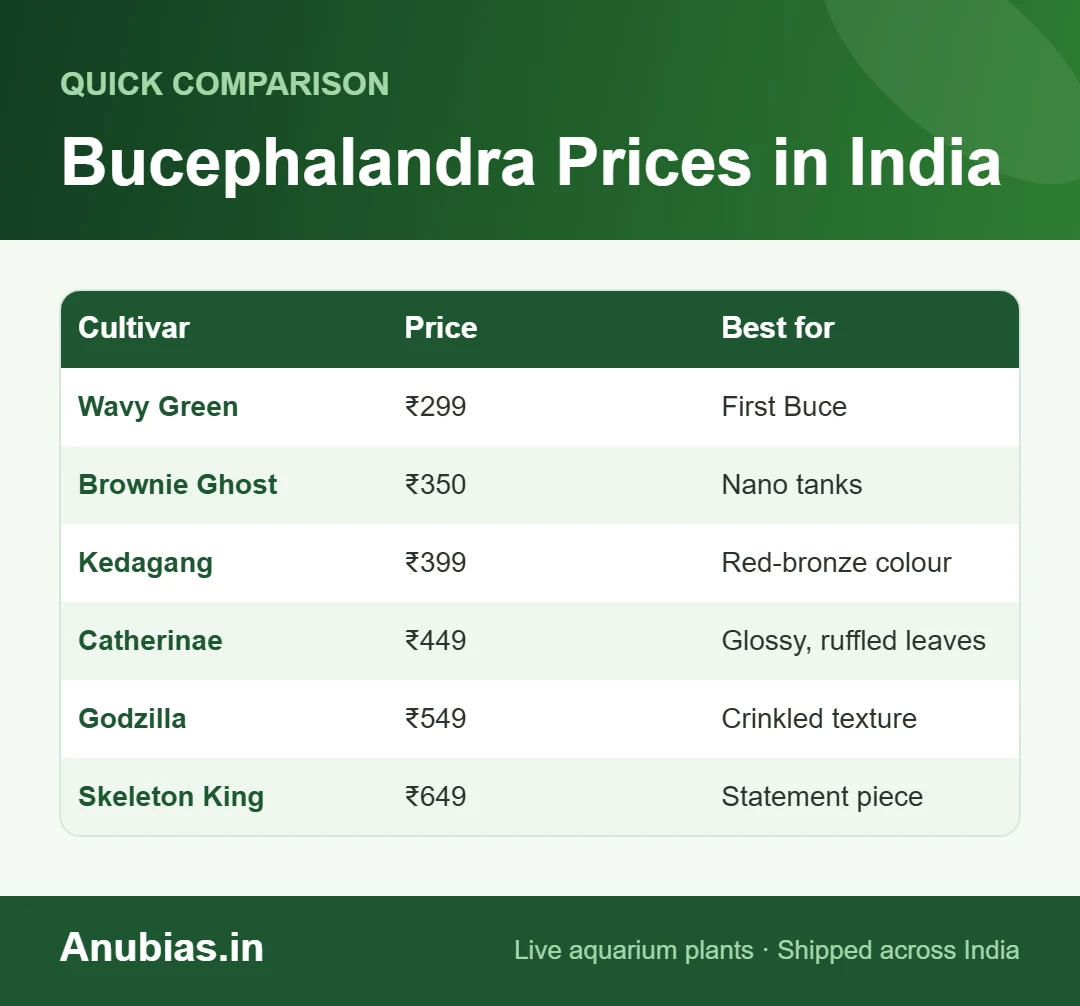
Bucephalandra price list in India (2026)
| Cultivar | Look | Price on Anubias.in | Availability |
|---|---|---|---|
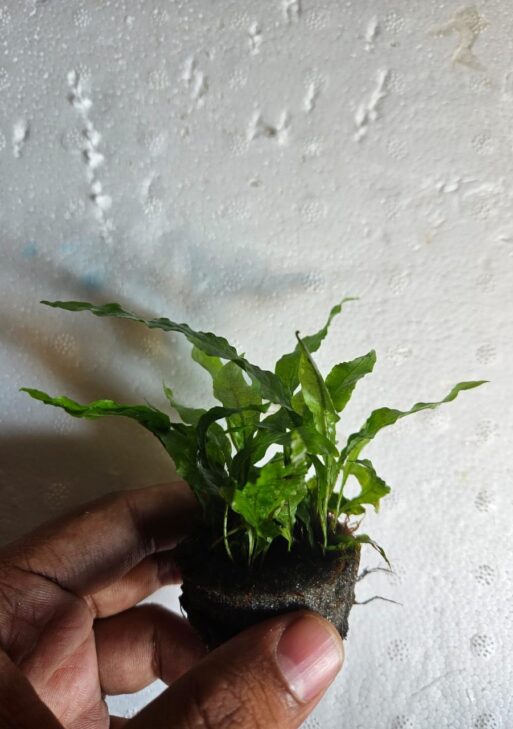
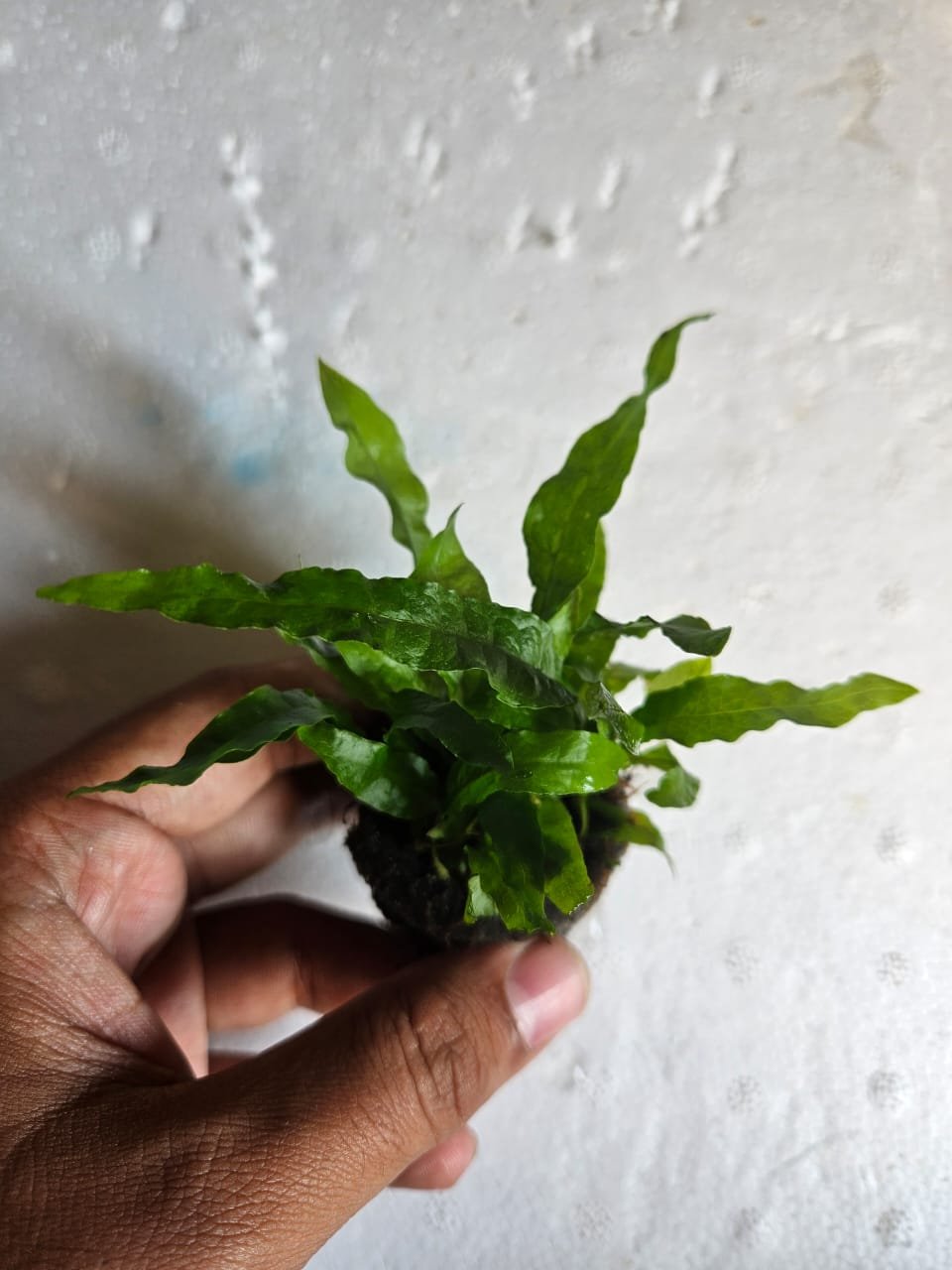
| Wavy Green | Classic green, broad wavy-edged leaves | ₹299 | Pre-order |
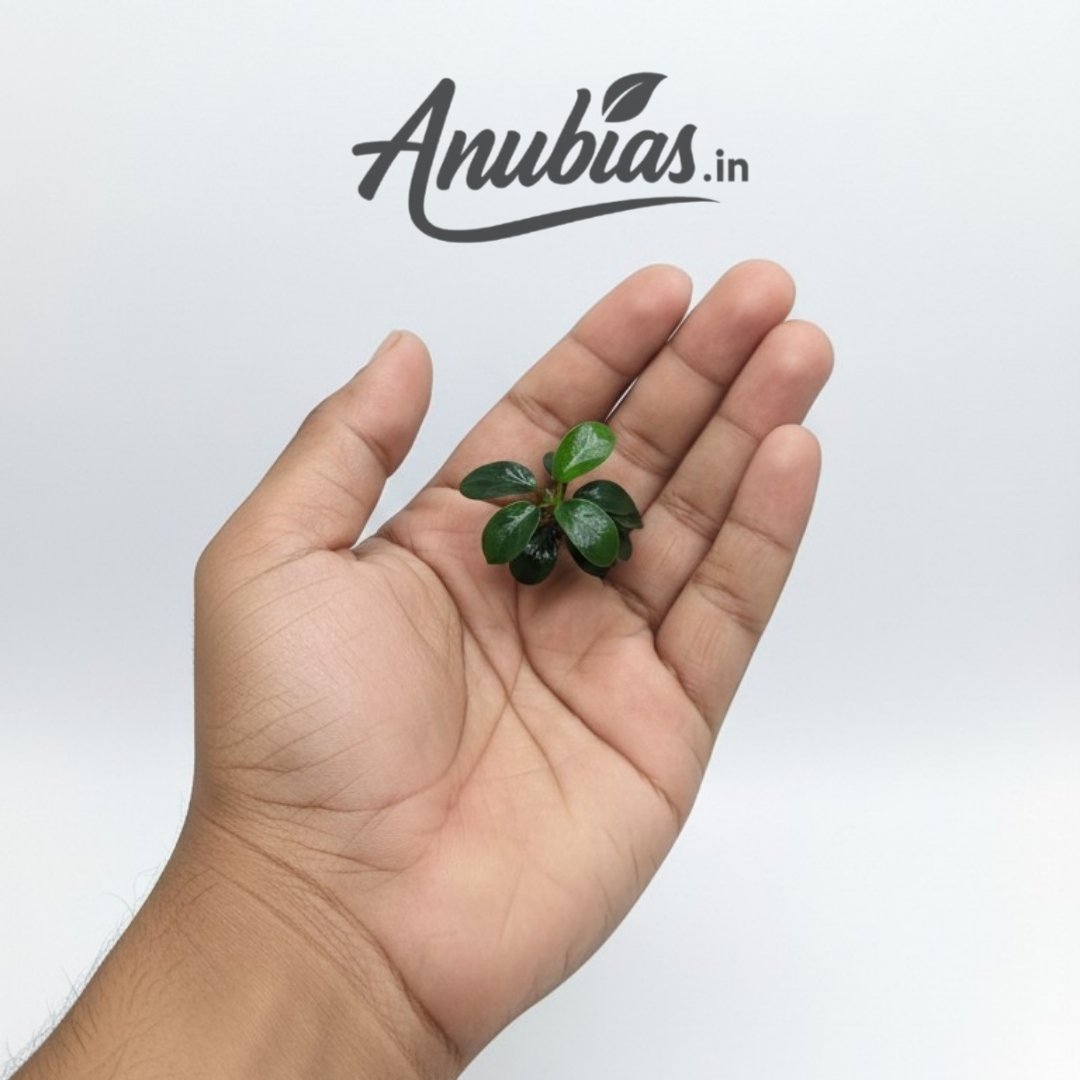
| Brownie Ghost | Dark, compact leaves with a subtle blue sheen | ₹350 | Pre-order |
| Kedagang | Red-bronze, narrow leaves with metallic sheen | ₹399 | Pre-order |
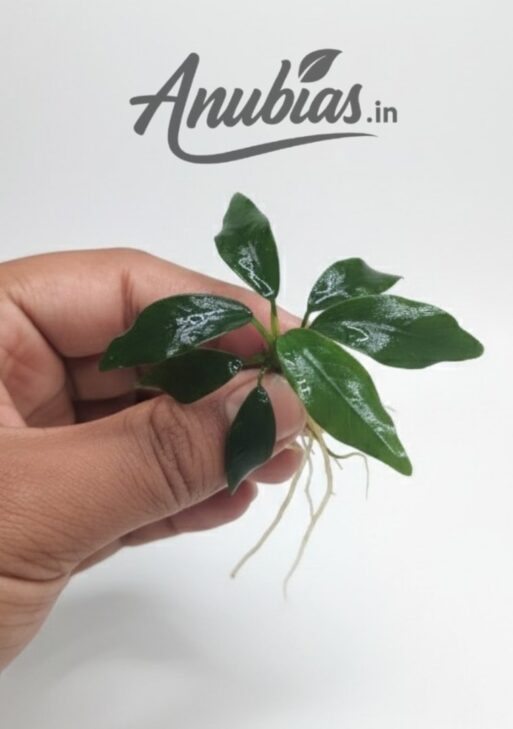
| Catherinae | Long, narrow, glossy dark-green, ruffled edges | ₹449 | Pre-order |
| Godzilla | Thick, crinkled blue-green leaves | ₹549 | Pre-order |
| Skeleton King | Broad leaves with rib-like veins | ₹649 | Pre-order |
Prices are for single plants and can change with stock. Pre-order Buce is sourced to order; see each product page for current delivery timing.
Why does Bucephalandra cost more than Anubias?
- Very slow growth: Buce adds leaves slowly, so nurseries need a long time to produce saleable plants.
- Named collector cultivars: distinct forms like Skeleton King and Godzilla are in demand and limited in supply.
- Import and sourcing: many cultivars are imported or propagated in limited batches.
- Texture and colour: heavily textured or colourful forms are prized, which pushes prices up.
Which Bucephalandra should you buy first?
- Best value starter: Wavy Green, the easiest named cultivar to start collecting.
- For nano tanks: Brownie Ghost, with compact dark leaves.
- For colour: Kedagang, with red-bronze metallic leaves.
- For a statement piece: Skeleton King or Godzilla on a prominent rock.
Compare the looks in detail in our Bucephalandra varieties guide.
Protect your investment: Buce care basics
- Attach it to rock or wood and never bury the rhizome.
- Low to moderate light and no CO2 needed; CO2 and brighter light are optional extras for colour.
- Expect some leaf drop (“buce melt”) in the first weeks; keep conditions stable. See why new plants melt after delivery.
- Full care details are in our Bucephalandra care guide.
More Bucephalandra guides:
Judging whether a Buce portion is worth the price
Two listings at the same price can be very different plants, so it helps to know what you are comparing.
- Number of growth points. A portion with three or four leaf clusters along the rhizome is worth considerably more than a single cluster, because each point can eventually be divided.
- Rhizome length and condition. A firm rhizome several centimetres long will recover from transit far better than a short fragment. Soft or brown sections are dead weight.
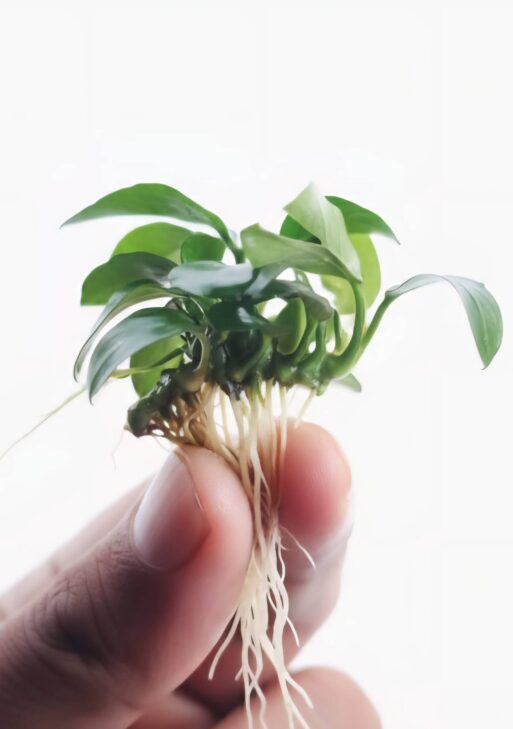
- Roots present. Visible white roots mean the plant was already growing rather than freshly cut.
- Submerged or emersed grown. Emersed plants are cheaper and more common, but they will melt and reshape in your tank. Submerged-grown stock costs more and settles faster.
- Named cultivar versus generic. Much of the price gap across the ₹299 to ₹649 range is the name, not the growing difficulty.
Building a collection without overspending
Buce is slow, which works in your favour financially if you are patient.
Start with one affordable, vigorous cultivar and let it grow for six months to a year before buying more. A single healthy portion divides into several over time, and those divisions are free. Many keepers end up with a tank full of Buce from two or three original purchases.
Buy in the cooler months where you can. Summer temperatures above 30°C and monsoon shipping delays both increase the chance that an expensive portion arrives stressed and melts heavily, and a slow grower takes a long time to come back from that.
Finally, spend on hardscape before rare cultivars. A good piece of wood makes a ₹299 plant look excellent, while a ₹649 plant glued to a plain stone in open substrate still looks like a plant on a stone.
Plants in this guide
Grown in Surat · graded by leaf count and photographed before dispatch · live-arrival guarantee on every order · ₹99 shipping, free from ₹2,000


Frequently asked questions
What is the cheapest Bucephalandra in India?
Wavy Green, at ₹299 on Anubias.in, is the most affordable named cultivar.
Is expensive Buce harder to grow?
No. Price reflects rarity and looks, not difficulty. All these cultivars share the same easy, low-light care.
Bucephalandra or Anubias for a first plant?
Does a bigger rhizome portion cost more per plant?
Larger portions usually cost more in total but less per growth point, because you can eventually divide them into several plants. A single-cluster portion is the most expensive way to buy Buce if your goal is to build up quantity. If you only want one accent plant for a nano tank, the small portion is fine.
Do Bucephalandra prices change through the year?
Availability shifts more than price does, and pre-order status is common because the plants grow so slowly. Cooler months generally see better stock movement, while summer and monsoon conditions make sellers more cautious about shipping delicate portions. Planning purchases around the weather matters more than waiting for a price drop.
Is it cheaper to buy one big portion and split it myself?
Usually yes, provided the portion has several distinct growth points along the rhizome. Cut cleanly between clusters with sterile scissors and make sure each piece keeps roots and at least a few leaves. Wait until the plant is established and growing in your tank before dividing, rather than splitting it the day it arrives.