A planted tank is a garden and a fish home at the same time, so the fish you choose decide whether your plants thrive or get eaten, uprooted and buried. This guide lists the best fish for a planted aquarium that are easy to find in Indian fish shops, the ones to avoid, and how to stock a tank without wrecking your aquascape.
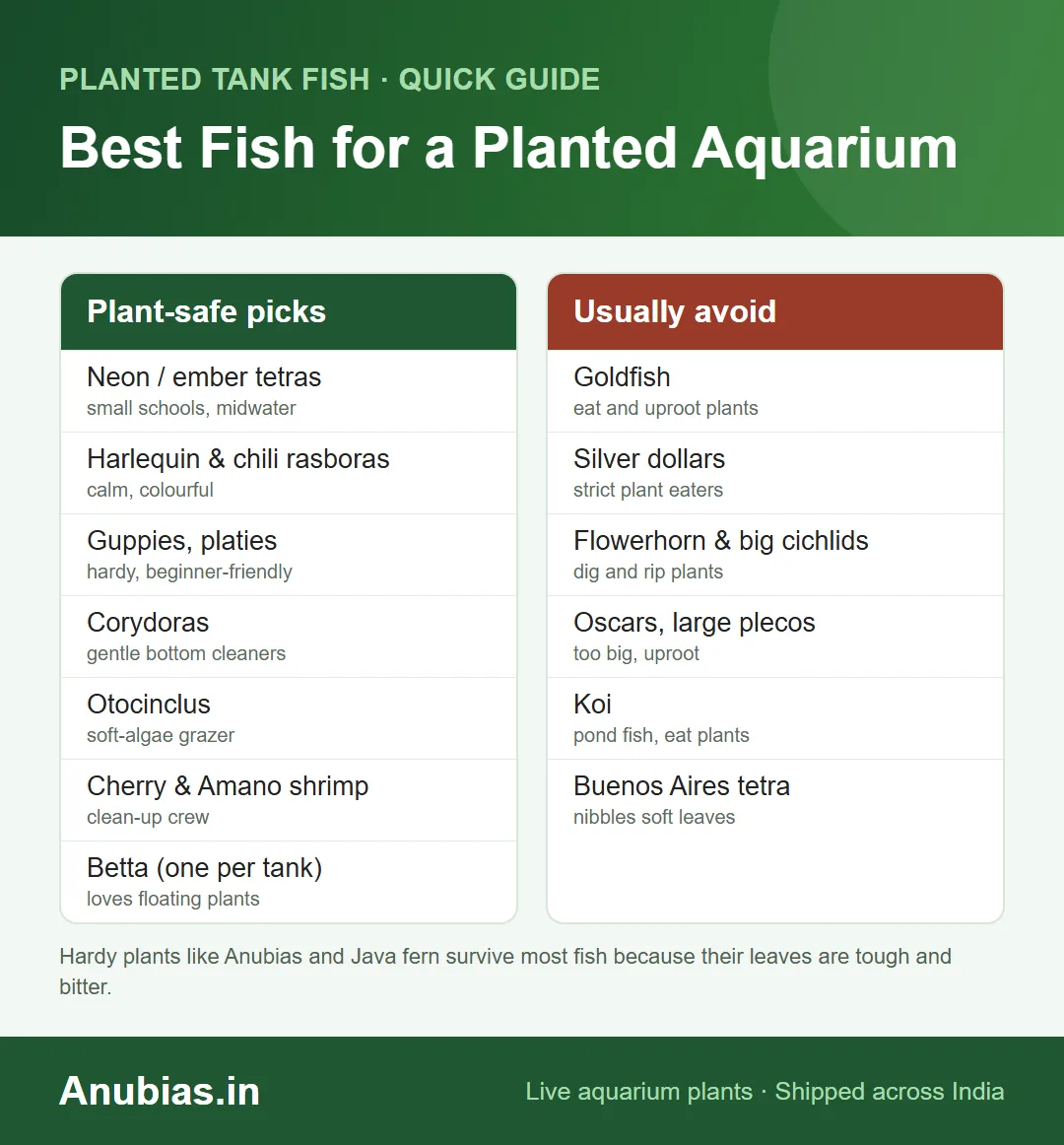
Quick answer: The best fish for a planted aquarium are small, peaceful species that do not eat or dig up plants: neon and ember tetras, harlequin and chili rasboras, guppies and platies, corydoras, otocinclus, cherry or Amano shrimp, and a single betta. Avoid goldfish, silver dollars, flowerhorn and other large cichlids, oscars, large plecos and koi, which eat or uproot plants. If you already keep plant-unfriendly fish, tough plants like Anubias and Java fern tied to wood survive best.
What makes a fish good for a planted tank?
- It does not eat plants. Most small community fish ignore healthy plants and only pick at algae or dead leaves.
- It does not dig. Diggers uproot carpets and stem plants faster than they can root.
- It stays small. Big fish produce more waste, which fuels algae, and push plants over as they swim.
- It likes the same water. Most plant-friendly fish are happy at 24–28°C and the moderately hard tap water found in much of India.
Best fish for a planted aquarium
1. Neon tetras and ember tetras
The classic planted-tank fish. Keep a group of at least 8–10 so they school across the middle of the tank. They never touch plants, and a school swimming in front of green stems is exactly the look most aquascapers want. Ember tetras stay even smaller and suit 2 ft tanks well.
2. Harlequin and chili rasboras
Calm, colourful schooling fish. Harlequins suit 2 ft and bigger tanks; tiny chili rasboras are ideal for nano tanks. Both like a densely planted tank with some floating cover.
3. Guppies, platies and endlers
Hardy, cheap and available in every Indian fish shop. They pick at algae and soft debris but leave healthy plants alone. They breed fast, and dense plants such as hornwort, guppy grass and floating plants give the fry cover. Mollies are fine too but grow bigger and produce more waste.
4. Corydoras catfish
Gentle bottom fish that sift sand for leftover food without uprooting plants. Keep 5–6 together on soft sand or smooth gravel. They are a much better bottom cleaner for planted tanks than large plecos.
5. Otocinclus
Small sucker catfish that graze soft algae and biofilm from leaves and glass without damaging plants. Add them to an established tank (a few months old) that already has some algae to eat, and keep 4 or more.
6. Cherry shrimp and Amano shrimp
The best clean-up crew for a planted tank. They eat algae, leftover food and decaying leaves, and never harm healthy plants. Avoid keeping them with large or aggressive fish that will eat them. See our clean-up crew guide for numbers.
7. Betta (fighter fish)
One betta in a planted 10 litre or bigger tank is a great beginner setup. Bettas rest on wide leaves and love floating plants. Keep only one male per tank and check betta tank mates before adding others.
Also good: honey gourami, kuhli loach, white cloud minnow, zebra danio
All are peaceful and plant-safe. Danios and white clouds are fast swimmers that need a longer tank; kuhli loaches hide in plants and sand.
Fish to avoid in a planted tank
| Fish | Why it is a problem |
|---|---|
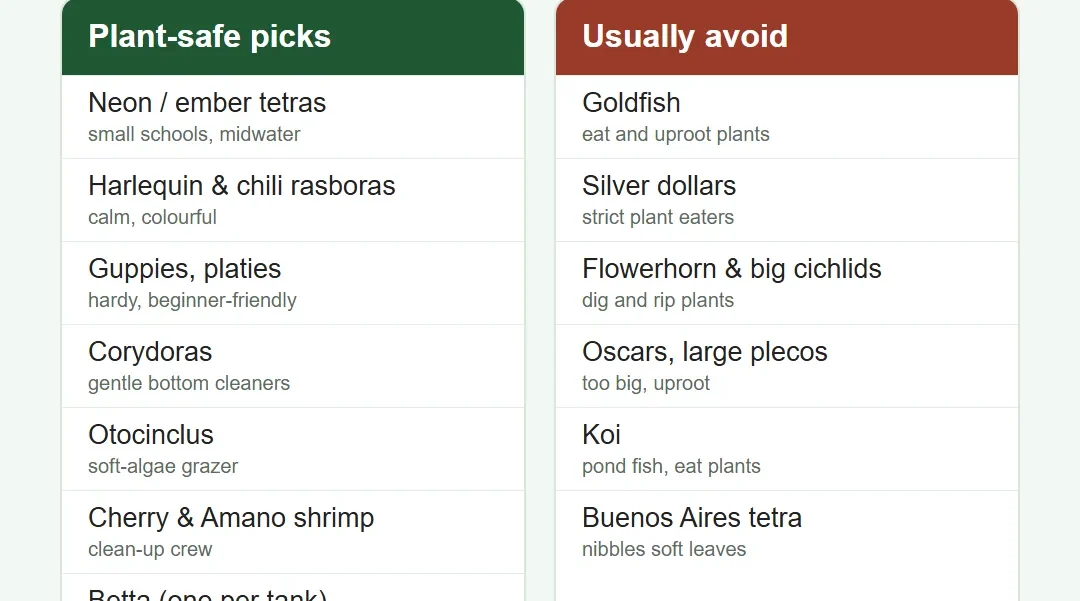
| Goldfish | Eat soft plants, dig and produce heavy waste. |
| Silver dollars | Mainly plant eaters; they strip most stem plants. |
| Flowerhorn, oscar, large cichlids | Dig, rearrange the tank and tear plants out. |
| Common pleco | Grows very large, knocks plants over and adds a lot of waste. |
| Koi | Pond fish that eat and uproot most plants. |
| Buenos Aires tetra | Known for nibbling soft leaves. |
African cichlids and some barbs are also hard on plants. If you love these fish, plan the tank around them with rocks, wood and only the toughest plants.
Already have plant-eating or digging fish?
Choose plants that fish usually leave alone: Anubias Nana and Java fern have tough, bitter leaves and can be tied to wood or rock so diggers cannot uproot them. Bucephalandra and Cryptocoryne are also fairly robust. Floating plants grow back quickly even if nibbled. Avoid soft carpets and fine stem plants in these tanks.
How many fish can a planted tank hold?
Plants absorb some fish waste, but they do not make overstocking safe. As a rough start, a 2 ft (about 60 litre) planted tank comfortably holds one school of 10–12 small tetras or rasboras, 5–6 corydoras and a group of shrimp. Add fish slowly over a few weeks, feed lightly, and change about 25–30% of the water weekly.
Plants first, fish second
Plant the tank first and let it run for a few weeks before adding most fish. Fast growers like hornwort, Vallisneria and floating plants soak up waste while the tank matures, which keeps algae down when fish arrive. Our planted aquarium setup guide, lighting guide and best beginner plants list walk through it step by step.
Frequently asked questions
Which fish are best for a planted aquarium?
Small, peaceful fish that do not eat or dig plants: neon and ember tetras, harlequin and chili rasboras, guppies, platies, corydoras, otocinclus, shrimp and a single betta.
Do guppies eat aquarium plants?
No. Guppies pick at algae and soft debris but leave healthy plants alone. Dense plants actually help guppies by hiding their fry.
Can goldfish live in a planted tank?
It is difficult. Goldfish eat soft plants and dig up the substrate. Only tough plants like Anubias and Java fern tied to wood usually survive with them.
Will a flowerhorn destroy plants?
Usually yes. Flowerhorns and other large cichlids dig and rearrange the tank, so most plants get uprooted. Use rocks, wood and tied-on Anubias instead.
What is the best algae-eating fish for a planted tank?
Otocinclus for soft algae on leaves, plus Amano or cherry shrimp. They clean without harming plants, unlike large plecos which grow big and knock plants over.
Should I add plants or fish first?
Plants first. Let the planted tank run for a few weeks before adding most fish, so the plants are rooted and already absorbing waste.