
Quick answer: Black beard algae settles on Anubias because those leaves stay in the tank for months, giving the algae time to anchor. It is driven by unstable CO2, long light hours, dissolved organics, a clogged filter and dead flow spots. Fix the cause first, trim the worst leaves, spot treat carefully with 3% hydrogen peroxide, and expect three to six weeks for the tank to clear properly.
Telling black beard algae apart from staghorn and black fuzz
Black beard algae, usually shortened to BBA, is a red algae that grows as short dark tufts roughly two to five millimetres long. It starts along leaf edges, on driftwood and around filter outlets, and it clings so hard that pulling it off takes plant tissue with it. The colour runs from dark grey to near black, and older patches can look faintly purple under strong light.
Staghorn is the one most often confused with it: stiffer, paler, more grey-green, branching outward like tiny antlers instead of forming a dense carpet. It grows in the same conditions, so plenty of tanks get both at once and the same fixes apply.
Black fuzz is simply young BBA before the tufts lengthen, so treat it as BBA and act early — the fuzz stage is far easier to clear than an established beard. A quick test: drop a suspect tuft into a cup with a little 3% hydrogen peroxide. BBA and staghorn slowly turn pink, while green algae simply bleach.
Why it targets Anubias, Bucephalandra and Java fern
These three share a trait that makes them magnets for BBA: their leaves last for months, sometimes more than a year. A stem plant sheds and replaces its foliage constantly, so an algae spore that lands on it is discarded with the old leaf. An Anubias leaf offers a hard, waxy, permanent surface that never gets renewed, so anything that takes hold has unlimited time to spread.
Growth rate matters too. All three grow slowly and take up nutrients slowly, so they cannot outcompete algae for what is in the water. Placement compounds it, because people attach rhizome plants to wood and rock near the front or under the filter outlet — exactly where detritus settles and CO2 swings most. The plants are not doing anything wrong; they are sitting in the worst part of the tank for algae pressure.
The real causes behind an outbreak
Unstable CO2
This is the biggest single trigger in injected tanks. It is not low CO2 that causes BBA so much as CO2 that fluctuates — a solenoid firing with the lights instead of before them, a diffuser clogging over weeks, or a drop checker that reads green at dawn and blue by evening. Plants handle a steady low level far better than one that moves around.
Too many light hours
Low tech tanks rarely get BBA from intensity alone; they get it from duration. Anything past eight hours gives algae a long window without giving slow plants much extra growth. Keep the photoperiod to six to eight hours, and keep light low to medium over rhizome plants, which do not want it bright anyway.
High organics
Uneaten food, fish waste, decaying leaves and mulm trapped in the hardscape feed a steady stream of dissolved organics and ammonia. BBA responds strongly to that background load, which is why it shows up after skipped water changes, overstocking or a dead fish nobody noticed.
A dirty filter and dead flow
A filter that has not been rinsed in months does two things at once: it drops flow so the tank develops stagnant corners, and it becomes a detritus reservoir leaking organics back into the water. The outlet itself usually gets the densest BBA, because that is where nutrient-rich water moves past a fixed surface all day. Aim for gentle, even movement everywhere rather than one strong jet across the front glass.
Manual removal: trimming leaves versus saving the rhizome
Scrubbing BBA off a leaf in the tank mostly spreads fragments around. Remove badly affected leaves entirely and clean the rest outside the water. On Anubias, Bucephalandra and Java fern this costs you nothing structurally, because the plant grows from the rhizome, not the leaf.
- Cut heavily covered leaves at the base of the stalk with clean scissors, leaving the rhizome untouched.
- Never cut into or bury the rhizome — it stays exposed on wood or rock, and a buried rhizome rots.
- Do not strip a plant bare. Take the worst third now and come back in a week or two for more.
- Lightly affected leaves can be wiped between your fingers or with a soft toothbrush while you hold the leaf supported.
- Scrape wood and pipework, and siphon out the loosened bits rather than letting them drift back.
If the rhizome itself is healthy — firm, green, no smell — the plant will push out fresh clean leaves within a few weeks once the tank conditions are corrected. That regrowth is the real cure; the trimming just buys time.
Hydrogen peroxide spot treatment
Plain 3% hydrogen peroxide from any chemist works well on BBA and staghorn. The safest method by far is out of the tank: lift the plant or piece of wood out, dab the affected areas neat with a syringe or cotton bud, wait about one to two minutes, rinse well under tap water and put it back. The algae turns pink over a day or two and then dies off.
For rocks, wood and pipework you cannot easily lift, spot dose in the tank with restraint. Switch the filter off, draw the peroxide into a syringe and squirt it directly onto the algae at close range so it stays put. Keep the total to a modest amount for the tank’s real water volume — very roughly one to two millilitres of 3% per litre of actual water, and stay at the low end on your first attempt. Leave the filter off for ten to fifteen minutes so the peroxide holds contact, then switch it back on.
A few cautions. Your tank holds less water than its rated volume once substrate, hardscape and the top gap are accounted for, so calculate on real volume and round down. Shrimp are the most sensitive residents and should never be dosed over directly; fish need the filter back on promptly and an airstone if they breathe hard. Never pour a large dose into the whole tank to wipe out everything at once — that is how people lose livestock and plants together. Space treatments two or three days apart.
Liquid carbon spot dosing and its risks
Glutaraldehyde-based liquid carbon products are also used as a spot treatment, applied the same way with the filter off. Most planted tank keepers already have a bottle, and it is less fiddly than peroxide on awkward surfaces.
The risks are real, though. Vallisneria, some Cryptocoryne and several mosses melt at doses that barely bother BBA, and overdosing stresses fish and shrimp quickly. Use it at the bottle’s stated tank dose at most, aim it only where the algae is, and do not stack it on the same day as a peroxide treatment.
A three-week reset that actually clears a tank
Week one cuts the fuel supply. Drop the photoperiod to six hours, do a 40 to 50 percent water change, rinse the filter media in tank water, clear the mulm from the hardscape, and feed only what the fish finish in a couple of minutes. If you inject CO2, set it to come on ninety minutes before lights and clean the diffuser.
Week two is removal. Trim the worst leaves, lift out and treat any moveable wood or rock, and spot treat the rest with the filter off as described above, followed by another 40 percent water change. Reposition the outlet if there is a stagnant corner, so water moves across the rhizome plants rather than past them.
Week three is holding the line. Keep the shortened photoperiod and the water changes, dose ferts consistently rather than heavily, and repeat one round of spot treatment on anything still dark. New growth should be coming in clean by now, though old hardscape stains take another two or three weeks to fade. Four to six weeks from start to properly clear is normal, and the tanks that fail are the ones that reverted in week two.
Biological help available in India, and what does not eat BBA
Nothing in a cleanup crew will clear a real BBA outbreak on its own. What they do well is mop up spores and early fuzz once you have fixed the underlying cause.
- Amano shrimp — the most genuinely useful grazer, though they prefer soft hair algae and only pick at weakened BBA.
- Nerite snails — good on diatoms and green spot algae, and they will rasp at short BBA on hard surfaces.
- Otocinclus — helpful on soft films and diatoms, and safe with plants, but they largely ignore established beards.
What will not help: common plecos and goldfish ignore BBA and damage plants instead, and guppies, tetras and rasboras have no interest at all. Siamese algae eaters are the species most often credited with eating BBA, and some individuals do nibble soft young growth, but they are frequently mis-sold, grow large and lose interest once fed properly. Treat any of them as support, not a plan.
Plants in this guide
Frequently asked questions
Will black beard algae kill my Anubias?
Not directly. BBA does not feed on the plant, but a thick coat blocks light from the leaf surface, so badly covered leaves slowly yellow and die back. The rhizome stays healthy, which is why trimming the worst leaves and fixing the tank conditions usually brings the plant back with clean new growth.
Can I use hydrogen peroxide with shrimp in the tank?
It is safer to lift the affected plant or wood out and treat it in a bucket, then rinse before putting it back. If you must spot treat in the tank, keep to the low end of the dose range for your real water volume, never squirt it near shrimp, and switch the filter back on after ten to fifteen minutes.
Why does BBA grow on my filter outlet first?
That is where nutrient-rich water passes a fixed surface constantly, all day long. It is also usually the most stable current in the tank. Treat the outlet as an early warning sign: if BBA is building there, your organics load or flow pattern needs attention before it spreads to the plants.
Do I need CO2 injection to beat black beard algae?
No. Low tech tanks clear BBA regularly by shortening the photoperiod to six to eight hours, improving flow, cleaning the filter and keeping up water changes. CO2 only matters in injected tanks, where instability rather than absence is the usual trigger.
How long before the tank looks clean again?
Expect four to six weeks. Treated algae turns pink or grey within a couple of days and dies off, but the visible staining on wood and rock fades slowly, and new Anubias leaves take several weeks to appear. The common mistake is reverting to old light hours and feeding once things start improving.
Replace what is too far gone
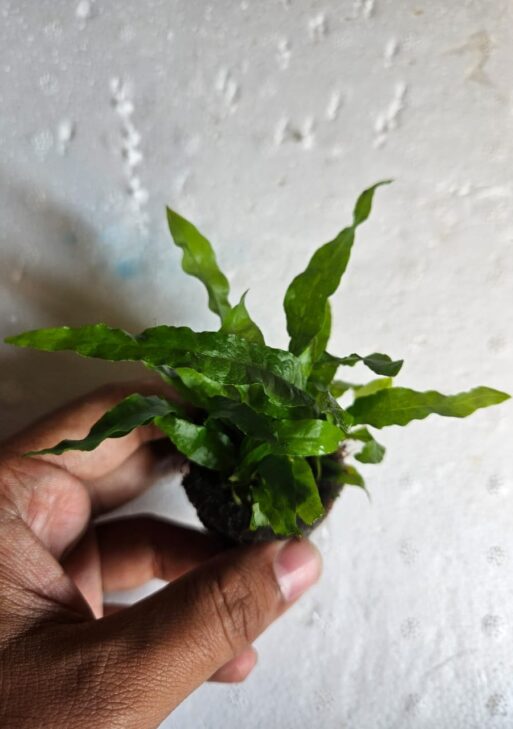
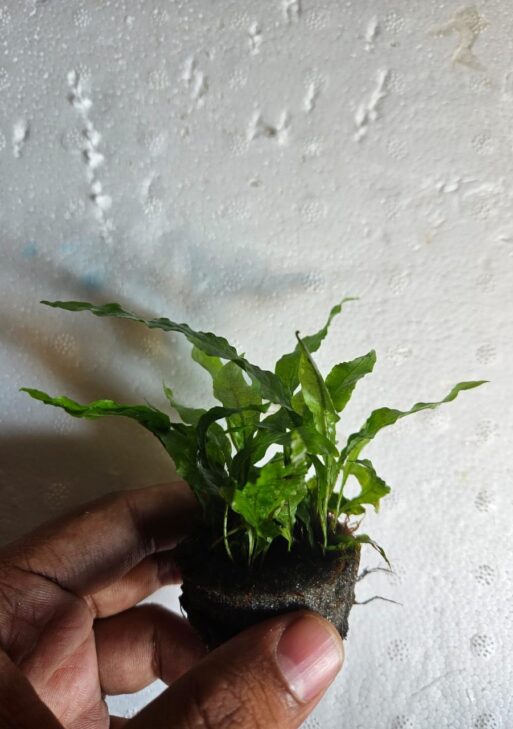
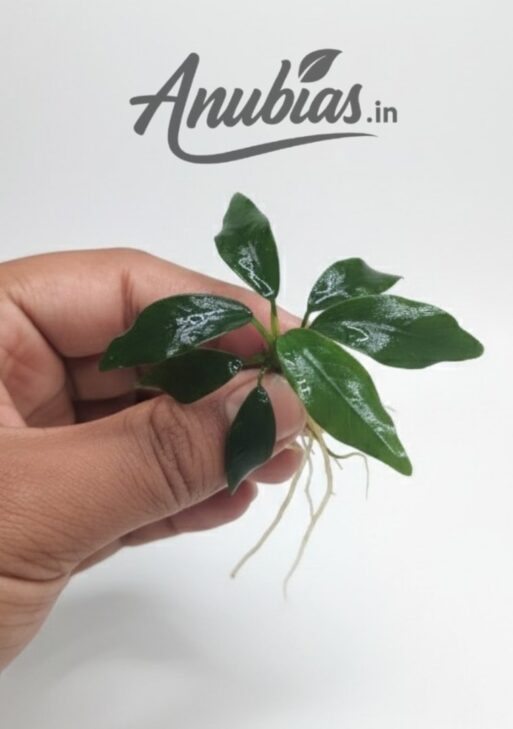
Badly covered leaves are easier to replace than to clean. Fresh Anubias, Bucephalandra and Java fern are in the shop, and fast growers help keep algae down.
Algae getting ahead of you? See which clean-up crew actually works in Indian tanks.