
Live plants come from ponds, farms and nurseries, so occasionally something comes along with them. Most hitchhikers are harmless, and nearly all are easier to deal with before the plant goes into your display tank.
Quick answer: The most common aquarium plant hitchhikers are pest snails and their jelly-like eggs, followed by algae on the leaves, and occasionally hydra, planaria or an insect larva. Inspect every leaf and the rhizome, rinse the plant in dechlorinated water, and keep new plants in a separate container for one to two weeks before adding them to the display tank. Avoid harsh chemical dips, which are risky for mosses and unsafe for shrimp; hydra and planaria are usually controlled by feeding less rather than by medication.
Pest snails and eggs
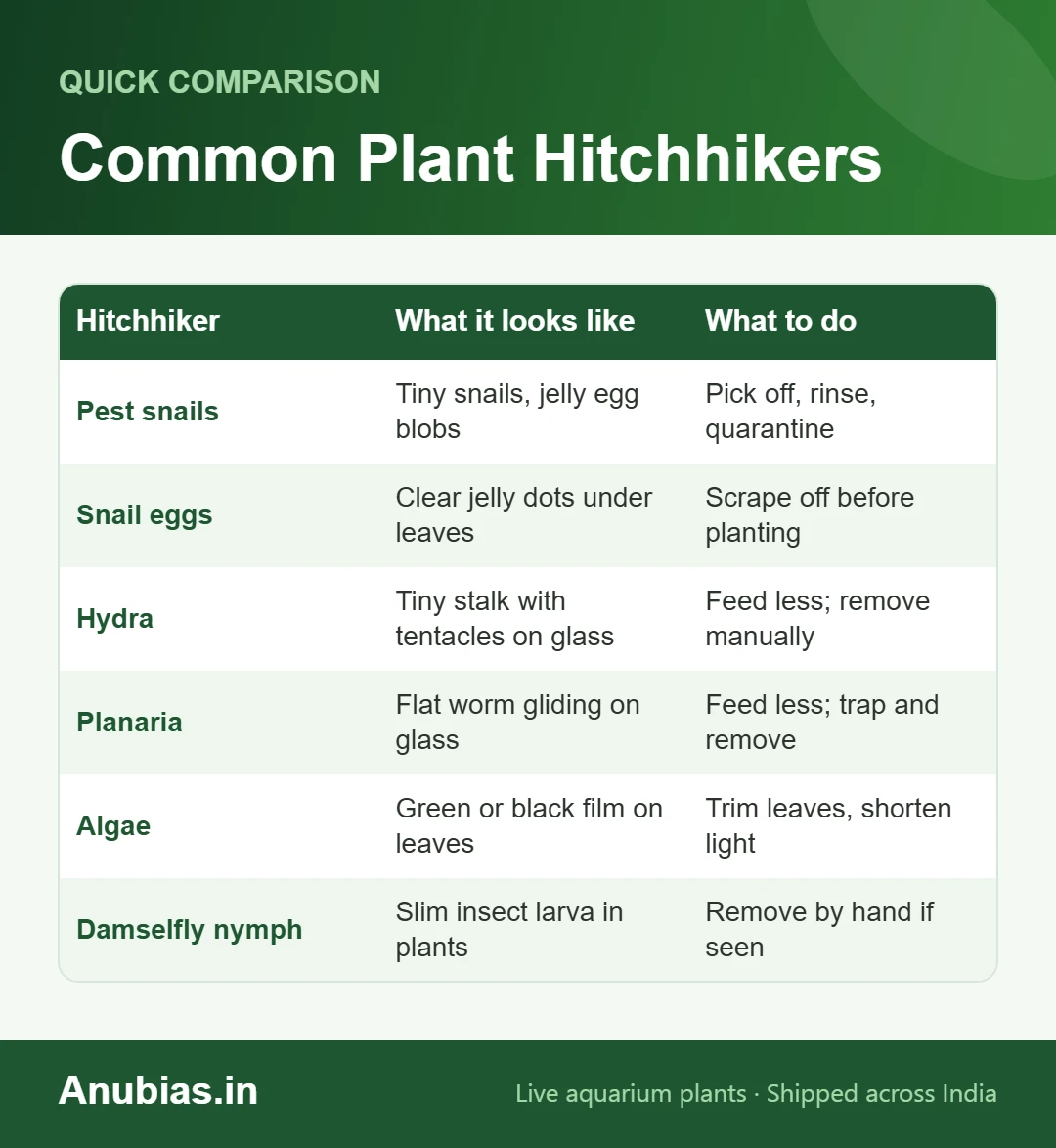
Small snails and clear jelly egg clusters are by far the most common hitchhikers. Scrape eggs off with a fingernail, rinse the plant, and quarantine it so any missed eggs hatch outside your tank. How to remove snails from new plants
Algae
Plants sometimes arrive with algae film or spots. Trim badly affected old leaves, keep lighting moderate and let healthy new growth come through. How to remove algae
Hydra
Hydra are tiny stalked animals with tentacles that appear on glass and leaves when there is lots of excess food. They can bother very small shrimplets and fry. Cut back feeding, siphon them off during water changes, and they usually fade away.
Planaria
Planaria are small flatworms that glide along the glass, again a sign of overfeeding. Reduce feeding, siphon out uneaten food and trap them with a small piece of blanched vegetable or a purpose-made trap. Avoid dewormer medications in shrimp tanks.
Insect larvae
Occasionally a damselfly or dragonfly nymph arrives on pond-grown plants. They are predatory towards fry and shrimp, so remove any you see by hand during quarantine.
The simple routine that prevents most problems
- Inspect leaves, rhizome and roots under good light.
- Rinse in dechlorinated water.
- Quarantine for one to two weeks in a separate container. Quarantine guide
- Feed your tank lightly so hitchhikers cannot multiply.
Setting up a quarantine container that costs almost nothing
You do not need a spare aquarium. A plastic storage box or a large jar on a windowsill away from direct sun will hold new plants for a fortnight and reveal anything that hitched a ride.
- Fill it with water from your main tank, so the plants are not facing new parameters at the same time as shipping stress.
- Add a small sponge filter or an air stone if you have one. Without it, change half the water every two or three days.
- Keep the plants loose or lightly weighted, not tied down, so you can lift and inspect them easily.
- Look at the sides and bottom of the container every day. Snails, planaria and larvae show up against bare plastic far more clearly than against substrate.
- Feed nothing. With no food going in, hydra and planaria populations shrink instead of growing.
After two weeks with nothing appearing, the plants can go into the display tank. If you do find something, you have lost nothing but a fortnight.
Hitchhikers that are not worth worrying about
Not everything that arrives with plants is a pest, and beginners often tear a tank apart over harmless organisms.
Detritus worms are thin white worms that wriggle through the substrate. They eat waste and are a sign of a well-fed tank rather than a problem. Reduce feeding if numbers bother you.
Seed shrimp and copepods look like tiny darting specks in the water and on glass. They are free food for fry and fish, and they disappear once fish notice them.
Ramshorn and bladder snails in small numbers are genuinely useful, grazing algae and leftover food. They only become a nuisance when overfeeding lets them boom, which makes them a helpful early warning about your feeding habits.
Biofilm, the slightly slimy film on new wood and plants, is not a hitchhiker at all. Shrimp and snails eat it, and it fades on its own within a few weeks.
Frequently asked questions
Are plant hitchhikers dangerous?
Most are harmless. Pest snails multiply when there is excess food, and hydra or planaria mainly threaten very small shrimplets and fry.
Should I use a bleach or potassium permanganate dip?
Harsh dips are risky for delicate plants such as mosses and unsafe for shrimp tanks. Inspection, rinsing and quarantine are safer for most keepers.
Do tissue culture plants have hitchhikers?
Tissue culture plants are grown in sterile cups, so they arrive free of snails, eggs and algae. More on tissue culture plants
How long should new plants stay in quarantine?
Two weeks is a sensible minimum, since that covers the hatching time of most snail eggs you may have missed. Extend it to three weeks if you keep shrimp or breed fish, where a single planaria outbreak is costly. Inspect daily rather than just waiting out the clock.
Are hitchhikers more likely on plants shipped during the monsoon?
Shipping season does not change what is on the plant, but monsoon delays mean parcels spend longer in transit, and a stressed plant with damaged leaves gives pests more cover. Unpack and inspect straight away when a delayed parcel arrives. Rinsing under a tap before quarantine removes most loose passengers regardless of season.
Can quarantined plants go straight into a shrimp tank?
Yes, once they have been through a clean two-week quarantine with no pests appearing. Skip any chemical dip beforehand, as residues of bleach, algaecide or copper-based treatments are far more dangerous to shrimp than the hitchhikers are. A rinse and a patient quarantine is the shrimp-safe route.