
Description
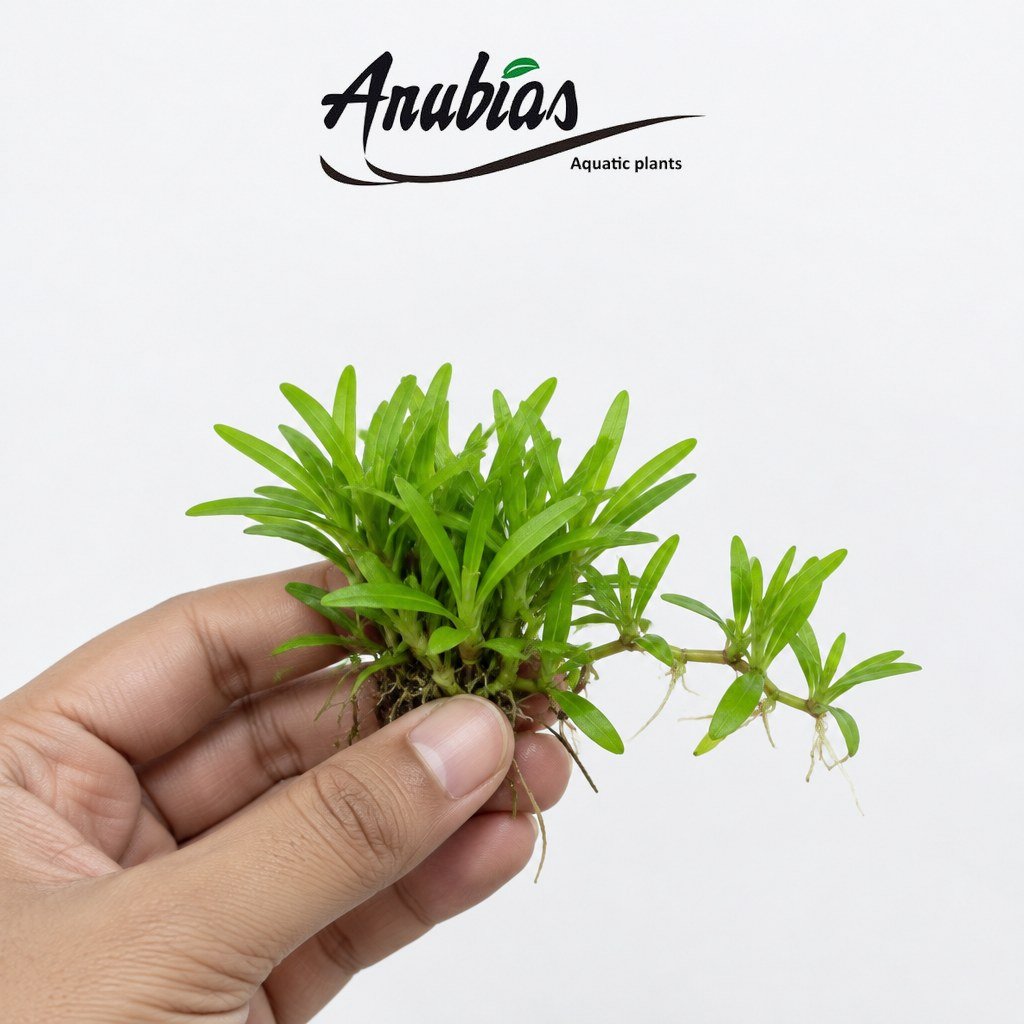
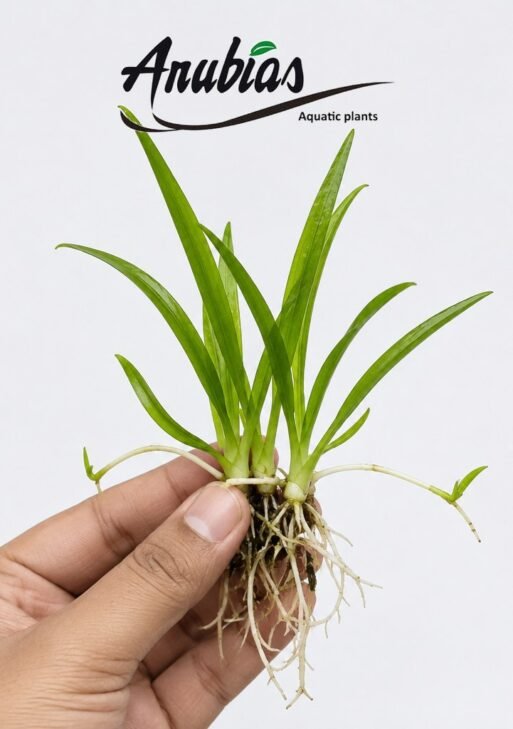
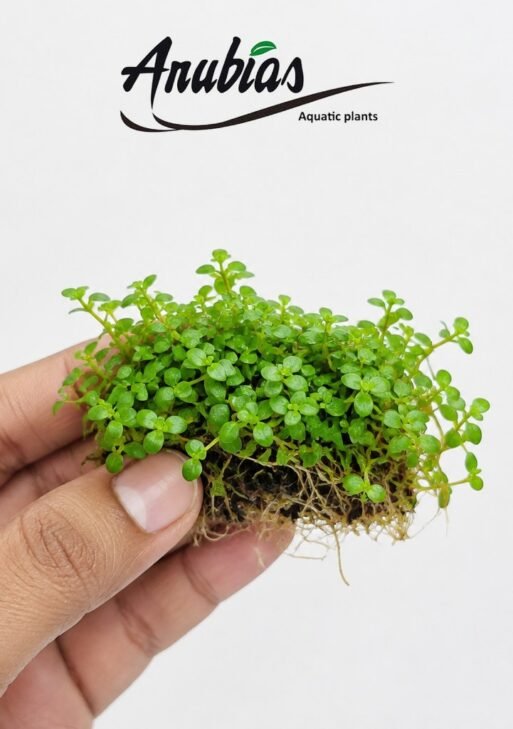
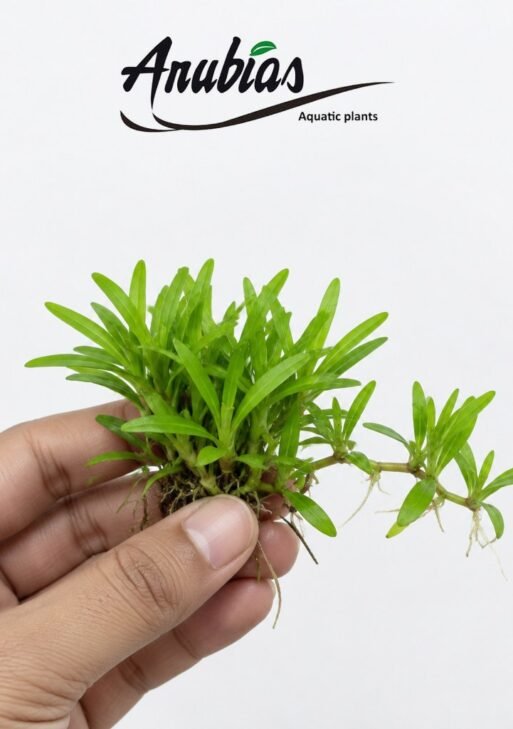
Lilaeopsis brasiliensis, the micro sword or Brazilian micro sword, is a short grass-like carpet plant from southern Brazil with slim, bright-green blades of 3–7 cm that spread by underground runners into a dense lawn. It is one of the most popular grass carpets worldwide because it looks like a real meadow in miniature and stays low without constant mowing. It suits Indian hobbyists with medium to high light who want a classic lawn foreground and, ideally, CO2 to get there in a reasonable time.
We should be straightforward: Lilaeopsis brasiliensis is easy to keep alive but slow to carpet without CO2. Plant densely, give it strong light at the substrate and a nutritious substrate, and it rewards you with a carpet that lasts for years.
Lilaeopsis brasiliensis at a glance
| Scientific name | Lilaeopsis brasiliensis |
|---|---|
| Family | Apiaceae |
| Origin | Southern Brazil, Paraguay and Argentina |
| Difficulty | Easy to medium |
| Light | Medium to high |
| CO2 | Optional for survival; recommended for carpeting |
| Temperature | 18–28 °C |
| pH | 6.0–7.5 |
| Growth rate | Slow |
| Height/size | 3–7 cm; blades 1–2 mm wide |
| Placement | Foreground carpet |
| Propagation | Runners; division of the mat |
How to plant Lilaeopsis brasiliensis
- Rinse the portion in tank-temperature water and pick off any dead blades.
- Divide the mat into many small clumps of two to four blades, each attached to a piece of the white runner. Small clumps spread faster and look more natural than a solid lump.
- Plant each clump with tweezers so the runner lies just beneath the substrate and the crown is at the surface. Do not bury the blades.
- Space clumps 2–3 cm apart; the closer you plant, the sooner the carpet closes.
- Aquasoil or fine sand is ideal. In gravel coarser than 3 mm the runners cannot travel well; add root tabs and expect slower coverage.
- The dry-start method works well for micro sword: plant into damp soil, cover, light for 8–10 hours daily and flood after four to six weeks of rooting.
Lilaeopsis brasiliensis care: light, CO2, fertiliser and water
Light
Give it medium to high light of 40–60 lumens per litre that reaches the substrate unshaded. This is the most common failure point: in a dim tank it survives for months but never spreads, and the blades grow long and thin. A good planted-tank LED over a tank no deeper than 40–45 cm is the practical requirement.
CO2
Lilaeopsis brasiliensis lives without CO2 and spreads very slowly. With CO2 at 20–30 ppm the difference is dramatic: runners appear weekly and a carpet closes in two to four months. If your tank is low-tech, plant very densely and treat the carpet as a year-long project; if you run CO2, this is one of the most rewarding grass carpets.
Fertiliser
Being a root feeder, it depends on substrate nutrition. Use aquasoil or push root tabs under the carpet every two months. Weekly liquid fertiliser supplies iron and potassium, which keep the blades green. Pale blades mean iron shortage; a stalled carpet usually means the substrate is exhausted.
Water and Indian conditions
Moderately hard water of 6–15 dGH is fine, so most Indian tap water works after dechlorination. The plant prefers temperatures up to 28 °C; in summer heat of 30–32 °C it slows and older blades brown, so use a fan and a shorter photoperiod. It is not harmed by monsoon power cuts; being slow and rooted, it waits them out. Keep debris from settling into the carpet with gentle siphoning during water changes.
Growth, trimming and propagation
Growth is slow and steady. First runners show in three to four weeks; a dense carpet takes two to four months with CO2 and six to twelve months without. Trimming is rarely needed because the plant stays short. When the carpet becomes too thick and the lower blades yellow, mow it with straight scissors to 2–3 cm and siphon out the cut pieces. Every six to twelve months, lift and thin dense sections, replanting the healthiest runners. Propagation is by dividing rooted runners and planting them in new areas.
Where to use it in an aquascape
Micro sword suits any tank from a 1.5-foot nano (30–40 litres) to a 4-foot, 250-litre tank. In a 2-foot, 60–70 litre tank one Standard portion planted densely carpets the front third in a few months under CO2. In larger tanks plant several portions or use it as a lawn strip along the front edge, with taller plants and hardscape behind.
It pairs well with Cryptocoryne for a natural midground, with Anubias nana and Java fern on driftwood, and with red stem plants at the back of Dutch-style layouts. Mix it with other carpeting plants for texture. It is safe with shrimp, corydoras, tetras, rasboras and apistogramma; large diggers will uproot the runners.
Common problems and fixes
- Not spreading for months: light at the substrate is too weak or there is no CO2. Raise the light, add CO2 if you can, and add root tabs.
- Blades turning transparent after planting: normal adaptation. New blades follow from the runners.
- Algae on blades: slow plants under strong light attract algae. Shorten the photoperiod, add Amano shrimp and otocinclus, and trim affected blades.
- Carpet lifting in patches: the lower layer has died from shading or trapped debris. Thin the carpet and replant.
- Yellow blades: iron or nitrogen shortage. Dose a complete fertiliser and refresh root tabs.
What you receive
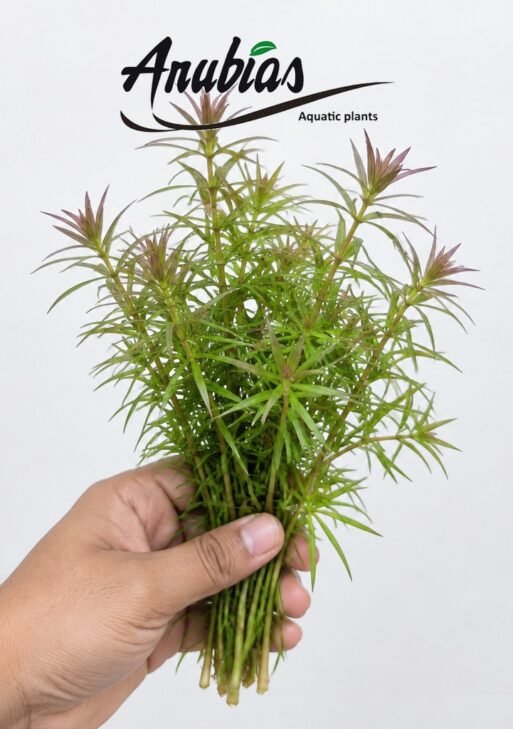
One healthy portion of Lilaeopsis brasiliensis in the size you select (Small or Standard), similar to the photo. Each portion is checked before packing, packed moist and shipped across India from Surat. ₹99 shipping, free on orders of ₹999 or more. Live-arrival guarantee: record one continuous unboxing video within 4 hours of delivery, and if the plant has arrived damaged we refund or replace it.
FAQ
Does Lilaeopsis brasiliensis need CO2?
Not to survive, but to carpet in a reasonable time it is strongly recommended. Without CO2 expect six to twelve months for a lawn.
Is Lilaeopsis brasiliensis good for beginners?
Yes, if you have a decent light. It is hardy and slow, so it forgives mistakes, but it will not carpet under a weak lamp.
Can Lilaeopsis brasiliensis grow in sand?
Yes. Fine sand holds its runners well; use root tabs underneath because it feeds through the roots.
How fast does Lilaeopsis brasiliensis grow?
Slowly. First runners appear in three to four weeks; a dense carpet takes two to four months with CO2 and much longer without.
Lilaeopsis brasiliensis vs dwarf hairgrass: which is easier?
Both need good light; micro sword stays shorter and is slower, while dwarf hairgrass spreads faster but needs more frequent mowing. Micro sword is more tolerant of neglect.
How tall does micro sword grow?
Usually 3–7 cm. Under low light blades stretch longer; under strong light with CO2 they stay short and dense.
Not sure what fits your tank? Plan it with our free AI tank planner.











There are no reviews yet.