
Description
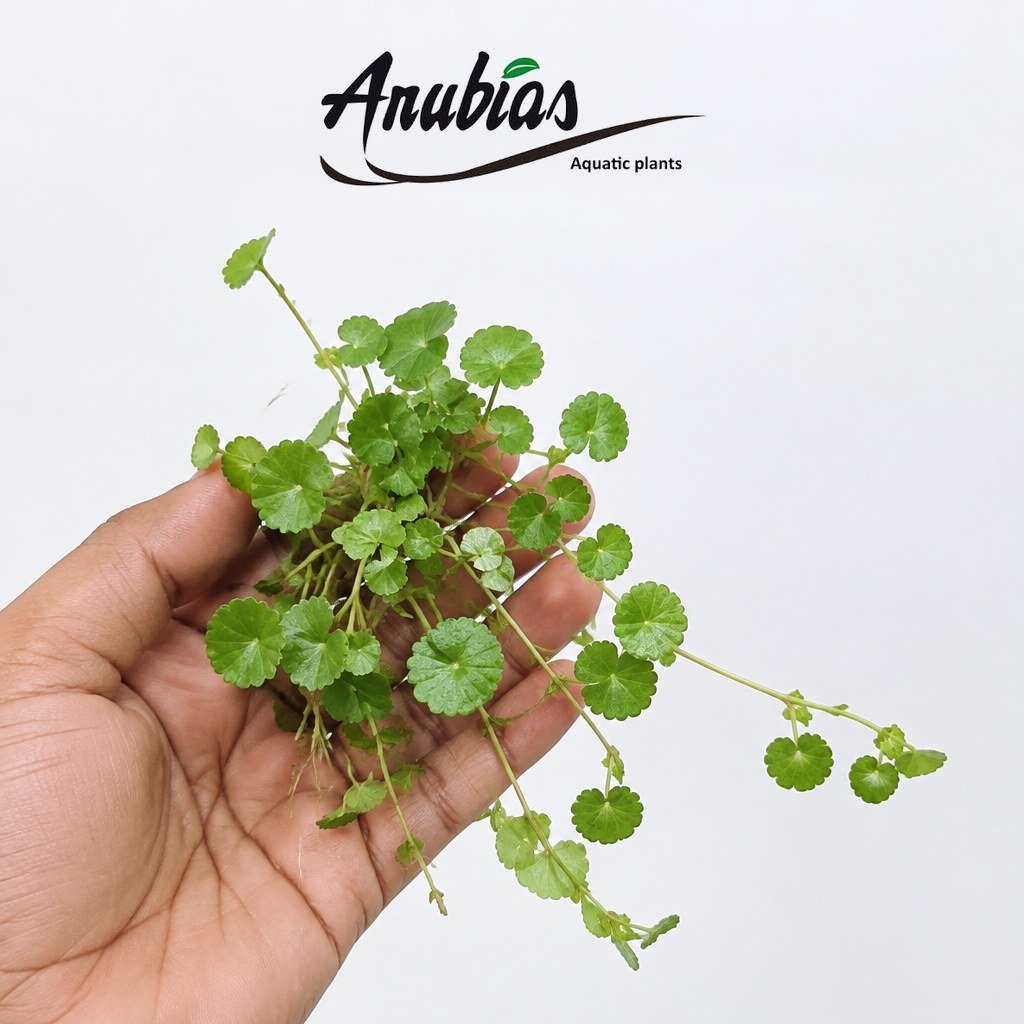
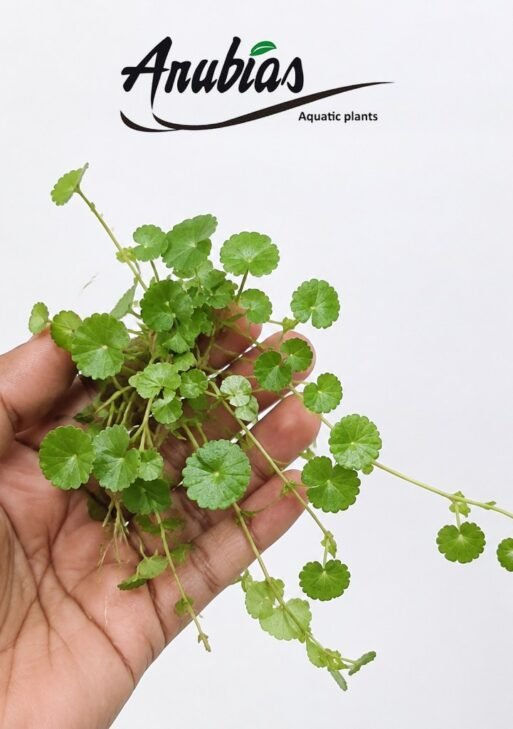
Hydrocotyle sibthorpioides, sold as Lawn Leaf or lawn marsh pennywort, is a small creeping plant with round, scalloped leaves about 1 cm across on thin, trailing stems. It is native across Asia, including wet ground and paddy margins in India, and is one of the few carpet-type plants that is genuinely comfortable in warm, hard Indian water. It suits beginners, low-tech tanks, paludariums and anyone who wants a soft, informal ground cover rather than a clipped lawn.
Be clear about what it does: Hydrocotyle sibthorpioides creeps and climbs at the same time. Under strong light it stays low; under weaker light it sends stems upward and sideways, forming a loose, airy mound. Either way it is easy to keep and quick to recover from trimming.
Hydrocotyle sibthorpioides at a glance
| Scientific name | Hydrocotyle sibthorpioides |
|---|---|
| Family | Araliaceae |
| Origin | Tropical and subtropical Asia, including India; naturalised elsewhere |
| Difficulty | Easy |
| Light | Medium (low tolerated, high preferred for a carpet) |
| CO2 | Not required; helps keep it low |
| Temperature | 18–30 °C |
| pH | 6.0–8.0 |
| Growth rate | Fast |
| Height/size | 3–15 cm depending on light; leaves about 1 cm |
| Placement | Foreground, midground, emersed in paludariums, or floating |
| Propagation | Stem and runner cuttings |
How to plant Hydrocotyle sibthorpioides
- Rinse the portion and snip off any leaves that are yellow or translucent.
- Divide it into pieces of 3–5 cm, each with roots at a node if possible.
- Push each piece into the substrate with tweezers so one or two nodes are buried; roots grow from every node that touches soil. Space pieces 3–4 cm apart.
- In sand or gravel, bury slightly deeper, as the stems are buoyant and lift easily in the first week.
- You can also let a clump float at the surface, where it will grow emersed leaves and shade the tank, or wedge it into damp substrate above the waterline in a paludarium.
- Avoid strong direct flow on newly planted pieces; once rooted they tolerate normal filter current.
Hydrocotyle sibthorpioides care: light, CO2, fertiliser and water
Light
This is the main control over the plant’s shape. Under 40–60 lumens per litre it creeps and forms a mat; under 20–30 lumens per litre it still grows well but stretches upward to 10–15 cm. If you want a low lawn, give it strong light and trim often. If you want a soft bush, moderate light is fine.
CO2
Lawn Leaf does not need CO2 and is a good choice for low-tech tanks. With CO2 at 15–30 ppm it grows noticeably faster and lower. Liquid carbon is tolerated at normal doses.
Fertiliser
It takes nutrients from the water column through its stems and leaves, so weekly liquid fertiliser matters more than root tabs. In a tank with a good fish load it often needs nothing extra. Add iron if new leaves come out pale.
Water and Indian conditions
Hydrocotyle sibthorpioides is well adapted to the subcontinent: it tolerates hard water above 15 dGH, warm water up to about 30 °C, and brief neglect. Summer heat slows it less than almost any other carpet plant. During monsoon power cuts it is unaffected by a day without filtration, and because it can grow emersed it survives even if the water level drops. Keep up with weekly water changes to limit algae on its many small leaves.
Growth, trimming and propagation
Growth is fast. New stems appear within a week and a portion can double in a month. To keep a carpet, trim every two weeks, cutting climbing stems back to 2–3 cm above the substrate; horizontal runners then take over. For a mound, simply pinch the longest stems. Trimmed pieces float; replant them in gaps or let them drift and grow at the surface. Old mats become thick and can shade their own lower layer, so lift and replant the healthiest pieces every three to four months. Propagation is by cuttings: any piece with a node will root.
Where to use it in an aquascape
In a 1.5-foot tank of 30–40 litres, one portion fills a corner as a soft foreground; in a 2-foot 60–70 litre tank it covers the front in six to eight weeks. In 3-foot and larger tanks it works best as a midground filler or allowed to creep over hardscape rather than as a formal lawn.
It looks natural beside Anubias nana and Java fern on wood, and in front of fast stem plants in a jungle layout. It is ideal in paludariums with the stems climbing out of the water. Mix with other carpeting plants for contrast. It is safe with shrimp, guppies, tetras, bettas and small barbs; larger diggers will uproot it.
Common problems and fixes
- Grows up, not across: light is too low for a carpet. Increase intensity or accept it as a mound and trim regularly.
- Pieces floating away: planted too shallow. Bury two nodes and reduce flow for a week.
- Leaves turning transparent after arrival: emersed leaves adapting to submersion. Remove them; submerged leaves follow within two weeks.
- Algae on leaves: too much light with too little nutrient or CO2, or old leaves left uncut. Trim the oldest growth and add algae-eating shrimp.
- Yellowing lower leaves: shaded by its own mat. Thin the carpet.
What you receive
One healthy portion of Hydrocotyle sibthorpioides (Lawn Leaf) in the size you select (Small or Standard), similar to the photo. Each portion is checked before packing, packed moist and shipped across India from Surat. ₹99 shipping, free on orders of ₹999 or more. Live-arrival guarantee: record one continuous unboxing video within 4 hours of delivery, and if the plant has arrived damaged we refund or replace it.
FAQ
Does Hydrocotyle sibthorpioides need CO2?
No. It grows well in low-tech tanks without CO2. CO2 only makes it faster and lower.
Is Hydrocotyle sibthorpioides good for beginners?
Yes. It is one of the easiest ground-cover plants, tolerating hard water, warm temperatures and low light.
Can Hydrocotyle sibthorpioides grow in sand?
Yes. Bury two nodes so it does not float up, and dose liquid fertiliser because it feeds mainly through the water column.
How fast does Hydrocotyle sibthorpioides grow?
Fast. A portion can double in size within a month, and it needs trimming every two to three weeks under good light.
Hydrocotyle sibthorpioides vs Hydrocotyle tripartita: which should I choose?
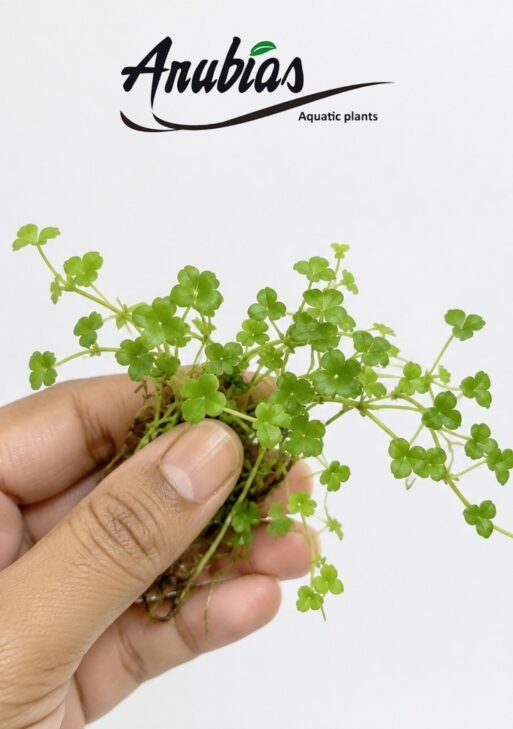
Sibthorpioides has round scalloped leaves, tolerates lower light and heat, and grows more upright; tripartita has clover-shaped leaves and forms a flatter carpet under strong light.
Can Hydrocotyle sibthorpioides grow emersed or floating?
Yes. It grows emersed in paludariums and can float at the surface, which makes it useful for tanks without substrate.
Not sure what fits your tank? Plan it with our free AI tank planner.










There are no reviews yet.