
Description
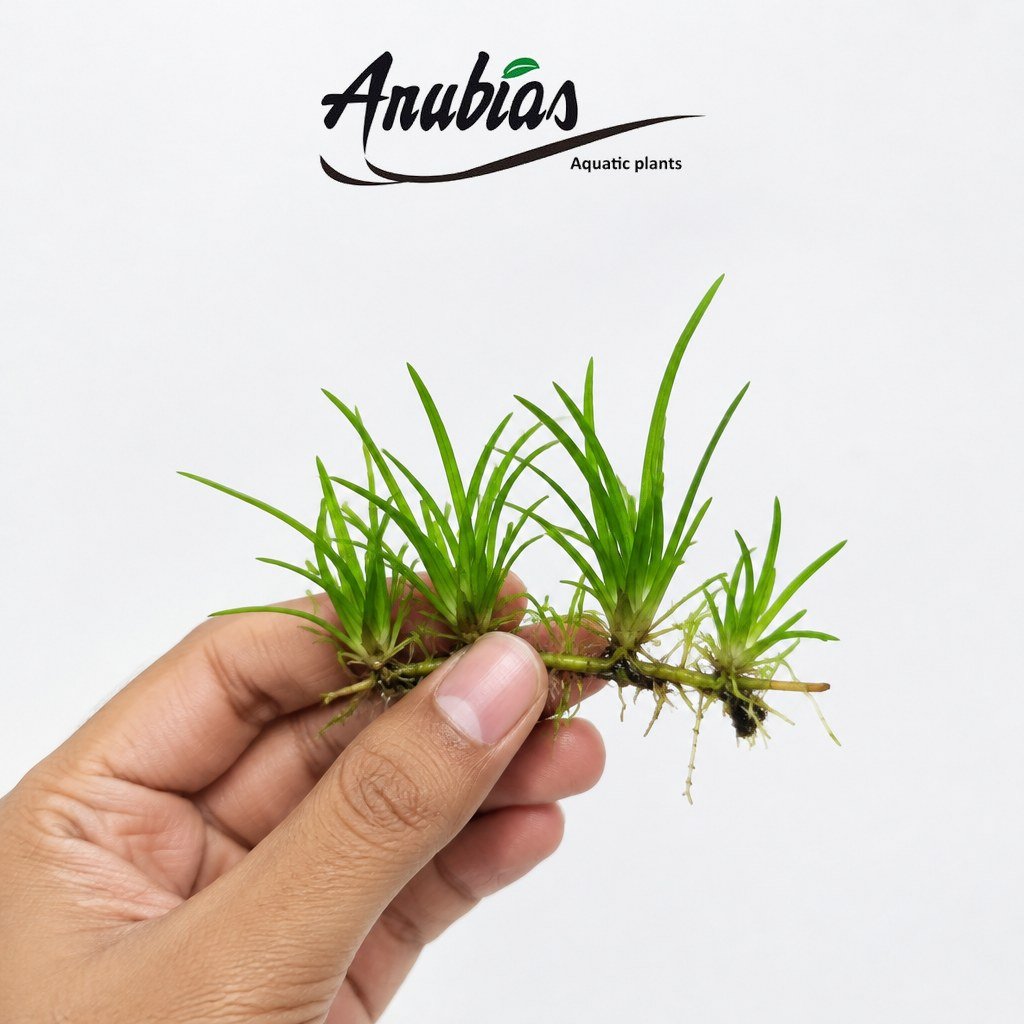
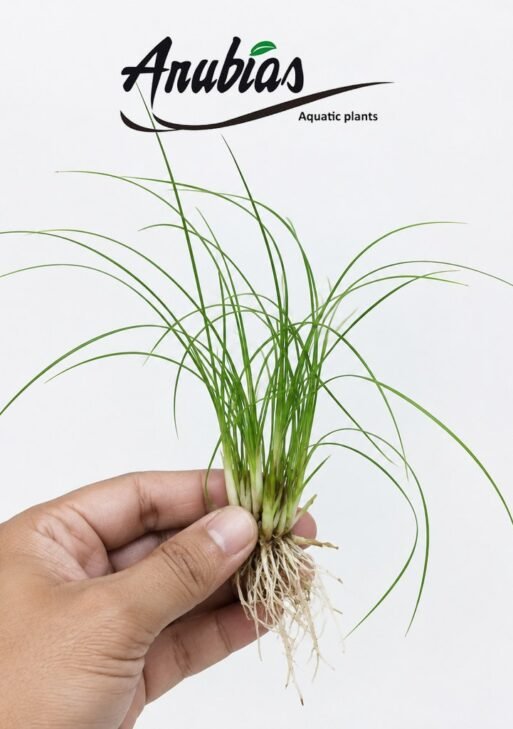
Lilaeopsis mauritiana is a fine-leaved aquarium grass from the island of Mauritius that forms a soft, bright-green lawn of 5–10 cm, a little taller and thinner-bladed than the better-known Lilaeopsis brasiliensis. It spreads by runners just under the substrate and, given time, knits into a dense carpet that sways in the current. It suits hobbyists who want a natural grass foreground in a low-tech or lightly CO2-injected tank and who are willing to wait a few months for it to fill in.
Coming from a warm Indian Ocean island, mauritiana handles tropical temperatures better than the South American Lilaeopsis species, which makes it one of the more sensible grass carpets for Indian tanks that run warm in summer.
Lilaeopsis mauritiana at a glance
| Scientific name | Lilaeopsis mauritiana |
|---|---|
| Family | Apiaceae |
| Origin | Mauritius (Indian Ocean) |
| Difficulty | Easy to medium |
| Light | Medium to high |
| CO2 | Optional; recommended for a dense carpet |
| Temperature | 20–29 °C |
| pH | 6.0–7.5 |
| Growth rate | Slow to moderate |
| Height/size | 5–10 cm; leaves 1–2 mm wide |
| Placement | Foreground; low midground |
| Propagation | Runners; division |
How to plant Lilaeopsis mauritiana
- Rinse the portion and remove any brown blades.
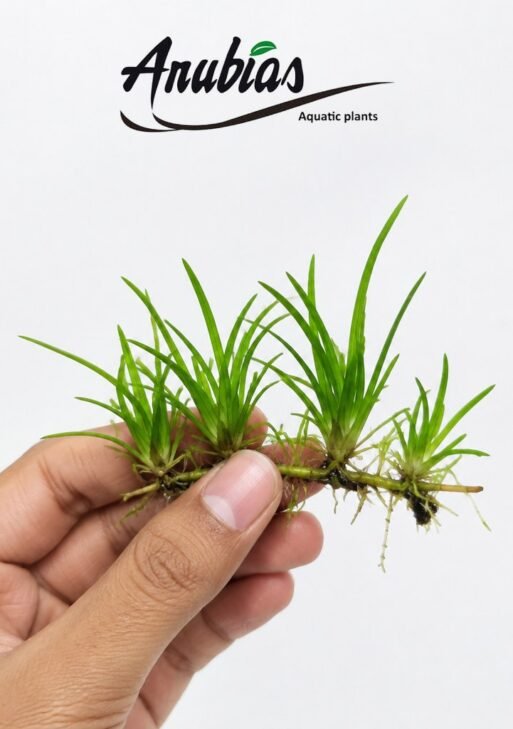
- Split the mat into small clumps of three to five blades, each with a bit of the pale runner and some roots. Many small clumps carpet faster than a few large ones.
- With tweezers, push each clump in so the runner is just under the substrate surface and the crown is level with it. Deep planting rots the crown.
- Space clumps 3–4 cm apart in a grid across the area you want to carpet.
- Fine sand or aquasoil is best. In gravel, the runners struggle to travel; use the finest gravel you can and add root tabs.
- Keep flow gentle for two weeks while the roots take hold; the light clumps float up easily at first.
Lilaeopsis mauritiana care: light, CO2, fertiliser and water
Light
To form a true carpet, Lilaeopsis mauritiana needs medium to high light of 40–60 lumens per litre reaching the substrate. Under weaker light it survives and spreads slowly but the blades grow longer and the stand looks sparse. Keep it out of the shade of taller plants and floaters.
CO2
CO2 is not essential, but we will be honest: without it, carpeting is slow and may take most of a year. With CO2 at 20–30 ppm, runners appear every week or two and a dense lawn forms in three to four months. For a quick, thick grass carpet, pair this plant with CO2 and good light; for a low-tech tank, plant densely and be patient.
Fertiliser
It is a root feeder. A nutrient substrate or root tabs every two months make the biggest difference; weekly liquid fertiliser supplies iron and potassium for the blades. Pale, yellowish blades point to iron shortage; stalled runners point to nitrogen or phosphate shortage in the substrate.
Water and Indian conditions
Mauritiana tolerates moderately hard tap water of 6–15 dGH and warm water up to about 29 °C, which covers most Indian tanks for most of the year. In peak summer, a fan helps. Monsoon power cuts do little harm; it is a slow plant that does not melt when flow stops for a day. Keep the carpet free of settled debris with gentle siphoning during water changes.
Growth, trimming and propagation
Expect the first runners within three to four weeks and a connected carpet in three to six months depending on CO2 and light. Trimming is seldom needed; when the carpet becomes too tall or dense, mow it with straight scissors to 3–4 cm, netting out the cut blades. Every six to twelve months, thin thick patches by lifting and replanting sections, which keeps the lower blades from being shaded and dying. Propagation is by dividing rooted runners and replanting them in bare areas.
Where to use it in an aquascape
In a 1.5-foot nano of 30–40 litres a Small portion carpets a corner; in a 2-foot, 60–70 litre tank a Standard portion carpets the front in a few months under CO2. In 3-foot and larger tanks of 120 litres and up, plant several portions or use it as a grass band along the front of the hardscape.
It is a natural companion for Cryptocoryne in the midground and Anubias nana or Java fern on wood above. Taller Lilaeopsis macloviana behind it gives a two-level grass effect, and other carpeting plants such as Monte Carlo contrast its fine blades. It is safe with shrimp, corydoras, tetras and rasboras; keep it away from goldfish and digging cichlids.
Common problems and fixes
- Blades turning transparent after planting: adaptation, especially if grown emersed. Leave the runners in place; new blades follow.
- Carpet not spreading: light too weak at the substrate, no CO2, or poor substrate nutrients. Fix the light first, then add root tabs.
- Clumps floating up: planted too shallow or disturbed. Replant with the runner buried.
- Hair algae in the grass: strong light with unstable CO2. Reduce the photoperiod, keep CO2 steady, and add Amano shrimp.
- Yellow patches: iron or nitrogen shortage. Dose a complete fertiliser and add root tabs.
What you receive
One healthy portion of Lilaeopsis mauritiana in the size you select (Small or Standard), similar to the photo. Each portion is checked before packing, packed moist and shipped across India from Surat. ₹99 shipping, free on orders of ₹999 or more. Live-arrival guarantee: record one continuous unboxing video within 4 hours of delivery, and if the plant has arrived damaged we refund or replace it.
FAQ
Does Lilaeopsis mauritiana need CO2?
Not to survive, but a dense carpet forms much faster with CO2. Without it, expect a slow, sparser lawn over many months.
Is Lilaeopsis mauritiana good for beginners?
Yes, if you have medium light and patience. It is hardy and heat-tolerant but slow to carpet.
Can Lilaeopsis mauritiana grow in sand?
Yes. Fine sand is ideal for its runners; add root tabs because it feeds through the roots.
How fast does Lilaeopsis mauritiana grow?
Slow to moderate. First runners in three to four weeks, a full carpet in three to six months depending on CO2 and light.
Lilaeopsis mauritiana vs Lilaeopsis brasiliensis: which is better?
Mauritiana is slightly taller with finer blades and tolerates warmer water; brasiliensis is shorter and denser. Both carpet at similar speeds.
Does Lilaeopsis mauritiana survive hot Indian summers?
Better than most Lilaeopsis. It tolerates up to about 29 °C; above that, use a surface fan and shorten the photoperiod.
Not sure what fits your tank? Plan it with our free AI tank planner.











There are no reviews yet.