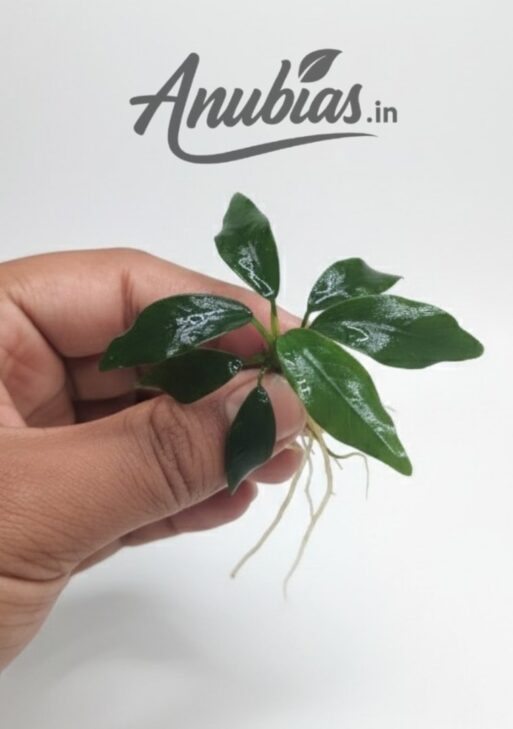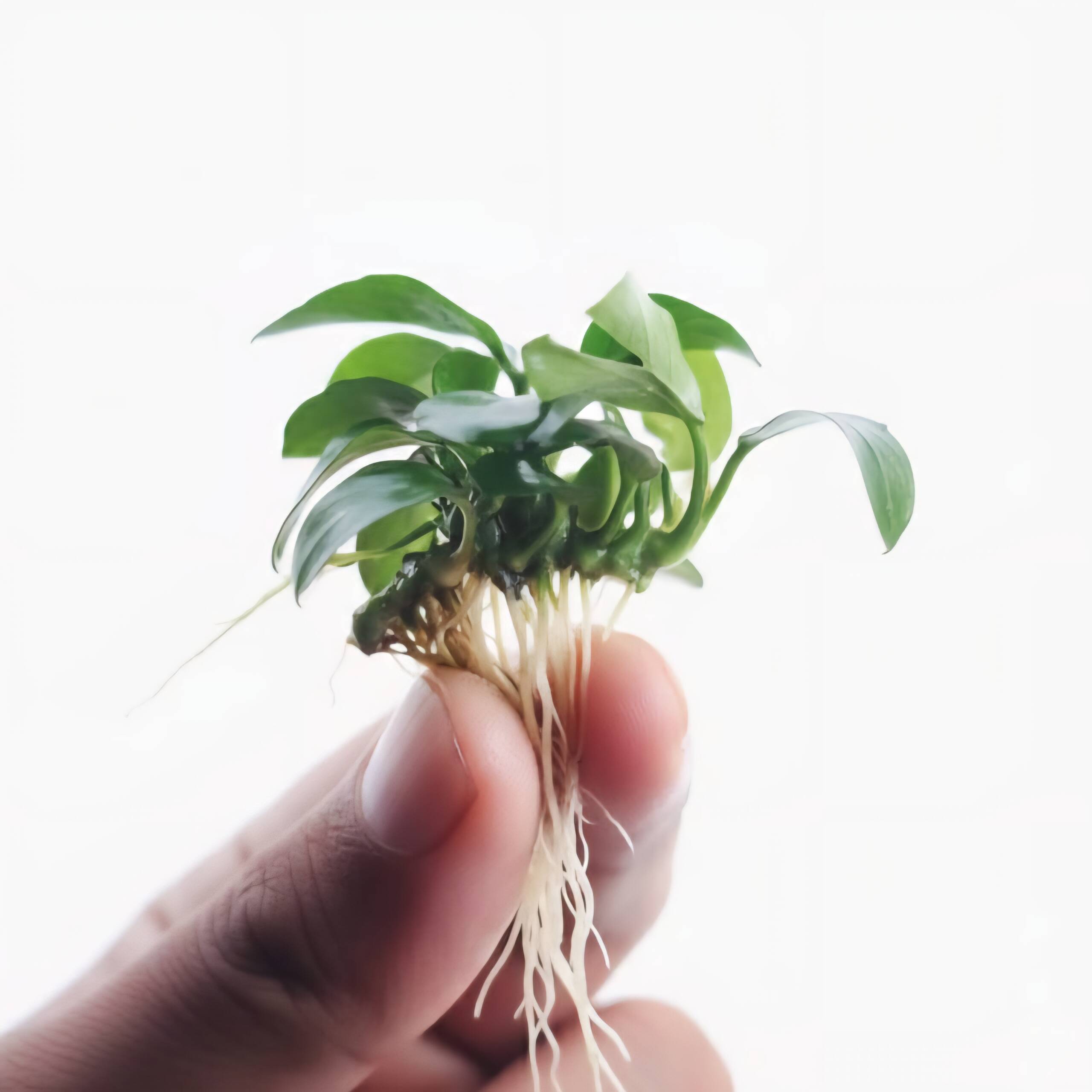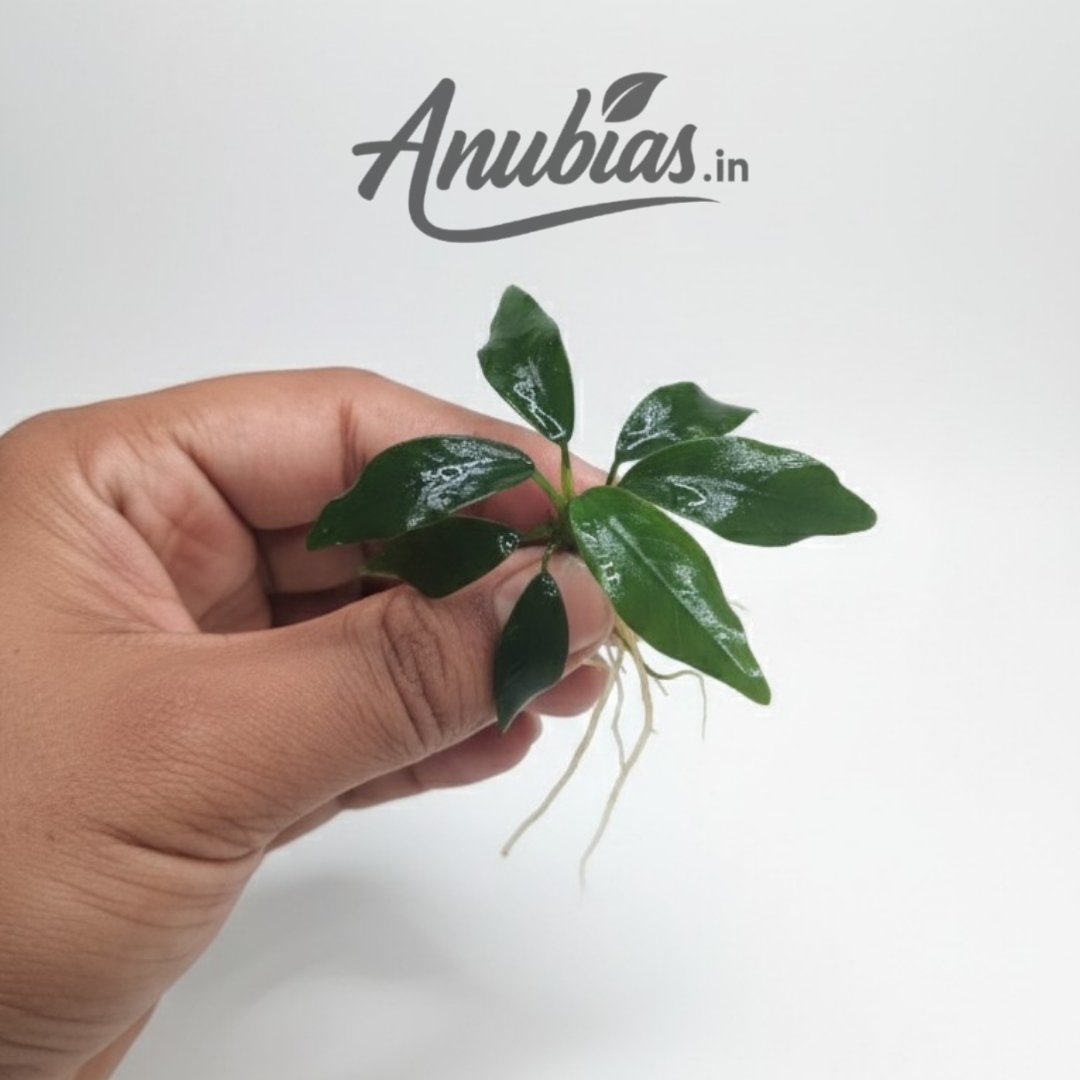

Variegated Anubias have leaves marbled or splashed with white or cream. They are collector plants, but they are still Anubias: hardy, slow and happy without CO2. The main difference is that they prefer gentler light and grow even more slowly than green varieties.
Quick answer: Variegated Anubias such as Snow White, Pinto, Panda, Butterfly, Marble, Stardust and Nana White need the same basic care as other Anubias: low to moderate light, no CO2, 22–28°C, and the rhizome tied or glued to wood or rock, never buried. Keep light gentle to keep the variegation crisp and to limit algae on their slow-growing leaves, and expect slower growth than green Anubias because white leaf areas carry less chlorophyll.
Care at a glance
| Factor | What they need |
|---|---|
| Light | Low to moderate; gentle light keeps variegation crisp |
| CO₂ | Not required |
| Temperature | 22–28°C |
| Placement | Rhizome on wood or rock, never buried |
| Growth | Very slow |
| Difficulty | Easy, but slow to recover from damage |
Why variegated Anubias grow slowly
White and cream areas of the leaf have little chlorophyll, so the plant produces less energy for new growth. Miniature and variegated types are the slowest Anubias of all. How fast Anubias grows.
Light and algae
Because each leaf lasts a long time, strong or long lighting mostly feeds algae on the leaf surface. Place variegated Anubias in shaded spots, under taller plants or near floating plants, and keep the photoperiod moderate: how long to run aquarium lights.
Planting
Tie the rhizome to wood or rock with cotton thread or glue it with aquarium-safe gel glue. Never bury it: a buried rhizome can rot. How to attach Anubias.
Varieties available in India
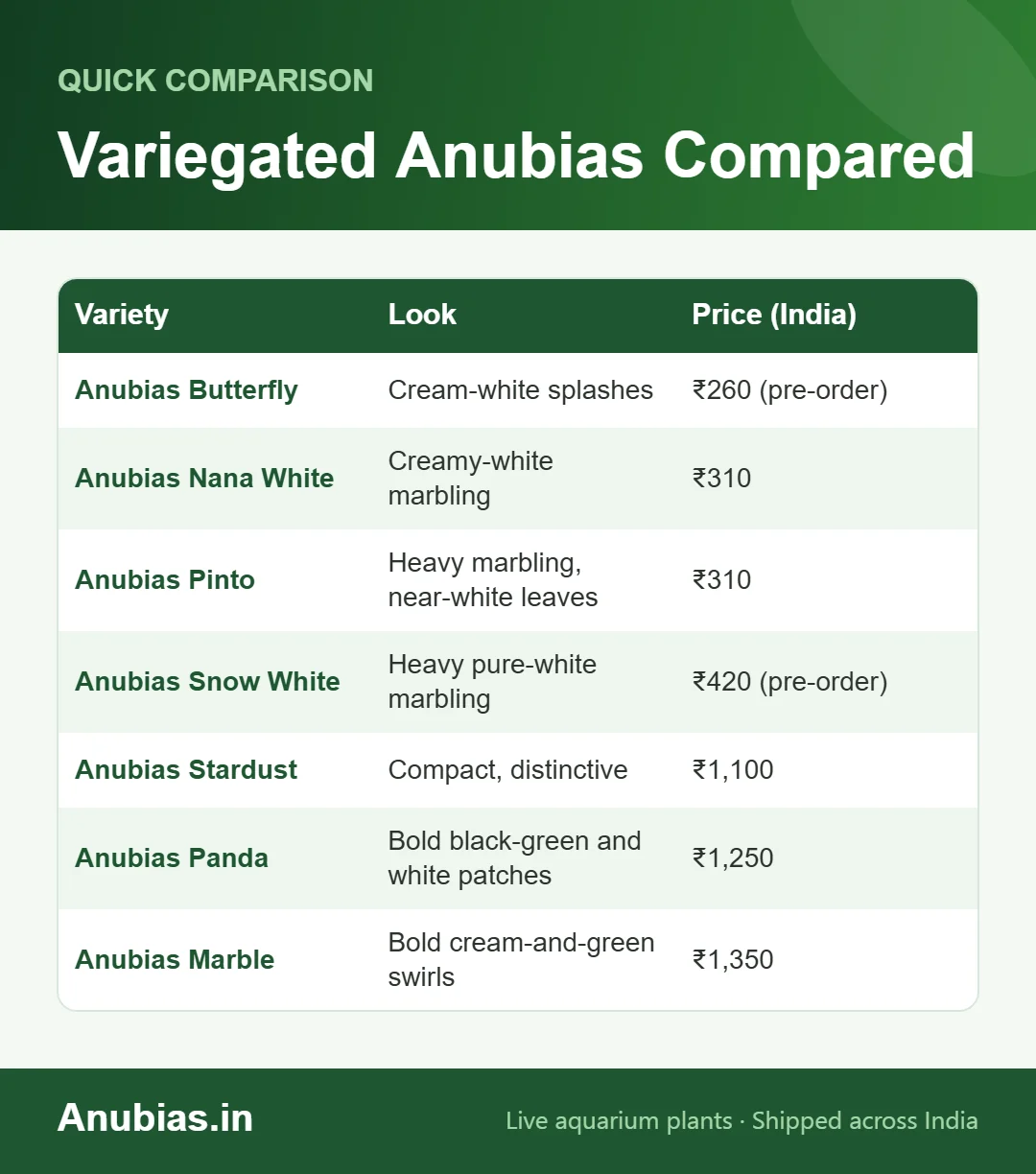
- Anubias Butterfly: leaves splashed creamy-white like butterfly wings.
- Anubias Pinto: heavily marbled, sometimes almost pure white leaves.
- Anubias Nana White: a variegated Nana with creamy-white marbling.
- Anubias Snow White: heavily marbled in pure white.
- Anubias Stardust: compact and slow-growing premium cultivar.
- Anubias Panda: compact, with bold black-green and white patches.
- Anubias Marble: bold cream-and-green swirls.
Choosing your first variegated Anubias
If this is your first white-leaved plant, pick a variety where the green still dominates. Butterfly and Marble usually carry enough chlorophyll to keep pushing leaves at a reasonable pace, so a mistake in placement does not cost you the whole plant.
Snow White and Stardust sit at the other end. They look spectacular, but with so little green tissue they recover very slowly from damage, and a single lost leaf can take more than a month to replace.
A practical route is to keep one heavily variegated plant as a feature piece at eye level, and one greener variegated plant lower down as insurance. If the feature plant struggles, you still have a healthy rhizome of the same look in the tank.
Signs the plant is settling in well
- The rhizome stays firm and green when you press it gently.
- Old leaves stay attached even if they stop growing.
- A small pale shoot appears at the growing tip within four to six weeks.
- New leaves hold their pattern rather than emerging plain green.
Mistakes that cost people their variegated Anubias
The most common one is treating the white areas as a deficiency and responding with heavy dosing and brighter light. Variegation is genetic, not nutritional. Extra light simply invites algae onto leaves that cannot outgrow it.
The second mistake is repeated relocation. Every time the plant is untied, moved and retied, it loses part of the energy it needed for the next leaf. Decide on a spot before you attach it, and then leave it alone for at least three months.
The third is summer neglect. In Surat and much of India tank water drifts to 30°C or higher in May and June. Variegated Anubias survive this, but growth stops almost entirely, and any leaf that starts to soften at the base should be trimmed off rather than left to rot against the rhizome.
Finally, avoid burying the plant in a nutrient soil to “feed” it. The rhizome rots in substrate, and rot on a slow grower is rarely recoverable.
Plants in this guide
Grown in Surat · graded by leaf count and photographed before dispatch · live-arrival guarantee on every order · ₹99 shipping, free from ₹2,000
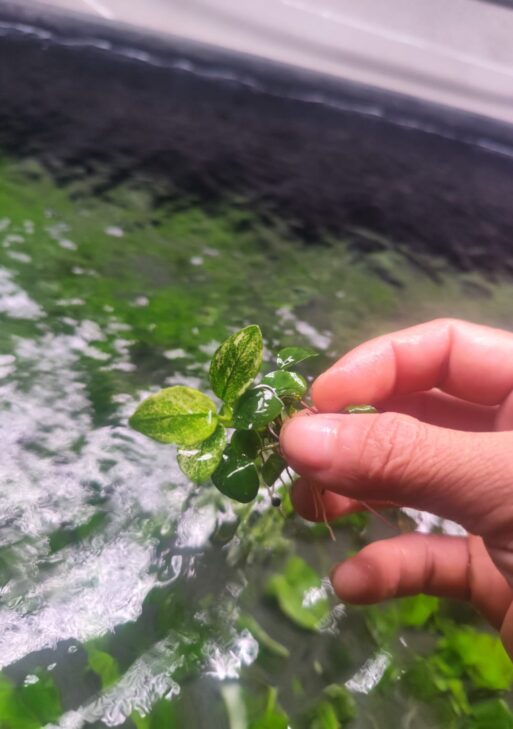
₹ 310 ₹ 550
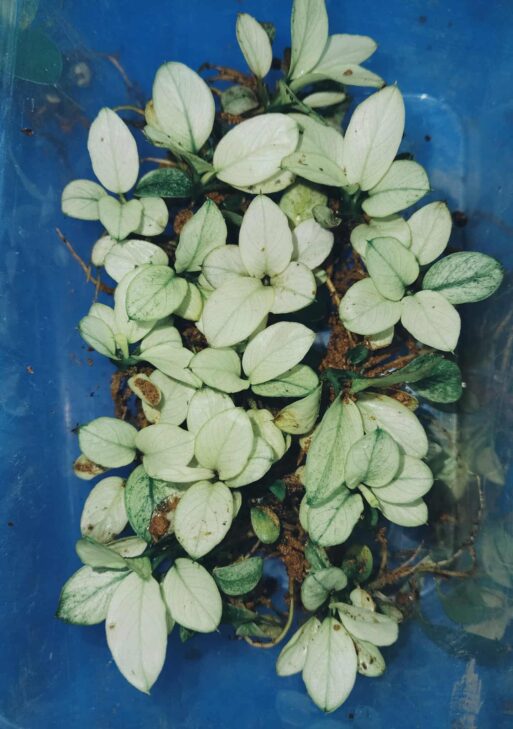
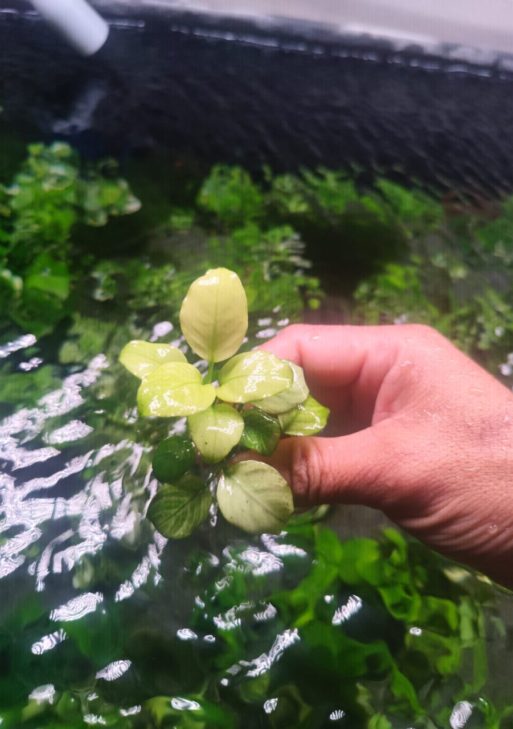
₹ 310 ₹ 600
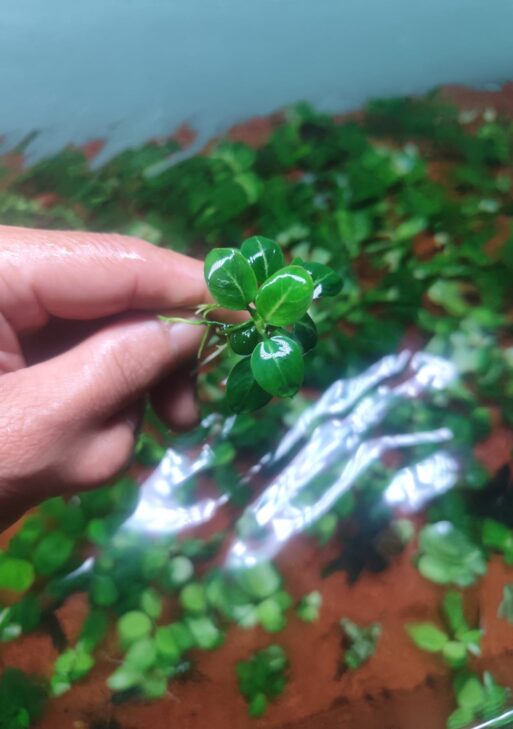
₹ 1,100 ₹ 1,900
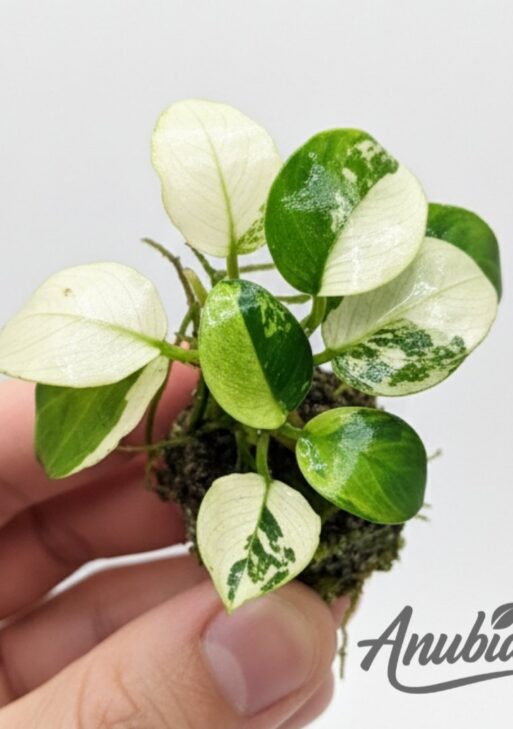
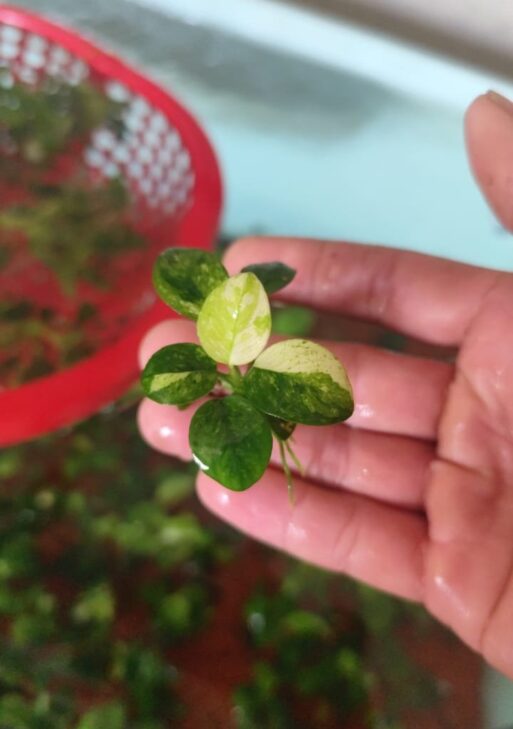
₹ 1,250 ₹ 2,200
Frequently asked questions
Are variegated Anubias hard to grow?
No. They need the same simple care as other Anubias, but they grow more slowly and prefer gentler light.
Do variegated Anubias need CO2?
No. They grow without CO2 in low to moderate light.
Why is my variegated Anubias growing so slowly?
That is normal. White leaf areas produce less energy, so expect slower growth than green Anubias.
Browse all Anubias varieties on Anubias.in.
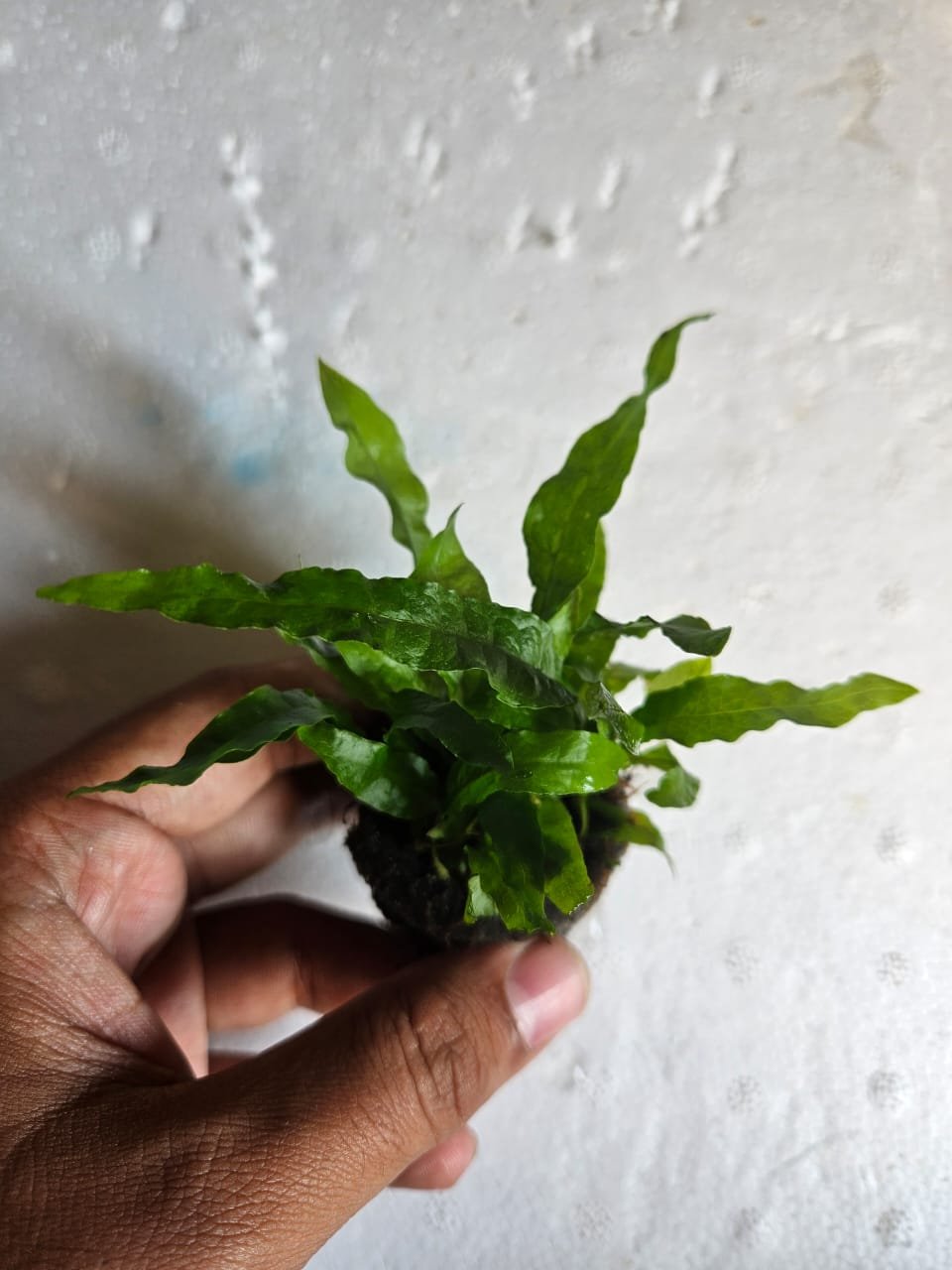
Like curled leaves? Read the Anubias Dragon Claw care guide.
Will my variegated Anubias lose its white pattern over time?
It can, and this is called reversion. New leaves sometimes emerge fully green because the plant’s growing tip has switched to producing normal tissue. If a whole shoot reverts, you can cut that section of rhizome away and keep the variegated portion, though the green part will always grow faster.
How do variegated Anubias cope with Indian summer heat?
They survive but effectively pause. Above roughly 30°C the plant puts out almost no new growth, and the risk of rhizome rot rises, so keep flow good and stop fertiliser dosing increases during the hottest weeks. Growth usually resumes once water settles back under 28°C after the monsoon.
Should I cut off a leaf that has come out almost entirely white?
Leave it unless it is damaged. An all-white leaf contributes little energy but costs nothing to keep, and removing leaves on an already slow plant only sets it back. Cut it only if it develops algae you cannot clean off, or if the base turns soft.
No space for a tank? Try a wabi-kusa with Anubias and Bucephalandra.