
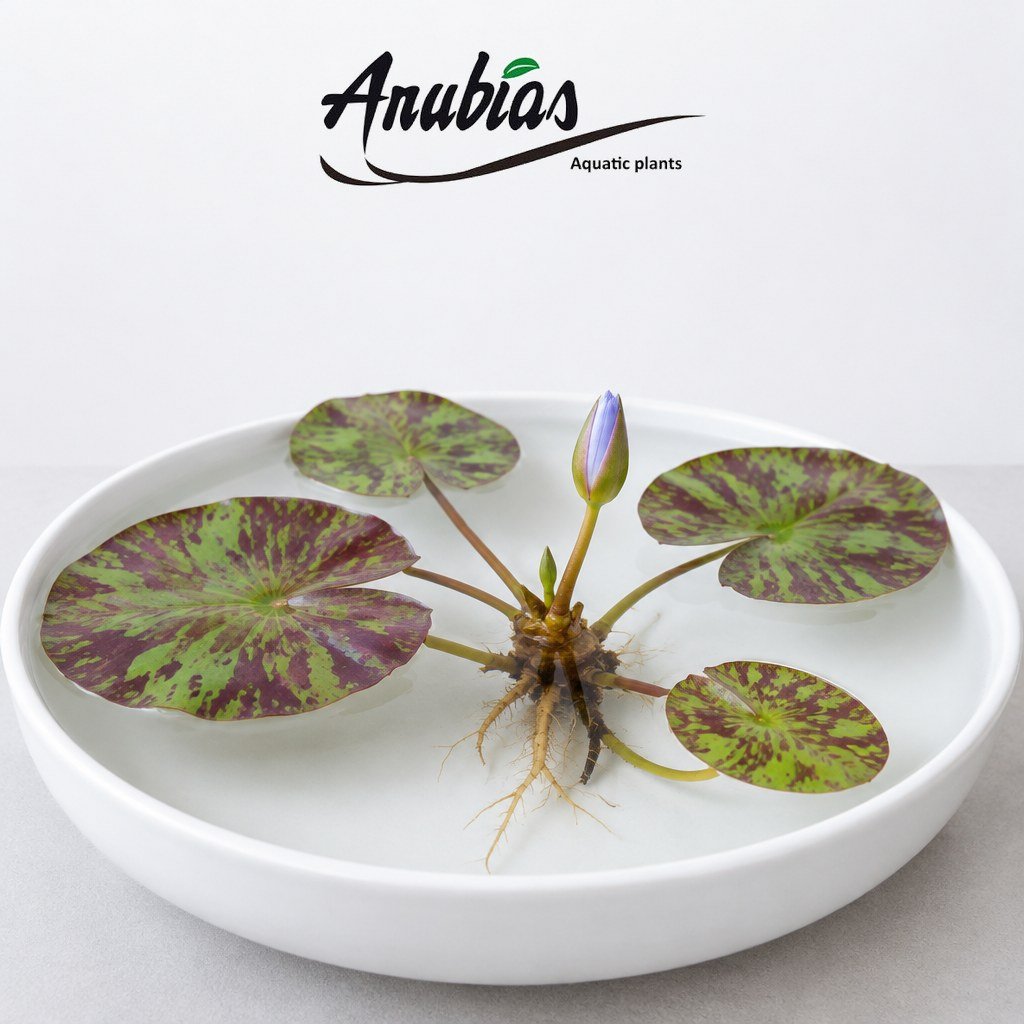
Description
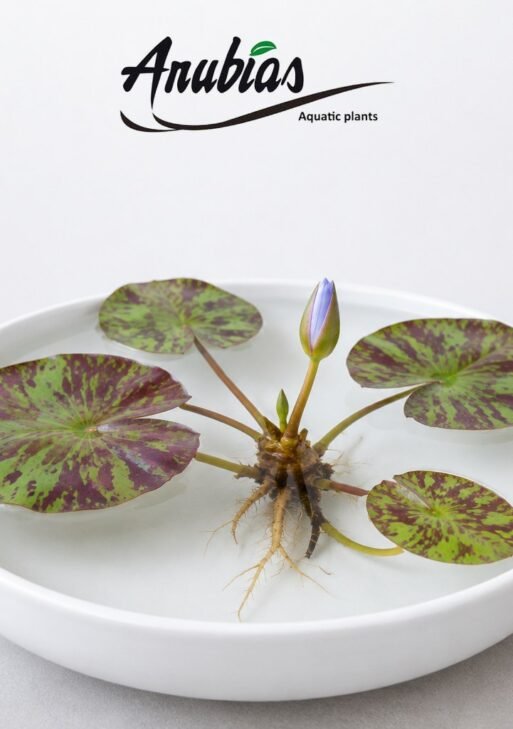
Nymphaea capensis ‘Blue’ (Variegated Leaves) is the classic Cape blue water lily – a tropical, day-blooming nymphaea with sky-blue to violet star flowers and new pads speckled maroon on green. Blue is a rare colour in water lilies and this is the easiest one to grow in India: it thrives in heat, flowers in a 45–60 cm bowl, and tolerates ordinary tap water. It is a tub, bowl and pond plant; it can also be grown in a large, well-lit aquarium for its patterned leaves.
Nymphaea capensis ‘Blue’ (Variegated) at a glance
| Scientific name | Nymphaea capensis (blue-flowered, variegated-leaf form) |
|---|---|
| Family | Nymphaeaceae |
| Origin | Southern and eastern Africa, Madagascar |
| Difficulty | Easy |
| Light | Full sun outdoors; strong LED indoors |
| CO2 | Not needed outdoors; optional in an aquarium |
| Temperature | 22–34 °C; tropical |
| pH | 6.5–8.0 |
| Growth rate | Fast |
| Height/size | Pads 15–25 cm; spread 60–120 cm; flowers 10–15 cm, lightly scented |
| Placement | Tub, bowl, pond; background of a large aquarium |
| Propagation | Tuber division, side tubers, seed |
How to plant Nymphaea capensis ‘Blue’ (Variegated)
- Container. A 25–30 cm pot or basket inside a tub or pond, or a 45–60 cm balcony bowl planted directly.
- Soil. Clay loam topped with 2 cm of sand. Cocopeat and compost float and rot – leave them out.
- Depth of the crown. Tuber upright, crown level with the soil surface. Never bury the crown.
- Water. 10–15 cm over the crown at first; 20–40 cm once pads float. Deeper water delays flowering.
- In a tank. Tuber in nutrient substrate with the crown exposed, under strong light. Pinch surface pads to keep it submerged, or let a few float for flowers.
Nymphaea capensis ‘Blue’ care: light, CO2, fertiliser and water
Sun. Five to six hours of direct sun is what turns this water lily into a flowering machine from March to November across most of India. Blooms open mid-morning, close in the late afternoon and last three to four days; the scent is strongest on the first morning. In partial shade you get green pads and little else.
Water. Hard municipal or borewell water is fine; no RO needed. Top up rather than replace. Guppies, or azolla and salvinia from our floating plants, keep mosquito larvae down.
Feeding. One aquatic fertiliser tablet pushed into the soil every three to four weeks through the growing season. Nymphaea capensis is a hungry plant; feeding is the difference between one flower a month and one every few days.
Indoors. Strong light (about 1 W per litre LED), root tabs under the tuber, weekly liquid fertiliser; CO2 is optional. Keep the water at 24–30 °C. Short monsoon power cuts are harmless – this plant does not depend on CO2 or filtration.
Winter. Grows on in the south and west. In the north it may go dormant below 15 °C; keep the tuber in wet soil and it returns in spring.
Growth, trimming and propagation
Pads reach the surface within two weeks in warm weather and buds follow in four to eight weeks. Cut old pads and spent flowers at the base of the stalk weekly. Leaving spent flowers to sink lets the plant set seed, which slows flowering.
Propagate by separating side tubers with their own crowns when you repot every one to two years. Seeds germinate readily in a tray of mud under shallow water but seedlings take a year to bloom and may not inherit the leaf marbling.
Where to use it in an aquascape
- Balcony bowl (2 ft / 60 cm, 60–80 L). A single blue lily with a few floating plants and guppies – the blue flowers show best against a dark bowl.
- Pond. Baskets 20–40 cm deep, one plant per square metre of surface; pair with white or pink lilies for contrast.
- Large aquarium (3–4 ft, 150–300 L). Background feature under strong light. Shade-lovers such as Anubias nana, Java fern and Cryptocoryne go under the pads. Suits gouramis, rainbowfish, tetras and shrimp.
For a tank under 3 ft, Nymphaea sp. ‘Leopard’ stays compact and submerged and is the better pick.
Common problems and fixes
- Flowers are pale or few. More sun and a fertiliser tablet; blue colour is deepest in full sun.
- Marbling fades. Low light. The pattern returns on new pads once light improves.
- Crown rot. Crown buried or soil too organic. Replant at the surface in loam.
- Pads crowding above each other. Overfed or too shallow; thin the pads and raise the water.
- Aphids on buds. Hose off or dunk the pads for the fish to pick clean.
- Green water in a new tub. Clears once the pads cover half the surface; do not change all the water.
What you receive
One healthy Nymphaea capensis ‘Blue’ (Variegated Leaves) plant in the size you select – Small or Standard – similar to the plant in the photo. Checked before packing, packed moist and shipped across India from Surat. Live-arrival guarantee: record one continuous unboxing video within 4 hours of delivery and, if the plant arrived damaged, we refund or replace it.
FAQ
Is the blue water lily easy for beginners?
Yes. Nymphaea capensis is among the easiest tropical water lilies – it needs sun, loam soil and a fertiliser tablet now and then, nothing more.
Can Nymphaea capensis ‘Blue’ be kept in an aquarium?
In a large, brightly lit tank, yes, mainly for its marbled leaves. Flowers need pads floating in open water with sunlight.
Does it need a big container?
No. A 45–60 cm bowl is enough for one plant to flower, which makes it ideal for balconies.
Why does the colour look violet instead of blue?
Flower colour varies from pale sky blue to violet-blue depending on light, age of the flower and temperature. Full sun gives the clearest blue.
Does it survive north Indian winters?
It slows or goes dormant below 15 °C. Keep the tuber in wet soil in a sheltered spot; growth resumes in spring.
Water lily vs lotus for a small balcony?
Water lily. It flowers in a smaller bowl, tolerates a little shade and starts blooming within two months.
Not sure what fits your tank? Plan it with our free AI tank planner.












There are no reviews yet.