

Description
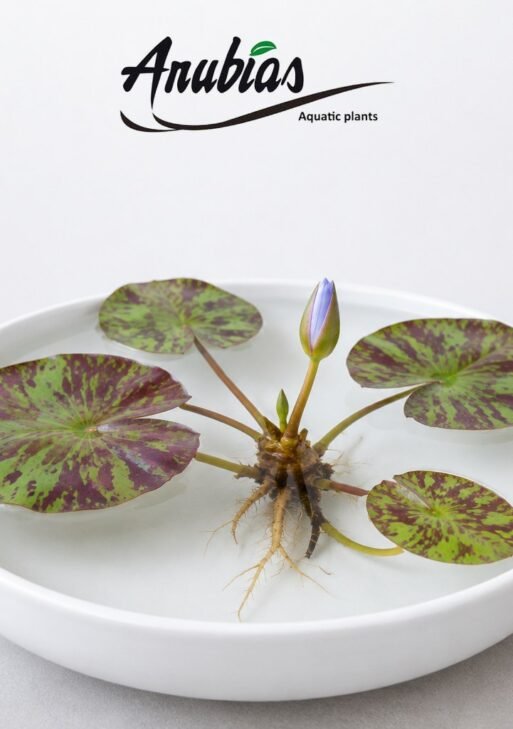
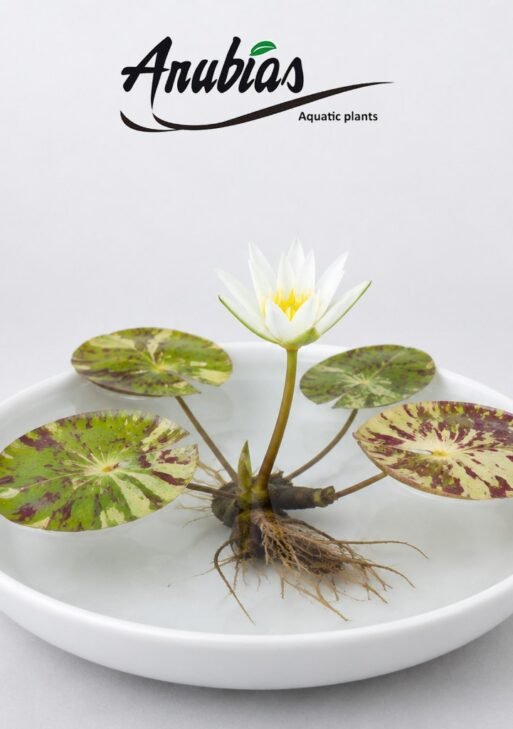
Nymphaea capensis ‘White’ (Variegated Leaves) is a tropical, day-blooming water lily with pure white star flowers and pads marbled in green and maroon – a plant that looks good even on days it is not flowering. It is a tub, bowl and pond plant for sunny balconies and terraces, and one of the most forgiving nymphaea for Indian heat. It can also be grown in a large, brightly lit aquarium, where its mottled young leaves are the main attraction.
Nymphaea capensis ‘White’ (Variegated) at a glance
| Scientific name | Nymphaea capensis (white-flowered, variegated-leaf form) |
|---|---|
| Family | Nymphaeaceae |
| Origin | Southern and eastern Africa; cultivated form |
| Difficulty | Easy |
| Light | Full sun outdoors; strong LED lighting indoors |
| CO2 | Not needed outdoors; optional in an aquarium |
| Temperature | 22–34 °C; tropical, no frost tolerance |
| pH | 6.5–8.0 |
| Growth rate | Fast |
| Height/size | Pads 15–25 cm; spread 60–120 cm; flowers 10–15 cm |
| Placement | Tub, bowl, pond; background of a large aquarium |
| Propagation | Tuber division, side tubers, seed |
How to plant Nymphaea capensis ‘White’ (Variegated)
- Pot. Use a 25–30 cm wide, 15–20 cm deep pot or basket set inside a tub or pond, or plant directly into a 45–60 cm balcony bowl.
- Soil. Clay-rich garden loam, capped with 2 cm of sand. No cocopeat, no compost-heavy mixes.
- Crown at the surface. Plant the tuber upright with the crown exactly at soil level. A buried crown is the commonest reason a water lily rots.
- Water depth. 10–15 cm over the crown at first, 20–40 cm once pads float.
- Aquarium. Push the tuber into a nutrient substrate with the crown exposed, under strong light. Pinch floating pads if you want to keep the marbled submerged leaves; let a few float if you want flowers.
Nymphaea capensis ‘White’ care: light, CO2, fertiliser and water
Sun and heat. Five to six hours of direct sun gives continuous flowering through summer and the monsoon. The variegation is strongest on new pads in strong light; in shade the pads turn plain green and blooms stop. Water temperatures of 30–34 °C in May and June do not bother this water lily as long as the tub is topped up.
Water. Hard tap or borewell water is fine. Top up instead of replacing. Guppies or a portion from our floating plants control mosquitoes.
Feeding. Push one aquatic fertiliser tablet into the soil near the roots every three to four weeks while the plant is growing. A fed lily gives a new flower every few days; a starved one gives small pale pads and none.
Indoors. Strong light (around 1 W per litre LED), root tabs under the tuber and a weekly liquid fertiliser. CO2 is optional and mainly improves leaf size. Keep the water at 24–30 °C; the plant handles summer heat better than most tank plants, and a short monsoon power cut does no harm.
Winter. Growth continues in central and south India. In the north it slows below 15 °C and may drop its pads; keep the tuber in wet soil and it sprouts again in spring.
Growth, trimming and propagation
New pads float within two weeks of planting in warm weather and buds appear in four to eight weeks. Remove yellowed pads and spent flowers at the base of the stalk; this keeps the water clear and pushes the plant to make new buds rather than seed.
To propagate, lift the plant when repotting (every one to two years) and separate side tubers that have formed their own crowns. Pot each one as above. Seed is possible but seedlings are slow and may not keep the variegation.
Where to use it in an aquascape
- Balcony bowl (2 ft / 60 cm, 60–80 L). One variegated lily is enough; add a little azolla or salvinia and a few guppies.
- Pond. Baskets 20–40 cm below the surface; the marbled pads stand out against plain-leaved lilies nearby.
- Large aquarium (3–4 ft, 150–300 L). Background feature. The dappled shade under the pads suits Anubias nana, Java fern and Cryptocoryne. Good with gouramis, rainbowfish, tetras and shrimp.
In a tank under 3 ft, choose Nymphaea sp. ‘Leopard’ instead – it stays compact and submerged.
Common problems and fixes
- Pads lose their marbling. Too little light. Move to stronger sun or brighter LEDs; new pads will show the pattern.
- No flowers. Insufficient sun or feeding. Both are usually needed together.
- Crown rot. Crown planted too deep or soil too organic. Replant at the surface in loam.
- Pads piling on top of each other. Overfed or the pot is too shallow; thin the pads and raise the water level.
- Aphids on buds. Hose them off or dunk the pads briefly for the fish.
- Green water in a new tub. Normal; clears as the pads cover half the surface.
What you receive
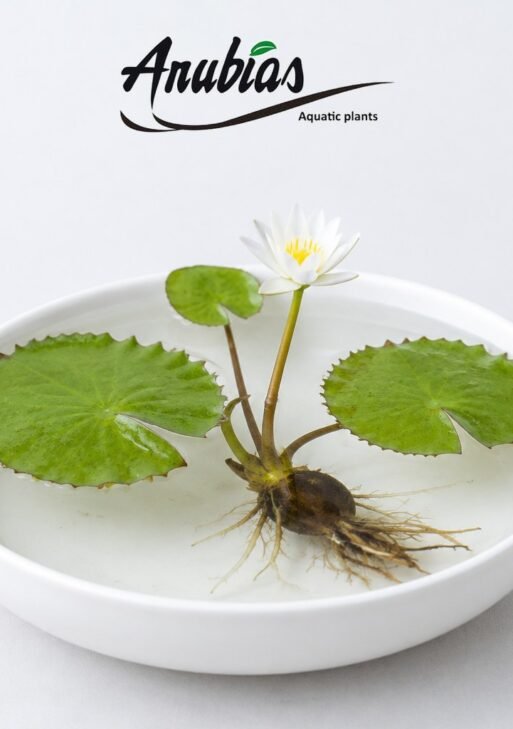
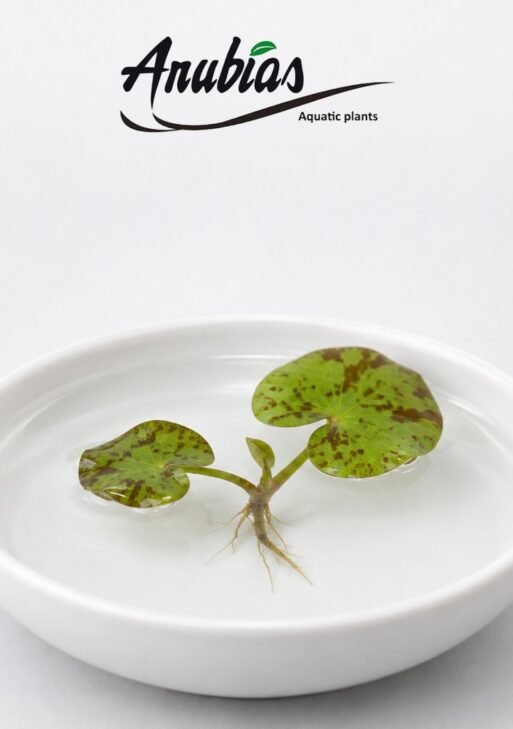
One healthy Nymphaea capensis ‘White’ (Variegated Leaves) plant in the size you select – Small or Standard – similar to the plant in the photo. Checked before packing, packed moist and shipped across India from Surat. Live-arrival guarantee: record one continuous unboxing video within 4 hours of delivery and, if the plant arrived damaged, we refund or replace it.
FAQ
Why are the leaves variegated?
It is a selected form of Nymphaea capensis whose new pads carry maroon and green marbling. The pattern is strongest under bright light and fades on old pads.
Can this water lily be grown in an aquarium?
Yes, in a large tank with strong light, mainly for its marbled submerged leaves. It flowers only when pads float in open water with sunlight.
Does Nymphaea capensis survive Indian summers?
Easily. It is a tropical nymphaea that grows and flowers best in heat, as long as the container does not dry out.
How often should I fertilise a water lily?
One aquatic fertiliser tablet pushed into the soil every three to four weeks during the growing season.
White vs pink Nymphaea capensis – any difference in care?
None. Both forms need the same sun, soil and feeding; only the flower colour and leaf marbling differ.
Is this a lotus?
No. It is a water lily: pads float on the surface and flowers sit just above it. Lotus (Nelumbo) holds leaves and flowers high in the air and needs a much bigger container.
Not sure what fits your tank? Plan it with our free AI tank planner.












There are no reviews yet.