
Description
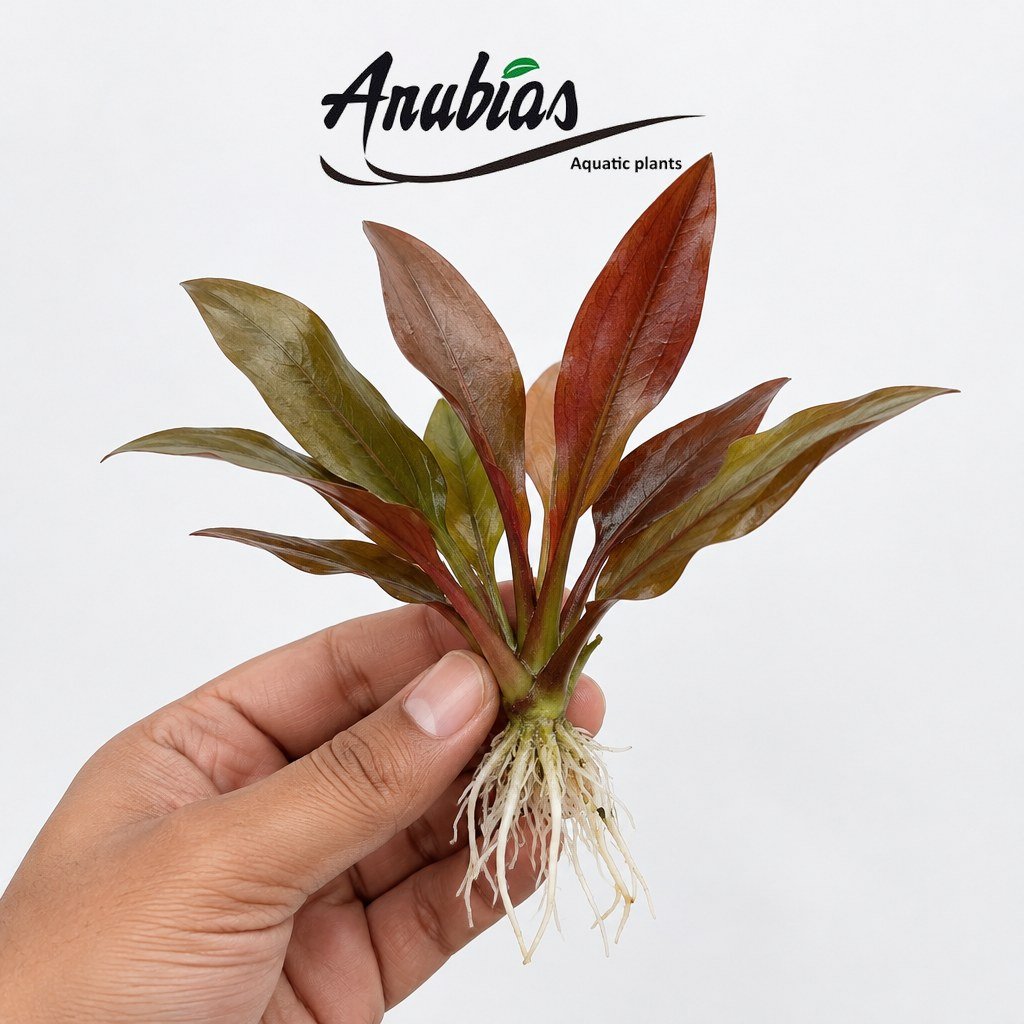
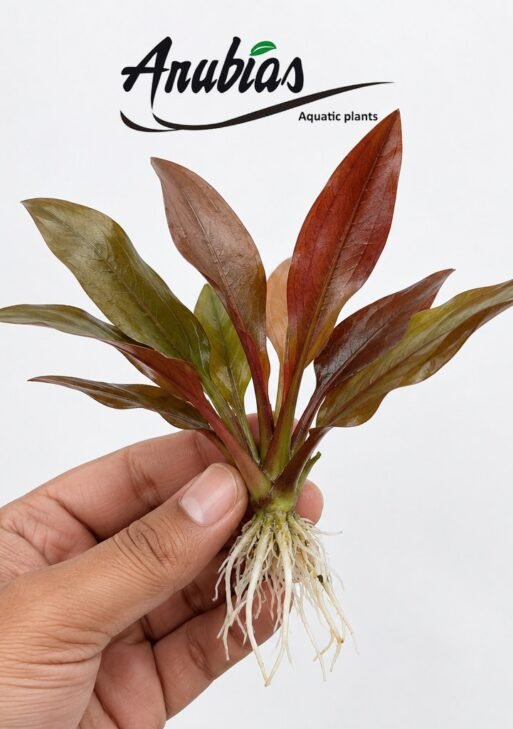
Echinodorus ‘Rubin’ is a large red amazon sword cultivar with long, lance-shaped leaves in ruby-brown to deep red, held on a strong rosette that reaches 40–50 cm. It is a cultivated hybrid raised from red South American sword species, bred to combine strong colour with the easy nature of the common amazon sword. Echinodorus Rubin is the sword to choose when you want a red centrepiece for a 3 ft or larger tank without CO2 or demanding stem plants.
Echinodorus ‘Rubin’ at a glance
| Scientific name | Echinodorus ‘Rubin’ (cultivated hybrid of Echinodorus horemanii ‘Red’ and Echinodorus barthii) |
|---|---|
| Family | Alismataceae |
| Origin | Cultivar; parent species from South America |
| Difficulty | Easy |
| Light | Medium |
| CO2 | Optional; deepens colour |
| Temperature | 22–28 °C |
| pH | 6.0–7.8 |
| Growth rate | Moderate |
| Height/size | 40–50 cm tall, 25–40 cm spread |
| Placement | Background or solitary centrepiece |
| Propagation | Plantlets on flower stalks; rhizome division |
How to plant Echinodorus ‘Rubin’
- Rinse the plant and remove damaged or yellow outer leaves. Trim roots to 4–5 cm.
- Choose a background or off-centre focal spot with 25 cm of clear space around it.
- Dig a hole in substrate at least 6 cm deep, spread the roots and cover them, leaving the crown above the surface.
- Press two or three root tabs around the root zone unless you use aquasoil. Red swords need steady root nutrition for colour.
- Face the rosette so the newest red leaves point towards the front of the tank.
Echinodorus ‘Rubin’ care: light, CO2, fertiliser and water
Light. Medium light is the minimum for red colour; under low light the plant grows well but leaves are olive-brown. Because it is tall, its leaves reach near the light, so a mid-range LED gives good results. A photoperiod of 7–8 hours limits algae on the broad leaves.
CO2. Optional. Without CO2 this amazon sword is healthy and shows red-brown colour; with CO2 the red is deeper and the leaves larger.
Fertiliser. Root tabs every two months or aquasoil, plus a weekly liquid fertiliser with chelated iron. Iron is the key to red in swords. Keep nitrate moderate rather than high, since excess nitrogen turns red swords green.
Water. Tolerant of hard Indian tap water up to pH 7.8. Regular 25–30% water changes keep the colour consistent.
Indian conditions. Comfortable at 28 °C; above 30 °C colour fades and old leaves yellow faster, so use a surface fan in peak summer. Monsoon power cuts of a few hours are harmless.
Growth, trimming and propagation
A settled plant produces a new leaf every week to ten days and reaches full size in three to four months. New leaves emerge dark red and gradually shift towards red-brown as they age.
Trim the oldest outer leaves at the base each month and remove any leaf that reaches the surface. This keeps the rosette compact and ensures the red centre is visible.
Propagate from the plantlets that form on flower stalks: once each has several leaves and roots, cut it free and plant it. Large plants can be divided at the rhizome with a clean blade.
Where to use it in an aquascape
Echinodorus ‘Rubin’ needs a 3 ft (150 litre) tank and looks best in 4 ft (300 litre) tanks and larger. Use one as a solitary red centrepiece or two or three along the back for a red wall. It is a standard focal plant in Dutch-style layouts and adds colour to jungle and South American biotope tanks.
Surround it with green plants for contrast: crypts from our Cryptocoryne collection in front, Anubias nana and Java fern on wood, a green carpet at the front and green stem plants beside it.
The large, firm leaves suit angelfish, discus, gouramis, rainbowfish and larger tetras, and angelfish will spawn on them. Avoid goldfish and plant-eating cichlids.
Common problems and fixes
- Old leaves yellowing after planting. Emersed-grown leaves are replaced by submerged ones over the first month. Remove them as they fade.
- Leaves green or brown instead of red. Light too low, iron short or nitrate too high. Raise light to medium, dose iron and keep nitrate moderate.
- Yellow new leaves with green veins. Iron deficiency. Add chelated iron and refresh root tabs.
- Pinholes in older leaves. Potassium shortage. Dose potassium.
- Green spot algae on leaves. Light high and phosphate low. Reduce the photoperiod, dose phosphate and add nerite snails.
- Plant too large for the tank. Trim outer leaves monthly and reduce root tabs; ultimately it needs a 3 ft tank.
What you receive
You receive one healthy Echinodorus ‘Rubin’ plant in the size you select (Small or Standard), similar to the one in the photo. It is checked before packing, wrapped moist and shipped across India from Surat. Live-arrival guarantee: record one continuous unboxing video within 4 hours of delivery and we refund or replace any plant that arrives damaged.
FAQ
Does Echinodorus ‘Rubin’ need CO2?
No. It grows and colours up without CO2 in medium light with root tabs and iron. CO2 deepens the red but is optional.
Is Echinodorus ‘Rubin’ good for beginners?
Yes, for tanks of 3 ft or more. It is as hardy as a common amazon sword and only needs medium light and regular root feeding.
How do I keep Echinodorus ‘Rubin’ red?
Medium light, a liquid fertiliser with chelated iron, moderate nitrate and fresh root tabs every two months. Shaded or starved plants turn olive-brown.
How big does Echinodorus ‘Rubin’ get?
About 40–50 cm tall and 25–40 cm across. It needs a tank at least 45 cm high and 90 cm long.
Can Echinodorus ‘Rubin’ grow in gravel?
Yes, with two or three root tabs around the roots every two months.
Echinodorus ‘Rubin’ vs Echinodorus ‘Ozelot’: what is the difference?
‘Rubin’ has solid red-brown leaves and grows larger (40–50 cm). ‘Ozelot’ is slightly smaller with green leaves covered in red-brown spots. Both are easy; choose by colour preference and tank size.
Not sure what fits your tank? Plan it with our free AI tank planner.












There are no reviews yet.