
Description
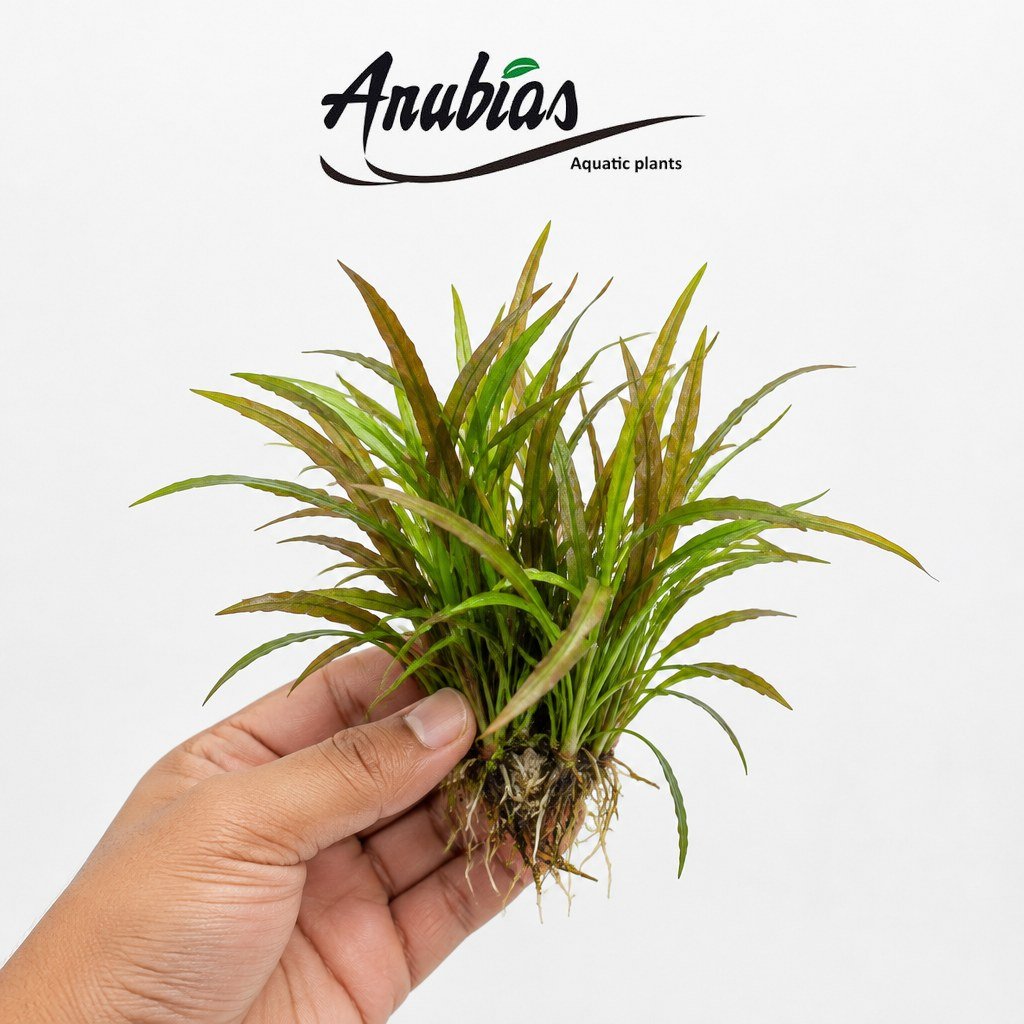
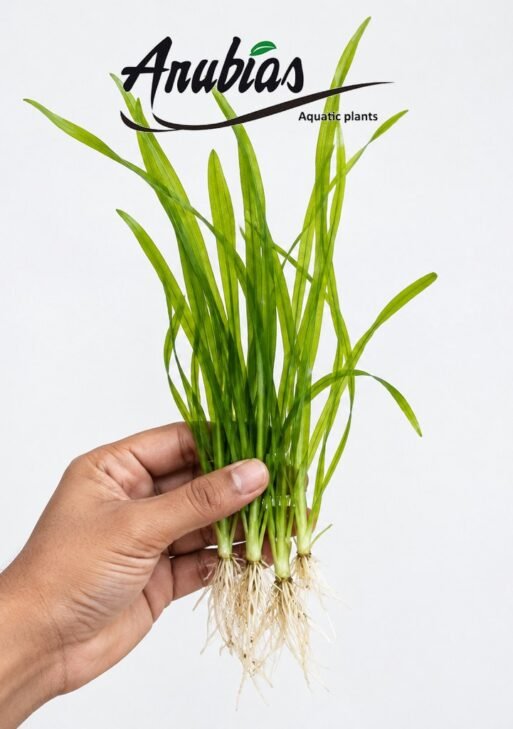
Blyxa japonica is a bushy, grass-like midground plant from the shallow streams and rice fields of East and Southeast Asia, including parts of India, with fine, pointed leaves that form a dense rounded clump 8–15 cm tall. Under strong light and CO2 the leaves take on golden and reddish tones that make it a favourite in nature-style aquascapes. Blyxa japonica suits aquarists running medium to high light with CO2 who want a soft, textured bush between hardscape and carpet.
Blyxa japonica at a glance
| Scientific name | Blyxa japonica |
|---|---|
| Family | Hydrocharitaceae |
| Origin | East and Southeast Asia (Japan, China, Southeast Asia, northeast India) |
| Difficulty | Moderate |
| Light | Medium to high |
| CO2 | Recommended |
| Temperature | 22–28 °C |
| pH | 5.5–7.5 |
| Growth rate | Moderate |
| Height/size | 8–15 cm tall, 8–12 cm wide clumps |
| Placement | Midground; foreground in large tanks |
| Propagation | Side shoots; stem cuttings |
How to plant Blyxa japonica
- Rinse the portion gently; the leaves are brittle. Remove any brown or broken leaves.
- Separate the clump into individual plants or small groups. Each has a short stem with roots at the base.
- Trim roots to about 2 cm and push the base into the substrate with tweezers until the lowest leaves sit just above the surface.
- Space plants 4–5 cm apart. Each one grows into a rounded clump, so a group of three to five makes a bush.
- Use a nutrient-rich aquasoil if possible. In sand or gravel, add root tabs under each group.
- Plant it where flow is gentle; strong current flattens the clumps and loosens young roots.
Blyxa japonica care: light, CO2, fertiliser and water
Light. Medium light produces a healthy green bush; high light produces the compact, golden-red form seen in aquascaping competitions. Under low light the plant grows leggy, loses lower leaves and eventually declines, so Blyxa japonica is not a low-light plant.
CO2. Strongly recommended. It will survive without CO2 under good light in a nutrient-rich substrate, but it stays small and green and may slowly fade. With CO2 it grows steadily and colours up.
Fertiliser. Both root and water column feeding: aquasoil or root tabs, plus a weekly liquid fertiliser with iron. Good iron and slightly limited nitrate bring out the golden tones.
Water. It prefers soft to moderately hard water with a pH of 5.5–7.5. In hard Indian tap water it still grows, especially with CO2 lowering the pH, but blending in RO water helps in very hard areas. Keep conditions stable.
Indian conditions. Keep temperatures below 30 °C with a fan in summer; prolonged heat makes it leggy. Keep CO2 and filtration consistent during the monsoon; power cuts that stop CO2 for a few hours are tolerated, but long outages cause leaf loss.
Growth, trimming and propagation
A settled plant adds new leaves from the centre every few days and produces side shoots at the base within a month or two, turning one plant into a clump.
Trim by removing old, brown outer leaves at the base. If a plant grows too tall or leggy, cut the stem below the healthy top portion and replant the top; the rooted base often regrows too.
Propagate by separating side shoots once they have roots, or by replanting trimmed tops. Blyxa also occasionally produces small white flowers at the surface; these can be left or removed.
Where to use it in an aquascape
Blyxa japonica is a midground plant for 1.5–3 ft (40–150 litre) tanks and a foreground bush in 4 ft (300 litre) tanks. In nature-style layouts it is used to soften the base of rocks and driftwood, bridging a low carpet and taller background plants. Its fine texture contrasts well with broad leaves and smooth stones.
Plant it beside a carpeting plant in front and stem plants behind, with Anubias nana and Java fern on the hardscape. Compact crypts from our Cryptocoryne collection work alongside it in lower-light sections.
It is ideal for shrimp tanks and small fish such as tetras, rasboras, otocinclus and Corydoras pygmaeus. Avoid large fish and diggers, which uproot the shallow-rooted clumps.
Common problems and fixes
- Plants floating up after planting. Roots are short and the base is light. Replant deeper and hold with a small stone until side roots take hold.
- Leggy growth and lost lower leaves. Light too low. Increase intensity and add CO2.
- Leaves staying plain green. Normal under medium light. Golden-red colour needs high light, CO2 and iron.
- Slow decline in a low-tech tank. The plant is starving for carbon. Add CO2 or at least liquid carbon and a richer substrate.
- Hair algae in the clump. High light with unstable CO2. Keep CO2 steady, reduce the photoperiod and add Amano shrimp.
- Brown leaf tips. Often potassium shortage or an abrupt parameter change. Dose potassium and keep water changes regular.
What you receive
You receive one healthy portion of Blyxa japonica in the size you select (Small or Standard), similar to the one in the photo. It is checked before packing, wrapped moist and shipped across India from Surat. Live-arrival guarantee: record one continuous unboxing video within 4 hours of delivery and we refund or replace any plant that arrives damaged.
FAQ
Does Blyxa japonica need CO2?
It is strongly recommended. The plant survives without CO2 under good light in rich substrate, but it stays small and may slowly fade. With CO2 it grows well and colours up.
Is Blyxa japonica good for beginners?
It is better for aquarists who already run medium to high light and CO2. In a basic low-light tank it tends to decline.
Can Blyxa japonica grow in sand?
Yes, with root tabs under each group and CO2 in the water. Aquasoil gives better results because the plant feeds heavily through its roots.
How do I make Blyxa japonica turn golden or red?
High light, steady CO2, a fertiliser with iron and moderate nitrate. Under medium light it stays green.
How big does Blyxa japonica get?
Clumps reach 8–15 cm tall and 8–12 cm wide, making it a midground plant in most tanks.
Why does my Blyxa japonica keep floating up?
The base is buoyant and the roots are short when new. Plant deeper, anchor with a small stone and avoid strong flow until side roots form.
Not sure what fits your tank? Plan it with our free AI tank planner.














There are no reviews yet.