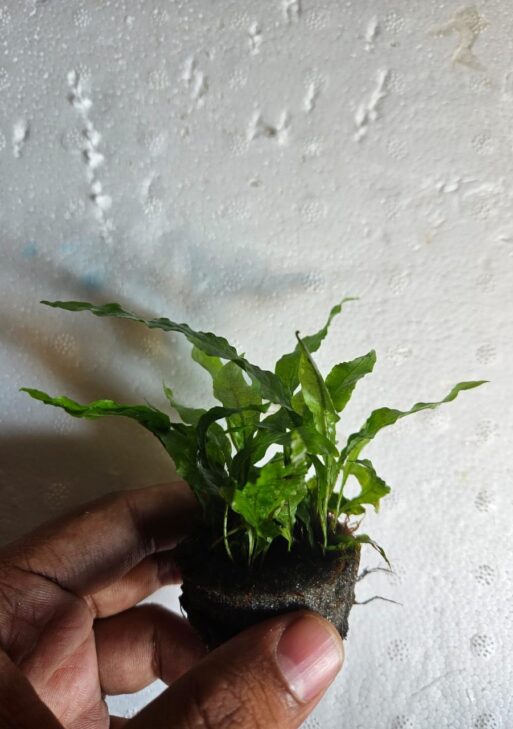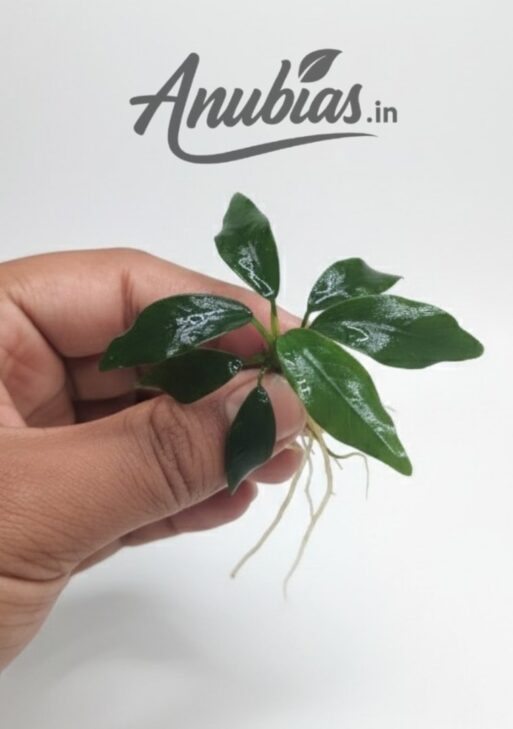

Bucephalandra and Java fern are both rhizome plants that attach to wood or rock, need little light and no CO2. But they look and grow very differently, and they suit different tanks. Here is how they compare so you can pick the right one, or use both.
Quick answer: Choose Bucephalandra for small, colourful, textured leaves in nano tanks and close-up hardscape detail; choose Java fern for taller, fuller green cover in medium to large tanks. Both are easy epiphytes that need low to moderate light and no CO2, and neither should have its rhizome buried. Java fern is cheaper (₹175 on Anubias.in) and grows faster; Bucephalandra costs about ₹299–₹649 and grows very slowly.
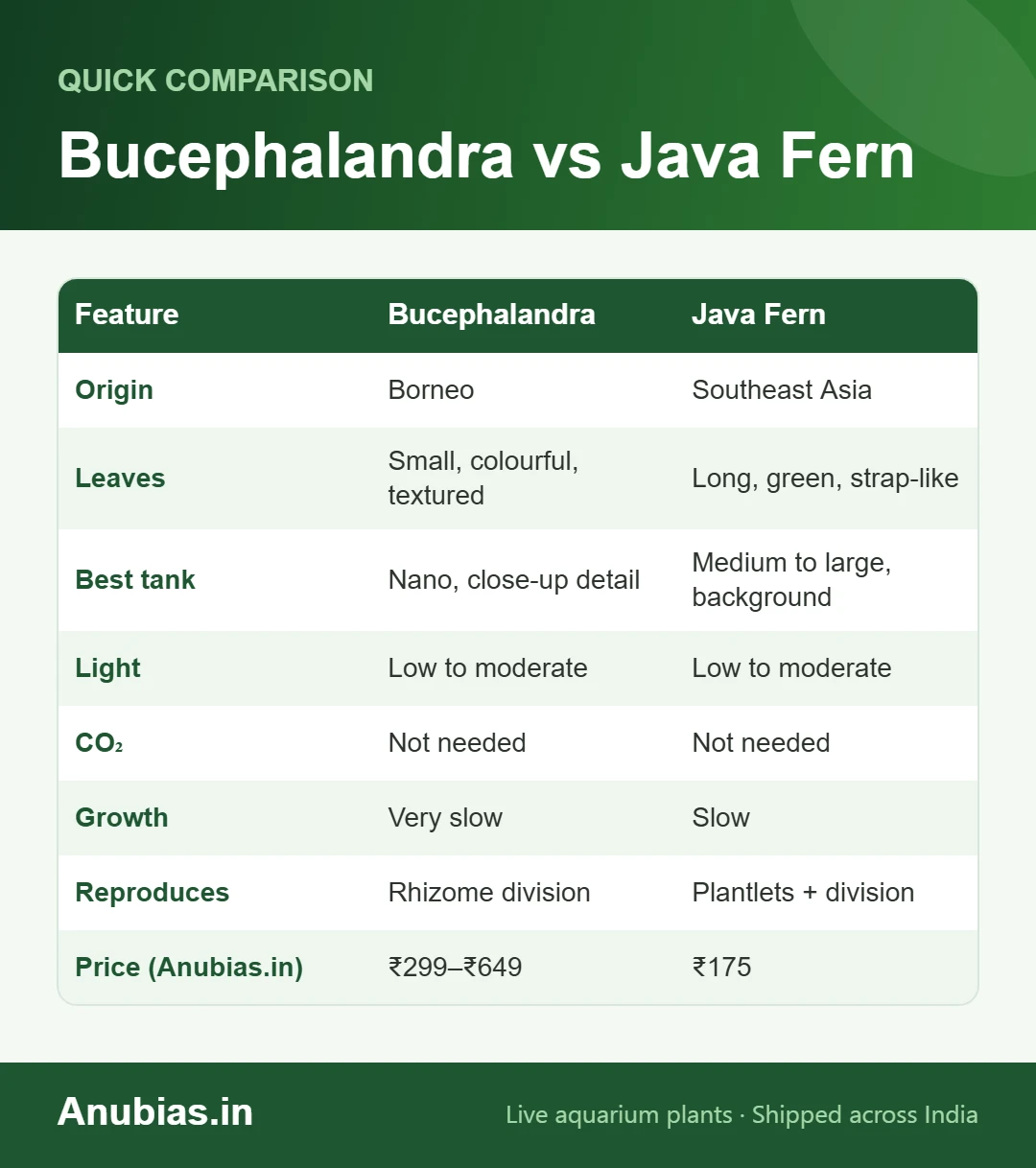
Key differences
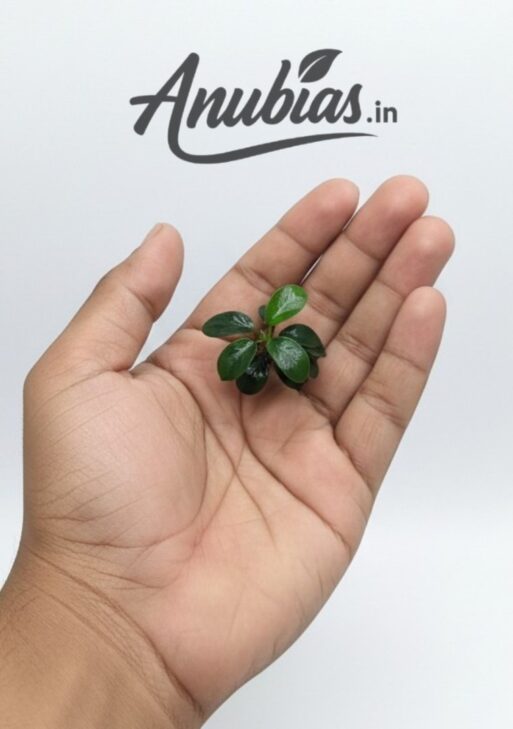
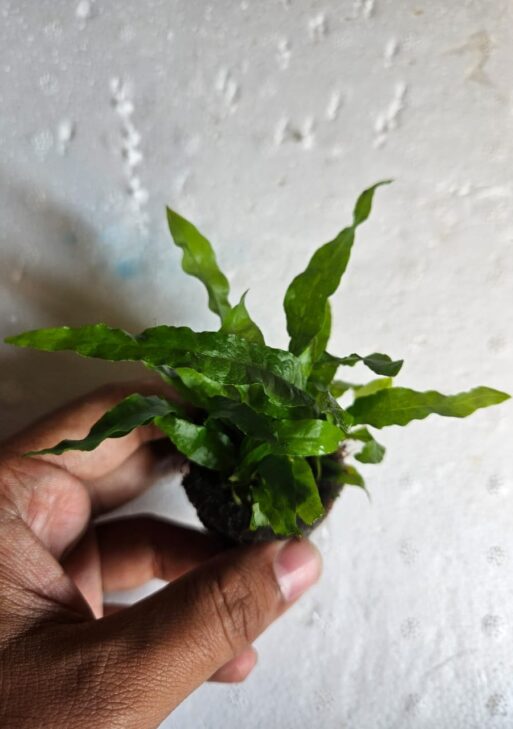
- Looks: Buce has small leaves in greens, bronzes and blue sheens; Java fern has long, green, strap-like fronds.
- Size: Buce stays compact; Java fern typically reaches 15–30 cm (dwarf types stay small).
- Growth: Buce is very slow; Java fern is slow to moderate and makes plantlets.
- After planting: Buce often drops some leaves (“buce melt”); Java fern is usually steadier.
- Price: Java fern is more affordable; named Buce cultivars cost more.
Which is better for your tank?
- Nano tank or shrimp tank: Bucephalandra or a dwarf Java fern.
- Betta tank: both work; Java fern gives more cover.
- Background cover or hiding equipment: Java fern.
- Rock garden detail: Bucephalandra tucked into crevices.
- Goldfish or cichlids: Java fern, tied firmly to heavy hardscape.
Using both together
A natural layout uses Java fern tied higher on driftwood toward the back, with Bucephalandra and Anubias Nana Petite on rocks in front. Care is the same, so they share a tank easily. See Java fern types and the Bucephalandra price guide.
More Java fern guides:
More Bucephalandra guides:
What each plant asks of you over a year
The buying decision is easy; the year that follows is where the two plants really differ. Java fern needs occasional attention and Bucephalandra needs almost none, but the kind of attention is not the same.
Java fern spreads. Within a year a single plant on driftwood typically becomes a cluster, and old leaves start to look ragged with brown edges while plantlets form along them. You will be trimming tired leaves a few times a year and deciding where to attach the babies.
Bucephalandra mostly sits still. The work is not trimming but keeping leaves clean, because a slow grower collects dust, algae film and detritus on older leaves. A gentle brush or simply positioning it in the flow path handles this.
How to decide in five minutes
- You want the tank to look filled in quickly: Java fern, because it grows fast enough to cover driftwood in months rather than years.
- You have a nano or shrimp tank: Bucephalandra stays in scale and its small leaves suit close viewing.
- Your water sits above 30°C in summer: both cope, but Java fern is the more forgiving of the two and less likely to melt after a heat spell.
- You are new to planted tanks: start with Java fern, then add Bucephalandra once you trust your routine.
- You care about colour rather than volume: Bucephalandra, since Java fern offers green and little else.
Mistakes people make choosing between them
Buying Bucephalandra for a large background is the most common. It stays small for years, so filling a two-foot back wall with it is expensive and slow, and the fine detail is lost at that distance anyway.
The other mistake is expecting Bucephalandra to look good on arrival. Some leaf loss after shipping is normal, and judging the plant in its first fortnight leads people to conclude it is difficult when it is simply settling.
Plants in this guide

Frequently asked questions
Is Bucephalandra harder to grow than Java fern?
Not really. Care is similar; Buce is slower and more likely to drop leaves after planting.
Which grows faster?
Java fern grows faster and also spreads by plantlets on its leaves.
Can Bucephalandra and Java fern grow on the same driftwood?
Yes. Attach both by the rhizome and keep them in low to moderate light.
Shop Bucephalandra and Java fern, shipped across India with a live-arrival guarantee.
Which one handles 30°C summer water better?
Java fern is the safer choice in prolonged heat. It slows down but rarely collapses, whereas Bucephalandra is more likely to shed leaves when water stays above 30°C for weeks. Good surface agitation helps both, since warm water holds less oxygen.
Do either of them need root tabs?
No, because both attach to wood or rock rather than rooting in substrate. Root tabs are wasted on them. A liquid fertiliser dosed into the water column is what actually reaches their leaves and rhizome.
Which is the better choice for a first planted tank?
Java fern, for the simple reason that it is harder to kill and shows visible progress quickly, which keeps beginners motivated. Bucephalandra is not difficult either, but its slow pace makes it hard to tell whether you are doing things right.