

Cabomba caroliniana is the plant most likely to arrive from an online order looking thinner than it did in the photo, with a few fine leaves scattered loose in the bag. That is normal handling shed, not a sign of a bad plant. This feathery, bright green stem plant is a classic contrast piece for the middle or back of a planted tank, grown for its soft, fan-shaped leaves that fan out in tight whorls and move with even gentle flow. It has a reputation for being fussy, but most of that comes down to light and stability rather than the plant itself being delicate. This guide covers what Cabomba needs to hold its shape instead of shedding down to bare stems.
Quick answer: Cabomba caroliniana wants slightly acidic to neutral water (pH 6.0–7.5, healthiest near 6.5) and 7–8 hours of reasonably strong full-spectrum light daily. Leaves shed in the shipping bag or right after planting are normal handling stress, not a dying plant. Propagate by trimming a healthy 10–12 cm shoot, stripping leaves that would sit below the substrate and pressing the bare stem in.
What Is Cabomba Caroliniana?
Cabomba caroliniana is a fast-growing stem plant with finely divided, fan-like leaves arranged in whorls around a thin central stem, giving each node a soft, feathery burst of green. It is usually sold as cut stems in a bunch rather than a potted plant, and grows either rooted in substrate or, for a period, simply weighted down while it establishes roots. In good conditions a single stem will keep pushing new growth from its tip while continuing to root along the lower part of the stem, which is why it is often used as a quick-growing background or midground plant to fill in a new aquascape.
Ideal Water Parameters
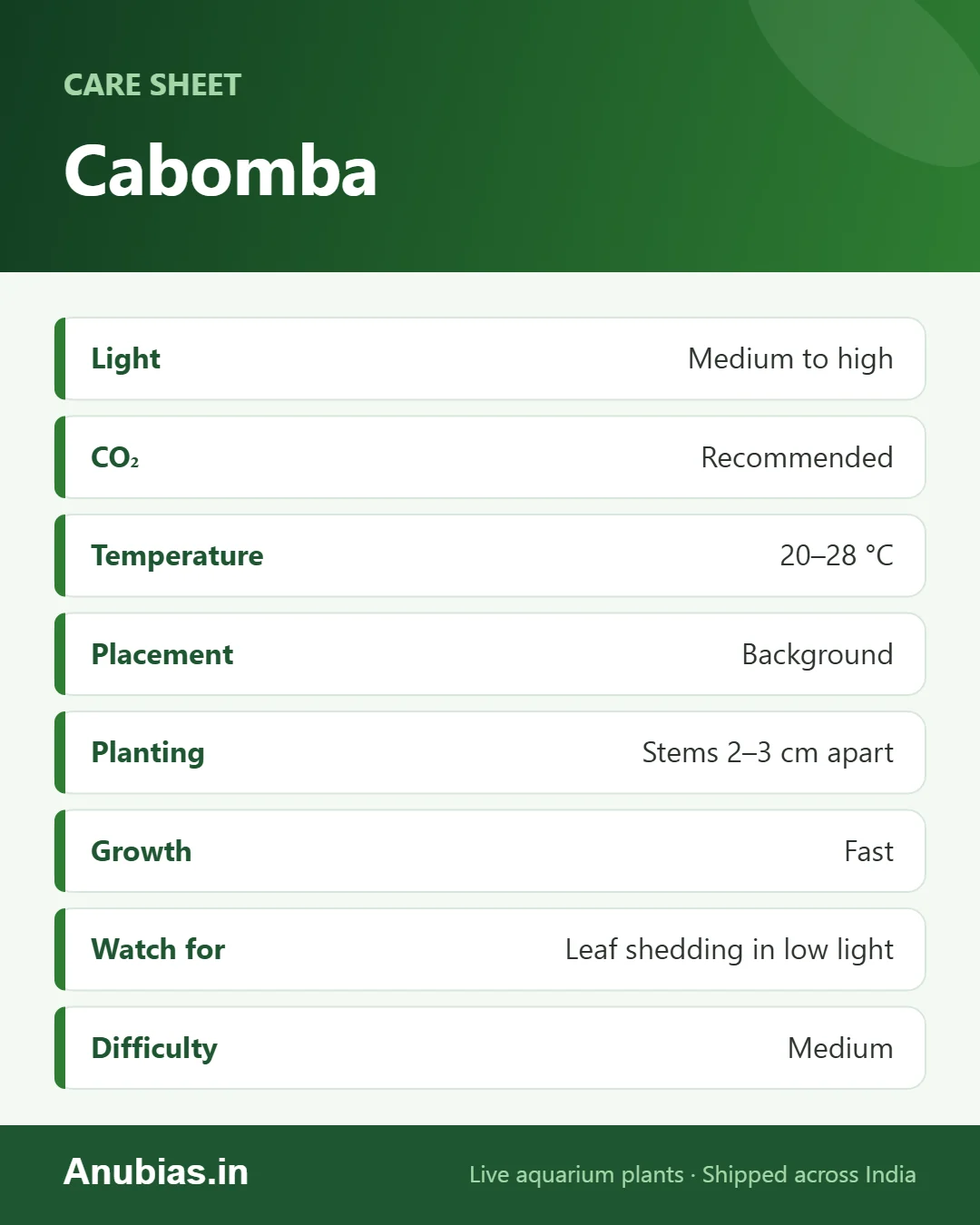
Cabomba does best in water between 20 and 28°C. It prefers slightly acidic to neutral conditions, with a pH between 6.0 and 7.5 and the healthiest growth reported closer to 6.5. It tolerates a reasonable range of general hardness, but very hard, highly alkaline water works against the slightly acidic conditions it prefers, so it is worth checking your source water before committing a large bunch to an aquascape running on hard borewell supply.
Light Requirements
This is a medium to high light plant, and it needs enough of it to stay compact and bushy rather than sparse. Aim for a lighting duration of about 7 to 8 hours a day under a reasonably strong full-spectrum light. Under weak or ambient light, the whorls space out further apart along the stem, the plant thins out, and lower leaves are usually the first to drop, so light is the first thing to check if a Cabomba stem starts looking leggy.
Substrate and Planting Method
Give it a nutrient-rich substrate or root tabs where possible, since Cabomba anchors into substrate and draws on it for nutrients alongside what it pulls from the water column. Avoid substrates containing crushed coral or aragonite, which slowly dissolve and push water hardness and pH upward, working against the slightly acidic range this plant prefers. Plant stems in small bunches spaced two to three centimetres apart, pushing each stem about a centimetre into the substrate, and handle them gently since the stems are thin and bruise or snap more easily than sturdier plants like Vallisneria or Anubias.
Propagation by Stem Cuttings
Cabomba propagates readily from stem cuttings. Trim a healthy shoot of around 10 to 12cm, strip away any leaves that would end up buried, and press the bare section of stem back into the substrate; this is often called topping. The parent stem left behind will usually push out a new growth tip from its highest remaining node, while the cutting roots and establishes as an independent plant within a couple of weeks under good light. Cuttings can also be left to float and root briefly before planting if you would rather see root growth first.
Trimming and Maintaining a Full Look
Regular trimming keeps a row of Cabomba dense rather than tall and thin. Rather than repeatedly cutting the same stems down at the same height, top the stems and replant the cuttings alongside the original base every few weeks; this keeps new growth thick and prevents the lower stem from going bare and woody. Because the leaves are so finely divided, they also collect drifting debris more easily than broad-leaved plants, so a bit of water flow through the bunch helps keep them clean.
Common Problems
Some leaf loss right after planting is normal handling shed from the move between grower, transit and your tank, and new growth over the following one to two weeks should look fuller and healthier. Shedding that continues well past that point, or that affects new growth rather than just older leaves, usually points to insufficient light, low or unstable CO2, or nutrient swings rather than a one-off adjustment. The stems are also fragile, so tugging at melted or tangled sections tends to snap healthy stems along with the bad ones; trim with scissors instead of pulling.
More stem plant guides:
Frequently Asked Questions
Why did my Cabomba lose leaves right after I planted it? Some leaf drop after transit and planting is normal handling shed rather than a sign of a dying plant, and new growth should fill in within one to two weeks once it settles into stable water.
Does Cabomba need CO2 injection to survive? Not strictly. It grows without injected CO2, but noticeably denser and faster with it, especially when paired with medium to high light.
How often should I trim Cabomba? Roughly every two to four weeks, or whenever a row starts looking tall and thin, using the top-and-replant method so new growth stays full instead of leaving a bare lower stem.
If you want to add a feathery contrast plant to your tank, our Cabomba Caroliniana ships as fresh cut stems ready to plant. For more fast-growing options to fill out a new aquascape, see our comparison of the best stem plants for beginners.
Planting a goldfish tank? Compare Anacharis vs Cabomba vs Vallisneria.
Grown in Surat (pre-order plants imported to order) · live-arrival guarantee with a 4-hour unboxing video · ₹99 shipping, free from ₹999