
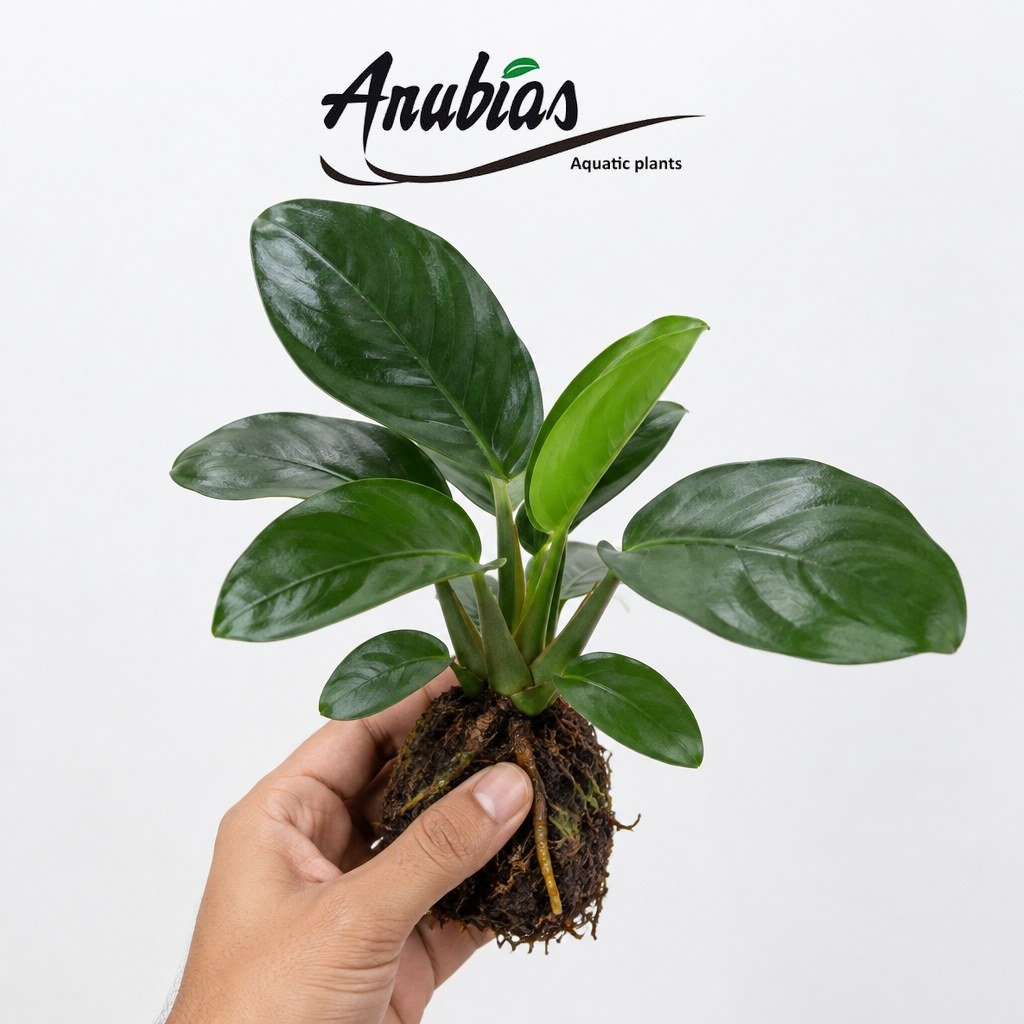
Description
Lagenandra ovata is a large, handsome marsh aroid from the streams of South India and Sri Lanka, with thick, glossy, lance-shaped leaves that rise on sturdy stalks from a creeping rhizome. It is the biggest of the commonly kept lagenandras and behaves like a giant cryptocoryne that nobody can kill: slow, tough, tolerant of low light and hard water, and perfectly at home in warm Indian tanks without CO2. Lagenandra ovata is the plant for a bold background in a large aquarium, a paludarium, or the margin of a shaded pond or tub.
Lagenandra ovata at a glance
| Scientific name | Lagenandra ovata |
|---|---|
| Family | Araceae |
| Origin | Southern India (Western Ghats) and Sri Lanka, along stream banks and marshes |
| Difficulty | Easy |
| Light | Low to medium |
| CO2 | Not required |
| Temperature | 22–30 °C |
| pH | 6.0–7.5 |
| Growth rate | Slow |
| Height/size | 30–50 cm submerged; up to 1 m emersed |
| Placement | Background; paludarium, pond margin |
| Propagation | Rhizome division |
How to plant Lagenandra ovata
Lagenandra grows from a thick, creeping rhizome with strong roots, much like a large cryptocoryne. The rhizome sits on or just at the surface of the substrate, with the roots below.
- Rinse the plant and trim any damaged roots. Wash your hands afterwards; like many aroids, the sap contains irritant calcium oxalate crystals.
- Use a deep substrate of at least 5–6 cm, ideally aquasoil or gravel enriched with root tabs. This is a heavy root feeder.
- Plant the roots in the substrate and leave the rhizome itself exposed or only lightly covered. Burying the rhizome deeply causes rot.
- Give it room: a mature plant spreads 20–30 cm wide. Place it at the back or in a rear corner.
- In a paludarium or pond, plant it in wet soil at the waterline with the leaves in air; it grows much larger this way.
Lagenandras resent being moved. Pick the final position and leave the plant alone.
Lagenandra ovata care: light, CO2, fertiliser and water
Light. Low to medium light. The plant grows naturally in shade and keeps its dark, glossy leaves in modest lighting. Strong light brings algae to the long-lived leaves without speeding growth much.
CO2. Not required. Lagenandra ovata grows slowly but reliably in low-tech tanks. CO2 injection produces larger leaves slightly faster but is not necessary.
Fertiliser. Root feeding is what counts. Push a root tab near the rhizome every two to three months and dose a complete liquid fertiliser weekly. Iron keeps the new leaves from emerging pale.
Water. This is a genuinely heat-tolerant plant. It is native to lowland South India and takes 30 °C summer water in its stride, which makes it one of the best large plants for Indian tanks without a chiller. Hard tap water is fine. It copes with monsoon power cuts without trouble. Keep the water clean with weekly 25–30% water changes, but avoid sudden large changes in parameters, which can trigger leaf melt in lagenandras just as in cryptocorynes.
Growth, trimming and propagation
A new leaf unfurls every four to six weeks. Each leaf lasts many months. Remove old or algae-coated leaves by cutting the stalk at the rhizome. Submerged leaves are slightly narrower and thinner than emersed ones.
Propagate by rhizome division. Once the rhizome has grown long and carries several leaves, cut it with a sharp blade so each piece has at least three leaves and some roots. Replant immediately. Side shoots occasionally form along the rhizome and can be separated once they have their own roots. Grown emersed, the plant can be divided every year.
Where to use it in an aquascape
Lagenandra ovata is a specimen background plant. In a 3 ft (around 120 litres) to 6 ft (around 500 litres) aquarium, one plant in a rear corner creates a dramatic green focal point. It is too large for nano tanks. Its bold leaves pair well with finer textures: Java fern and Anubias nana on wood in front, smaller cryptocorynes in the midground and fast stem plants to fill space while it establishes.
In a paludarium, riparium or shaded outdoor tub it becomes a large, lush marginal plant. It suits South Indian biotope tanks alongside other Western Ghats plants.
It is safe with all fish and is tough enough for goldfish, cichlids, large barbs and plecos. Angelfish and discus appreciate the broad leaves.
Common problems and fixes
- Melt after planting. Leaves turn soft and translucent in the first weeks, especially emersed-grown leaves adapting to submersion. Keep the rhizome in place and the water stable; new leaves follow within a month or two.
- Rhizome rot. Rhizome buried too deep or substrate anaerobic. Lift the plant, cut away the rot, replant shallower.
- Pale new leaves. Iron shortage. Dose micronutrients and add a root tab.
- Holes and ragged edges in old leaves. Potassium deficiency or simple age. Dose potassium and remove the oldest leaves.
- Algae on old leaves. Too much light for a slow grower. Shorten the photoperiod and add nerite snails or Amano shrimp.
- No new growth for months. Usually a disturbed plant. Stop moving it and feed the roots.
What you receive
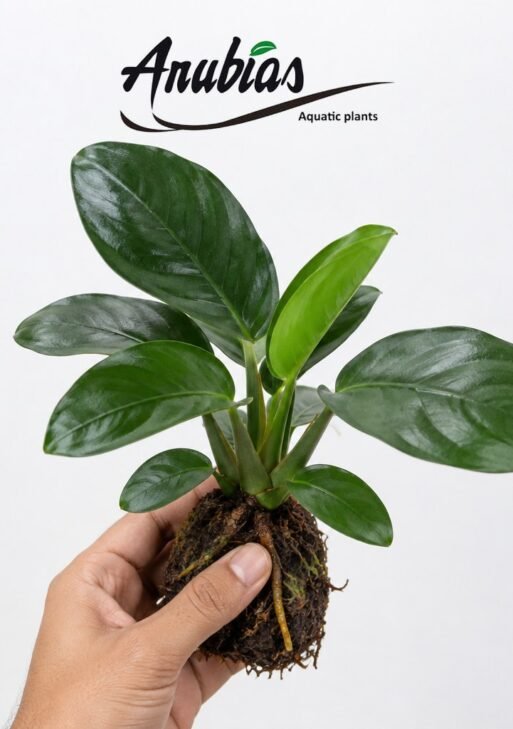
One healthy Lagenandra ovata plant of the size you select (Small or Standard), similar to the photo. Each plant is checked before packing, packed moist and shipped across India from Surat. ₹99 shipping, free on orders of ₹999 or more.
Live-arrival guarantee: record one continuous unboxing video within 4 hours of delivery and we will refund or replace a plant that arrived damaged.
FAQ
Does Lagenandra ovata need CO2?
No. Lagenandra ovata grows well without CO2 in a low-tech tank. Injection speeds growth slightly but is not needed.
Is Lagenandra ovata good for beginners?
Yes. It tolerates low light, hard water and 30 °C summer heat, needs no CO2 and is ignored by plant-eating fish. Just plant it once and leave it alone.
How big does Lagenandra ovata grow?
Submerged it reaches 30–50 cm tall and 20–30 cm wide. Emersed in a paludarium or pond it can approach 1 m.
Can Lagenandra ovata grow in a pond?
Yes, as a marginal plant in wet soil at the edge of a shaded, frost-free pond or tub. It grows larger emersed than submerged.
Lagenandra ovata vs Cryptocoryne: what is the difference?
Both are Asian aroids with similar care. Lagenandra ovata is much larger with thicker, glossier leaves and a creeping rhizome, and it tolerates heat even better than most crypts.
Is Lagenandra ovata toxic to fish?
No. Fish and shrimp are not harmed by it. Its sap can irritate human skin, so wash your hands after handling.
Not sure what fits your tank? Plan it with our free AI tank planner.













There are no reviews yet.