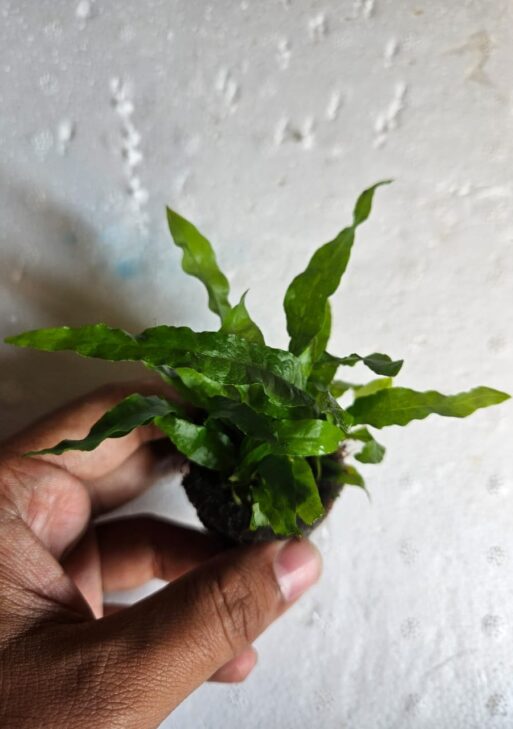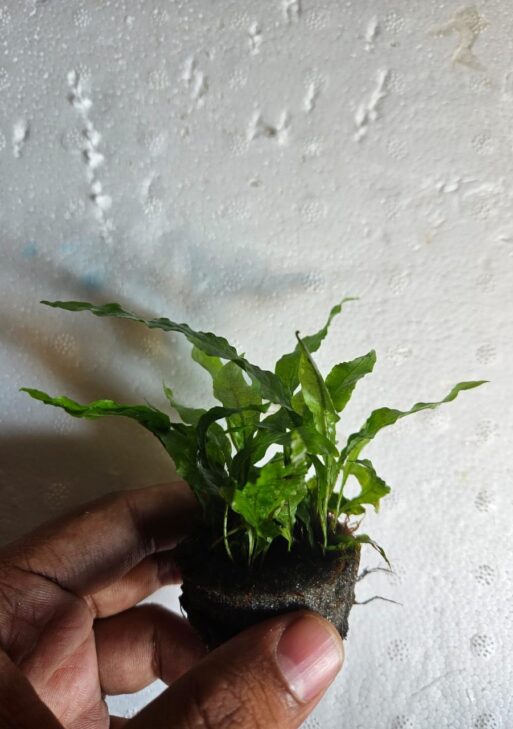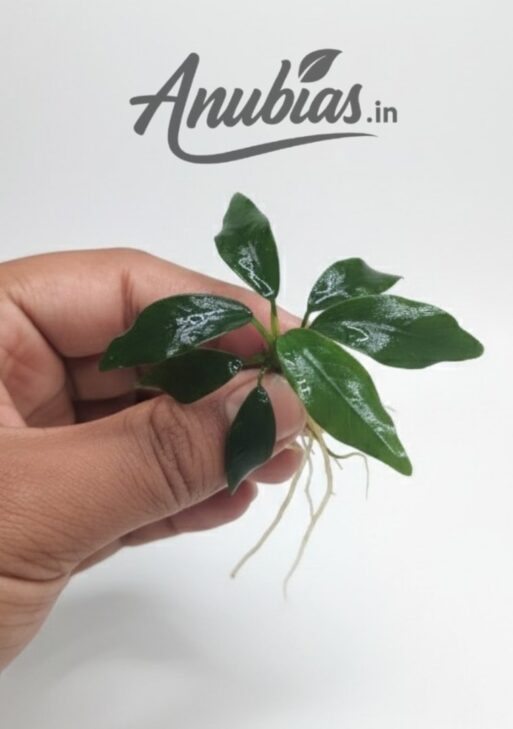


Staurogyne Repens is one of the easiest carpet-style plants, but it can still turn yellow, get holes, or grow straight up without ever forming a carpet. The fixes are simple once you know what each symptom means.
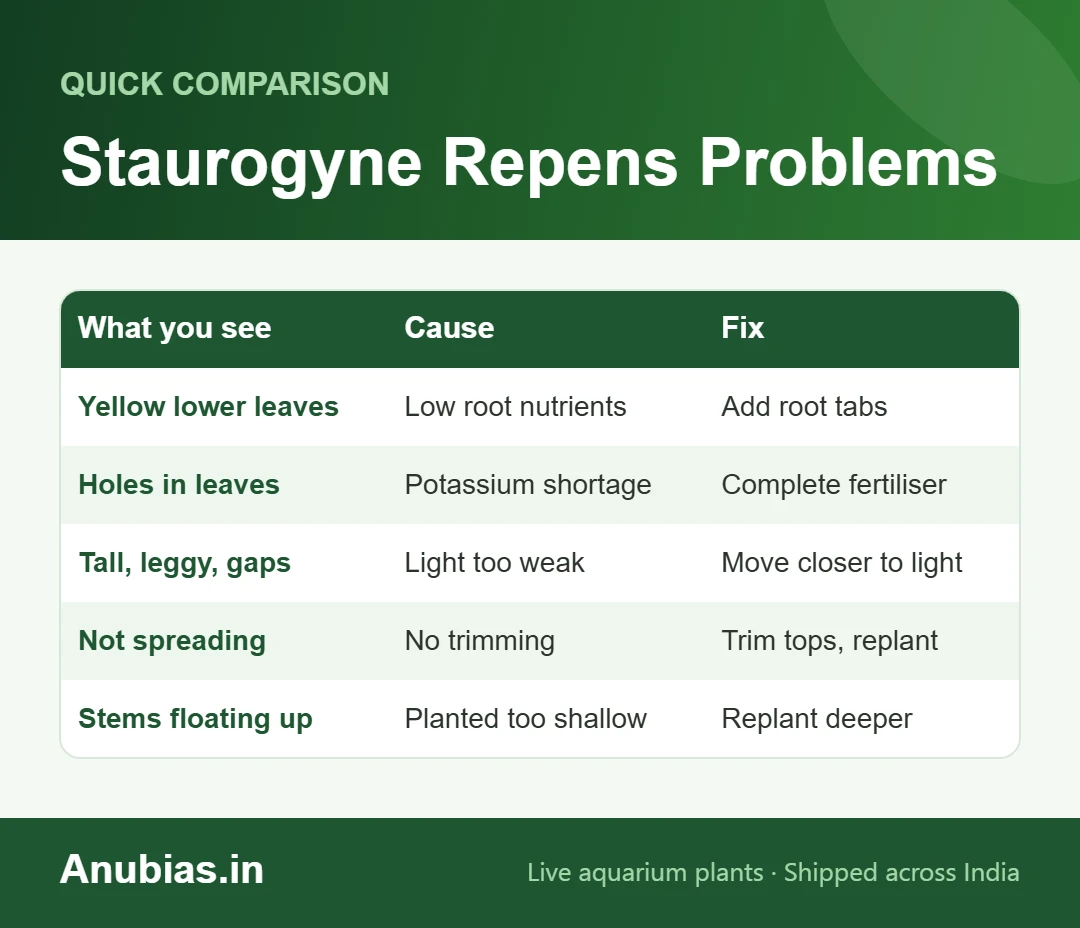
Quick answer: Staurogyne Repens usually turns yellow from low nutrients in the substrate (add root tabs), gets pinholes from potassium shortage (use a complete liquid fertiliser), and grows tall and leggy when light is too weak. It spreads into a carpet only when you trim the tops and replant them. Give medium light, plant stems 2–3 cm deep and apart, and trim every 3–4 weeks.
Why Staurogyne leaves turn yellow
Staurogyne is a rooted stem plant that feeds well from the substrate. In plain gravel, lower leaves yellow as nutrients run out. Push root tabs near the plants and dose a liquid fertiliser weekly. If new leaves are pale while old ones are green, add a fertiliser with iron and trace elements.
Why it is not spreading
Staurogyne grows upward first. It becomes a low carpet only when trimmed: cut the top few centimetres, replant them in gaps, and the cut stems send out side shoots. Without trimming, it stays as a small upright bush.
Leggy growth and gaps between leaves
Stretched stems with wide gaps mean the light is too weak or blocked by floating plants. Move it to the brightest area or improve lighting. CO2 is optional but speeds dense growth.
Fix checklist
- Add root tabs near the plants.
- Dose a complete liquid fertiliser weekly.
- Give medium light for 7–8 hours; reduce shading.
- Trim tops every 3–4 weeks and replant them.
- Replant any stems that float up, 2–3 cm deep.
Full guide: Staurogyne Repens care.
More carpet plant guides:
- Monte Carlo vs Dwarf Hairgrass
- Best Foreground Aquarium Plants (With and Without CO2)
- Easiest Carpet Plant Without CO2
- Dwarf Hairgrass Turning Brown or Yellow? Causes and Fixes
- Monte Carlo Melting or Not Carpeting? Causes and Fixes (With and Without CO2)
- Hydrocotyle Tripartita Japan Care Guide
- Monte Carlo Plant Care Guide
- Dwarf Sagittaria (Sagittaria subulata) Care Guide
Is Staurogyne repens the right carpet for your tank?
It is often bought as an easy carpet and it is not quite that. It is easy to keep alive and slow to carpet, which is a different thing, so it is worth checking the fit before troubleshooting further.
It suits you if you have a nutrient substrate or are willing to use root tabs, a medium light, and the patience to trim every few weeks for several months. It rewards that with a dense, dark green mat that needs no carbon dioxide.
It suits you less well if you want coverage within a month, if your substrate is plain gravel you do not want to feed, or if the spot you have chosen is shaded by taller plants. In those cases another plant will get you there with less work.
- Marsilea hirsuta spreads by runners in low light and needs almost no trimming.
- Dwarf Sagittaria is the most forgiving option in hard Indian tap water and warm tanks.
- Cryptocoryne parva is extremely slow but tolerates low light and never needs replanting.
- Anubias nana petite attached to flat stones gives a low foreground with no substrate demands at all.
Heat, flow and the first two months
Staurogyne comes from flowing, cooler water and it shows. Above roughly 30 degrees it slows noticeably, and the older lower leaves are the first to yellow, which is why so many tanks report problems from April onwards. A fan across the surface through the hot months does more than any fertiliser change.
Flow matters more than for most foreground plants. In a dead corner with no water movement, debris settles on the low leaves, the plant self-shades and the base rots. Angle the filter outlet so there is gentle movement across the foreground, without blasting the plants directly.
Expect the first month to look like nothing is happening. Nursery-grown Staurogyne is usually emersed, so the leaves you bought are often shed and replaced with smaller, darker submerged ones. Month two is when new side shoots appear at the base, and that is your first real signal that the plant has settled.
Do not judge progress by height. A plant that is gaining width at the base is on track even if it looks no taller.
Plants in this guide
Grown in Surat · graded by leaf count and photographed before dispatch · live-arrival guarantee on every order · ₹99 shipping, free from ₹2,000

Frequently asked questions
Does Staurogyne Repens need CO2 to carpet?
No. It carpets slowly without CO2 if light is adequate and you trim regularly; CO2 makes it faster and denser.
How long does Staurogyne take to carpet?
In a low-tech tank, expect a few months with regular trimming and replanting.
Can yellow Staurogyne leaves recover?
Yellow leaves will not turn green again; remove them and new healthy leaves will follow once nutrients are fixed.
Buy Staurogyne Repens on Anubias.in.
How many pots do I need for a two foot tank?
Three to four pots split into individual stems will cover a foreground strip reasonably in a two foot tank. Fewer will work but adds months to the process, since Staurogyne spreads by side shoots rather than runners. Planting more small pieces spaced a few centimetres apart is always faster than planting fewer large clumps.
Can Staurogyne repens grow attached to wood or rock?
Not reliably, because it is a rooted stem plant that feeds mainly through its roots. Some aquarists wedge it into crevices with a little substrate packed behind it, but it will not attach the way Anubias or moss does. If you want a low plant on hardscape, Anubias nana petite is the right choice.
Why do my fish or shrimp keep uprooting the new stems?
Freshly planted Staurogyne has a very small root system and almost no grip for the first two weeks. Bottom-sifting fish and large shrimp dislodge it easily while it is establishing. Plant each stem slightly deeper than feels natural, press the substrate firmly around it, and replant any floaters promptly rather than leaving them drifting.