
Description
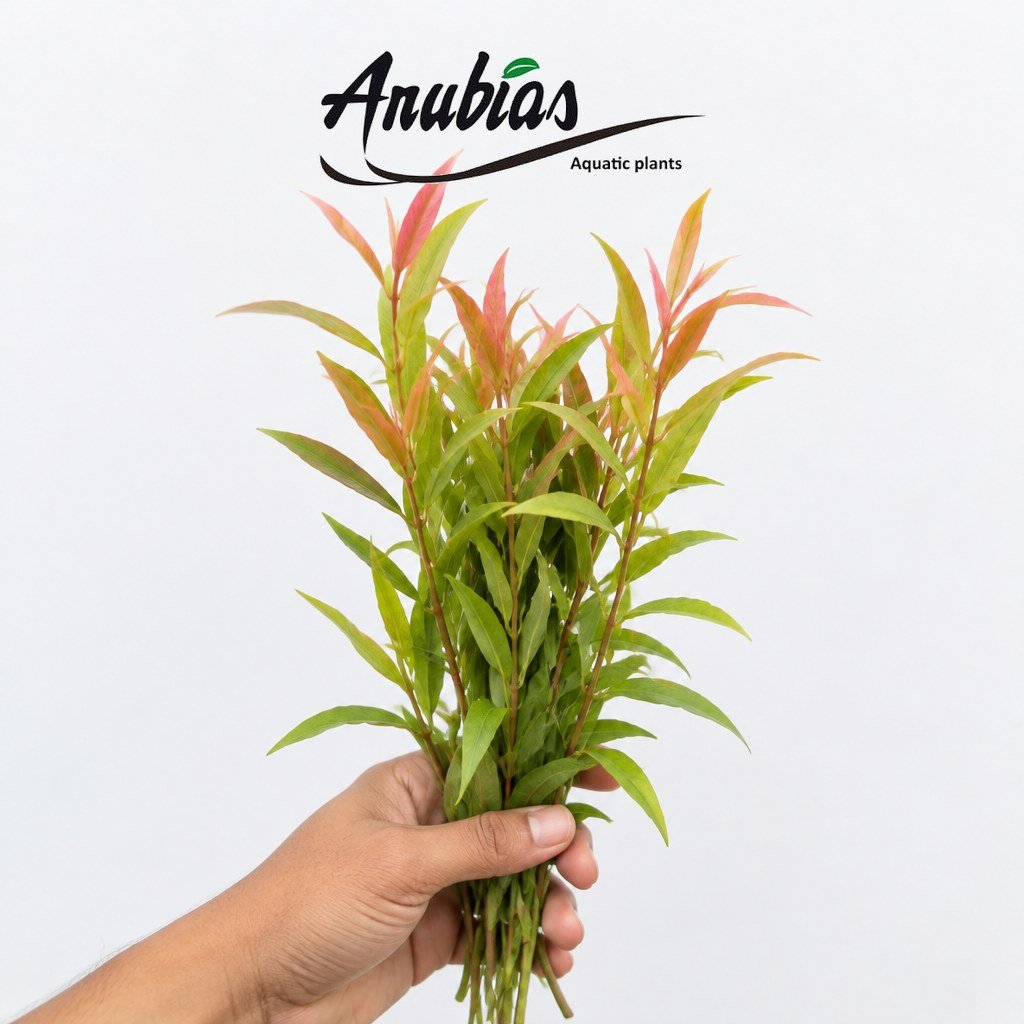
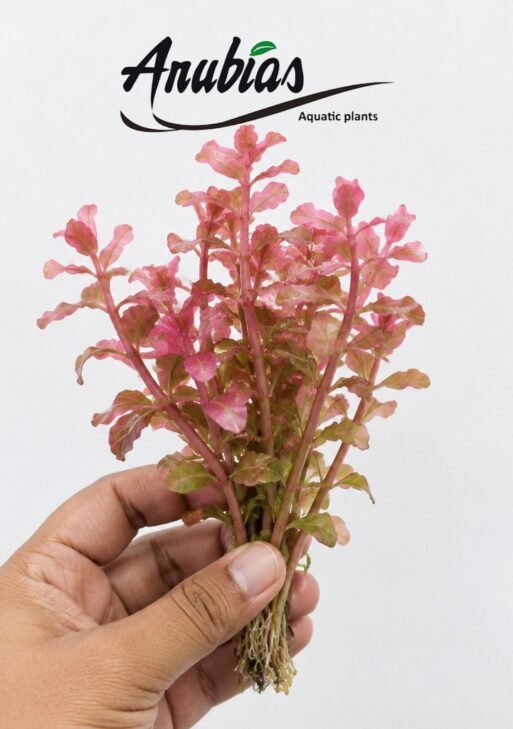
Polygonum Sao Paulo (Polygonum sp. ‘Sao Paulo’, now placed in the genus Persicaria) is a Brazilian stem plant with long, pointed leaves that turn a vivid pink to magenta-red under strong light, with contrasting pale veins. It is one of the brightest pinks in the hobby and a favourite for Dutch-style tanks, but it is a high-light, CO2 plant that stays plain green and leggy without them. It suits aquascapers with an established high-tech setup who want a tall, saturated colour accent.
Polygonum Sao Paulo at a glance
| Scientific name | Persicaria sp. ‘Sao Paulo’ (traded as Polygonum sp. ‘Sao Paulo’) |
|---|---|
| Family | Polygonaceae |
| Origin | Brazil (São Paulo state) |
| Difficulty | Medium to hard |
| Light | High |
| CO2 | Required for colour and compact growth |
| Temperature | 22–28 °C |
| pH | 5.5–7.0 |
| Growth rate | Fast |
| Height/size | 30–60 cm tall; stems 6–10 cm wide |
| Placement | Background |
| Propagation | Stem cuttings; side shoots |
How to plant Polygonum Sao Paulo
- Rinse the portion in dechlorinated water and trim any soft stem ends.
- Strip the leaves from the lowest 3–4 cm of each stem; the stems are thick and need a firm anchor.
- Plant each stem 3–4 cm deep with tweezers, 4–5 cm apart. The leaves are long, so crowded stems shade each other and lose colour low down.
- Place it at the back, directly under the strongest light.
- Keep flow moderate for the first week; it roots quickly and also produces roots from the nodes.
A nutrient-rich aquasoil gives the best results. Sand or gravel works with root tabs and steady liquid dosing.
Polygonum Sao Paulo care: light, CO2, fertiliser and water
Light makes or breaks this plant. Under high light (around 70 PAR or more at the top of the plant) the leaves turn pink to magenta with pale veins and the stems stay compact. Under medium light it is green with a faint pink flush, stretches quickly and looks nothing like the photos. On a basic LED, be honest with yourself: it will be a green plant.
CO2: required for the colour and density that make it worth growing. At a steady 25–30 ppm it is a fast, vigorous plant; without CO2 it grows slowly, pale and leggy.
Fertiliser: dose a complete liquid fertiliser two or three times a week with plenty of iron. Moderate nitrate (5–10 ppm) with good phosphate, potassium and iron gives the strongest pink; high nitrate pushes it green. Potassium prevents pinholes in older leaves.
Indian conditions: it accepts moderately hard tap water (GH up to about 12) but colours best in softer water (GH 4–8), so mixing RO water in helps. Summer temperatures above 28–29 °C slow it and dull the colour; a surface fan or chiller is useful in May–June. Keep CO2 and lights on the same inverter so monsoon power cuts never leave lights running without CO2.
Growth, trimming and propagation
Polygonum Sao Paulo grows 5–10 cm a week in a high-tech tank. Trim every two weeks before the tops break the surface, cutting just above a node and leaving 10–15 cm in the substrate. The base branches into side shoots, though the plant tends to grow as a loose group of upright stems rather than a dense bush.
Replant the tops, which carry the best colour, at the front of the group. Replace old bases with fresh tops every couple of months to keep the stand compact and pink. One portion fills a background group in a 2 ft tank within two months.
Where to use it in an aquascape
Polygonum Sao Paulo is a background plant for 2 ft (60–70 litre) tanks and larger; in 3 ft and 4 ft tanks (120–250 litres) a tall pink group against green is the focal point of a Dutch-style layout. It is too tall and too demanding for nano and low-tech tanks.
Pair it with green stem plants such as Hygrophila polysperma or Rotala Ceylon on either side, Rotala Blood Red for a deeper red nearby, Java fern or Anubias nana on wood in the midground, and a carpeting plant in front.
Safe with small community fish and shrimp. Avoid plant-nibbling fish and diggers.
Common problems and fixes
- Plant is green and leggy: light too low or no CO2. This is the most common complaint and has no shortcut; raise light and add CO2.
- Pale pink with high nitrate: let nitrate settle at 5–10 ppm and keep iron up.
- Pinholes in older leaves: potassium deficiency. Dose potassium.
- Lower leaves drop: shading by the long upper leaves. Space stems wider and trim regularly.
- Stunted tips: hard water or unstable CO2. Soften the water and hold CO2 steady.
- Melt after arrival: some leaf loss in the first week is normal; new pink growth follows once settled.
What you receive
You receive one healthy portion of Polygonum Sao Paulo in the size you select (Small or Standard), similar to the photo. It is checked before packing, wrapped moist and shipped across India from Surat. Live-arrival guarantee: record one continuous unboxing video within 4 hours of delivery and we refund or replace any plant that arrives damaged.
FAQ
Does Polygonum Sao Paulo need CO2?
Yes, for the pink colour and compact growth. Without CO2 and high light it is a plain green, leggy plant.
Is Polygonum Sao Paulo good for beginners?
No. It needs high light, CO2 and steady fertilising. Beginners wanting pink or red should start with Ludwigia Mini Super Red or Rotala Blood Red.
How much light does Polygonum Sao Paulo need to turn pink?
High light, roughly 70 PAR or more at the plant, with CO2 and iron. Medium light gives only a faint flush.
How fast does Polygonum Sao Paulo grow?
Fast, 5–10 cm a week in a high-tech tank. Trim every two weeks.
Can Polygonum Sao Paulo grow in hard water?
Moderately hard water (GH up to about 12) is acceptable; colour is best at GH 4–8, so mix in RO water if your tap is very hard.
Polygonum Sao Paulo vs Rotala macrandra: which is easier?
Both need high light and CO2. Polygonum is faster and a little more tolerant of hard water; macrandra has softer leaves and is more sensitive overall.
Not sure what fits your tank? Plan it with our free AI tank planner.












There are no reviews yet.