
Description
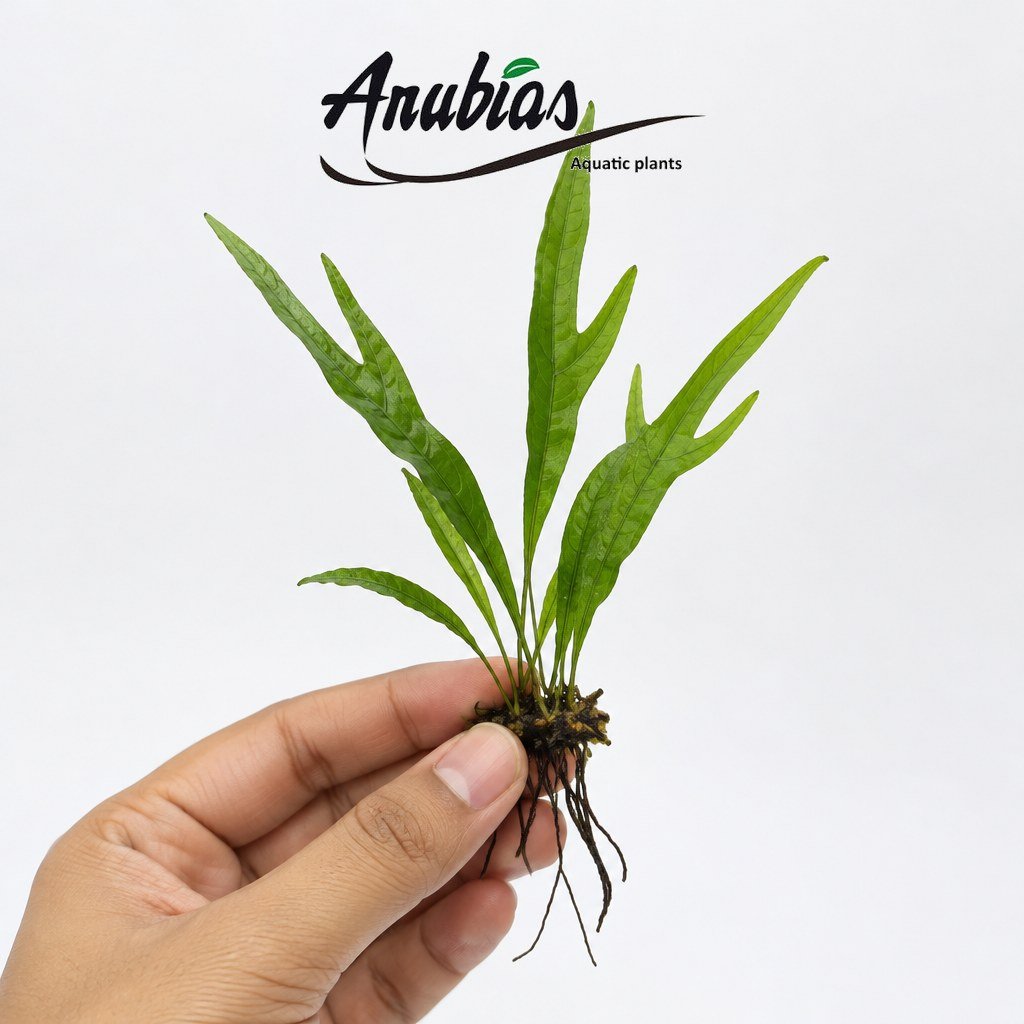
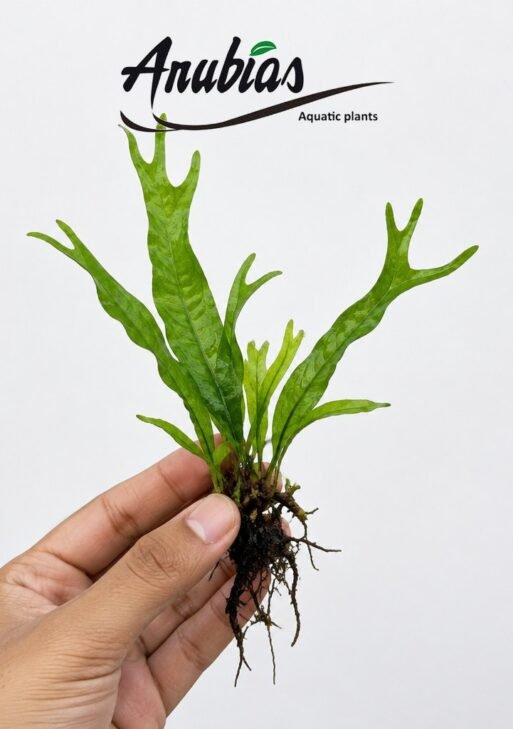
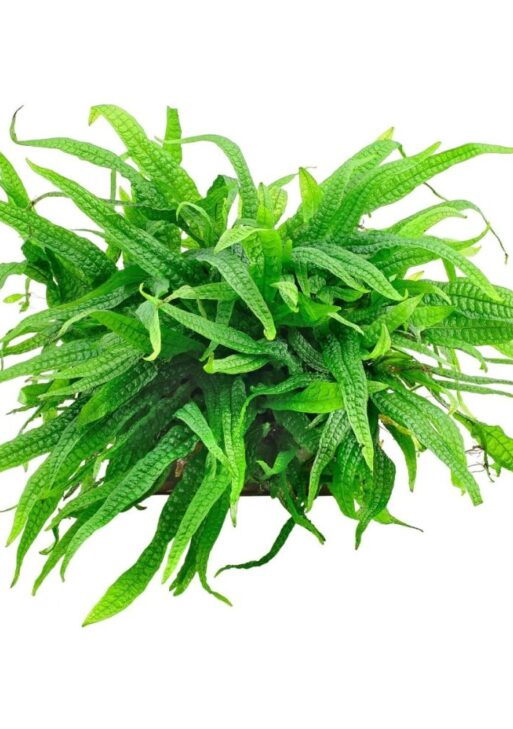
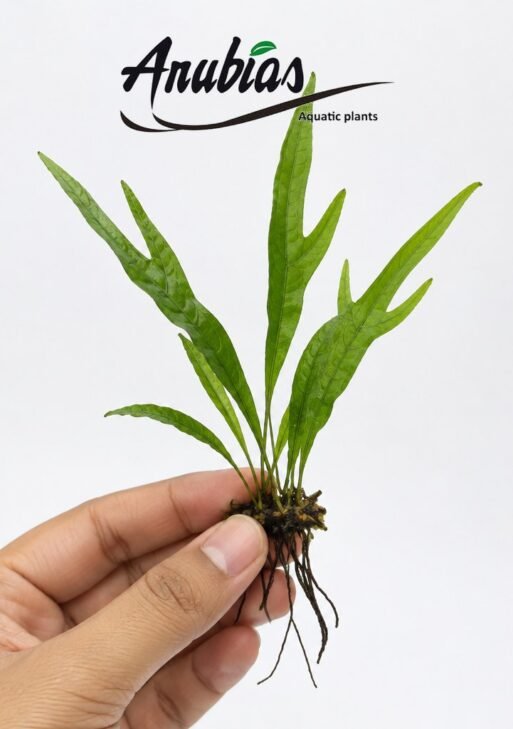
Java fern trident (Microsorum pteropus ‘Trident’) is a narrow-leaved cultivar of the classic Java fern whose fronds split into two or three forked tips, like a trident. It grows on wood and rock, needs no CO2 and tolerates the low light, hard water and warm temperatures of a typical Indian community tank, while its finer texture makes it far more elegant than the standard broad-leaved form. Java fern trident is an excellent midground plant for beginners, betta keepers and nature-style aquascapers alike.
Java fern trident at a glance
| Scientific name | Microsorum pteropus ‘Trident’ (also spelled Microsorium) |
|---|---|
| Family | Polypodiaceae |
| Origin | Cultivated form; the species is native to South and Southeast Asia (India to Indonesia and the Philippines) |
| Difficulty | Easy |
| Light | Low to medium |
| CO2 | Not required; optional |
| Temperature | 20–28 °C (tolerates short spells to 30 °C) |
| pH | 6.0–7.5 |
| Growth rate | Slow to moderate |
| Height/size | 15–25 cm; fronds narrow with 2–3 forked tips |
| Placement | Midground, epiphyte on wood or rock |
| Propagation | Rhizome division; plantlets on leaf tips and edges |
How to plant java fern trident
Microsorum pteropus grows from a creeping rhizome with black, wiry roots. Like anubias, the rhizome must never be buried.
- Rinse the plant and remove any brown fronds. The black roots are healthy; do not mistake them for rot.
- Choose a piece of driftwood or a porous rock. The roots of Java fern attach strongly to wood, which is its favourite surface.
- Tie the rhizome down with cotton thread or fishing line, or glue it with cyanoacrylate gel.
- If you want it in the substrate, wedge the rhizome between pebbles with only the roots buried.
- Place it in moderate flow where the narrow fronds can sway.
Within a month or two the roots grip the surface and the thread can be removed. Rooted plants stay put even in tanks with boisterous fish.
Java fern trident care: light, CO2, fertiliser and water
Light. Low to medium light is ideal. Trident keeps a neat, compact shape under moderate light. Very strong light turns the fronds pale and invites black beard algae, so provide shade or reduce the photoperiod in high-light tanks.
CO2. Not required. In a low-tech tank java fern trident grows steadily. With CO2 and good fertilisation it produces fronds more often and the forked tips become more pronounced.
Fertiliser. Feed through the water column with a weekly complete liquid fertiliser. Potassium is the nutrient Java fern asks for most; a shortage shows as black spots and holes in old fronds. Root tabs are not needed for a mounted plant.
Water. Hard tap water is fine, and the plant adapts to pH from slightly acidic to slightly alkaline. It prefers 20–28 °C; in Indian summers above 30 °C growth slows and older fronds may brown, so keep the tank shaded and the surface moving. It copes well with monsoon power cuts. Do weekly 25–30% water changes with temperature-matched water.
Growth, trimming and propagation
Expect a new frond every two to four weeks in a settled tank. The rhizome branches and creeps across the hardscape, slowly building a dense clump. Remove old or algae-covered fronds by cutting at the rhizome.
Java fern trident propagates in two ways. First, by rhizome division: cut a rhizome with six or more fronds into sections of three or more fronds and mount each separately. Second, by adventitious plantlets: tiny baby ferns appear on the tips and edges of mature fronds, especially on older leaves that look like they are dying. Leave them until they have a few leaves and roots of their own, then pull them off and tie them to new wood. Those black “dying” fronds are often just the parent plant making babies.
Where to use it in an aquascape
The forked, narrow fronds give a feathery look that suits nature-style and jungle layouts. Mount several rhizomes along a driftwood branch to create a mid-height screen, or cluster them at the base of rock in the midground. Because it is narrower than standard Java fern, it works in smaller tanks too.
Suitable for tanks from 1.5 ft (around 40 litres) to 5 ft (around 400 litres). Combine it with Anubias nana for contrast in leaf shape, other Java fern varieties for a fern-only scape, cryptocorynes in the substrate and floating plants above to soften the light.
It is safe with everything: bettas, tetras, gouramis, angelfish, goldfish, African cichlids and plecos. The fronds taste bitter, so even plant-eaters leave them alone. Shrimp and snails graze them clean.
Common problems and fixes
- Rhizome rot. Soft rhizome, fronds detach. Cause: rhizome buried. Fix: cut away the rot and remount above the substrate.
- Black spots and holes in old fronds. Usually potassium deficiency. Dose potassium weekly. Brown edges with tiny plantlets are normal reproduction, not disease.
- Black beard algae on frond edges. Cause: unstable CO2, poor flow, excess light. Fix: improve circulation, shorten the photoperiod, spot-treat with liquid carbon.
- Translucent, melting fronds after arrival. Emersed-grown fronds adapt to submersion by dying back. Keep the rhizome in place; new submerged fronds appear within weeks.
- Pale fronds. Too much light or an iron shortage. Shade the plant and dose micronutrients.
What you receive
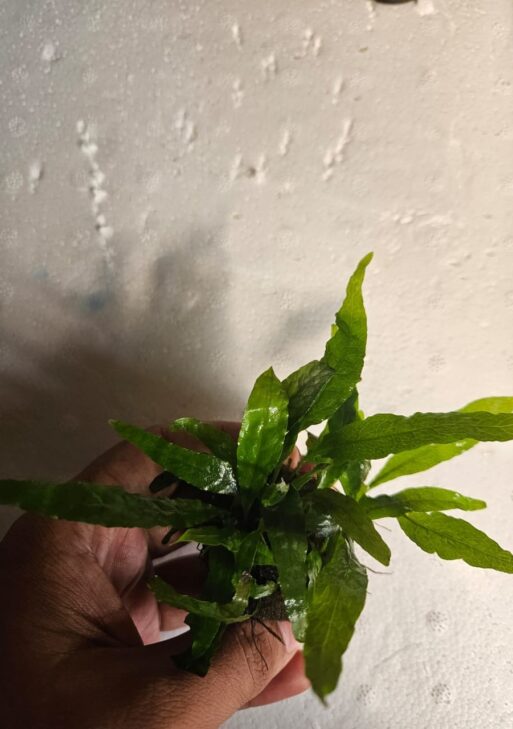
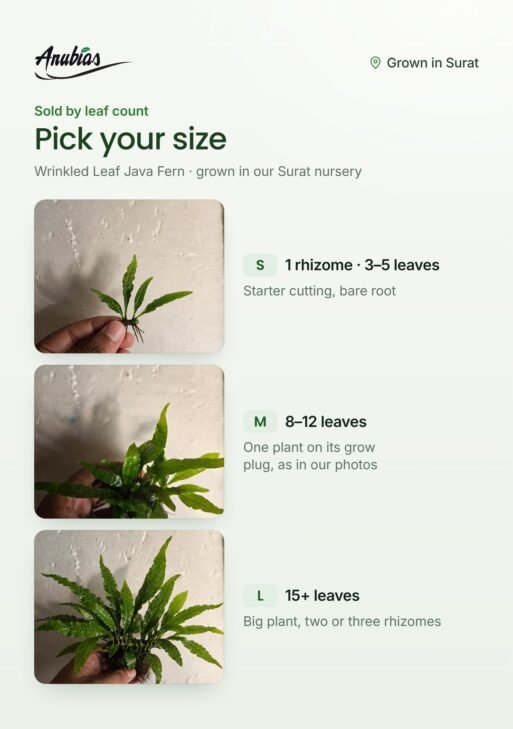
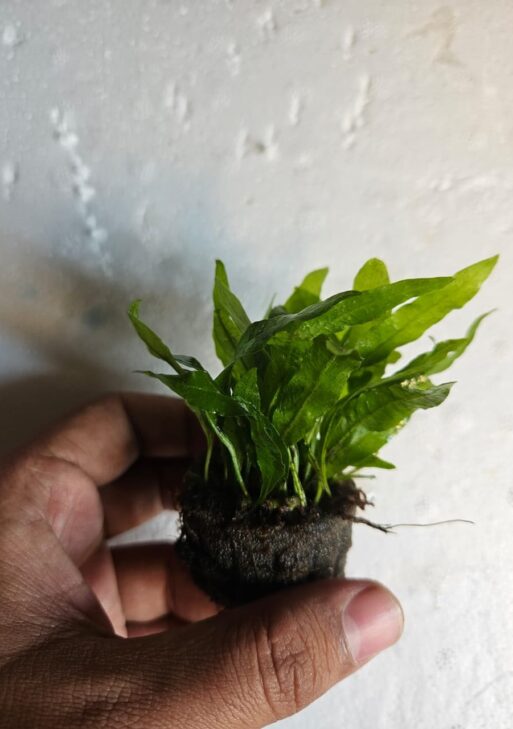
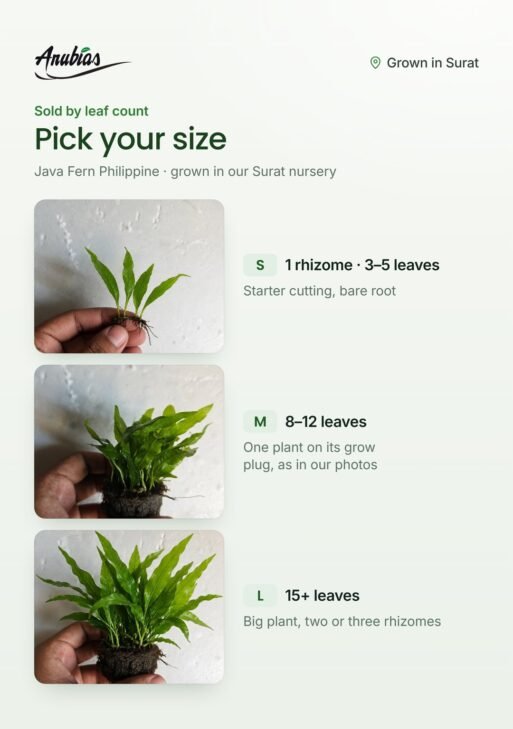
One healthy java fern trident plant of the size you select (XS, Small or Standard), similar to the photo. Each plant is checked before packing, packed moist and shipped across India from Surat. ₹99 shipping, free on orders of ₹999 or more.
Live-arrival guarantee: record one continuous unboxing video within 4 hours of delivery and we will refund or replace a plant that arrived damaged.
FAQ
Does java fern trident need CO2?
No. Java fern trident grows well without CO2. Injection speeds up growth and produces more forked fronds, but it is optional.
Is java fern trident good for beginners?
Yes. It tolerates low light, hard water and plant-eating fish, and it only needs its rhizome kept above the substrate.
Can java fern trident grow in gravel or sand?
Yes if only the roots go into the substrate and the rhizome stays exposed, for example wedged between stones. Mounting on wood is more reliable.
How fast does java fern trident grow?
Slow to moderate, with a new frond every two to four weeks in a settled tank. It gradually builds a clump over several months.
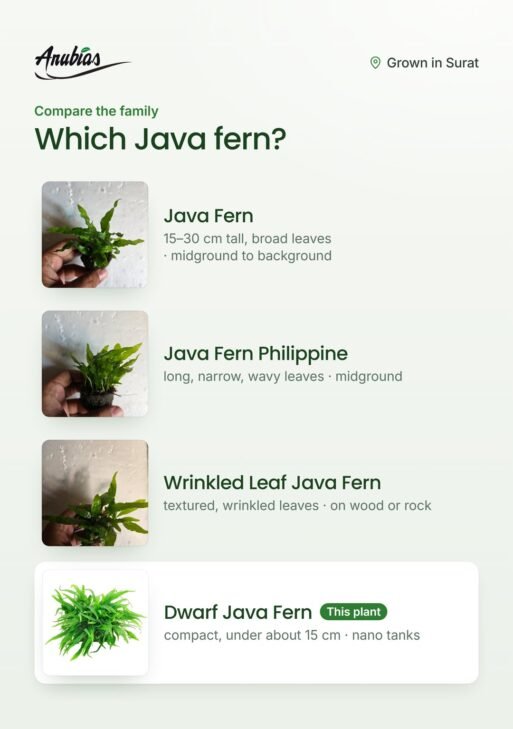
Java fern trident vs regular java fern: what is the difference?
Trident has narrower fronds that split into two or three tips, giving a finer, feathery look; regular Java fern has broad undivided fronds. Care and size are similar.
Why are there black dots on my java fern leaves?
Rows of brown or black dots under the fronds are spores and are normal. Black patches with holes point to potassium deficiency. Tiny baby plants on the leaf edges are new plantlets you can replant.
Not sure what fits your tank? Plan it with our free AI tank planner.










There are no reviews yet.