
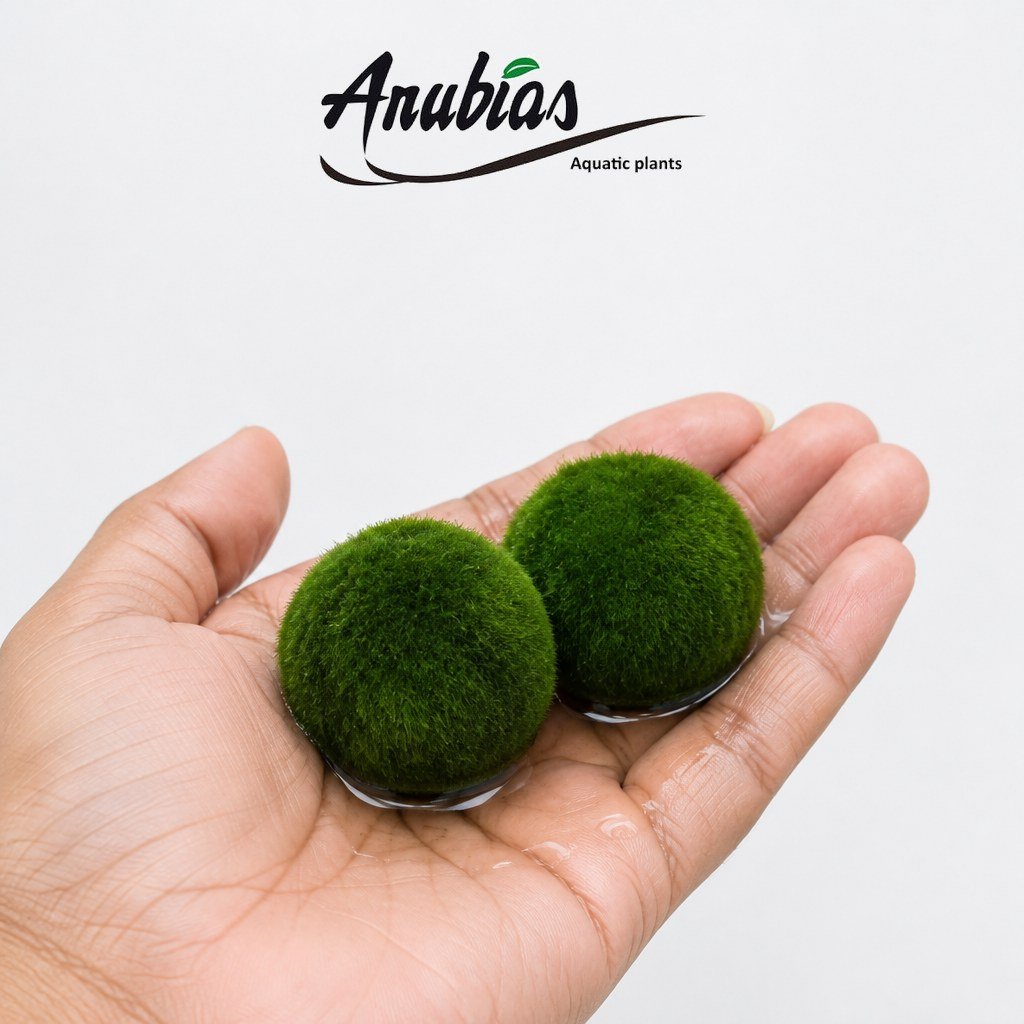
Description
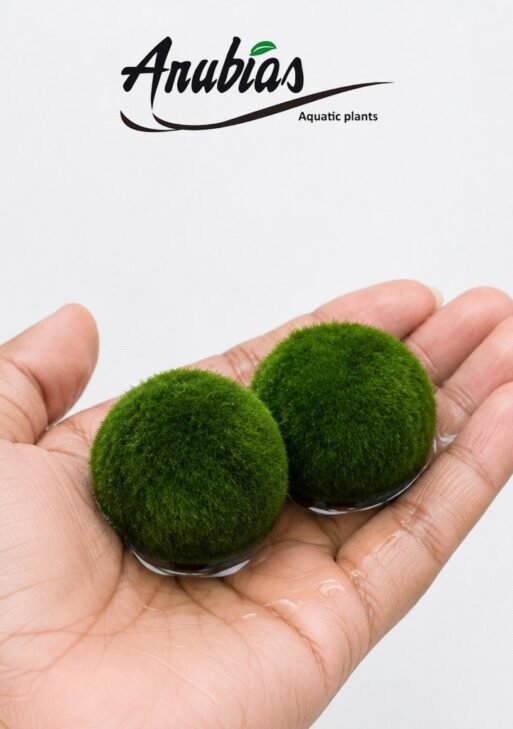
Marimo moss ball (Aegagropila linnaei) is a soft, velvety green sphere that is not a moss at all but a rare form of filamentous green algae that grows into a ball as it rolls on the beds of cold lakes in Japan and Iceland. It needs no CO2, no fertiliser and only dim light, and it is as happy in a jar on a desk as in a shrimp tank. The marimo moss ball suits beginners, shrimp and betta keepers, children’s first tanks and anyone looking for a small living gift, with one caution for Indian homes: it prefers cool water and dislikes summer heat.
Marimo moss ball at a glance
| Scientific name | Aegagropila linnaei (formerly Cladophora aegagropila) |
|---|---|
| Family | Pithophoraceae (a green alga, not a moss or plant) |
| Origin | Cold, clear lakes of Japan (Lake Akan), Iceland, Estonia, Scotland and Ukraine |
| Difficulty | Very easy, as long as it is kept cool |
| Light | Low; indirect room light is enough |
| CO2 | Not required |
| Temperature | 15–25 °C ideal; tolerates up to about 28 °C |
| pH | 6.5–8.0 |
| Growth rate | Very slow; roughly 5 mm a year |
| Height/size | Balls of 2–6 cm as sold; wild balls reach 20–30 cm over decades |
| Placement | Foreground, on the substrate, or loose in a jar or vase |
| Propagation | Division; a ball can be split and the halves rerolled |
How to place a marimo moss ball
There is no planting. A marimo has no roots and simply rests on the bottom, which makes it the easiest aquarium purchase there is.
- Rinse the ball gently in clean, dechlorinated water, squeezing lightly to flush out transport debris. A faint pond smell at unboxing is normal and goes after a rinse.
- Squeeze out the air so the ball sinks. A new ball sometimes floats for a day as trapped bubbles escape; it settles on its own.
- Set it in the foreground, in a shaded spot away from the brightest part of the light.
- For a jar or vase, use dechlorinated or filtered water and keep it out of direct sun.
- Every week or two, roll it gently between your palms so all sides get light and it keeps its shape.
Outdoors it is fine in winter but struggles in an Indian summer; keep it indoors.
Marimo moss ball care: light, CO2, fertiliser and water
Light. Low. In its native lakes marimo lives in dim water several metres deep. Room light or the shaded end of a tank is plenty; strong direct light or sunlight turns it brown and encourages other algae to grow on it.
CO2 and fertiliser. Neither is needed. The ball grows so slowly that it draws everything from fish waste or plain tap water. In a jar with no fish, a few drops of liquid aquarium fertiliser once a month is optional.
Water. Temperature is the one thing that matters. Marimo is a cold-water organism, happiest between 15 and 25 °C and coping up to about 28 °C. Above that, as in an Indian summer room or a heated tropical tank, it turns brown and falls apart. In April–June keep it in the coolest, most shaded room, an air-conditioned space, or a tank with a surface fan; a jar can go in the fridge door for a few hours on the hottest days. Hard Indian tap water and any pH between 6.5 and 8 are fine. Change jar water every one to two weeks with dechlorinated water. In a tank it is unaffected by monsoon power cuts.
A pinch of aquarium salt in a jar (never a planted tank) is a traditional way to deepen the green; use sparingly.
Growth, trimming and propagation
Marimo grows about 5 mm a year, so the ball you receive looks much the same for a long time. That slowness is part of its charm: a well-kept marimo lives for decades. Trimming is never needed; just roll it occasionally so it does not flatten on one side.
To propagate, cut a healthy ball in half with a clean blade and roll each half tightly between your palms into a new sphere. Hold the shape with a loop of cotton thread for a few weeks until the filaments knit. If a ball ever falls apart, the loose strands can be rerolled the same way; they do not die, they just need reshaping.
Where to use it in an aquascape
Marimo fits these setups:
- Shrimp tanks of 1–1.5 ft (around 20–40 litres), where cherry shrimp spend all day picking food from the fuzzy surface. This is the classic use.
- Betta tanks of 1 ft (around 10–20 litres); bettas rest on the ball and push it around.
- Unheated nano and coldwater tanks, such as white cloud minnow setups, where the cool water suits it perfectly.
- Foreground detail in a nature-style tank of 2 ft (around 60 litres), clustered between stones with Anubias nana and Java fern above, or alongside other ferns and mosses.
- Jars, vases and desks, alone or with pebbles, as a zero-effort living ornament and a popular gift; see our gifting plants.
It is safe with all shrimp, snails, bettas, tetras, rasboras and guppies. Goldfish and large plecos pull it apart; there, keep it in a separate jar.
Common problems and fixes
- Turning brown. Heat above 28 °C first, too much light second. Move it somewhere cooler and shaded. Brown patches often recover once it cools; rinse and roll it, and trim any mushy parts.
- Floating. Trapped gas from photosynthesis or a water change. Squeeze gently and it sinks. If it keeps floating and smells bad it may be rotting inside; cut it open, remove the dark core and reroll the outer layer.
- Falling apart. Heat, rot or a fish worrying at it. Reroll the strands tightly and hold with thread until they knit.
- Hair or thread algae on it. Other algae growing under strong light. Reduce light, rinse and pick off the strands; a short soak with a pinch of salt helps.
- White or grey patches. Mould or dead filaments from poor water. Rinse, trim the patch and improve water changes.
- Flat on one side. Never rolled. Turn and roll it every week or two.
What you receive
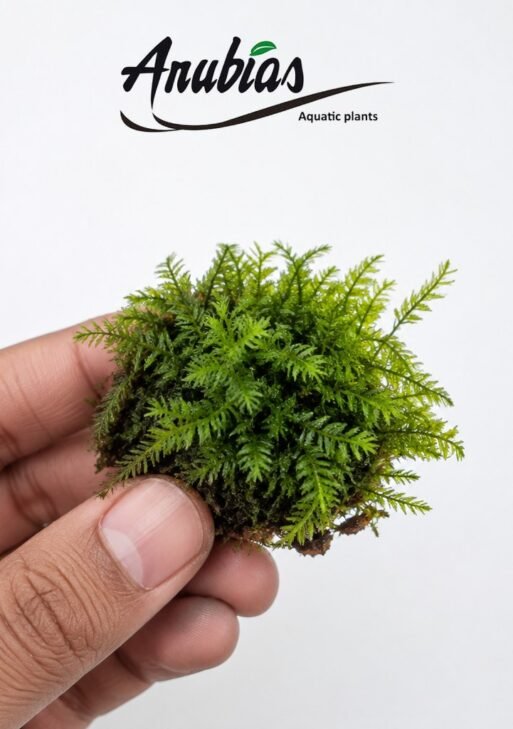
One healthy marimo moss ball of the size you select, Small or Standard, similar to the photo. Small suits a jar, vase, betta tank or nano tank; Standard is a larger ball for a bigger tank or a more substantial gift. Checked before packing, packed moist and shipped across India from Surat. ₹99 shipping, free on orders of ₹999 or more.
Live-arrival guarantee: record one continuous unboxing video within 4 hours of delivery and we will refund or replace a marimo that arrived damaged.
FAQ
Is a marimo moss ball a real moss?
No. It is a ball of Aegagropila linnaei, a filamentous green alga that naturally grows into a sphere in cold lakes. It behaves like a very slow plant and is treated as one.
Can marimo survive in Indian summer heat?
Only with care. Above about 28 °C it browns and falls apart. Keep it in the coolest, shaded room or an air-conditioned space during April–June, and in an unheated tank the rest of the year.
Does a marimo moss ball need light or CO2?
Very little light and no CO2. Indirect room light or the dim end of a tank is enough; strong light turns it brown.
Is marimo good for shrimp and bettas?
Yes. Shrimp graze its surface all day and bettas rest on it. It is safe with all small fish, shrimp and snails.
How fast does a marimo moss ball grow?
About 5 mm a year. A ball keeps its size for years and can live for decades with basic care.
Why is my marimo turning brown?
Heat first, light second. Move it somewhere cooler and dimmer, rinse it, roll it and trim any mushy parts; it usually greens up again.
Not sure what fits your tank? Plan it with our free AI tank planner.


There are no reviews yet.