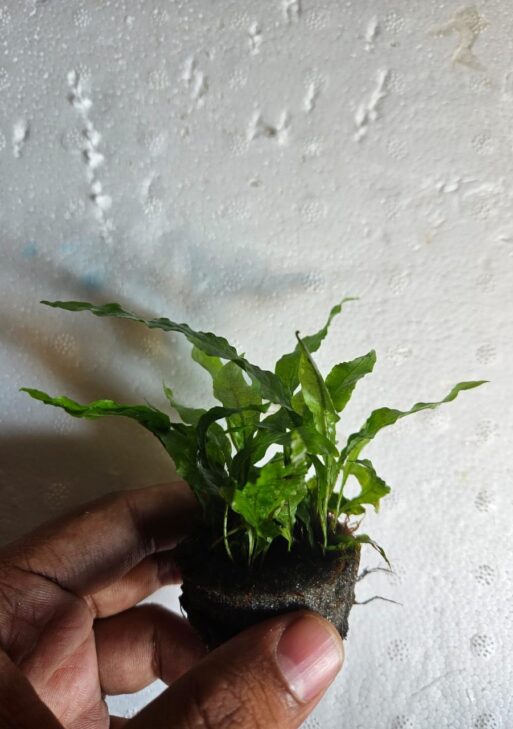

Outdoor tubs, urli bowls and balcony ponds full of aquatic plants look lovely in the monsoon, but standing water can also breed mosquitoes, including those that spread dengue. Municipal bodies in many Indian cities urge residents to remove mosquito breeding sites. The good news is that a planted tub can stay beautiful and larvae-free with a few simple habits.
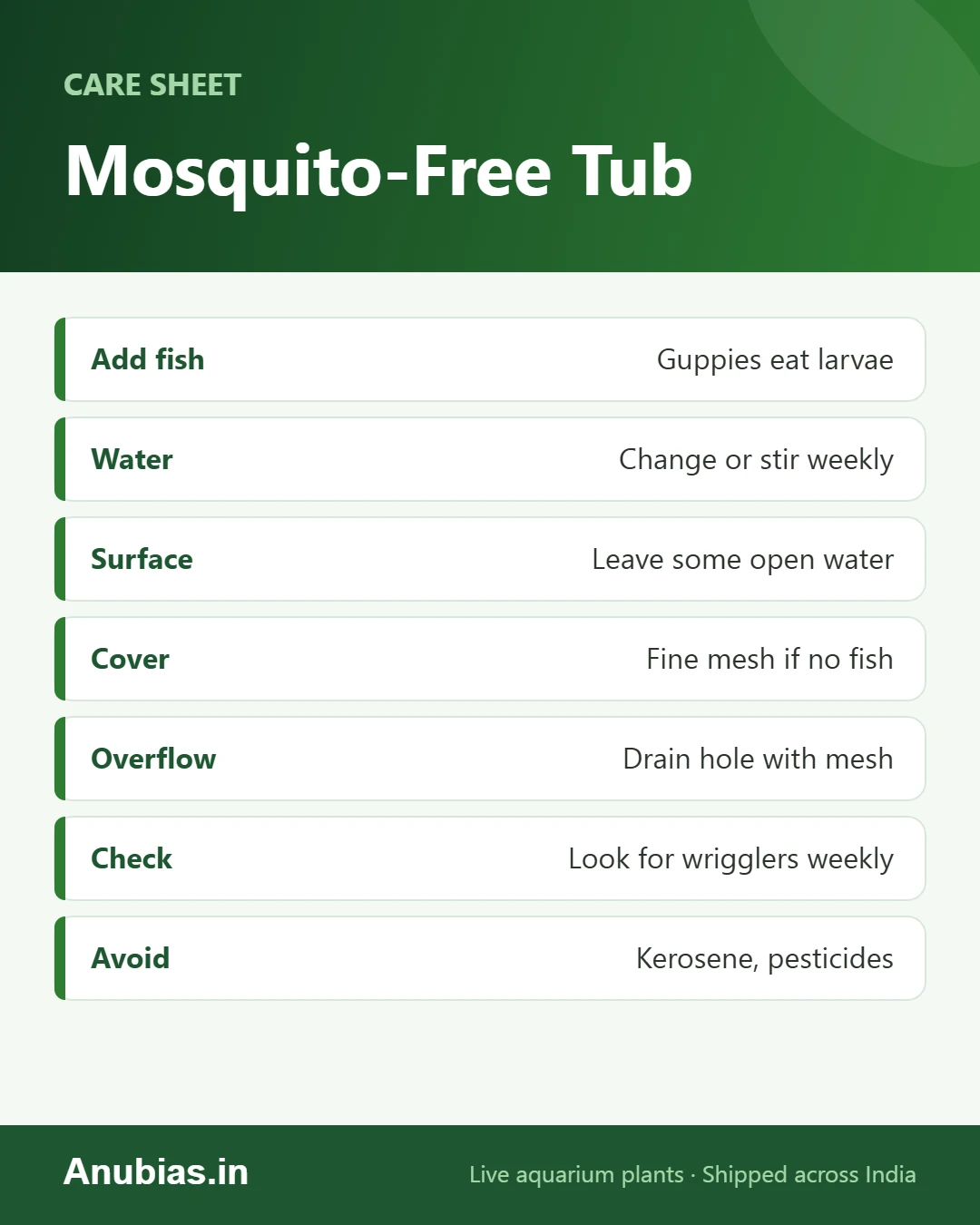
Quick answer: To keep aquatic plant tubs mosquito-free, add a few guppies or other small fish that eat larvae, stir or partly change the water every week, leave some open water surface so fish can reach larvae, and cover fishless containers with fine mesh. Check weekly for wriggling larvae and never use kerosene or pesticides, which harm plants, fish and pets.
Why plant tubs can breed mosquitoes
Mosquitoes lay eggs on still water, and larvae develop in about a week in warm weather. Tubs with no fish, no water movement and a thick cover of floating plants give larvae shelter. Rainwater collecting in saucers and pots nearby is another common source.
Simple ways to stop larvae
- Add small fish: guppies are hardy, breed readily and eat mosquito larvae.
- Weekly water turnover: top up or exchange part of the water; larvae cannot finish developing in regularly disturbed water.
- Keep open patches: do not let floating plants cover the whole surface.
- Use mesh: for fishless bowls, cover with fine mesh or netting.
- Manage overflow: add a mesh-covered drain hole so rain does not wash fish out.
- Remove other standing water: empty plant saucers, buckets and clogged gutters around the tub.
What not to do
- Do not pour kerosene, oil or insecticides into tubs; they kill plants and fish.
- Do not leave fishless tubs uncovered through the monsoon.
More floating plant guides:
How to spot larvae before they become a problem
Check the tub once a week with a torch, ideally in the evening. Mosquito larvae hang just under the surface film with their tail tip touching the air, and dart down in a jerky wriggle when a shadow passes. That combination of hanging at the surface and wriggling downwards is the giveaway.
Not everything moving in a tub is a mosquito. Knowing the difference stops you from panicking and dumping a healthy tub.
- Mosquito larvae: thin, comma-shaped, hang head-down at the surface, wriggle in a jerk.
- Mosquito pupae: comma-shaped with a fat head, tumble when disturbed. These hatch within a day or two, so act immediately.
- Daphnia and copepods: tiny dots that hop through the water column. Harmless and a good sign.
- Bloodworms: red and living in the sediment, not at the surface. These are midge larvae, not mosquitoes, and they do not bite.
- Snails and their jelly egg clutches on the tub wall: harmless.
The fastest response if you find larvae in a fishless tub is to pour the water through a fine cloth into a drain and refill, rather than trying to net them out.
Choosing fish for a terrace tub
A terrace or balcony tub in India is a harsh place, so fish choice matters more than in an indoor tank. Water can sit above 32 degrees on a summer afternoon and drop sharply after a monsoon downpour.
Guppies handle this best and breed fast enough to keep numbers up, which is why they are the default. Mosquito-eating habits vary less than people think; any small surface-feeding fish will take larvae readily.
A few practical rules for tubs. Keep the tub in part shade rather than full afternoon sun, because a black plastic tub in direct sun gets dangerously hot. Aim for a tub of at least 30 to 40 litres, since small volumes swing in temperature too fast. Add a drainage hole near the rim covered with fine mesh so monsoon rain overflows without washing fish out. Avoid adding fish in the first week if the tub is brand new and has no established plants or biofilm.
Plants in this guide
Grown in Surat · graded by leaf count and photographed before dispatch · live-arrival guarantee on every order · ₹99 shipping, free from ₹2,000

Frequently asked questions
Do floating plants attract mosquitoes?
They do not attract them, but a completely covered surface can shelter larvae from fish. Keep some open water.
How many guppies does a tub need?
A few adults in a medium tub are usually enough, and they multiply over time.
Can I keep a tub without fish?
Yes, if you change the water fully every few days or cover it with fine mesh.
Choose plants for your tub from our outdoor tub plant guide.
Do mosquito larvae harm my plants?
No, they feed on microscopic matter in the water and ignore plants completely. The problem with larvae is purely a human health one, since the mosquitoes that hatch can carry dengue and other diseases. That is reason enough to keep them out, even though the tub itself is unaffected.
Will a small solar fountain stop mosquitoes in a tub?
It helps a great deal, because mosquitoes lay on still water and larvae struggle in moving water. A solar fountain that runs through the day disturbs the surface exactly when females are looking for somewhere to lay. It is not a complete answer on its own, since it stops at dusk and on cloudy monsoon days, so pair it with fish or mesh.
What should I do with a tub before a long trip?
Cover it with fine mesh stretched tight and weighted at the rim before you leave. If the tub has no fish and you will be away more than a week, it is safer to empty it and turn it upside down. A planted tub with established guppies will manage on its own for two to three weeks without feeding.