
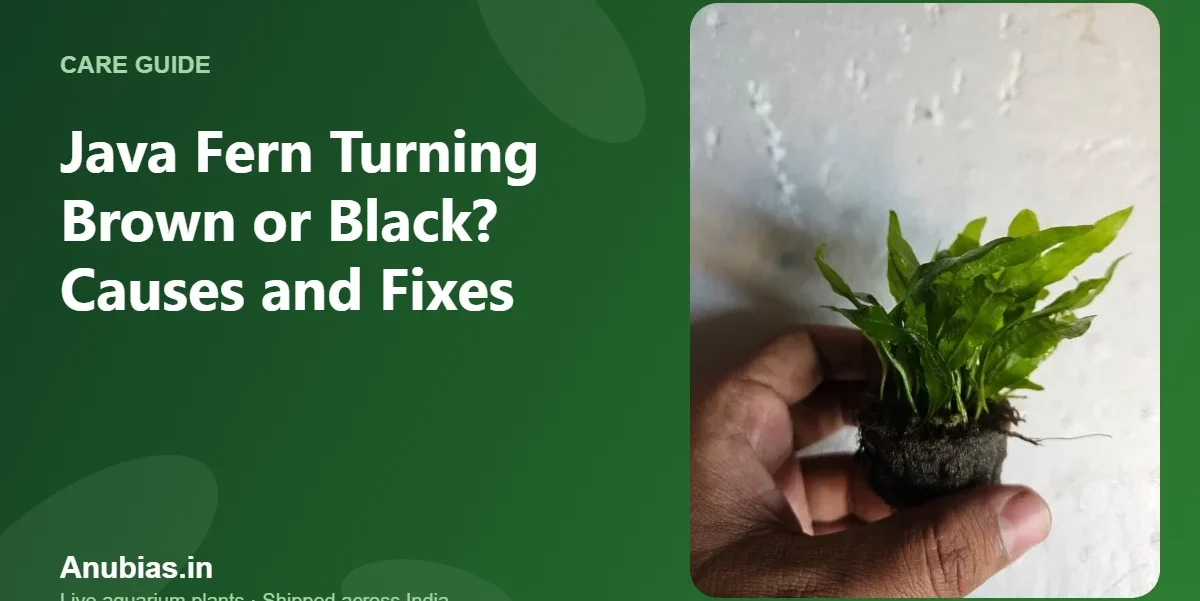
Java fern is one of the hardiest aquarium plants, but brown patches, black spots and melting leaves still worry many keepers. Some of these are completely normal, while others signal a problem with nutrients, light or planting. This guide helps you tell the difference and fix it.
Quick answer: Neat rows of dark brown or black dots under Java fern leaves are usually spores (sori) and are normal. Brown, see-through patches that spread usually mean nutrient shortage, often potassium or nitrogen; leaves melting from the base point to a buried or rotting rhizome; and brown burnt patches can come from too much light. Keep the rhizome attached above the substrate, give low to moderate light, dose a complete liquid fertiliser weekly, and trim badly damaged leaves.
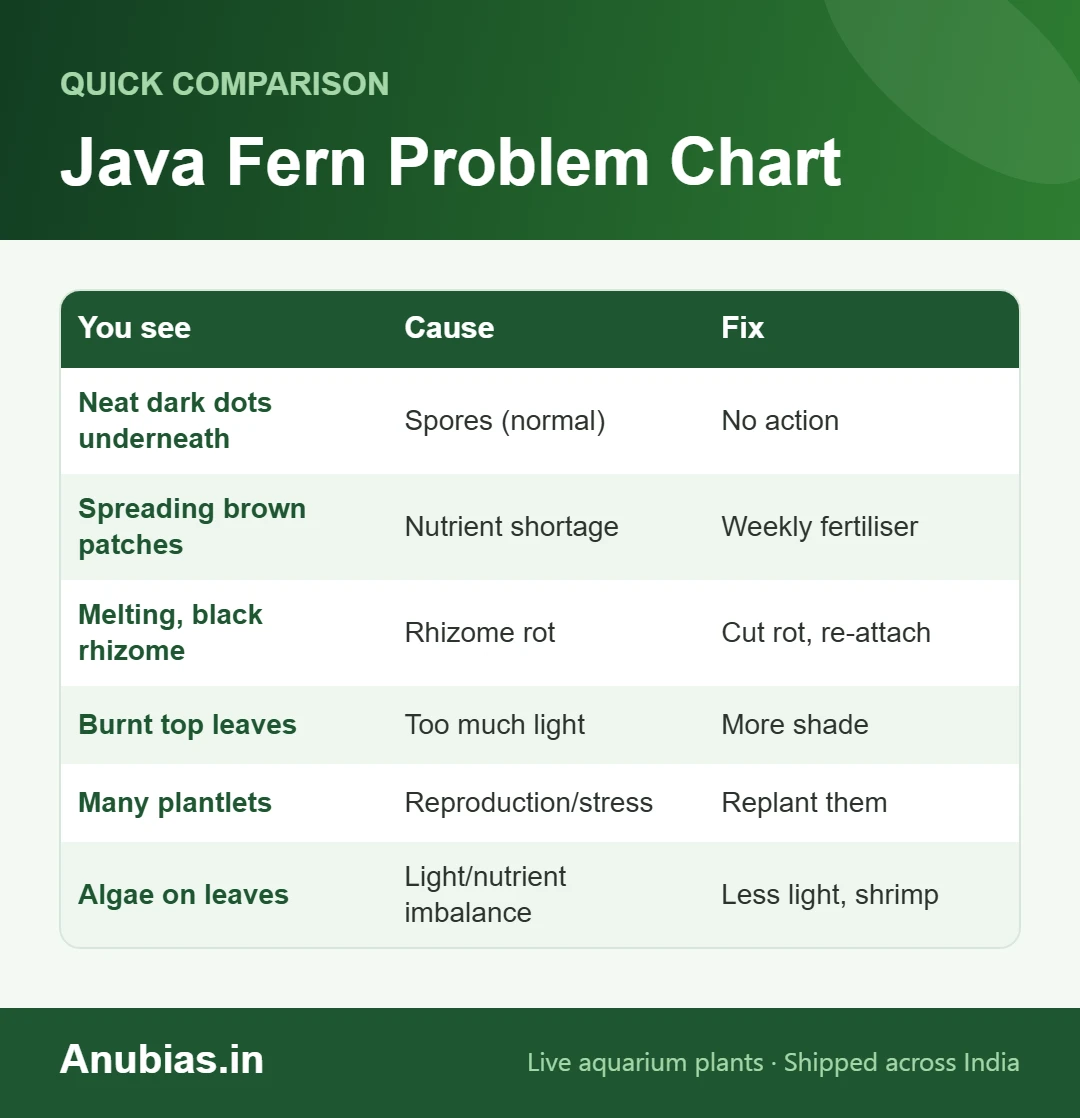
Java fern problem diagnosis chart
| What you see | Likely cause | Fix |
|---|---|---|
| Rows of small dark dots under leaves | Spores (sori), a sign of maturity | Normal; no action needed |
| Brown, transparent patches spreading | Nutrient shortage (potassium, nitrogen) | Weekly complete liquid fertiliser |
| Whole plant melting, soft black rhizome | Rhizome buried or rotting | Cut away soft parts, attach above substrate |
| Brown burnt patches on top leaves | Light too strong | Move to shade, shorter photoperiod |
| Many baby plantlets on old leaves | Normal reproduction, sometimes stress | Remove and replant plantlets |
| Leaves melting after planting | Adjustment to new water | Keep stable; new leaves follow |
| Algae on leaves | Excess light and nutrients imbalance | Reduce light, wipe leaves, add shrimp |
Is it spores or disease?
Spores look organised; disease looks random. Java fern reproduces with sori, clusters of spores that appear as neat rows or dots along the underside of mature leaves, often along the veins. The rest of the leaf stays firm and green. Brown patches from nutrient deficiency, by contrast, are irregular, spread across the leaf surface, and make the tissue thin or see-through.
Fixing brown patches (nutrient deficiency)
- Start a complete all-in-one liquid fertiliser once a week after water changes.
- Trim leaves that are more than half brown at the rhizome.
- Keep light moderate so the plant can use the nutrients without feeding algae.
- New leaves should grow in healthy within a few weeks.
More detail: how often to fertilise aquarium plants.
Fixing melting and rhizome rot
Java fern melts from the base when its rhizome is buried in gravel or soil. Lift the plant, cut away any black or mushy rhizome with clean scissors, and tie or glue the healthy sections to wood or rock with the rhizome uncovered. See our Java fern care guide for attachment tips.
Java fern in Indian conditions
- Summer: Java fern tolerates warm water up to around 28 °C but can develop brown patches in very hot tanks; keep water below 30 °C. See heat-tolerant plants.
- Tap water: it adapts to a broad pH range, so most dechlorinated Indian tap water is fine.
More Java fern guides:
Plants in this guide
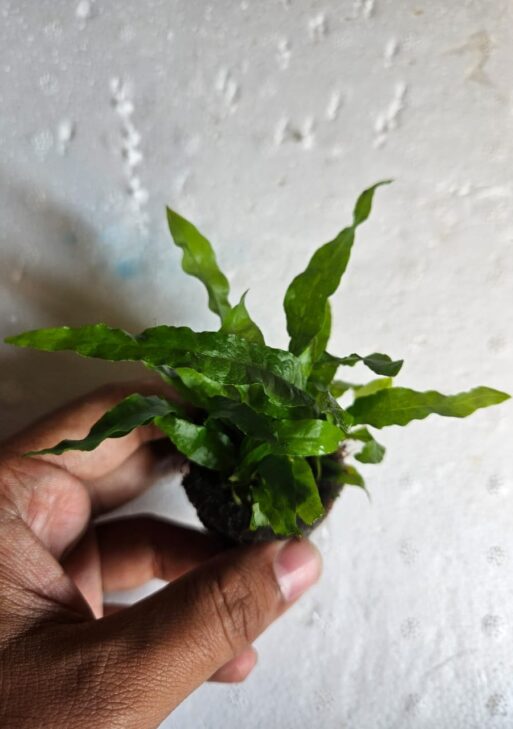
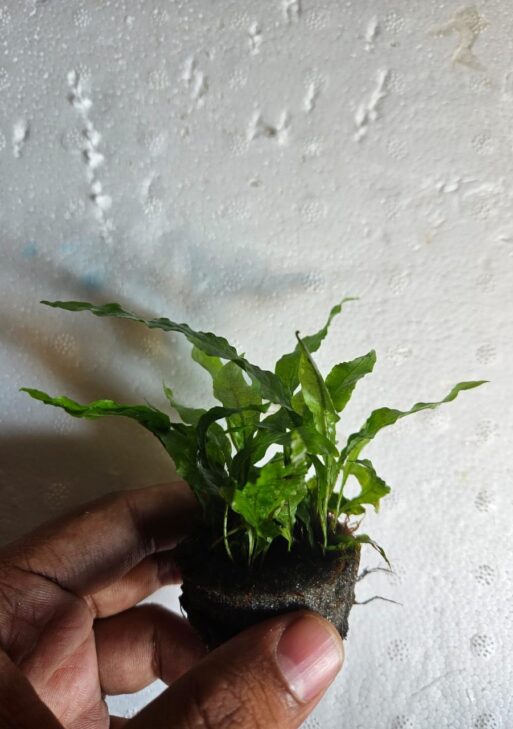
Grown in Surat · graded by leaf count and photographed before dispatch · live-arrival guarantee on every order · ₹99 shipping, free from ₹2,000
Frequently asked questions
Should I remove the black spots from Java fern?
No, if they are neat spore clusters under healthy leaves. Only remove leaves that are brown, soft or mostly damaged.
Why does my Java fern have so many baby plants?
Plantlets grow naturally on older leaves, and stressed plants may produce more. Pull them off once they have a few roots and attach them elsewhere.
Can a melting Java fern recover?
Yes, as long as some rhizome is firm and green. Trim the soft parts, re-attach it, and new leaves usually appear within weeks.
Replace damaged plants with healthy stock: see our Java fern types and Java fern range, shipped across India with a live-arrival guarantee.
More quick answers in the Java fern FAQ.
Getting baby ferns? Learn how to propagate Java fern plantlets.