
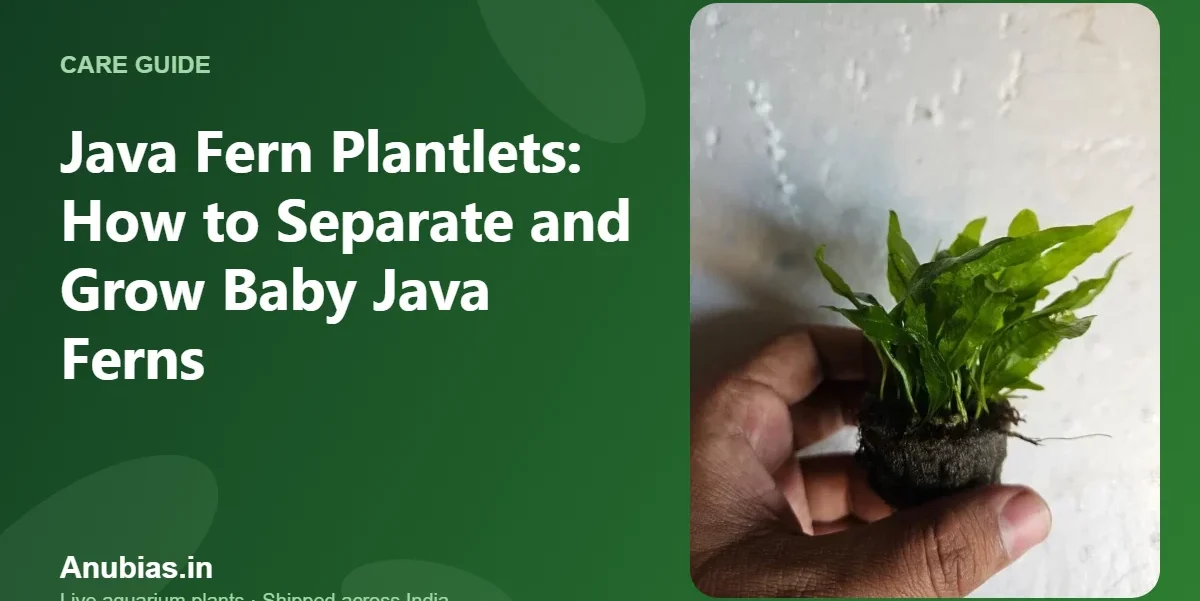
One of the nicest things about Java fern is that it makes more of itself. Mature plants grow tiny baby ferns, called plantlets, right on their leaves, and each one can become a full new plant. This guide shows when plantlets are ready, how to remove them, and how to grow them on.
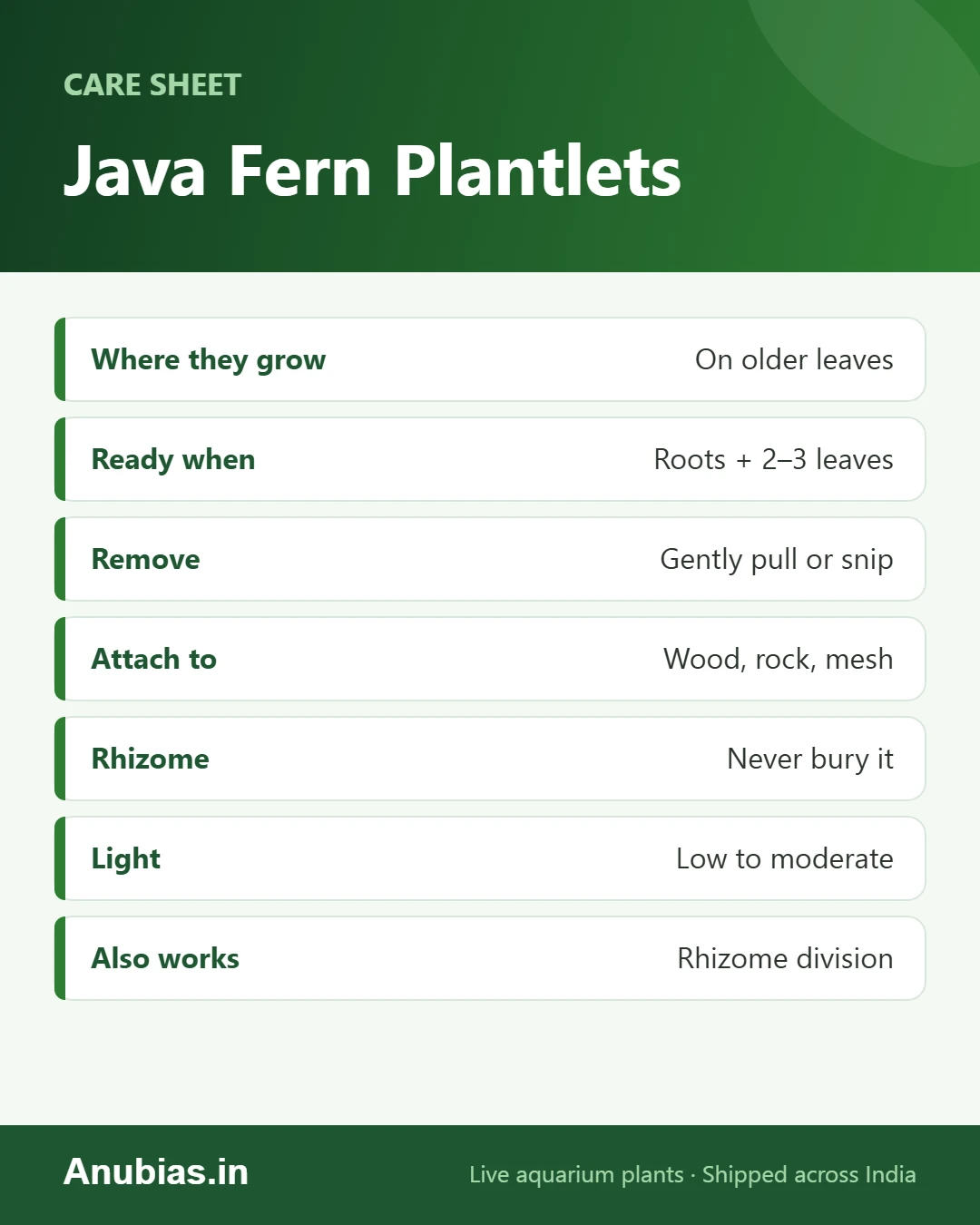
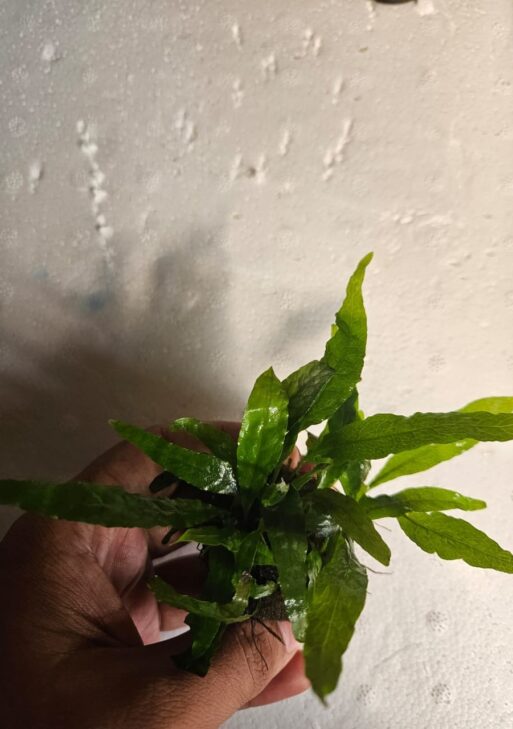
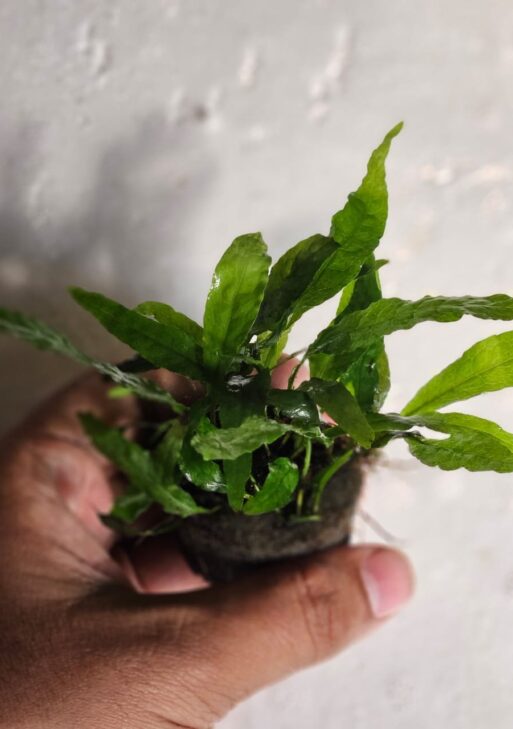
Quick answer: Java fern reproduces by growing small plantlets on older leaves, usually at the tips or along the edges. When a plantlet has a few roots and two or three small leaves, gently pull or snip it off and tie or glue it to wood or rock without burying its rhizome. You can also propagate Java fern by cutting a long rhizome into sections that each keep several leaves.
How Java fern makes plantlets
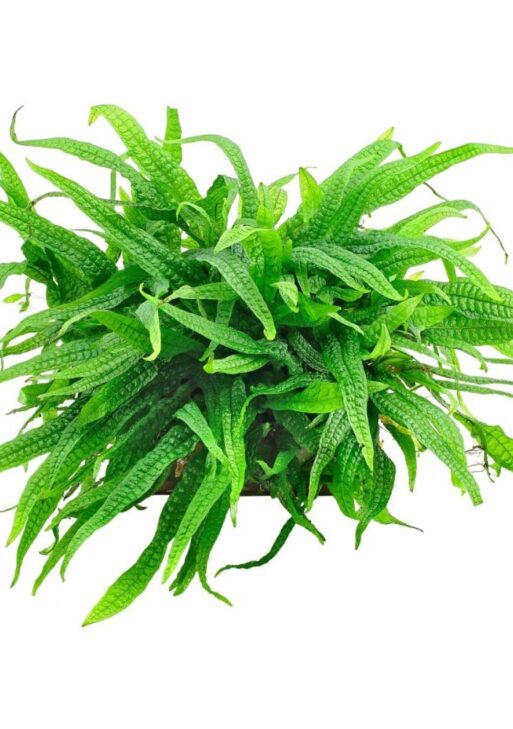
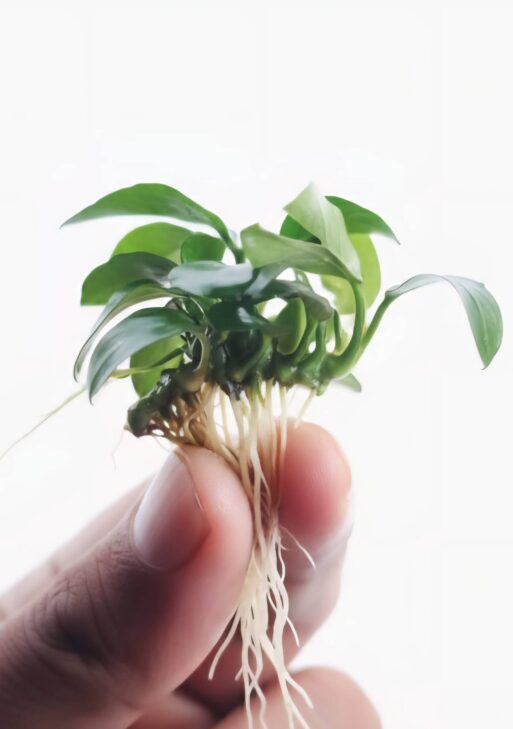
Plantlets grow from older leaves as a natural way to reproduce. They often appear at leaf tips or where veins meet the edge, starting as tiny brown bumps that grow roots and green leaves. Older or slightly stressed leaves sometimes produce many at once. Neat dark dots under leaves are spores instead, which you can ignore. See Java fern spots and problems.
When is a plantlet ready?
- It has a few visible roots.
- It has two or three small leaves.
- It comes away with a gentle tug or a small snip.
How to separate and plant Java fern plantlets
- Pinch or snip the plantlet from the parent leaf.
- Tie it to wood, rock or mesh with cotton thread, or use a tiny dab of gel superglue.
- Keep its small rhizome exposed; never bury it in gravel.
- Place it in low to moderate light with gentle flow.
- Dose a light liquid fertiliser weekly to speed growth.
Other ways to propagate Java fern
- Rhizome division: cut a long rhizome into sections with several leaves each and attach them separately.
- Leave plantlets attached: they can grow on the parent leaf until it decays, creating a natural cluster.
More Java fern guides:
Should you remove plantlets or leave them attached?
Both approaches work, and the right one depends on what you want from the plant.
Remove them if you are spreading Java fern to new spots, sharing with other keepers, or want a tidy layout. Detached plantlets attached to their own piece of wood grow into properly shaped plants with room to open out.
Leave them attached if you want a dense, wild-looking clump quickly. The parent leaf eventually breaks down and the cluster stays where it is, forming a thick bush. This suits shrimp tanks and heavily shaded corners where a solid mass looks better than neat individual plants.
A middle option is to remove half. Take the plantlets from the outer leaves where the clump is getting crowded, and leave the inner ones to thicken the base.
Plantlet mistakes that cost you plants
- Taking them too early. A plantlet with no roots and a single leaf rarely survives on its own. Wait until roots are visible and it separates without force.
- Burying the rhizome. The same rule applies to a plantlet as to the parent. Push it into substrate and the rhizome rots within weeks.
- Tying too tightly. Thread pulled hard cuts into the soft new rhizome. Snug is enough; the roots will grip on their own.
- Using too much glue. A blob covering the whole rhizome underside blocks root attachment. A single small dot at one end is sufficient.
- Putting them under bright light. A new plantlet grows slowly, and slow growth under strong light means algae covers the leaf before it establishes. A shaded spot under wood is safer.
- Moving them repeatedly. Every reposition breaks fresh roots. Pick the spot, attach once, and leave it alone for a month.
In tanks running at 30°C or more through the Indian summer, plantlet development slows and some newly detached ones sit unchanged for weeks. That is normal and not a sign of failure, as long as the leaf stays firm and green.
Plants in this guide
Grown in Surat · graded by leaf count and photographed before dispatch · live-arrival guarantee on every order · ₹99 shipping, free from ₹2,000
Frequently asked questions
Why is my Java fern making so many plantlets?
Mature plants reproduce naturally, and stressed leaves sometimes produce more. It is not harmful; just use or remove the extras.
How long until a plantlet becomes a full plant?
It is slow; expect a few months for a small plantlet to become a bushy fern in a low-tech tank.
Can plantlets float and root on their own?
They often drift and catch on hardscape, but attaching them gives more reliable results.
Can I grow Java fern plantlets in a separate container?
Yes, and it is a good way to raise a batch without them being knocked around by fish. A plain plastic tub with a few centimetres of water, gentle ambient light and a weekly water change works well. Keep the rhizomes exposed and move the plantlets to the main tank once they have two or three proper leaves.
My plantlet leaves turned black at the edges. Is it dying?
Black or dark brown patches on Java fern are usually a response to a change in conditions rather than a death sentence. Check that the rhizome is still firm and pale green; if it is, the plant will push new leaves and you can trim the damaged ones. Soft, mushy rhizomes are the real problem and cannot be saved.
How many plantlets can one leaf support?
A healthy mature leaf commonly carries anywhere from a couple to a dozen plantlets, and the older the leaf, the more it tends to produce. The leaf itself is being consumed in the process, so it will yellow and break down as the plantlets grow. There is no need to thin them out, though removing a few early gives the rest more room.


![Green Plus + Trace Fertilizer [ 250ML + 250ML ]](https://anubias.in/wp-content/uploads/2026/04/1000647632.jpg)