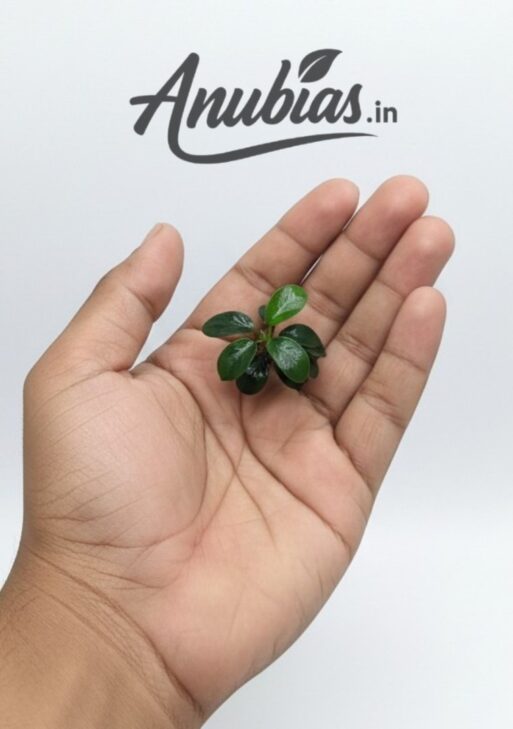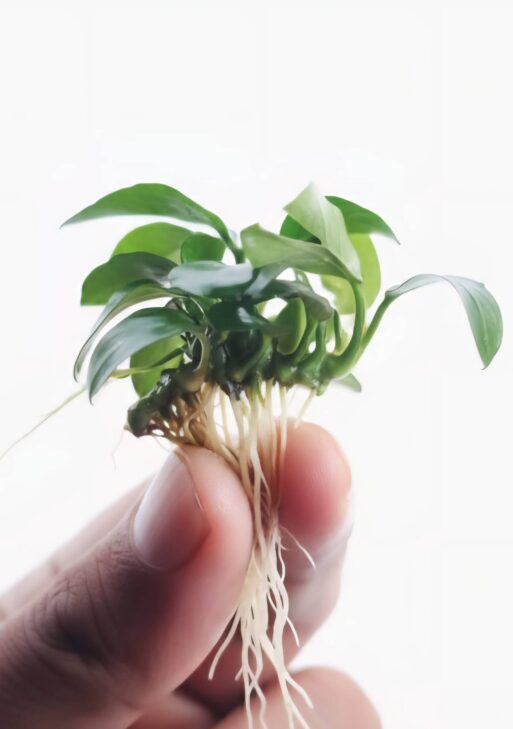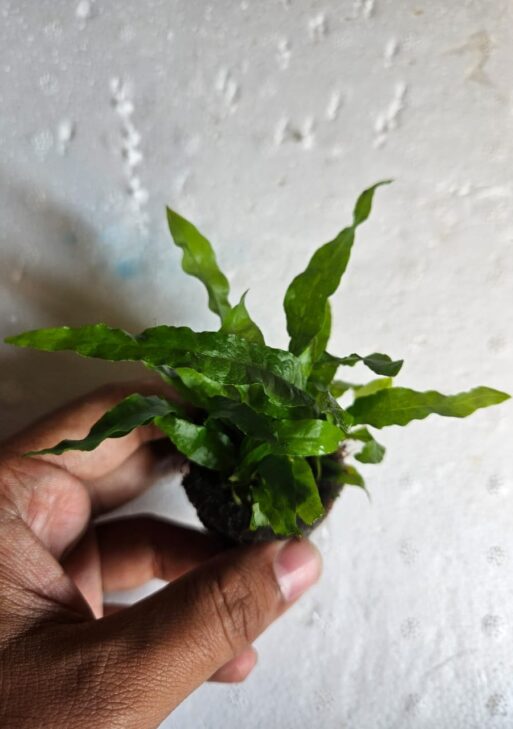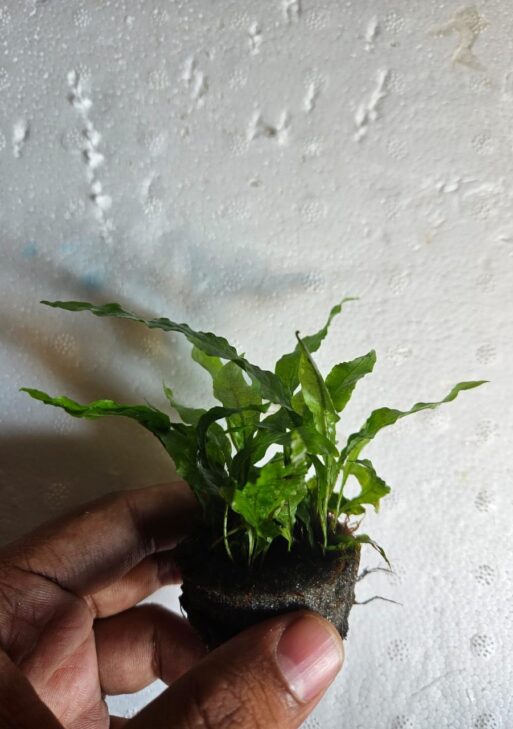

You do not need soil or gravel to keep live plants. Epiphytes take nutrients from the water through their roots and leaves, and floating plants never touch the bottom. That makes them ideal for bare-bottom tanks, breeding tanks and easy-to-clean setups.
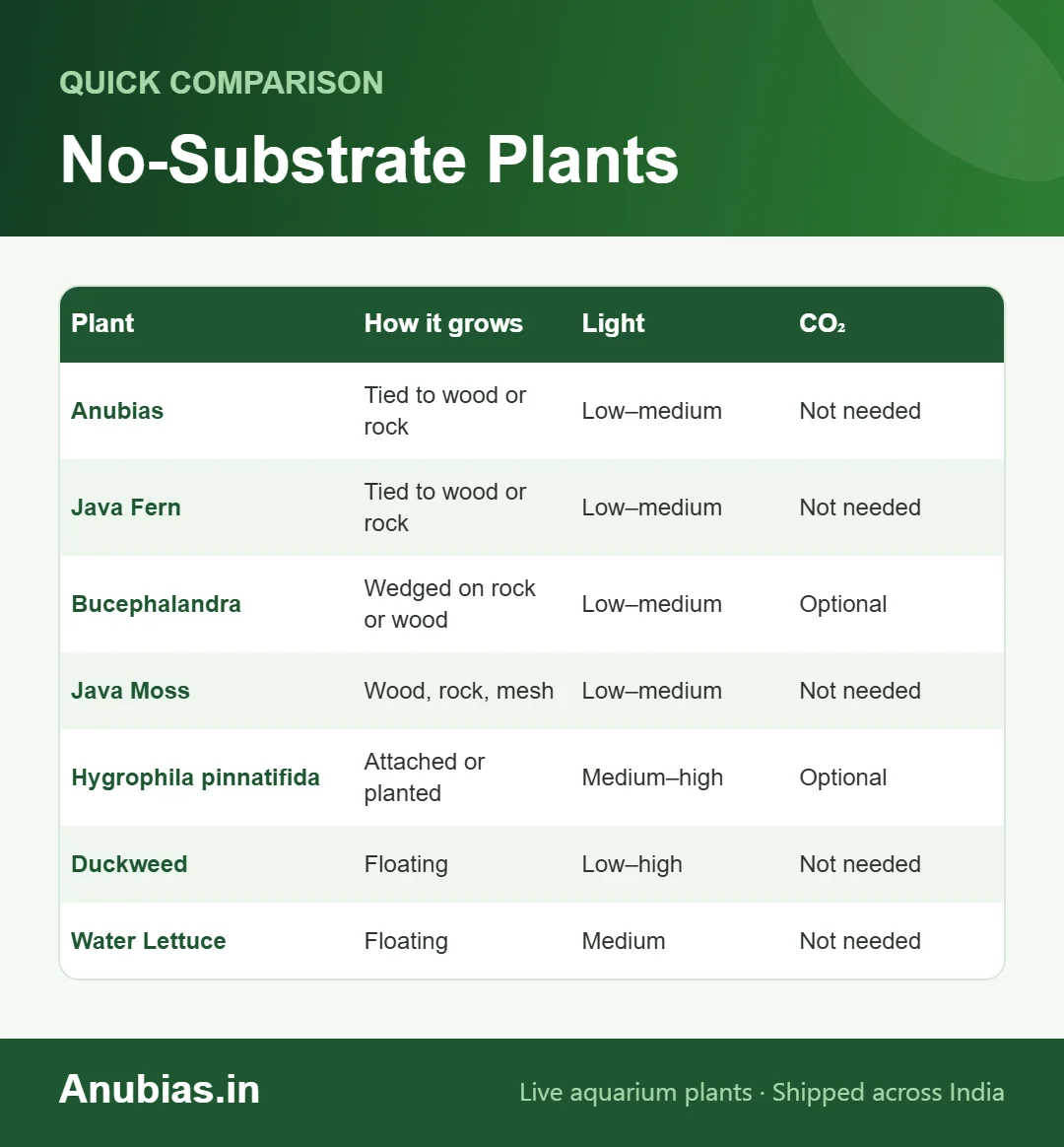
Quick answer: Aquarium plants that do not need substrate include epiphytes such as Anubias, Java fern, Bucephalandra and Java moss, which you tie or glue to driftwood or rock, and floating plants such as Duckweed, Amazon frogbit and Water lettuce. Hygrophila pinnatifida can also grow attached to hardscape. Never bury the rhizome of Anubias, Java fern or Bucephalandra, and feed with a liquid fertiliser because there is no substrate to hold nutrients.
Epiphytes: attach to wood or rock
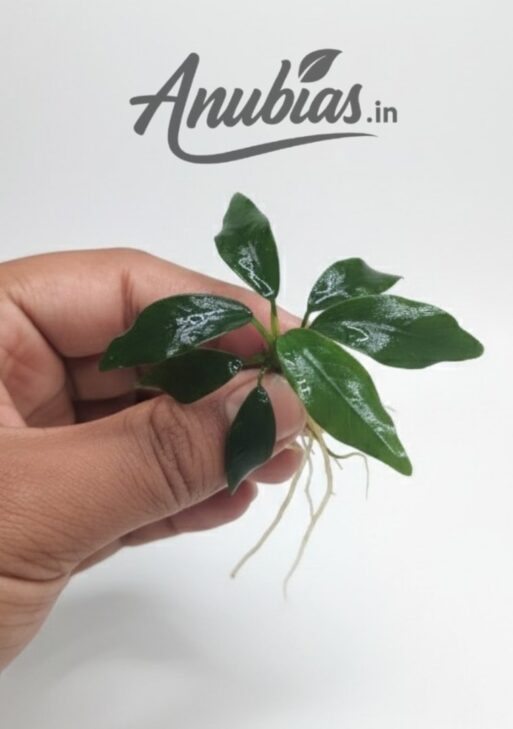
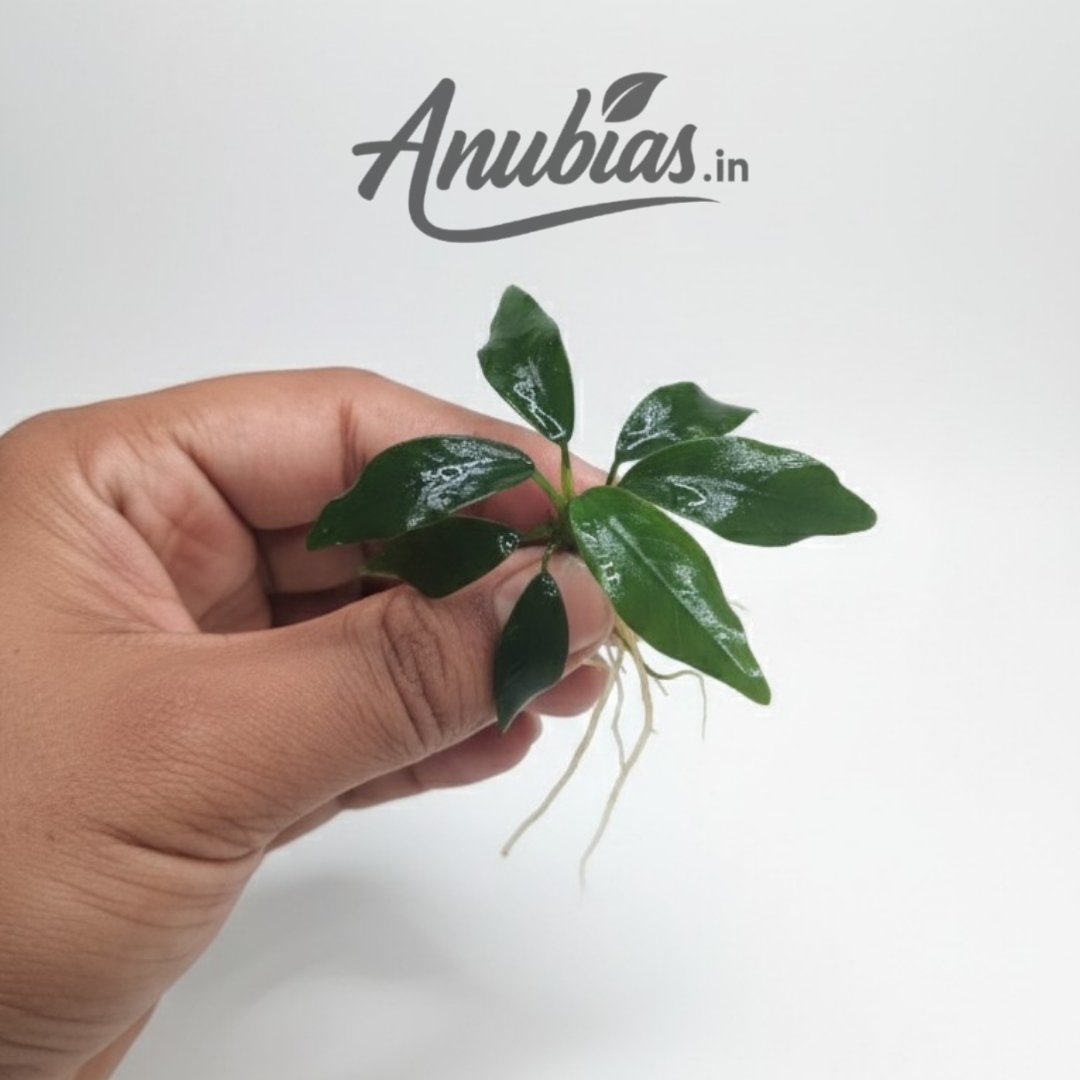
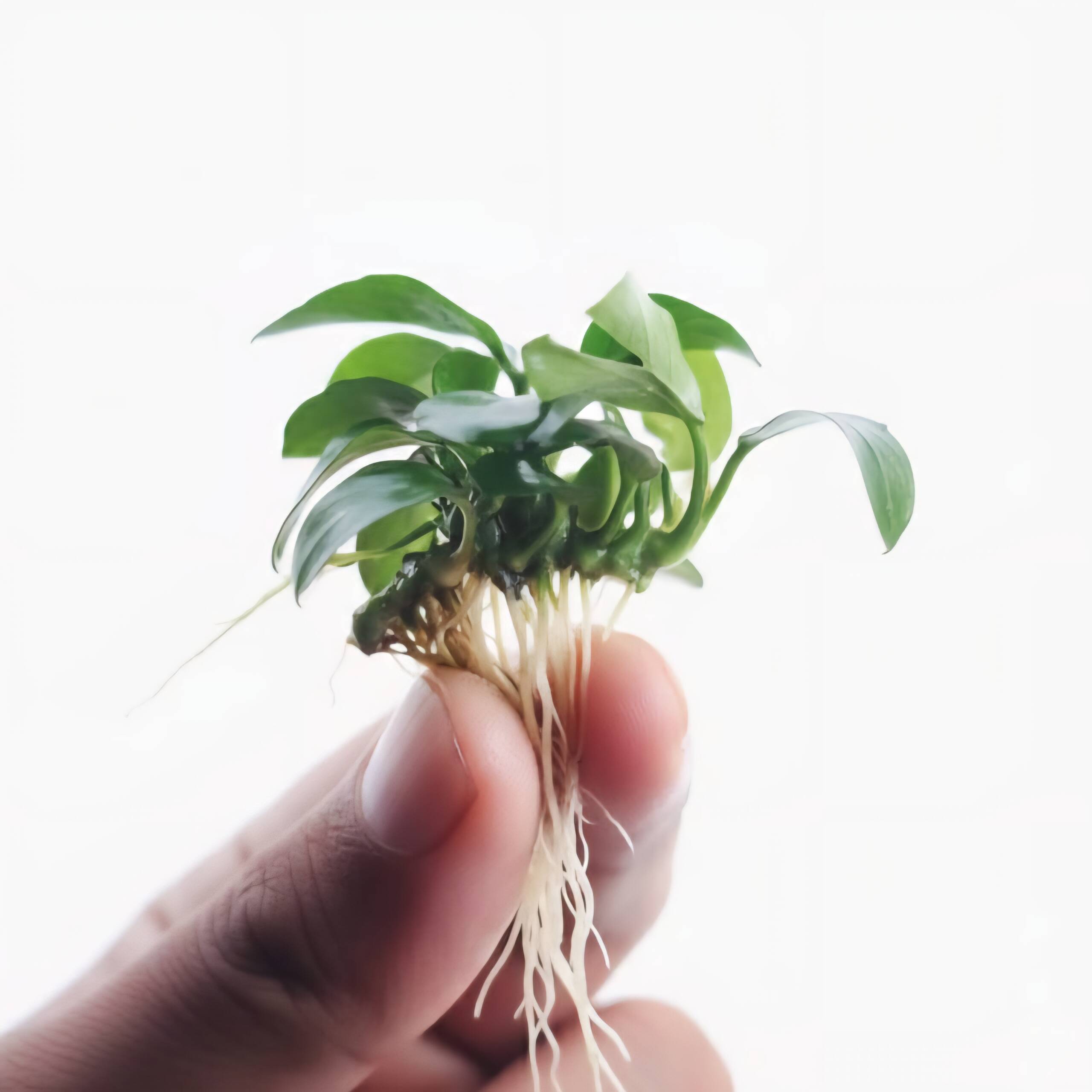
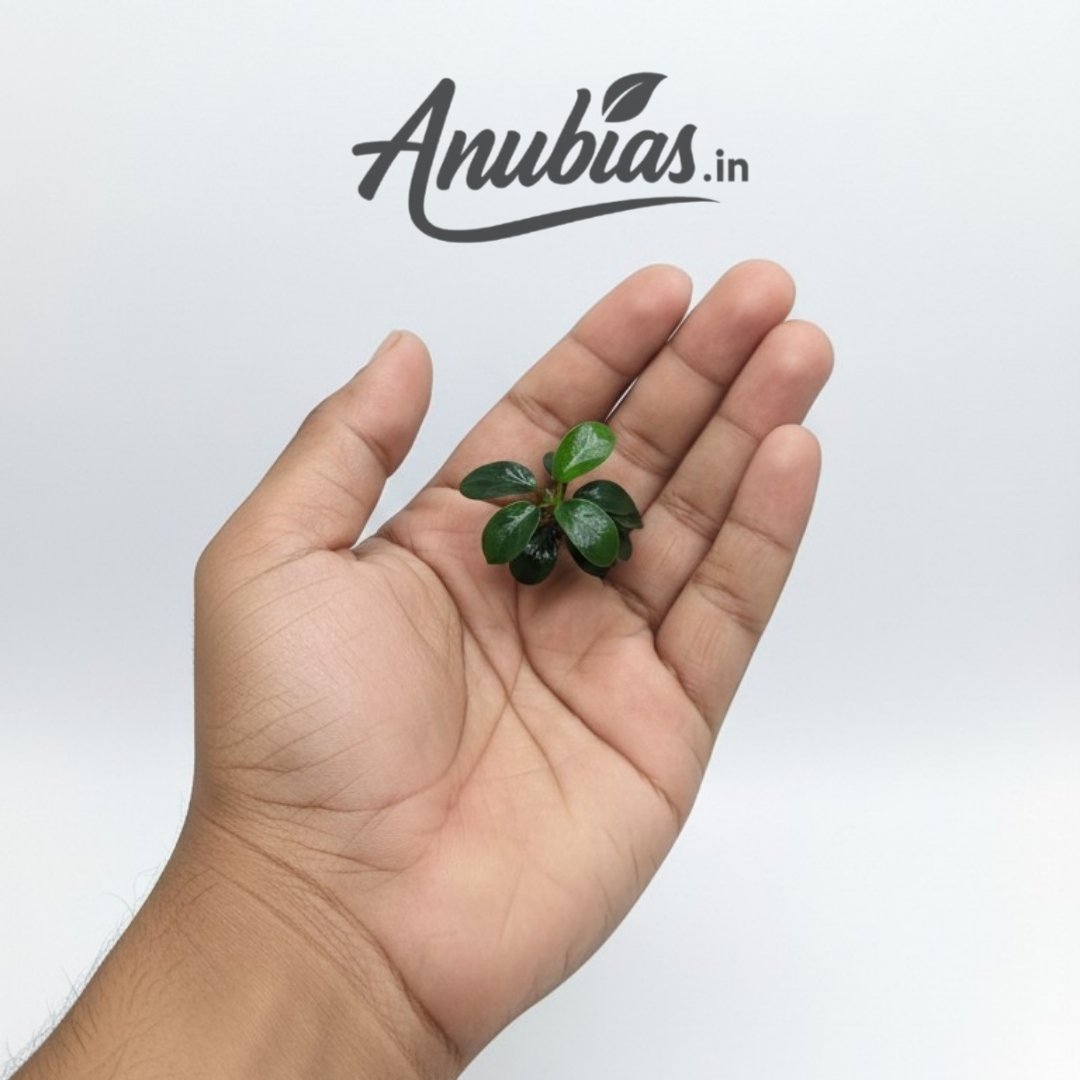
- Anubias: the toughest option; tie the rhizome to wood or rock. Anubias care guide.
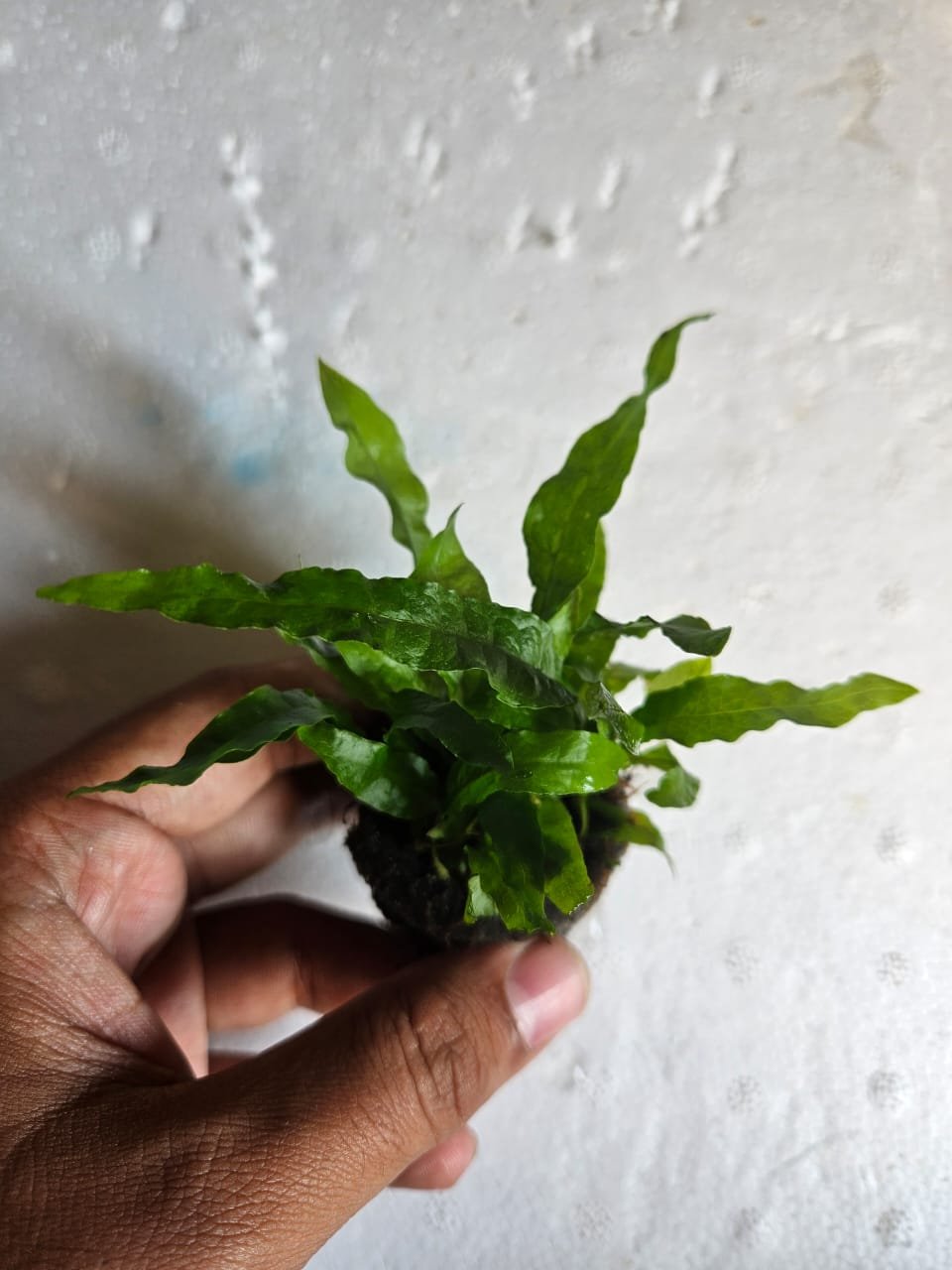
- Java fern: low light, no CO2, attach and never bury. Java fern care guide.
- Bucephalandra: compact and colourful; wedge or glue onto rock. Bucephalandra care guide.
- Java moss: grows on wood, rock and mesh walls. How to attach moss.
- Hygrophila pinnatifida: can grow attached or planted. Hygrophila pinnatifida care guide.
Floating plants
- Duckweed: very fast; net out extra weekly. Duckweed care guide.
- Amazon frogbit: Amazon frogbit care guide.
- Water lettuce: best for larger tanks and tubs. Water lettuce care guide.
Feeding plants without substrate
With no substrate to store nutrients, use a liquid fertiliser. For low-tech epiphyte tanks, see the fertiliser schedule for Anubias and Bucephalandra.
Ways to hold plants down in a bare tank
Without substrate, everything needs anchoring, and the method matters more than in a planted tank because there is nothing to fall back on.
- Thread or fishing line onto wood and rock, which is the standard approach for epiphytes and costs nothing.
- Gel superglue for a fast, permanent bond, applied to a briefly dried rhizome on dry hardscape.
- Stainless steel or plastic mesh sheets with plants tied on, which can be lifted out whole for cleaning and are useful in breeding tanks.
- Small ceramic or plastic pots filled with substrate and capped, which lets you keep rooted plants without committing the whole tank to a soil bed.
- Suction-cup clips on the glass for moss and small epiphytes, easy to reposition but check them occasionally as suction fails over time.
Whatever you use, keep the hardscape heavy enough to stay put on bare glass. A light piece of wood with no substrate holding it will float or slide the moment you do a water change.
Running a bare-bottom planted tank day to day
Bare-bottom tanks are easier to clean and that is the main reason to run one, but there are trade-offs worth planning for.
Detritus is visible and mobile. Every scrap of uneaten food and every fallen leaf sits on plain glass and gets pushed around by the current into the corners. That makes it easy to siphon, which is the advantage, but it means you will be siphoning more often than tank owners with substrate.
Biological filtration has less surface area to work with, since a substrate bed normally hosts a large share of the bacteria. Compensate with a well-filled filter, plenty of hardscape and a stocking level on the modest side.
Feeding goes entirely into the water column, so liquid fertiliser is not optional here. Dose to the schedule on the bottle and watch the newest growth for pale or yellowing leaves, which is the first sign of a shortfall.
Finally, expect a faster temperature swing in Indian summers, because a bare tank has less mass and thermal buffering than one with a deep substrate bed.
Plants in this guide
Grown in Surat · graded by leaf count and photographed before dispatch · live-arrival guarantee on every order · ₹99 shipping, free from ₹2,000
₹ 220
Frequently asked questions
Can aquarium plants grow without soil?
Yes. Epiphytes like Anubias and Java fern attach to hardscape, and floating plants grow at the surface without any soil.
Can I just place Anubias on the tank bottom?
It is better to tie or glue it to wood or rock so it stays in place and the rhizome stays uncovered.
Do plants without substrate need fertiliser?
A light liquid fertiliser helps, especially in tanks with few fish.
Shop the plants in this guide: Hygrophila Pinnatifida, Duckweed, Water Lettuce, Amazon Frogbit, Java Moss.
Shop epiphytes and floating plants on Anubias.in.
Can plants grow in a bare tank with no filter?
They can, but only in a lightly stocked or unstocked tank, and you will need to change water more often to keep nutrients in check. A filter provides circulation as much as filtration, and epiphytes in particular depend on flow to bring nutrients to their leaves. A small sponge filter is a cheap way to solve both problems at once.
Can I use pots of substrate in an otherwise bare tank?
Yes, and it is a practical compromise if you want rooted plants such as crypts or swords without a full substrate bed. Fill a small pot with aquarium soil or gravel, add a root tab, and cap it so the soil does not cloud the water. Hiding the pot behind hardscape keeps it out of sight.
Do bare-bottom tanks get more algae?
Not inherently, and they often get less because waste is removed rather than accumulating in a substrate bed. Algae in a bare tank almost always traces back to overfeeding, long light hours or a plant load too small to use the nutrients present. Adding a few fast-growing floating plants is a quick way to soak up the surplus.