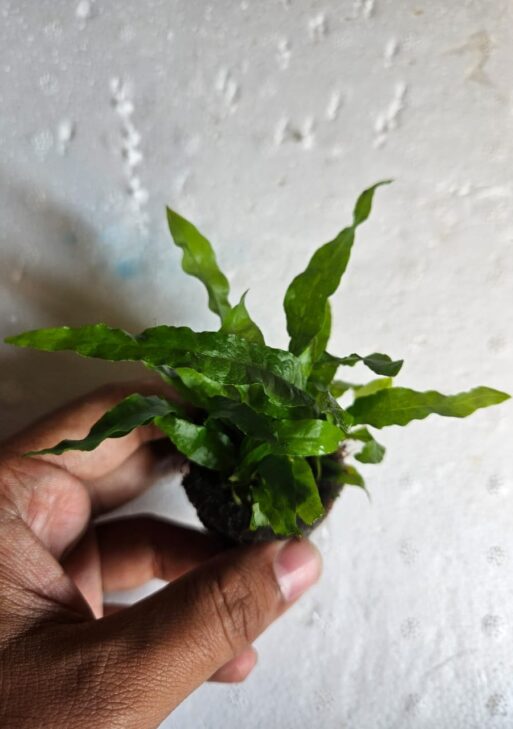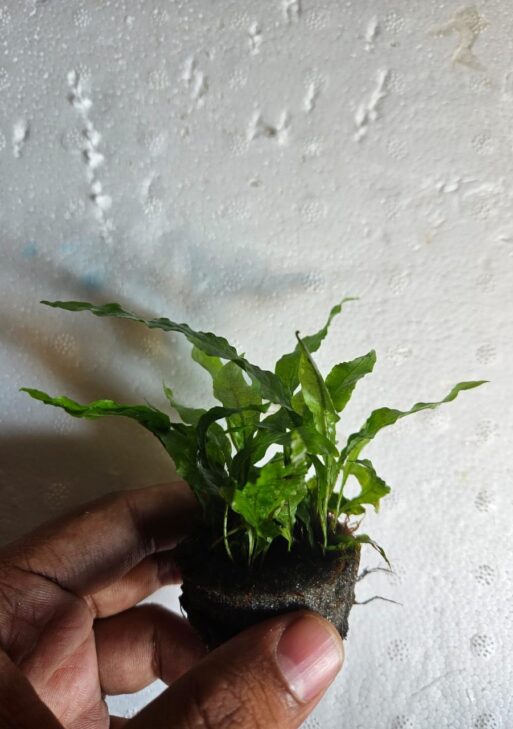

Water wisteria (Hygrophila difformis) and Hygrophila pinnatifida are both Hygrophila species, so they are often confused. In the tank they behave very differently: one is a fast, easy background stem plant, the other a creeping, colourful midground plant that can even grow on rocks. Here is how to choose.
Quick answer: Water wisteria is a very easy, fast-growing background stem plant with lacy green leaves that grows in low to high light without CO2 (₹120 on Anubias.in). Hygrophila pinnatifida is a moderate-difficulty midground plant with lobed olive to red-brown leaves that creeps along hardscape or substrate and needs medium to high light, colouring best with CO2 (₹220). Pick wisteria for quick, easy cover; pick pinnatifida for texture and colour in aquascapes.
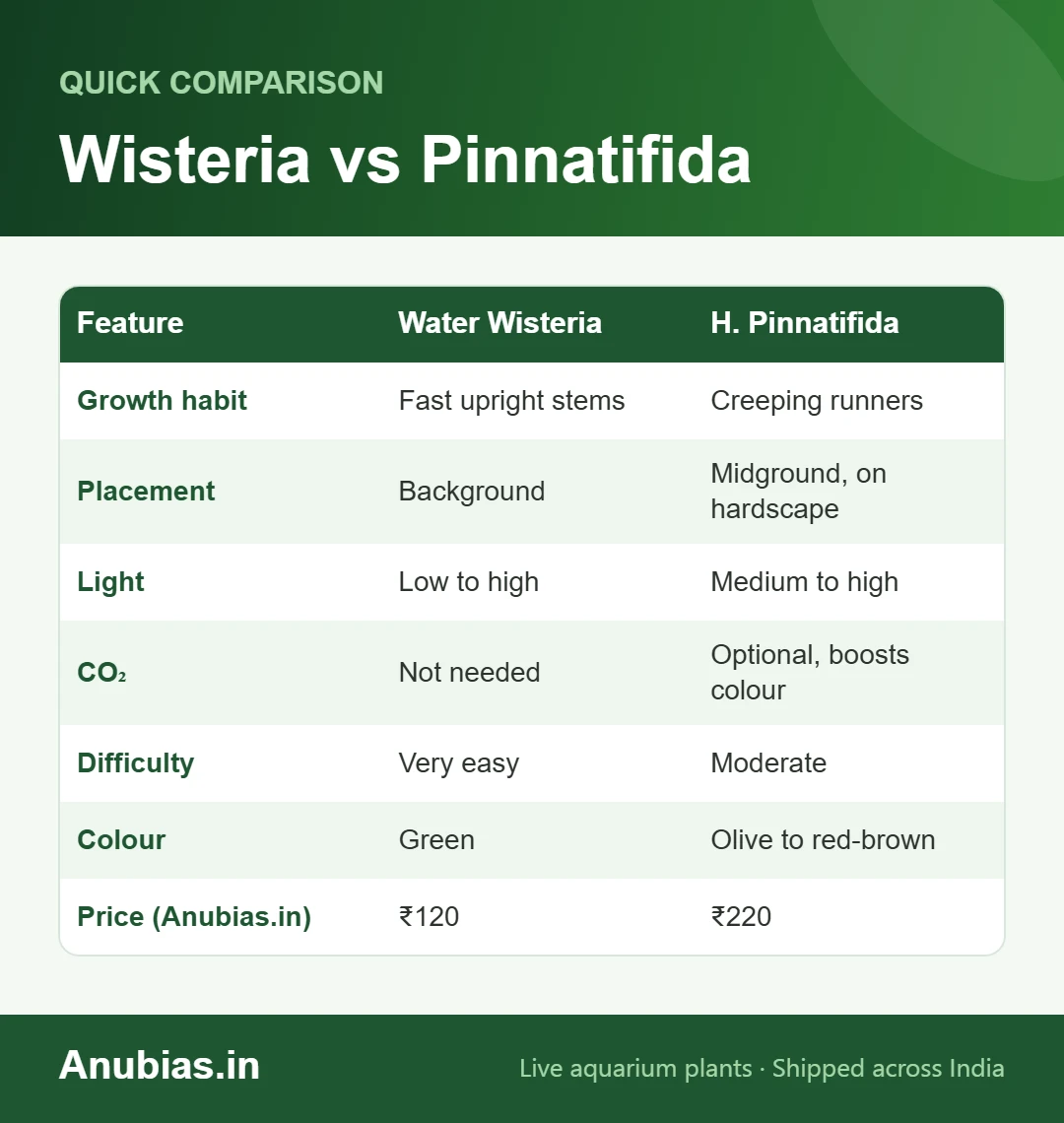
Key differences
- Growth habit: wisteria grows upright and fast; pinnatifida sends creeping runners sideways.
- Placement: wisteria suits the background; pinnatifida suits the midground or can attach to wood and rock.
- Light: wisteria copes with low to high light; pinnatifida needs medium to high.
- Difficulty: wisteria is very easy; pinnatifida is moderate.
- Colour: wisteria is green; pinnatifida shifts to red-brown in good light.
Which should you choose?
- Beginner or goldfish tank: Water wisteria for fast, forgiving cover.
- Nutrient control in a new tank: Water wisteria’s fast growth absorbs excess nutrients.
- Aquascape with hardscape: Hygrophila pinnatifida on rocks or wood for texture.
- Colour contrast: pinnatifida under strong light.
More stem plant guides:
Trimming and propagating each one
These two are trimmed in completely different ways, and treating them alike is why one of them usually looks untidy.
The fast background species is cut like a classic stem plant. Snip the top third of a stem, replant the cutting in the substrate beside the parent, and the parent throws side shoots from just below the cut. Repeat every few weeks and a handful of stems becomes a dense thicket surprisingly quickly. Discard the woody lower sections once they lose their leaves rather than keeping them for looks.
The creeping midground species is trimmed like a bush. It sends out horizontal side shoots that will root where they touch, so the useful cut is a side shoot with a couple of small roots already forming, which you then tie or glue onto a fresh piece of wood. Topping it repeatedly like a stem plant just produces a crowded crown that shades its own lower leaves.
Common problems with these two
The fast grower most often disappoints by going leggy. Long bare stems with leaves only at the top mean it is not getting enough light at the lower levels, usually because it has been left untrimmed and is shading itself. Cut it back hard, replant the healthy tops, and bin the bare bases.
Its leaf shape also changes constantly. Plants grown out of water arrive with broad, rounded leaves and switch to the finely divided form underwater. That transition often looks like the plant is dying when it is not.
The midground species disappoints in two ways instead. It melts back after planting more readily than most, and it stays plain green when the keeper wanted red and bronze. Melting is normal for a few weeks and resolves if you leave it alone. Colour is the harder one, because it needs genuinely strong light and lean nitrate to develop, and in a low-tech tank you should plan on an olive-green plant that occasionally blushes rather than the deep tones seen in high-tech aquascapes.
Both also object to sudden heat. Above about 30 degrees, growth slows and lower leaves drop, which is worth expecting in an Indian summer rather than treating as a disease.
Plants in this guide

₹ 220
Frequently asked questions
Can Hygrophila pinnatifida grow on driftwood?
Yes. Unusually for a stem plant, it can attach to wood or rock like an epiphyte.
Why does my water wisteria have different leaf shapes?
Leaf shape changes with light and conditions, becoming more finely divided in stronger light.
Is Hygrophila pinnatifida native to India?
Yes, it is native to streams in the Western Ghats region of India.
Buy Water Wisteria or Hygrophila Pinnatifida on Anubias.in.
Can water wisteria grow floating instead of planted?
Yes, and it often grows faster that way because it sits nearer the light and can use surface carbon dioxide. Floating stems develop trailing roots and broader leaves, and they shade whatever is beneath them. Many keepers float a few stems temporarily to soak up nutrients while a new tank stabilises, then remove them.
Why is my Hygrophila pinnatifida staying green instead of turning red?
Colour in this plant needs bright light and relatively lean nitrate, and in a low-light tank without CO2 it will almost always stay olive green. That is a healthy state, not a failure. If you want the bronze and red tones, increase light first and only then look at trimming back nitrogen dosing slightly.
How far apart should water wisteria stems be planted?
Two to three centimetres apart is a reasonable starting point, planting each stem individually rather than as a bunch. Stems planted together in one hole shade each other, and the inner ones rot at the base. The gaps close within weeks given how fast this plant grows.