
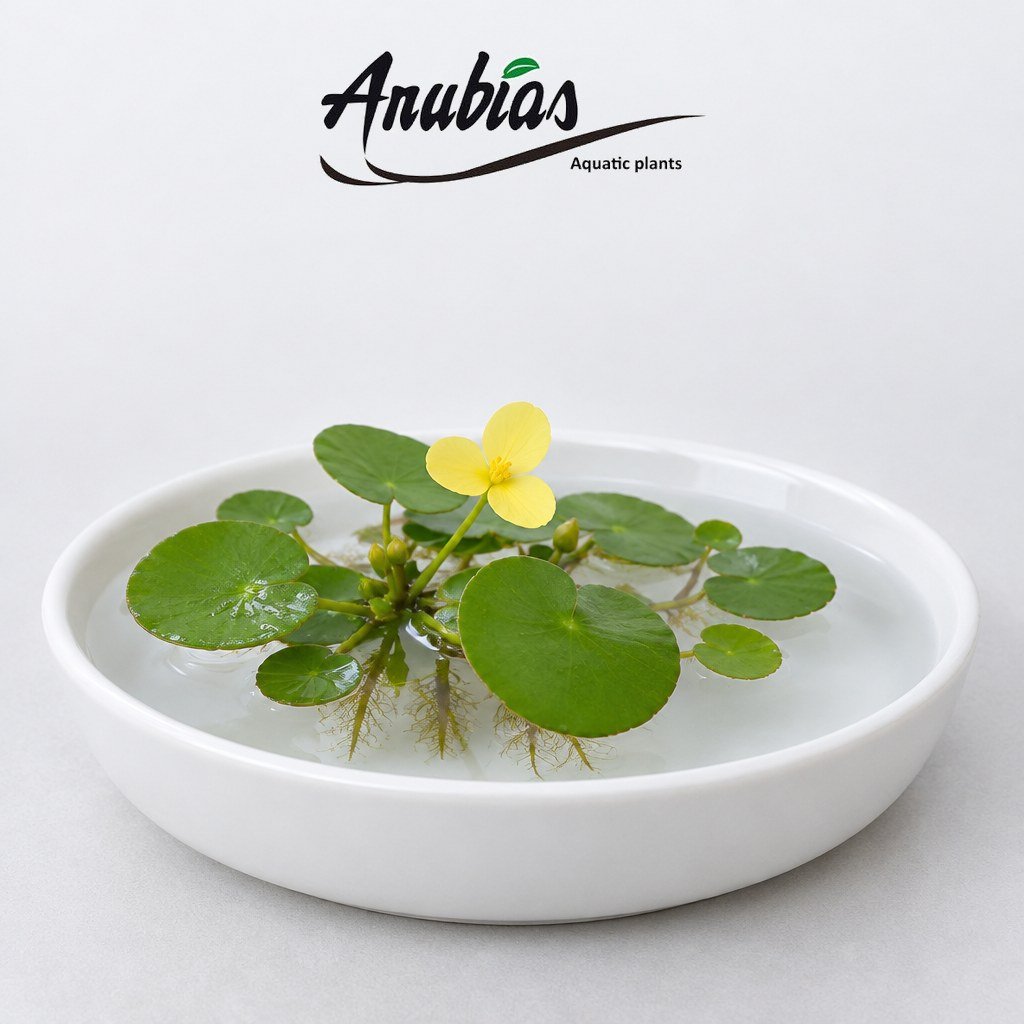
Description
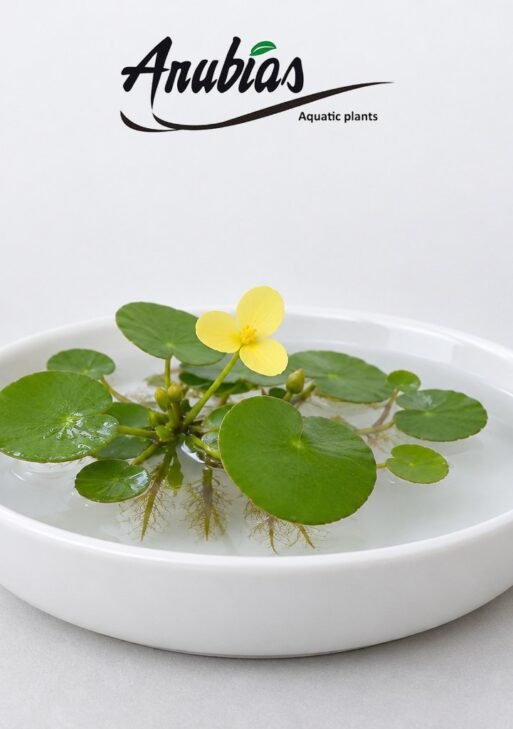
Water poppy (Hydrocleys nymphoides) is a tropical pond plant from Central and South America with glossy, rounded floating leaves of 5–8 cm and cheerful three-petalled yellow flowers that open just above the surface through the warm months. It is sold under floating plants because its leaves float, but it is a rooted plant: the stems run along the bottom or hang in the water and send leaves to the surface. It suits garden ponds, tubs, cement tanks and open-top aquariums or paludariums in India, where it enjoys the sun and warmth. It is not a plant for a closed, lidded aquarium with artificial light.
We want to be clear about that so you buy it for the right place. In a sunny tub or shallow pond, water poppy is one of the easiest and most rewarding flowering plants; in a standard indoor tank it survives only with very strong light and an open top, and it rarely flowers.
Water poppy at a glance
| Scientific name | Hydrocleys nymphoides |
|---|---|
| Family | Alismataceae (formerly Limnocharitaceae) |
| Origin | Central and South America, from Mexico to Argentina |
| Difficulty | Easy in ponds and tubs; medium indoors |
| Light | High; partial to full sun outdoors |
| CO2 | Not needed; the floating leaves take CO2 from the air |
| Temperature | 20–32 °C; dormant or dies back below about 15 °C |
| pH | 6.0–8.0 |
| Growth rate | Fast in warm, sunny conditions |
| Height/size | Leaves 5–8 cm across; spreads 30–60 cm or more; water depth 10–45 cm |
| Placement | Floating-leaved, rooted in the substrate; ponds, tubs, open-top tanks |
| Propagation | Runners (stolons) and division |
How to plant water poppy
- Rinse the portion and remove any yellow or torn leaves.
- For a pond or tub, plant the rooted stem in a pot of heavy garden soil or pond soil topped with 1–2 cm of gravel, or directly into a soil layer at the bottom of a cement tank.
- Sink the pot so the crown sits 10–30 cm below the surface. The leaves will float up to the surface within days; longer stems will reach from deeper water.
- In an open-top aquarium or paludarium, plant into aquasoil at the shallow end under a strong light with no lid, and allow leaves to reach the surface.
- Place the container where it gets at least four to six hours of direct sun, and keep the water level steady.
Water poppy care: light, CO2, fertiliser and water
Light
Water poppy needs strong light. Outdoors, morning sun with some afternoon shade is ideal in the hottest months; full sun is fine in winter. Indoors it needs a powerful LED of 60 lumens per litre or more directly over an open surface, and even then it grows slowly and flowers rarely. Under ordinary aquarium lighting it weakens within weeks.
CO2
None needed. Its floating leaves take carbon dioxide from the air, so it is unaffected by the CO2 level in the water.
Fertiliser
It is a heavy root feeder when growing fast. In a pond pot, push a pond fertiliser tablet or a couple of aquarium root tabs into the soil every month during the growing season. In a tub with fish, their waste supplies most of what it needs. Yellow older leaves with a healthy plant usually just mean natural turnover; yellow new leaves point to iron shortage.
Water and Indian conditions
Water poppy is well suited to the Indian climate. It tolerates hard water and loves warmth, growing and flowering best from March to October in most of the country. During monsoon, heavy rain can swamp a tub; keep an overflow so the water does not rise above the leaves. In north Indian winters it slows or dies back below 15 °C and regrows from the roots in spring; in the south and west it often grows year-round.
Growth, trimming and propagation
In a warm, sunny tub, water poppy spreads quickly and can cover a square metre in a season. Remove yellowing leaves and spent flowers regularly to keep the surface tidy and the water clean, and trim runners that escape the area you want covered. Propagation is by runners: cut a stolon with a rooted plantlet and pot it up, or simply divide a crowded pot in spring.
Where to use it in an aquascape
Water poppy is at home in a 2-foot, 60–100 litre tub, a 3-foot cement tank of 150–250 litres, or any garden pond. It pairs well with pond lilies and marginals, with azolla or Salvinia from our floating plants for surface cover, and with submerged oxygenating plants below.
In an open-top aquarium or paludarium of 2 feet (60–70 litres) or more it can be grown at the shallow end with Anubias nana and Java fern on emergent wood, but it is not a companion for light-hungry carpeting plants, which it would shade. Suitable livestock in tubs includes guppies, mollies, white cloud minnows, medaka and small barbs; goldfish may nibble the leaves.
Common problems and fixes
- Leaves yellowing and dying in an indoor tank: not enough light, or a lid trapping the leaves under water. Move it to an open-top container with strong light or outdoors.
- No flowers: insufficient sun or too cool. It flowers in warm weather with at least four hours of direct sun.
- Leaves submerged after a water change or rain: the stems adjust in a day or two; keep the water level steady and fit an overflow.
- Dying back in winter: normal below 15 °C. Leave the roots in place and it regrows in spring, or move the pot indoors to a bright window.
What you receive
One healthy portion of Hydrocleys nymphoides (Water Poppy) in the size you select (Small or Standard), similar to the photo. Each portion is checked before packing, packed moist and shipped across India from Surat. ₹99 shipping, free on orders of ₹999 or more. Live-arrival guarantee: record one continuous unboxing video within 4 hours of delivery, and if the plant has arrived damaged we refund or replace it.
FAQ
Can water poppy grow in an aquarium?
Only in an open-top tank or paludarium under very strong light. It is really a pond and tub plant and rarely flowers indoors.
Does water poppy need CO2?
No. Its floating leaves take CO2 from the air.
Is water poppy good for beginners?
Yes, in a sunny tub or pond. It is one of the easiest flowering pond plants for Indian conditions.
How fast does water poppy grow?
Fast in warm, sunny weather: a single plant can cover a square metre of surface in one season.
Water poppy vs water lily: what is the difference?
Water poppy has small 5–8 cm leaves and yellow three-petalled flowers on a spreading stem, and needs only 10–45 cm of water; water lilies grow from a rhizome with larger leaves and flowers and prefer deeper water.
Does water poppy survive winter in India?
In south and west India it often grows year-round; in the north it dies back below 15 °C and regrows from the roots in spring.
Not sure what fits your tank? Plan it with our free AI tank planner.












There are no reviews yet.