
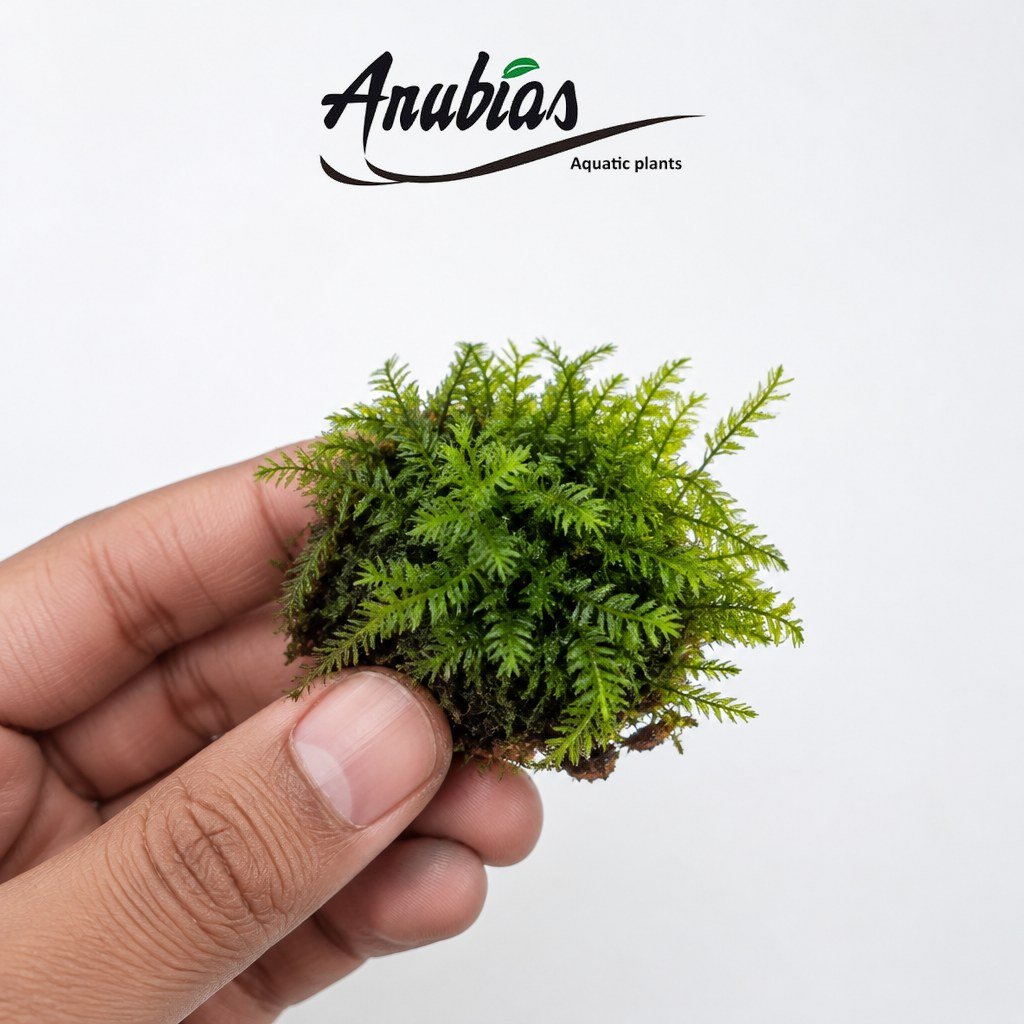
Description
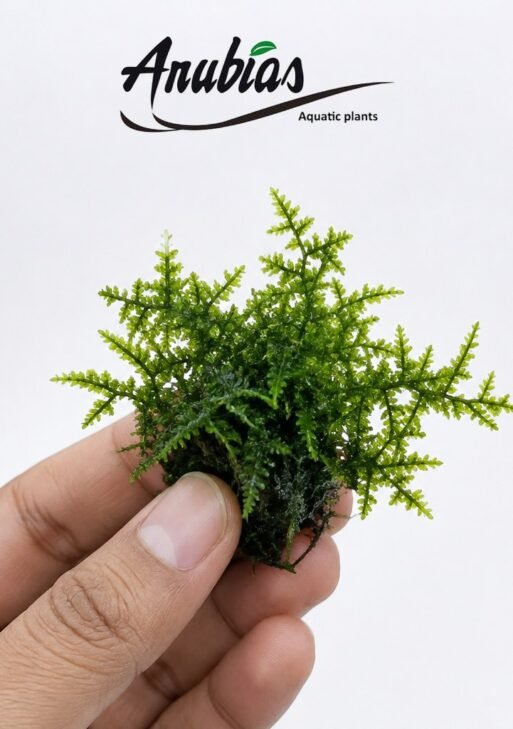
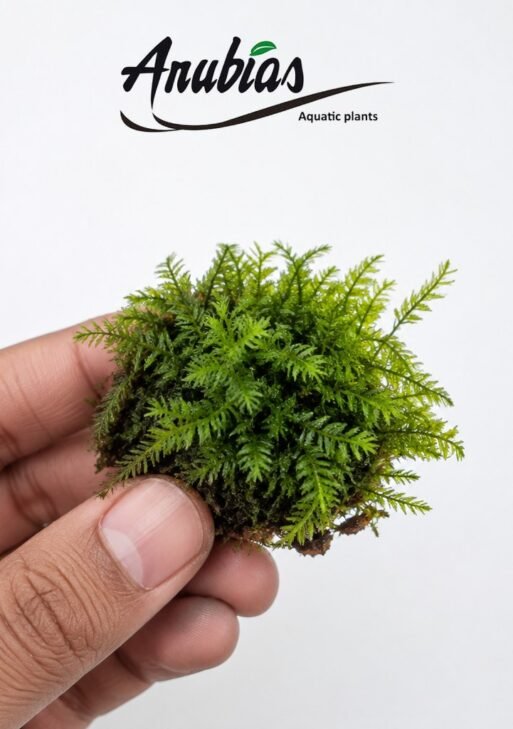
Fissidens moss (Fissidens crispulus) is a fine, feathery aquarium moss whose flat, two-ranked fronds grow in neat fan-shaped tufts that attach themselves to wood and stone over time. It is more compact and more orderly than Java moss, which makes it a favourite for detailed nature-style aquascapes, shrimp tanks and bonsai-tree layouts. Fissidens moss grows without CO2 in low to medium light, prefers cool clean water, and rewards patience with a dense, low cushion that few other mosses can match.
Fissidens moss at a glance
| Scientific name | Fissidens crispulus (a close relative of Fissidens fontanus, the “phoenix moss”) |
|---|---|
| Family | Fissidentaceae |
| Origin | Tropical and subtropical Asia |
| Difficulty | Easy to moderate |
| Light | Low to medium |
| CO2 | Not required; recommended for faster, denser growth |
| Temperature | 20–27 °C ideal; tolerates up to 28 °C |
| pH | 6.0–7.5 |
| Growth rate | Slow |
| Height/size | 1–3 cm tall cushion; spreads sideways |
| Placement | Foreground to midground, epiphyte on wood, rock or mesh |
| Propagation | Division of clumps |
How to plant fissidens moss
Fissidens does not have roots; it holds on with tiny rhizoids that take a few weeks to grip. It needs to be fixed firmly until then.
- Rinse the portion gently in tank water and pull it apart into small, flat pieces about the size of a fingernail. Small pieces attach faster and spread more evenly than one big clump.
- Spread the pieces thinly over driftwood, lava rock, dragon stone or a stainless steel mesh pad. Thin layers grow; thick layers rot underneath.
- Tie them down with fine cotton thread or nylon fishing line wrapped every centimetre, or dab a tiny drop of cyanoacrylate gel under each piece. Thread works best for fissidens because glue can burn the delicate fronds.
- Place the hardscape in gentle to moderate flow. Moss in dead spots collects debris and smothers.
- Leave it alone. Within four to eight weeks new fronds grow outward and the moss attaches itself; cotton thread rots away on its own.
Fissidens can also be grown on a mesh mat for a moss carpet or on small stones that can be moved around the tank.
Fissidens moss care: light, CO2, fertiliser and water
Light. Low to medium light. Fissidens grows well under modest lighting and keeps its tight, fan-like form. Strong light speeds growth only slightly and makes hair algae a real risk inside the moss, so keep the photoperiod to 6–8 hours.
CO2. Not required. In a low-tech tank fissidens moss grows slowly but steadily. With CO2 injection it grows faster and the fronds become fuller and more upright, which is how it is shown in competition scapes.
Fertiliser. A small weekly dose of a complete liquid fertiliser is enough. Mosses are sensitive to overdosing, especially of copper-containing products and liquid carbon, so dose at half strength if the tank has few other plants.
Water. Clean, cool water is the key. Fissidens moss is happiest at 20–27 °C and struggles above 28 °C; Indian summers can brown the fronds, so run a fan across the surface, keep the tank out of direct sun, or use a chiller. It tolerates moderately hard tap water. Good filtration matters because debris settling in the moss blocks light and encourages algae. During monsoon power cuts, restart the filter as soon as you can. Weekly 25–30% water changes with temperature-matched water keep it healthy.
Growth, trimming and propagation
Growth is slow, a few millimetres per month at first and faster once the moss is attached and established. Because it stays low, fissidens rarely needs trimming. When a cushion grows thick, trim the top with sharp scissors to let light reach the base, and siphon out the clippings or replant them elsewhere.
Propagation is simple: every trimmed piece is a new plant. Tie clippings to new wood or stone, or scatter them over a mesh pad. Unlike Java moss, fissidens does not float and spread uncontrollably, which makes it tidy to manage.
Where to use it in an aquascape
Fissidens moss is the moss of choice for bonsai-tree driftwood, where its fan-shaped fronds imitate foliage, and for the edges of rocks in Iwagumi layouts, where it softens hard lines. It also makes a slow but very beautiful foreground carpet grown on mesh.
It suits tanks from 1 ft (around 15–20 litres) nano and shrimp tanks to 4 ft (around 250 litres) scapes. Combine it with Anubias nana and Java fern on the same hardscape, carpeting plants in the foreground and cryptocorynes behind.
It is the perfect shrimp plant: cherry, crystal and Amano shrimp graze its surface constantly and shrimplets hide in the fronds. Small fish such as rasboras, tetras, otocinclus and bettas suit it well. Avoid goldfish and cichlids that uproot and shred moss.
Common problems and fixes
- Browning after planting. Shipping stress or a change in water. Keep it tied down and in flow; green growth usually appears from the base within a few weeks.
- Browning in summer. Water above 28 °C. Cool the tank with fans or a chiller and reduce lighting.
- Hair algae inside the moss. Too much light or nutrients. Reduce the photoperiod, add Amano shrimp, remove strands with a toothbrush, and avoid overdosing.
- Debris and brown sludge in the cushion. Poor flow. Reposition the hardscape, increase circulation and siphon gently over the moss during water changes.
- Rot under a thick clump. Layer applied too thick. Trim the top and spread thinner.
- Moss floats away. Attached too loosely. Retie with finer thread and more wraps.
What you receive
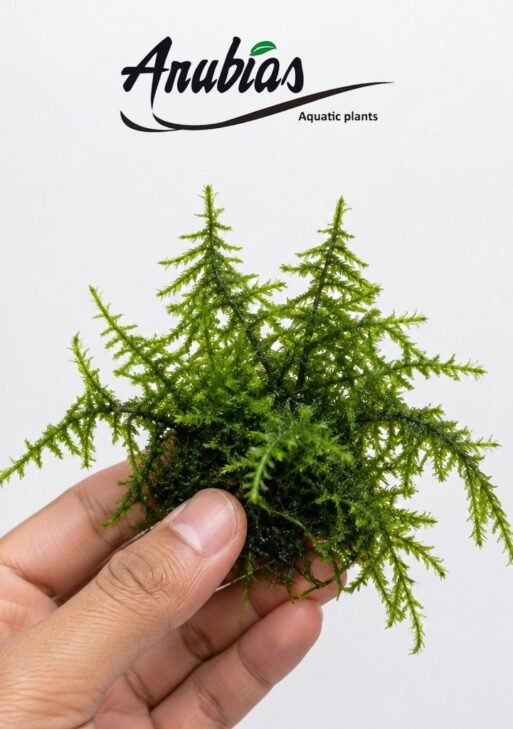
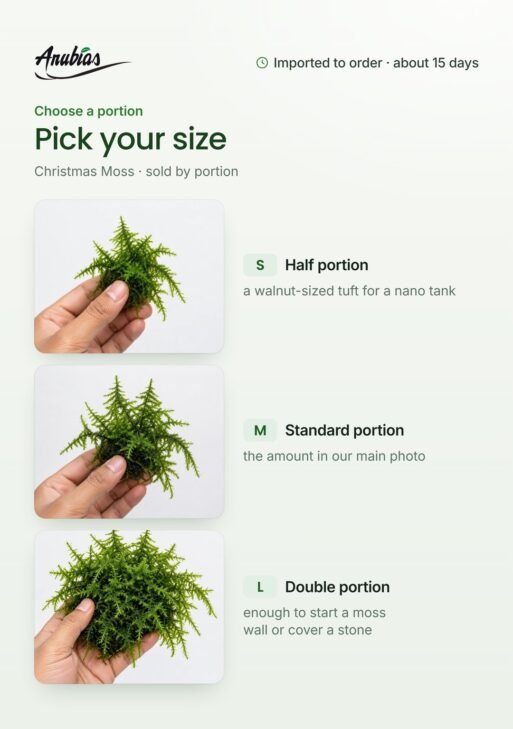
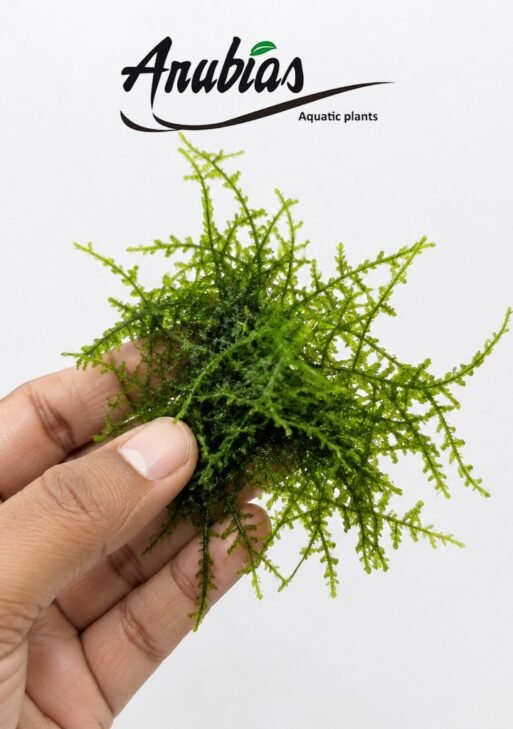
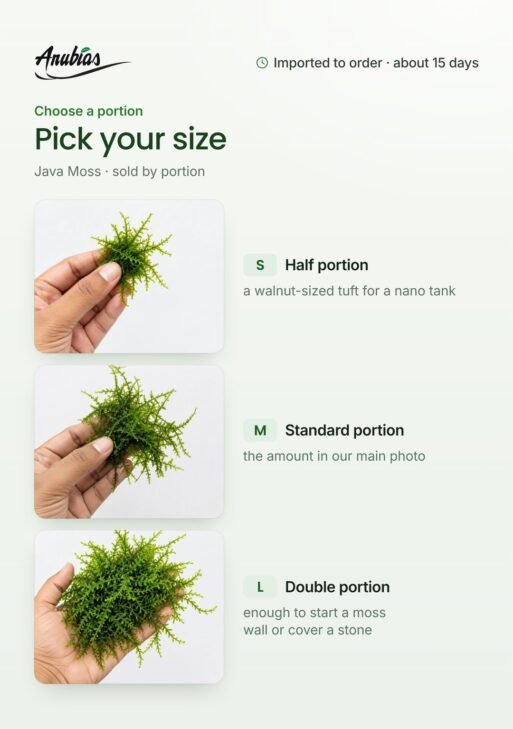
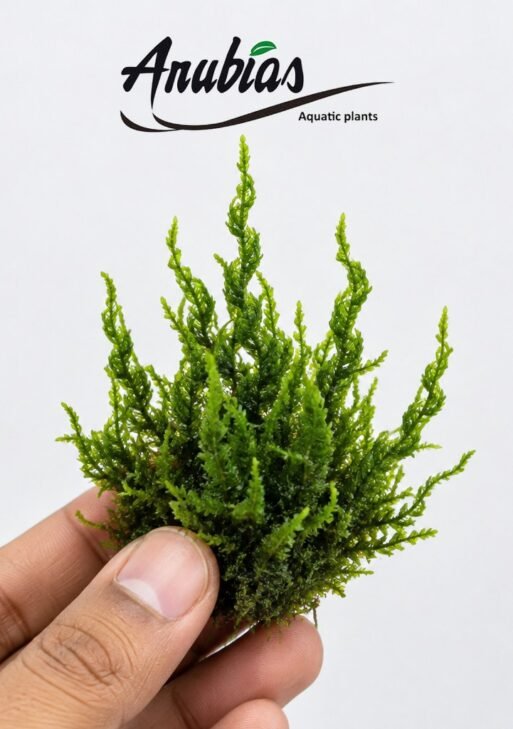
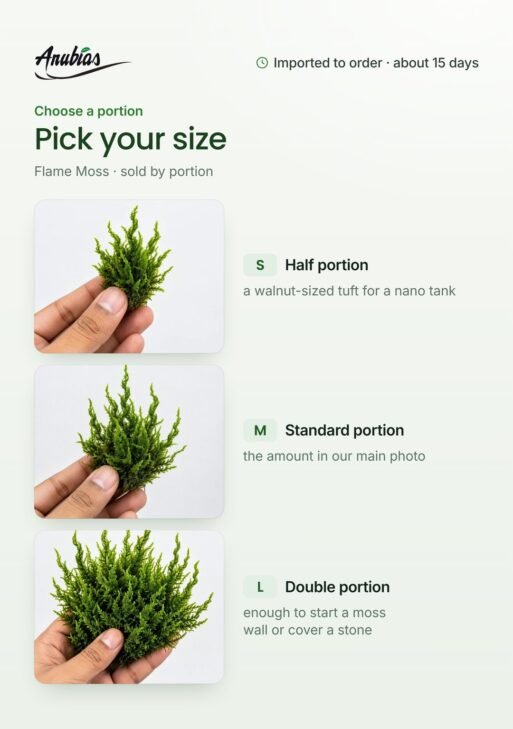
One healthy portion of fissidens moss of the size you select (Small or Standard), similar to the photo. Each portion is checked before packing, packed moist and shipped across India from Surat. ₹99 shipping, free on orders of ₹999 or more.
Live-arrival guarantee: record one continuous unboxing video within 4 hours of delivery and we will refund or replace a portion that arrived damaged.
FAQ
Does fissidens moss need CO2?
No. Fissidens moss grows without CO2 in low to medium light. CO2 makes it grow faster and fuller but is optional.
Is fissidens moss good for beginners?
Yes, as long as the tank stays clean and reasonably cool. It is slower than Java moss but tidier and easier to control.
How do I attach fissidens moss to wood or rock?
Spread small pieces thinly and tie them with cotton thread or fishing line. The moss attaches itself with rhizoids within four to eight weeks.
How fast does fissidens moss grow?
Slowly, a few millimetres a month at first, faster once attached. Expect a full cushion after three to six months.
Fissidens moss vs Java moss: which is better?
Fissidens is neater, stays low and attaches firmly, which suits detailed aquascapes; Java moss grows faster and is more tolerant of heat but spreads untidily. For shrimp tanks either works.
Can fissidens moss survive Indian summer temperatures?
It tolerates up to 28 °C. Above that it browns, so use a fan, a chiller or a cool room during peak summer.
Not sure what fits your tank? Plan it with our free AI tank planner.










There are no reviews yet.