
Description
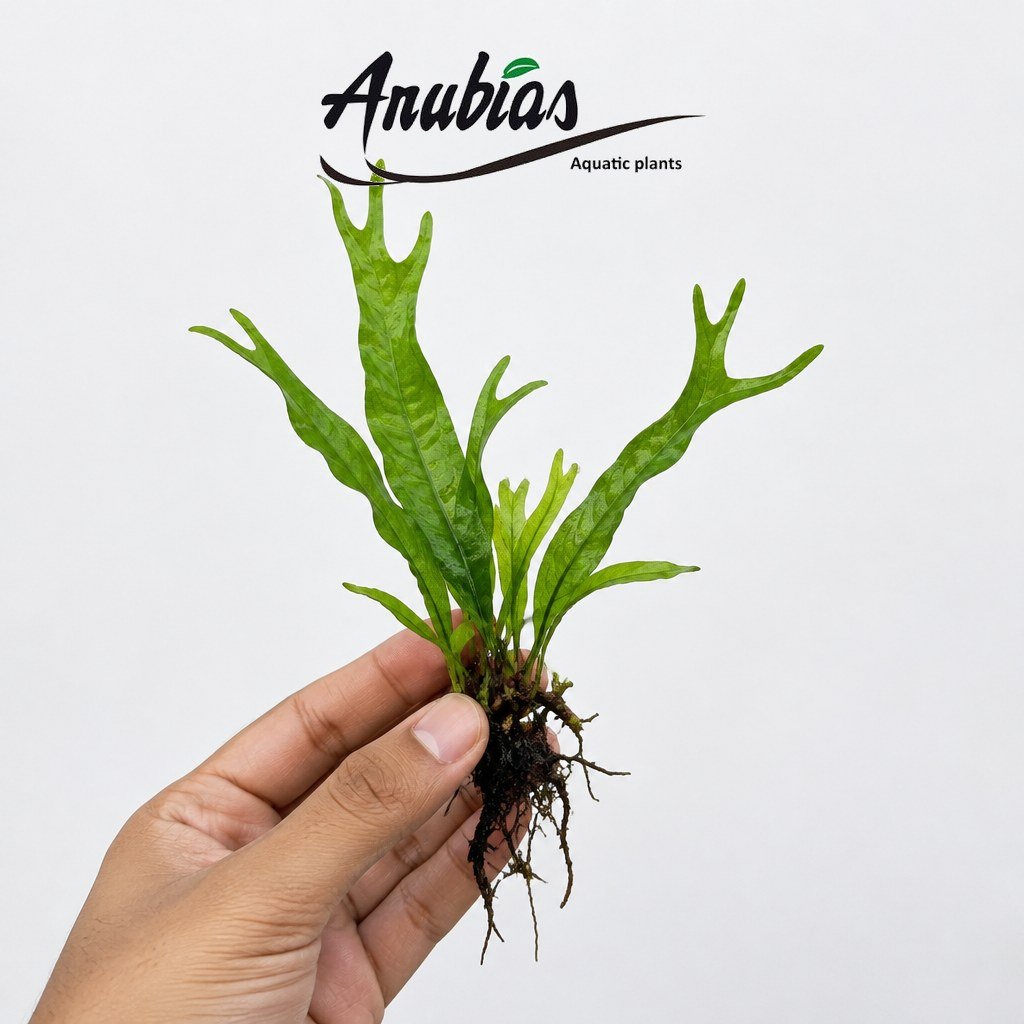
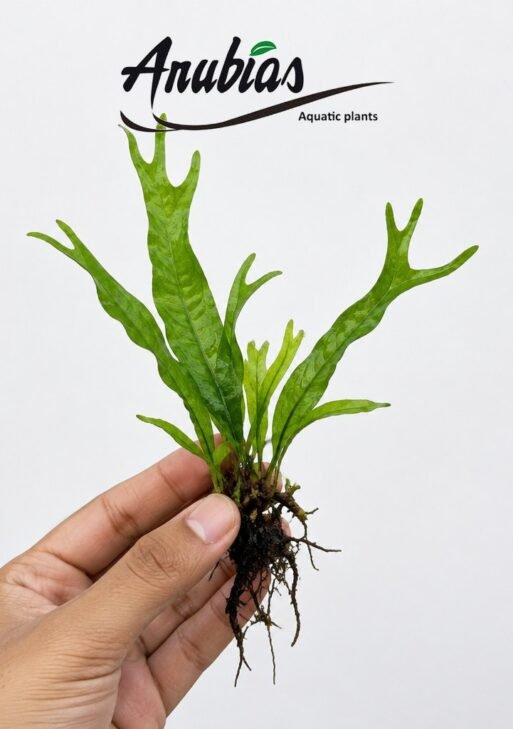
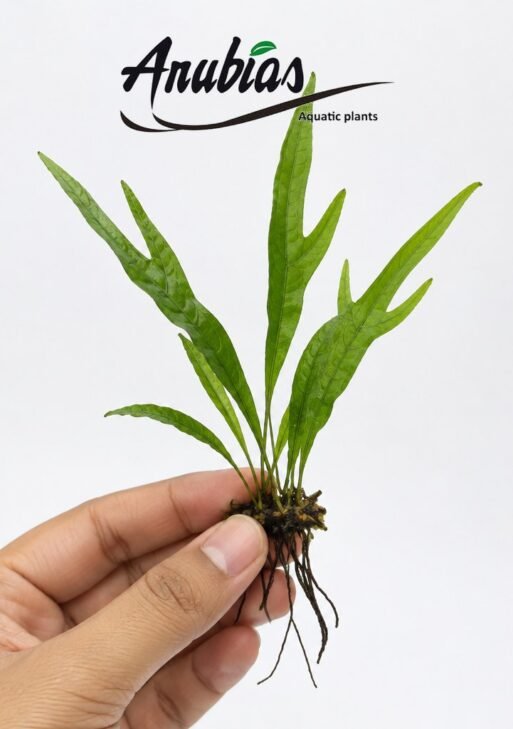
Java fern staghorn (Microsorum pteropus ‘Staghorn’) is a striking cultivar of Java fern whose fronds branch repeatedly at the tips into antler-like forks, giving each leaf the silhouette of a stag’s horns. It keeps every advantage of Microsorum pteropus: it grows on wood and rock, needs no CO2, and tolerates low light, hard water and warm Indian tanks. Java fern staghorn is for hobbyists who want an unusual, sculptural epiphyte in the midground without taking on a demanding plant.
Java fern staghorn at a glance
| Scientific name | Microsorum pteropus ‘Staghorn’ (also spelled Microsorium) |
|---|---|
| Family | Polypodiaceae |
| Origin | Cultivated form; the species is native to South and Southeast Asia |
| Difficulty | Easy |
| Light | Low to medium |
| CO2 | Not required; optional |
| Temperature | 20–28 °C (tolerates short spells to 30 °C) |
| pH | 6.0–7.5 |
| Growth rate | Slow to moderate |
| Height/size | 12–25 cm; fronds branch into antler-like tips |
| Placement | Midground, epiphyte on wood or rock |
| Propagation | Rhizome division; plantlets on fronds |
How to plant java fern staghorn
Staghorn grows from a creeping rhizome with dark wiry roots. The rhizome must remain exposed; burying it causes rot.
- Rinse the plant and cut away any fully brown fronds.
- Choose driftwood or a textured rock. Java fern roots cling best to wood.
- Tie the rhizome on with cotton thread or fishing line, or glue it with cyanoacrylate gel.
- If planting in substrate, press only the roots in and leave the rhizome on the surface, or wedge it between stones.
- Give it moderate flow so the branched tips do not collect debris.
The plant anchors itself within one to two months.
Java fern staghorn care: light, CO2, fertiliser and water
Light. Low to medium light. Under moderate light the fronds branch well and stay a rich green. Very bright light makes the fronds pale and brings black beard algae to the branched tips, which are hard to clean, so keep the photoperiod to 6–8 hours in high-light tanks.
CO2. Optional. Java fern staghorn grows steadily without CO2. With injection it produces fronds faster and the forking becomes more elaborate.
Fertiliser. Dose a complete liquid fertiliser weekly. Potassium is the nutrient Java fern needs most; a shortage causes black patches and holes in older fronds. No root tabs are needed for a mounted plant.
Water. Hard Indian tap water is fine. The preferred range is 20–28 °C; in summers above 30 °C growth slows and older fronds may brown, so shade the tank and keep the surface moving. It tolerates monsoon power cuts well. Weekly 25–30% water changes keep the fronds clean and algae at bay.
Growth, trimming and propagation
A new frond emerges every two to four weeks, and the forking at the tips becomes more pronounced as the plant matures. The rhizome branches and creeps across the hardscape to form a clump. Trim damaged fronds at the rhizome.
Propagate by rhizome division: once the rhizome carries six or more fronds, cut it into pieces with three or more fronds each and mount them separately. Java fern staghorn also produces adventitious plantlets on the tips and edges of mature fronds, often on fronds that appear to be dying. When the babies have a few leaves and roots, pull them off and tie them to new wood or rock.
Where to use it in an aquascape
The antler-shaped fronds make staghorn a focal plant. Mount a single rhizome on a prominent piece of driftwood in the midground where the branching tips catch the eye, or group several on a central rock. It suits nature-style and jungle layouts and gives movement in moderate flow.
It fits tanks from 1.5 ft (around 40 litres) to 5 ft (around 400 litres). Combine it with Anubias nana for contrast, other Java fern varieties for a layered fern scape, cryptocorynes in the substrate and floating plants to diffuse bright light.
It is safe with bettas, tetras, gouramis, angelfish, goldfish, African cichlids and plecos because the fronds are bitter and tough. Shrimp and snails keep the branched tips clean.
Common problems and fixes
- Rhizome rot. Fronds detach from a soft rhizome. Cause: rhizome buried. Fix: cut away the rot and remount above the substrate.
- Black patches and holes in old fronds. Potassium deficiency. Dose potassium weekly. Rows of brown dots under fronds are spores and normal.
- Black beard algae on the forked tips. Cause: poor flow, unstable CO2, strong light. Fix: improve circulation, shorten lighting, spot-treat with liquid carbon or hydrogen peroxide, or trim the worst fronds.
- Melting after arrival. Emersed-grown fronds die back as submerged ones replace them. Leave the rhizome in place.
- Pale or translucent fronds. Excess light or iron shortage. Shade the plant and dose micronutrients.
What you receive
One healthy java fern staghorn plant of the size you select (XS, Small or Standard), similar to the photo. Each plant is checked before packing, packed moist and shipped across India from Surat. ₹99 shipping, free on orders of ₹999 or more.
Live-arrival guarantee: record one continuous unboxing video within 4 hours of delivery and we will refund or replace a plant that arrived damaged.
FAQ
Does java fern staghorn need CO2?
No. It grows well without CO2. Injection speeds growth and encourages more branching, but it is optional.
Is java fern staghorn good for beginners?
Yes. It is as hardy as regular Java fern, tolerating low light, hard water and plant-eating fish. Keep the rhizome above the substrate and it thrives.
How fast does java fern staghorn grow?
Slow to moderate, with a new frond every two to four weeks. The branching becomes more pronounced as the plant matures.
Java fern staghorn vs java fern windelov: what is the difference?
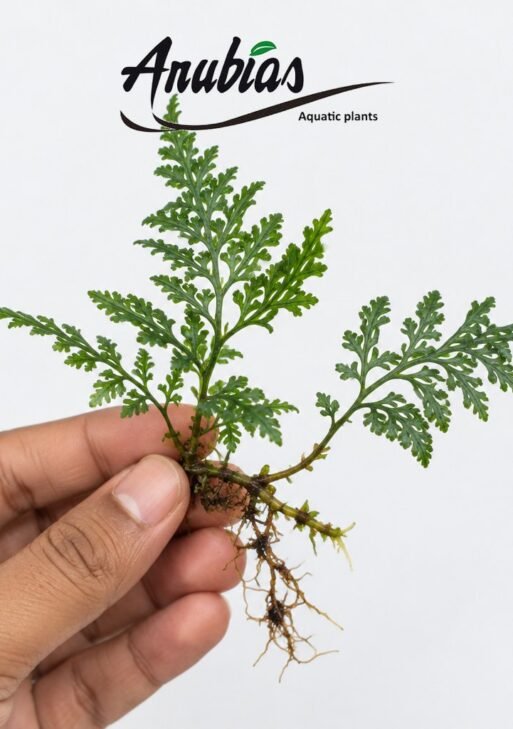
Staghorn fronds fork into a few thick antler-like branches at the tips; Windelov fronds split into many fine, lacy divisions. Both are the same size class and have identical care.
Can java fern staghorn grow in gravel?
Yes if only the roots are buried and the rhizome stays exposed, for example wedged between pebbles. Mounting on wood or rock is the safest method.
Why are the tips of my java fern turning black?
Black patches with holes usually mean potassium deficiency; dose potassium. Black edges on old fronds with tiny plantlets are normal reproduction. Fuzzy black tufts are black beard algae and need better flow and lighting control.
Not sure what fits your tank? Plan it with our free AI tank planner.










There are no reviews yet.