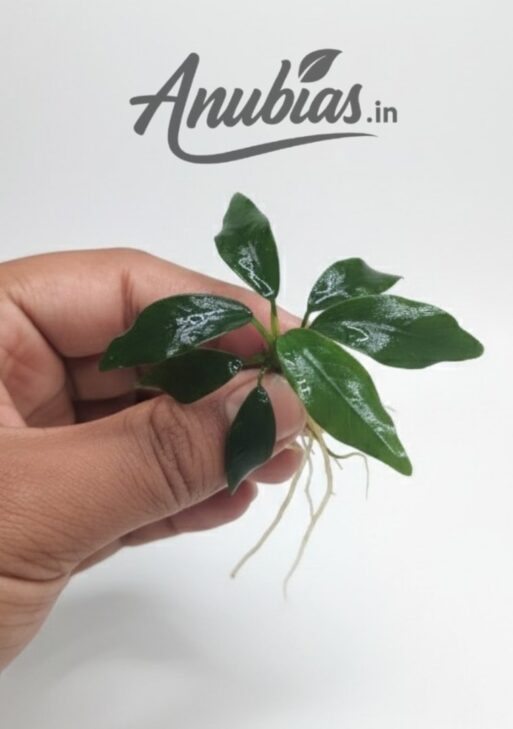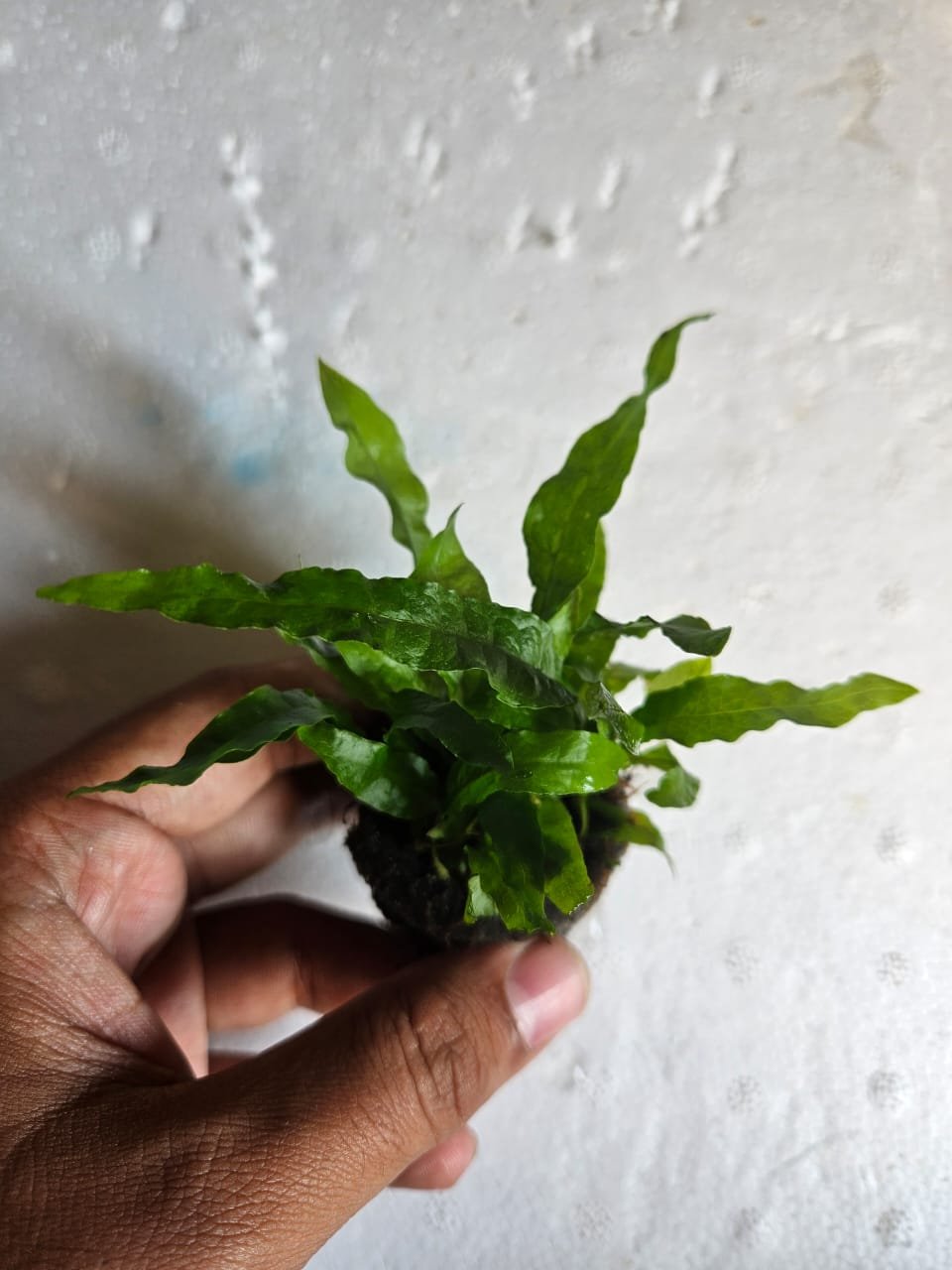

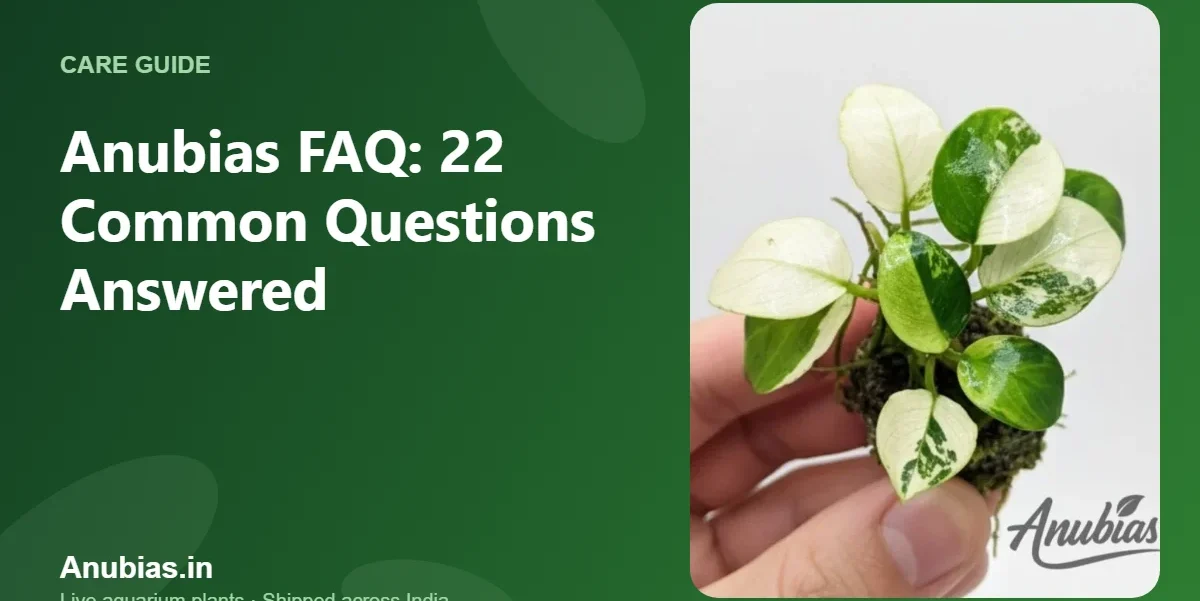
Anubias is the most searched aquarium plant on our site, and these are the questions we hear most often from hobbyists across India. Each answer is short, with a link to the full guide if you want more detail.
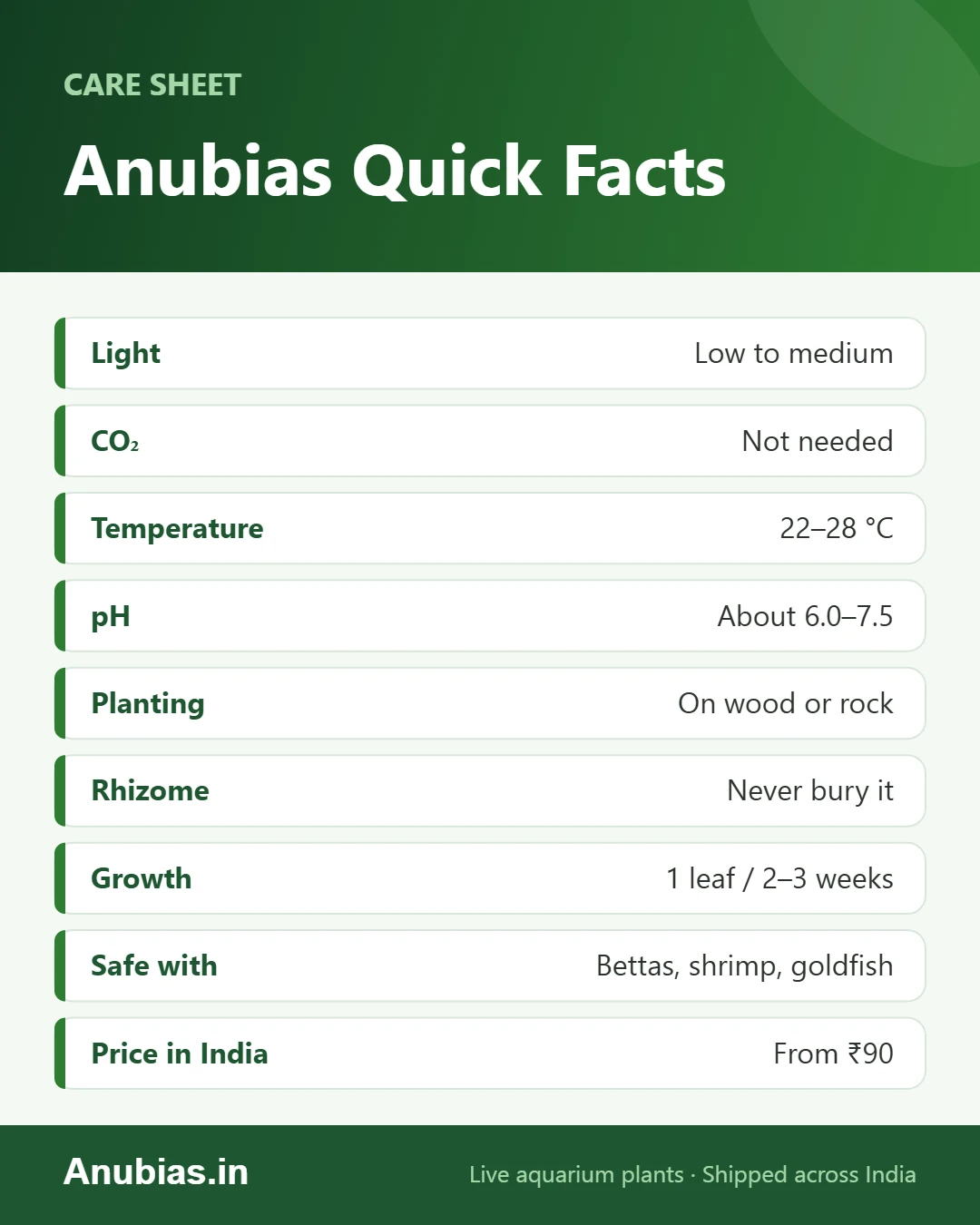
Quick answer: Anubias is a hardy, slow-growing epiphyte that needs low to medium light, no CO2 and water at about 22–28 °C. Attach it to wood or rock and never bury the rhizome, dose a light fertiliser weekly, and expect about one new leaf every 2–3 weeks. It is safe for bettas, shrimp and goldfish tanks, and costs from ₹90 in India.
Plants in this guide
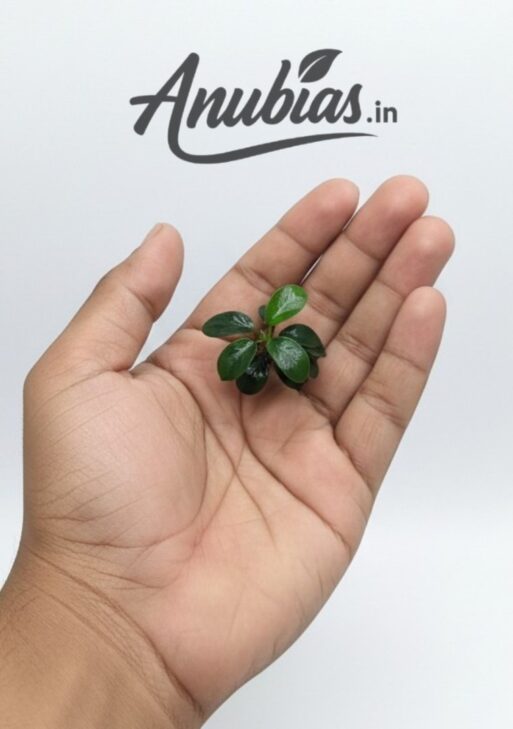
Price range: ₹ 90 through ₹ 250
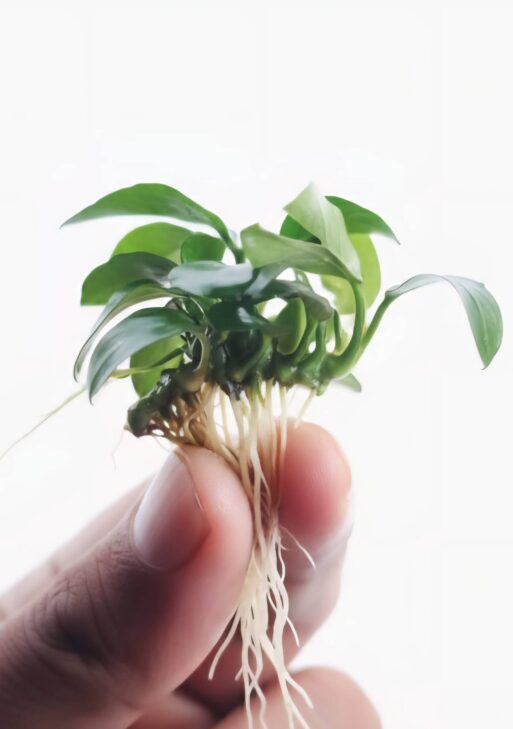
Price range: ₹ 90 through ₹ 250
Price range: ₹ 90 through ₹ 250

₹ 250
Frequently asked questions
What is Anubias?
Anubias is a genus of hardy, slow-growing aquatic plants from West and Central Africa. It grows attached to wood or rock, needs low light and no CO2, and is one of the easiest aquarium plants for beginners. Anubias care guide
Does Anubias need CO2?
No. Anubias grows well without CO2 under a basic aquarium LED. CO2 only speeds up its naturally slow growth slightly.
How much light does Anubias need?
Low to medium light for about 6–8 hours a day. Strong light mainly causes algae on its long-lived leaves.
What temperature does Anubias like?
About 22–28 °C with a pH of roughly 6.0–7.5. It tolerates most dechlorinated Indian tap water.
Can I plant Anubias in gravel or soil?
Its roots can go into the substrate, but the rhizome (the thick horizontal stem) must stay uncovered. A buried rhizome rots. How to attach Anubias
How do I attach Anubias to driftwood?
Tie the rhizome with cotton thread or fishing line, or fix it with aquarium-safe gel superglue. Roots grip the surface in a few weeks.
How fast does Anubias grow?
Very slowly: about one new leaf every 2–3 weeks in a low-tech tank. Growth rates by variety
Why is my Anubias turning yellow?
Usually a buried or rotting rhizome, nutrient shortage, or normal ageing of old leaves. Anubias yellowing and melting fixes
Why does my Anubias have holes or black spots?
Pinholes usually mean potassium shortage; black or green spots are algae from too much light. Anubias leaf problem chart
Does Anubias need fertiliser?
It survives without it, but a weekly complete liquid fertiliser keeps leaves dark green and prevents pinholes. How often to fertilise
Is Anubias safe for bettas and shrimp?
Yes. Bettas rest on its broad leaves and shrimp graze biofilm from them. It is safe for fish, shrimp and snails.
Do goldfish eat Anubias?
Rarely. Its thick, bitter leaves survive goldfish and cichlids, especially when tied firmly to hardscape. Fish-proof plants
Is Anubias toxic to pets?
It is safe in the aquarium, but as an aroid it contains calcium oxalate and can irritate cats, dogs or people if chewed. Is Anubias toxic?
Can Anubias grow out of water?
Yes, in humid setups like paludariums and closed jars, and it often grows faster emersed. Emersed Anubias care
How do I propagate Anubias?
Cut a long rhizome into sections with at least 3–4 leaves each and attach each piece to wood or rock. Propagation guide
Why is my Anubias flowering underwater?
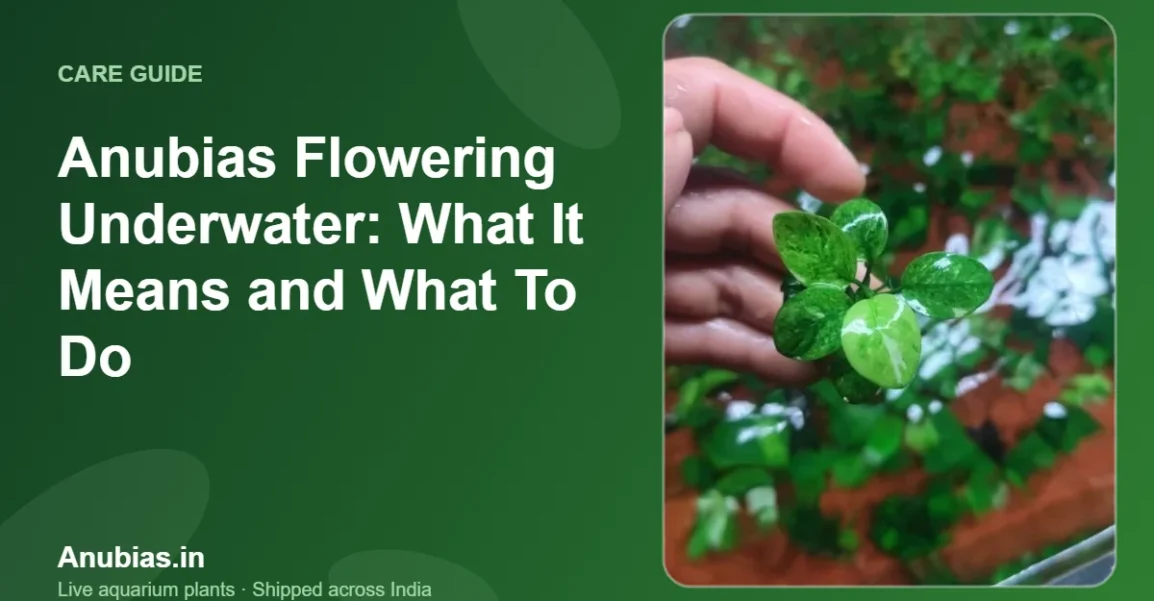
Flowering is a sign of a healthy, mature plant and is harmless. Anubias flowering explained
What is the difference between Anubias Nana and Nana Petite?
Nana has leaves of about 4–6 cm; Petite is a miniature cultivar with 1–2 cm leaves for nano tanks. Care is identical. Nana vs Petite vs Gold
How many Anubias varieties are there?
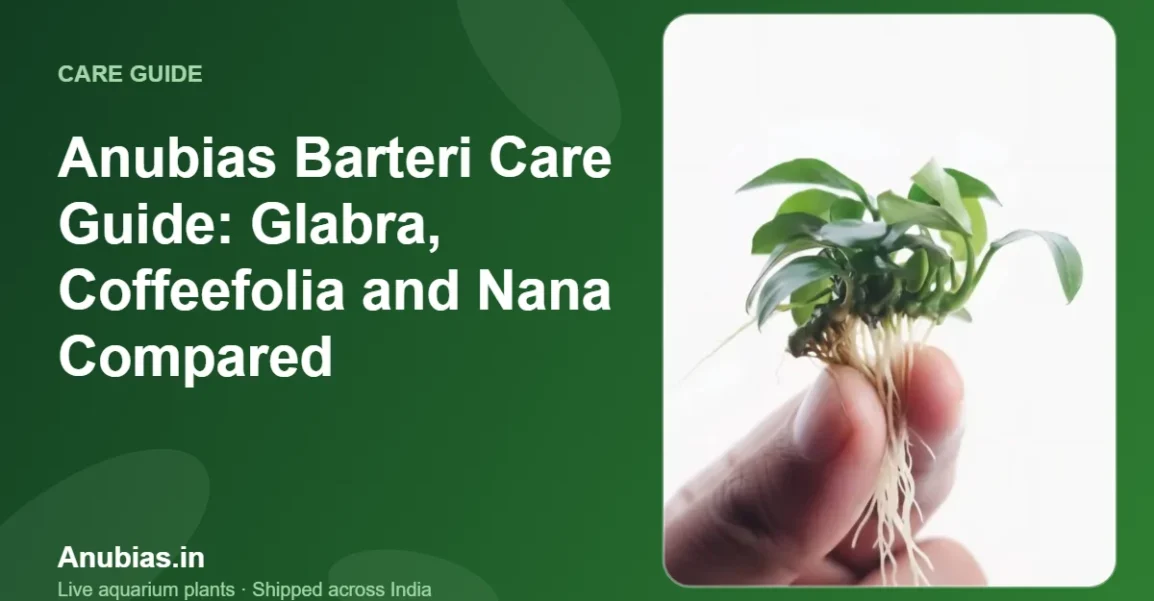
Anubias.in compares 16 popular varieties, from Nana and Barteri to rare Pinto, Panda and Marble. Anubias plant types
How much does Anubias cost in India?
Anubias Nana costs ₹90–₹250 depending on size on Anubias.in, while rare variegated types range from ₹310 to ₹1,650. Anubias Nana price and rare Anubias prices
Anubias or Java fern for beginners?
Both are ideal. Anubias suits the front and middle of the tank; Java fern gives taller cover at the back. Java fern vs Anubias
Anubias or Bucephalandra?
Anubias is cheaper with more size options; Bucephalandra offers more colour and texture for nano tanks. Anubias vs Bucephalandra