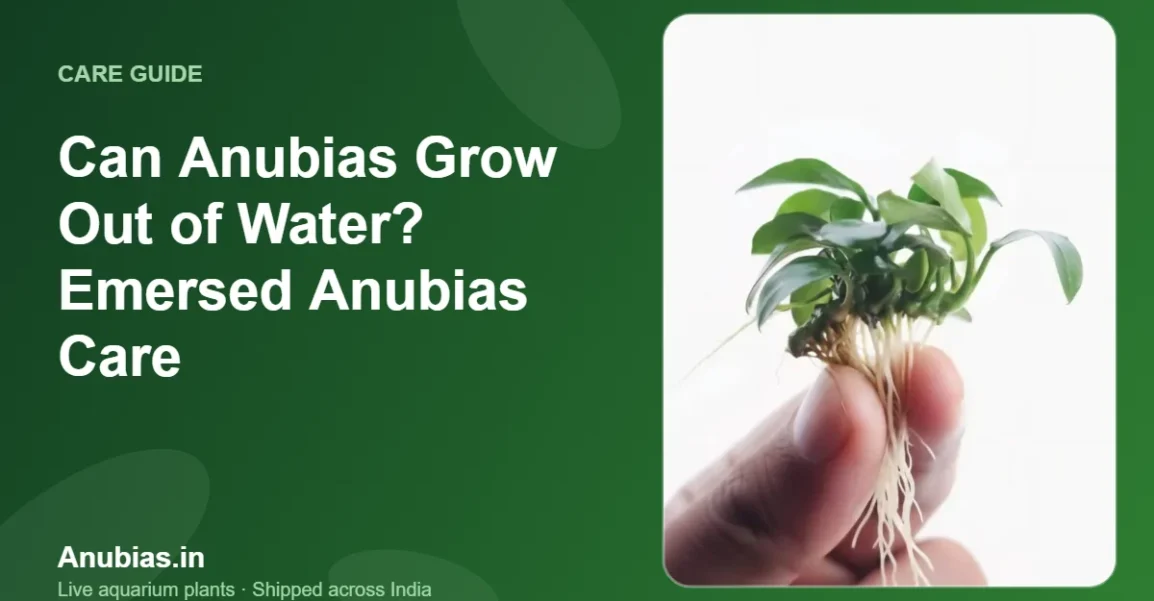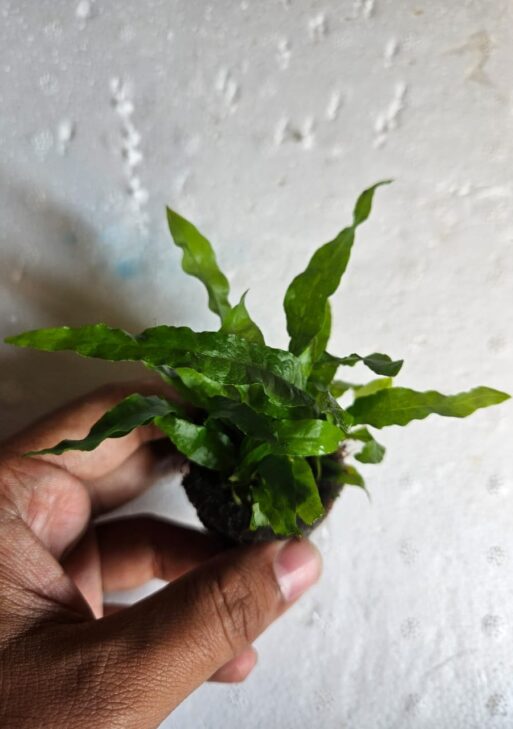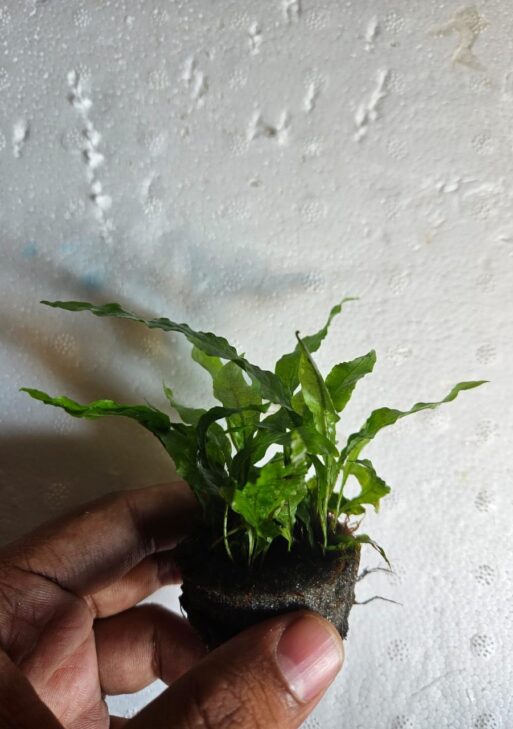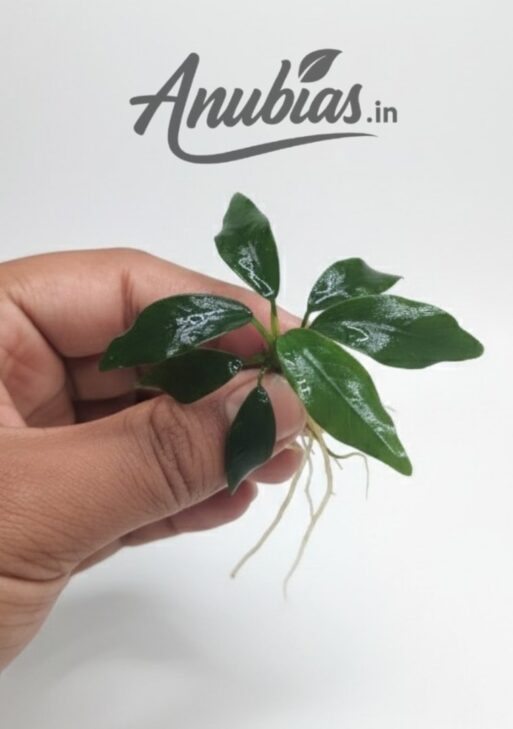

Anubias barteri is the species behind most of the Anubias sold in India. Anubias Nana, Coffeefolia and Glabra are all varieties of the same plant, which is why their care is almost identical. This guide explains the differences between the main barteri varieties, how to grow them, and which one suits your tank.
Quick answer: Anubias barteri is a hardy, slow-growing epiphyte from West Africa. Attach it to wood or rock (never bury the rhizome), give it low to medium light, keep water at 22–28 °C and dose a light liquid fertiliser weekly; no CO2 is needed. Choose var. glabra for large, tall leaves in bigger tanks, var. coffeefolia for rippled leaves with bronze new growth, and var. nana for compact foreground planting.
What is Anubias barteri?
Anubias barteri is a rhizome-forming aquatic plant native to the rivers and streams of West Africa, where it grows in shade along banks, often partly out of the water. In the aquarium hobby it is sold as several naturally occurring and cultivated varieties that differ in leaf size and shape but share the same tough, glossy leaves and very slow growth. All of them are epiphytes: they grip hardscape with their roots and take nutrients from the water.
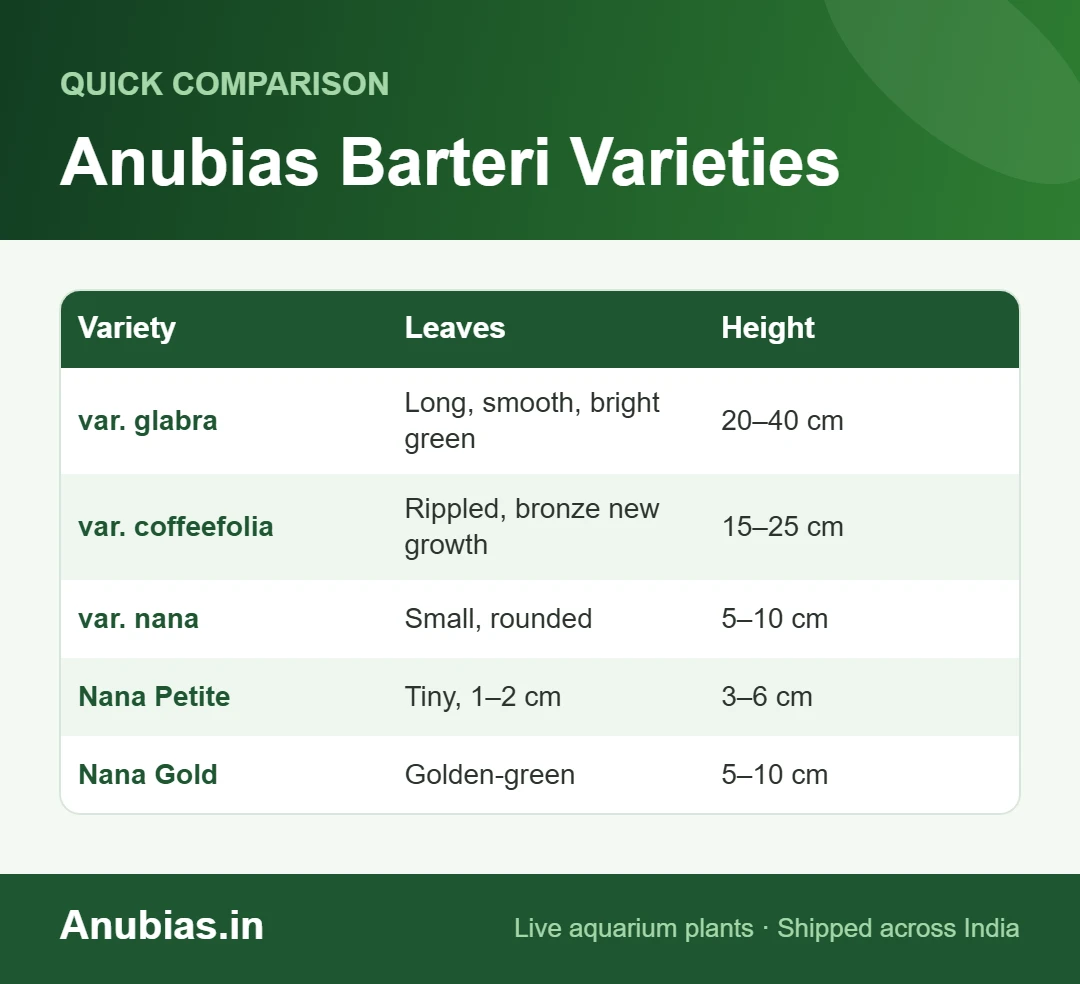
Anubias barteri varieties compared
| Variety | Leaves | Typical height | Best placement | Price from (Anubias.in) |
|---|---|---|---|---|
| Anubias barteri var. glabra | Long, narrow, smooth, bright green | 20–40 cm | Midground and background, larger tanks | ₹90 |
| Anubias barteri var. coffeefolia | Rippled, puckered like a coffee leaf; new leaves bronze-red | 15–25 cm | Midground focal point | ₹250 |
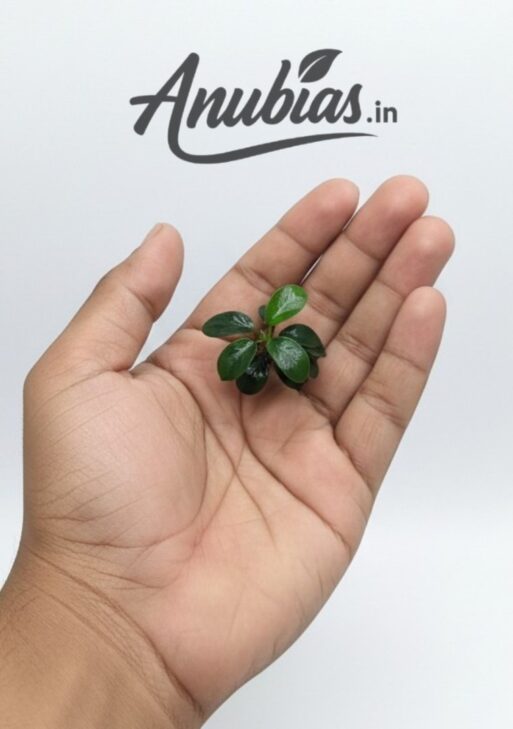
| Anubias barteri var. nana | Small, rounded, dark green | 5–10 cm | Foreground and on hardscape | ₹90 |
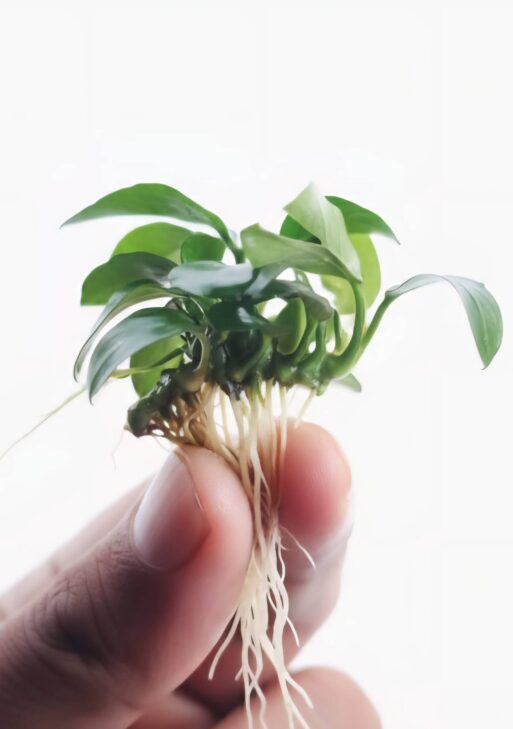
| Anubias Nana Petite | Tiny, 1–2 cm | 3–6 cm | Nano tanks and rock crevices | ₹90 |
| Anubias Nana Gold | Golden-green, rounded | 5–10 cm | Colour accent in the foreground | ₹90 |
How to care for Anubias barteri
Light
Low to medium light is ideal. A basic aquarium LED for 7–8 hours a day is enough. Strong light does not make barteri grow much faster, but it does encourage green spot and black beard algae on the long-lived leaves, so place it in partial shade under taller plants or wood.
Water and temperature
Keep the tank at 22–28 °C with a pH of roughly 6.0–7.5. Barteri adapts well to most Indian tap water once dechlorinated. It tolerates the warm water of Indian summers better than many plants, but aim to keep the tank below 30 °C.
Planting
Tie the rhizome to driftwood or rock with cotton thread or fishing line, or fix it with gel superglue. Roots can be tucked into gravel, but the rhizome itself must stay uncovered, because buried rhizomes rot. Step-by-step methods are in our guide to attaching Anubias to driftwood or rock.
Fertiliser and CO2
CO2 is not needed. A weekly all-in-one liquid fertiliser keeps leaves dark and prevents pinholes, especially in lightly stocked tanks. Glabra, the largest variety, benefits most from regular feeding.
Anubias barteri var. glabra: the big, tough one
Glabra is the best Anubias for large tanks and boisterous fish. Its long, smooth leaves reach 20–40 cm, filling the back or middle of 2–4 feet aquariums. Because its leaves are thick and bitter, it is one of the few plants that survives with goldfish, cichlids, silver dollars and large plecos when attached firmly to wood or stone. It is also the fastest-growing of the common barteri types.
Anubias barteri var. coffeefolia: the textured one
For a full walkthrough, see our dedicated Anubias Coffeefolia care guide.
Coffeefolia is prized for its deeply rippled leaves and bronze-red new growth. The puckered texture catches light and contrasts beautifully with smooth-leaved Anubias, Java fern and moss. It stays medium-sized, making it a natural focal plant on a piece of driftwood in 2-feet tanks. New leaves emerge reddish-brown and turn green as they mature. Growth is slower than glabra, so start with a well-rooted plant.
Anubias barteri var. nana: the compact classic
Nana is the most popular Anubias in the world thanks to its small, rounded leaves and compact habit. It suits the foreground of most tanks and grows happily on small rocks and wood. For even smaller scapes, choose Nana Petite. Compare the two in our Nana vs Petite vs Gold guide.
Propagating Anubias barteri
- Wait until the rhizome has at least 5–6 leaves and is several centimetres long.
- Using clean, sharp scissors, cut the rhizome into sections with at least 3 leaves each.
- Attach each section to a new piece of wood or rock.
- Expect a pause of a few weeks before new leaves appear from the cut sections.
Common problems
- Algae on leaves: reduce light hours and move the plant into shade. See removing algae from Anubias.
- Yellow or melting leaves: often a buried or damaged rhizome. See why Anubias melts.
- No new growth: normal for weeks after planting; see how fast Anubias grows.
- Flower stalk appearing: a healthy sign; read about Anubias flowering underwater.
Plants in this guide
Price range: ₹ 90 through ₹ 250
Price range: ₹ 90 through ₹ 250
Price range: ₹ 90 through ₹ 250
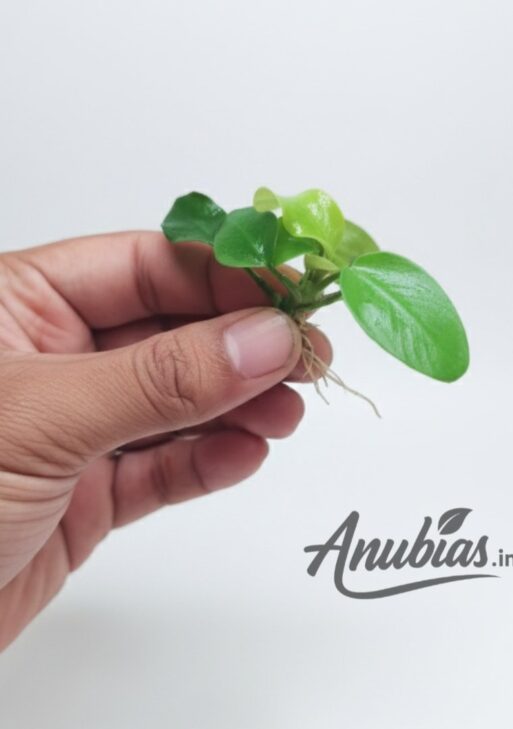
Price range: ₹ 90 through ₹ 250
Frequently asked questions
Is Anubias Nana the same as Anubias barteri?
Yes. Anubias Nana is Anubias barteri var. nana, a naturally compact variety of the same species, so its care is identical to other barteri types.
Which Anubias barteri is best for goldfish or cichlids?
Var. glabra. Its large, tough leaves and strong rhizome survive nibbling and digging much better than smaller varieties, especially when tied to heavy hardscape.
Why are new Coffeefolia leaves red or brown?
Bronze-red new growth is normal for Coffeefolia. The leaves turn green as they harden over a couple of weeks.
Can Anubias barteri grow in a pond or outdoor tub?
Yes, in shaded tubs and paludariums it grows well partly out of water, as long as it is protected from direct midday sun and cold winter nights.
Shop Anubias Barteri var. glabra, Coffeefolia and Anubias Nana, or browse the full Anubias collection, shipped across India with a live-arrival guarantee.