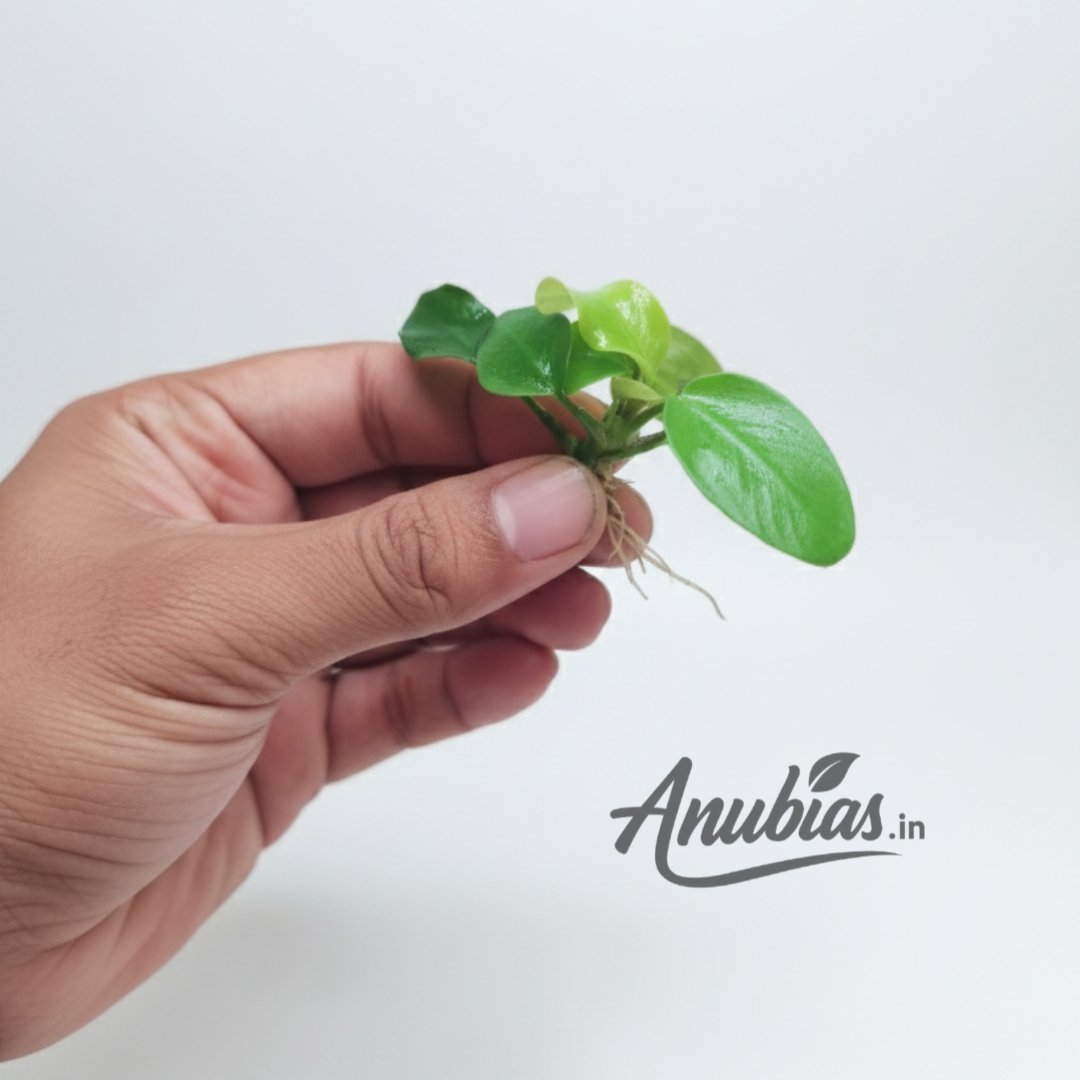

Browse the Anubias section on anubias.in and you’ll spot “Nana” in three different names: Anubias Nana, Anubias Nana Petite, and Anubias Nana Gold. All three sit within the wider family of Anubias plant types, and all three are compact, rhizome-based, beginner-proof plants, and all three start at the same ₹90. So what actually separates them, and does the difference matter for your tank? It comes down to two things only — leaf size and leaf colour. Here is exactly how they compare and which one belongs in your aquarium.
Quick answer: All three need identical care: low light, no CO2 and a rhizome tied to wood or rock, never buried. Anubias Nana has rounded leaves of about 4–6 cm; Nana Petite shrinks them to roughly 1–2 cm for nano tanks and small driftwood; Nana Gold is Nana-sized with gold-green leaves. Pick by tank size and colour.
Anubias Nana vs Nana Petite: what is the difference?
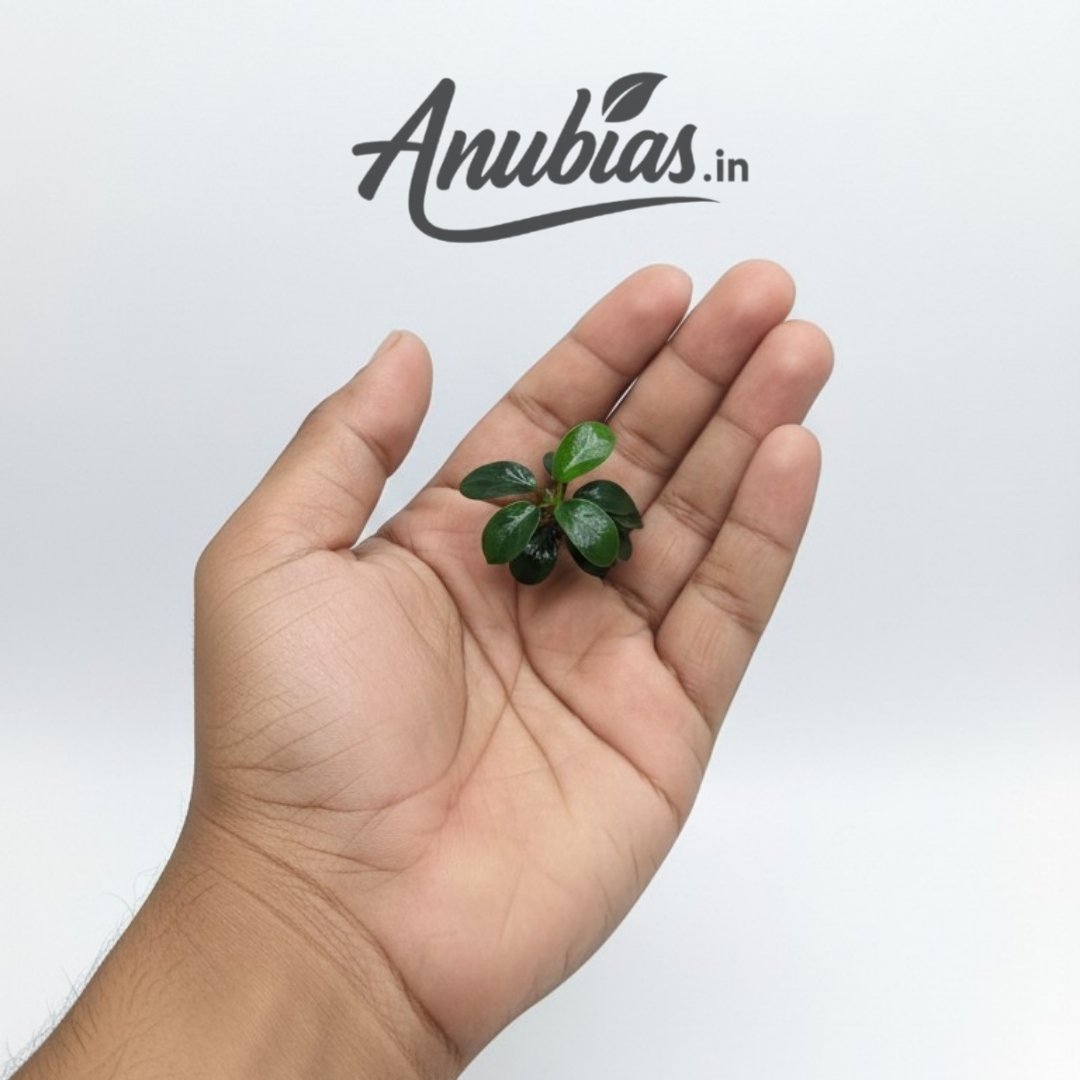
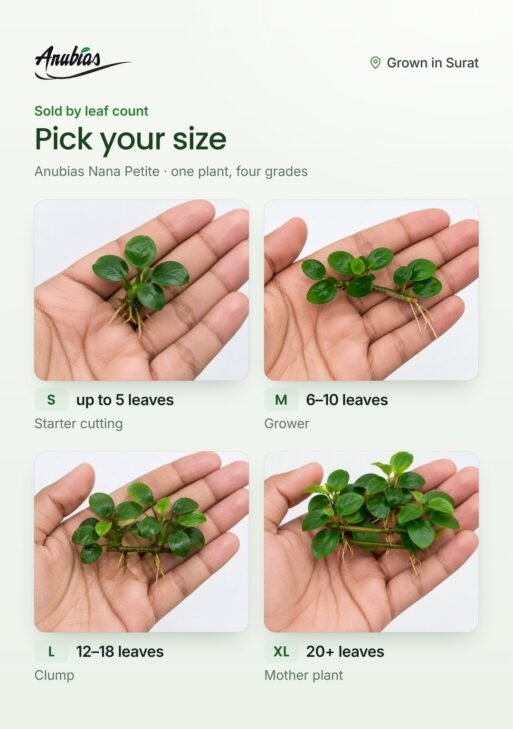
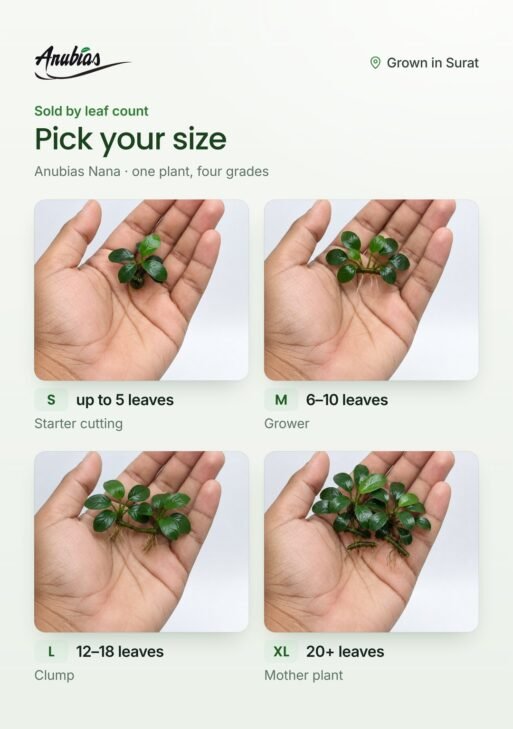
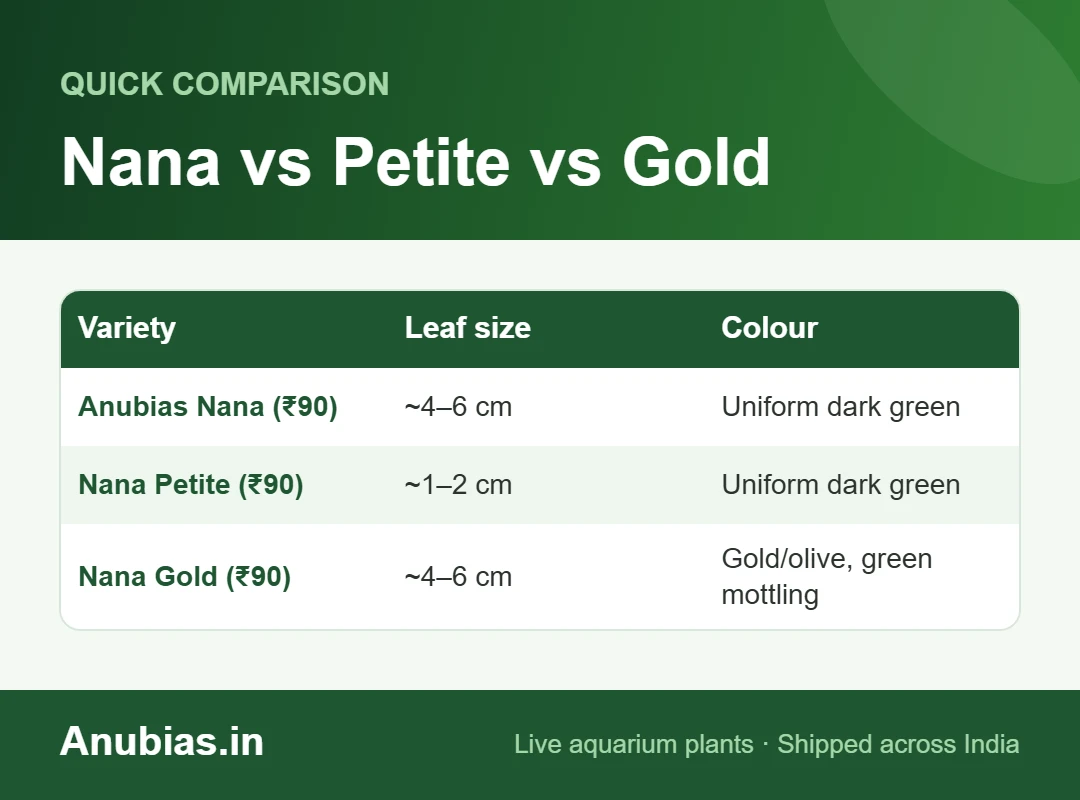
The difference is leaf size. Anubias Nana has leaves of about 4–6 cm, while Anubias Nana Petite has leaves of roughly 1–2 cm, so Petite suits nano tanks and small pieces of wood. Care is identical, and both are grown in Surat. Both are graded S to XL by leaf count and cost ₹90–₹250 on Anubias.in.
Where All Three Come From
All three are forms of Anubias barteri var. nana, the smallest naturally occurring variety in the Anubias genus and the plant most people picture when they hear the word “Anubias.” Nana Petite is a dwarf sport of that same variety, bred over generations for smaller leaves. Nana Gold is a colour morph of the standard-sized nana, selected for pigmentation rather than size. Genetically they are close cousins, but the practical differences in a running tank are real enough to change which one you should buy.
Anubias Nana — the size the whole group is named for
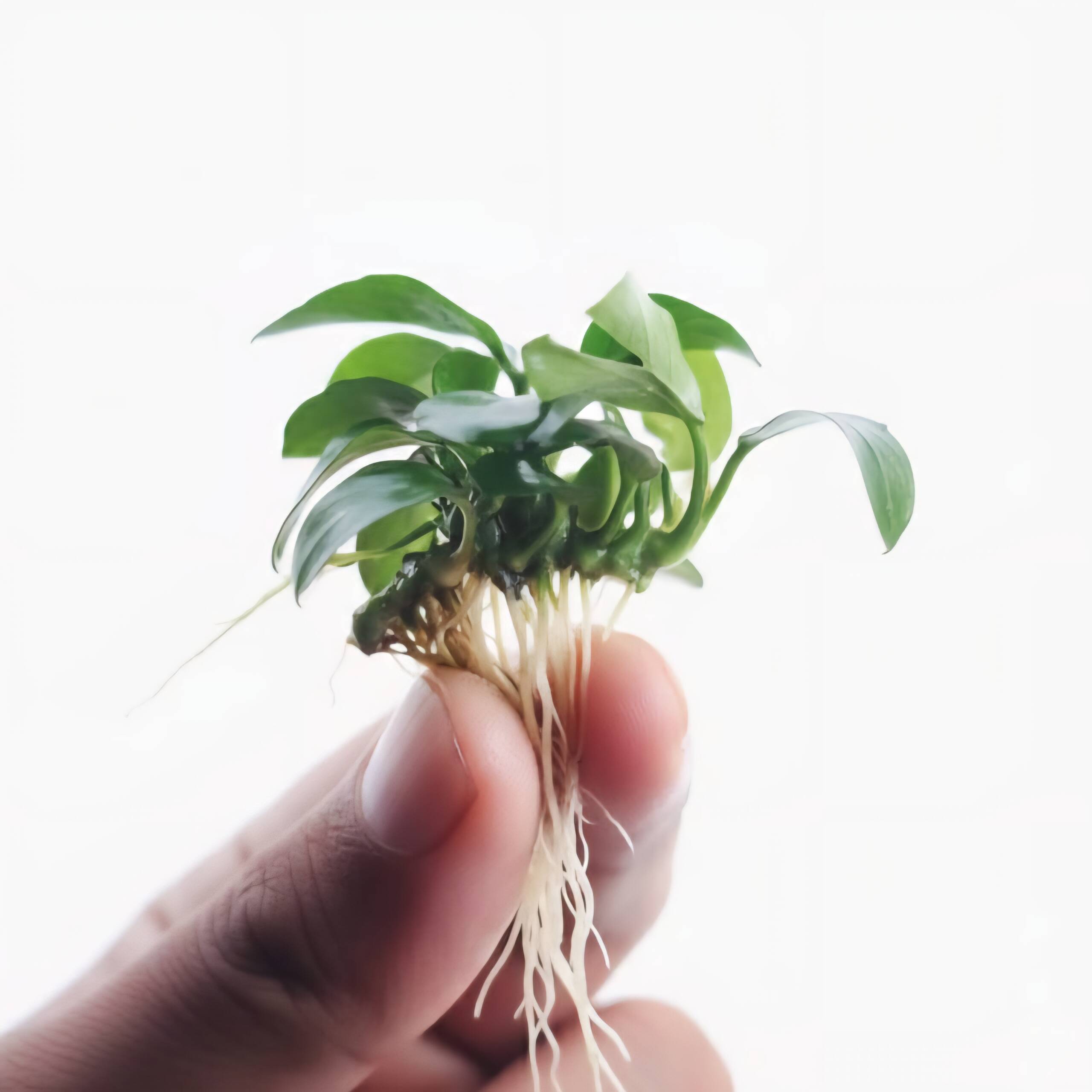
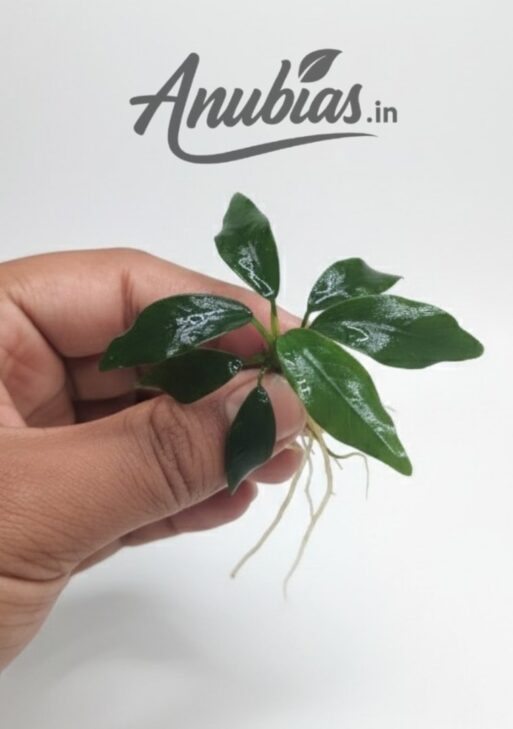
Anubias Nana is the plant most Indian hobbyists mean when they just say “Anubias.” Leaves are rounded, glossy and dark green, typically 4–6 cm long on a mature plant, growing from a thick rhizome that must sit on top of your hardscape rather than buried in substrate. It is slow-growing — a handful of new leaves a year is normal — but that slowness is also why it survives neglect, low light and inexperienced hands better than almost anything else you can put in a tank. At ₹90, it is the reference point the other two are judged against.
Anubias Nana Petite — built for small spaces
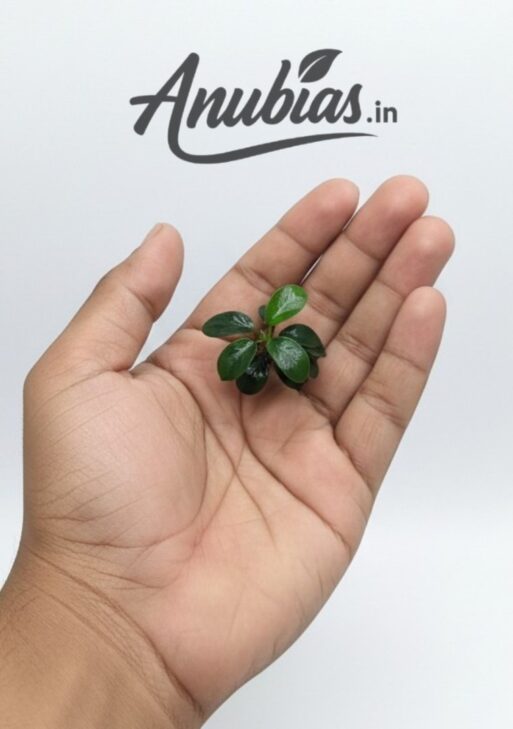
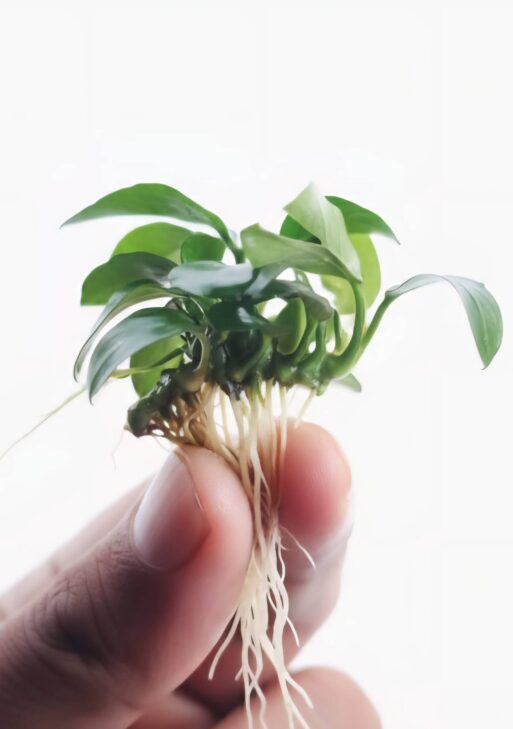
Anubias Nana Petite keeps every care requirement of standard Nana but shrinks the leaves down to roughly 1–2 cm — miniature enough that scale stops being a problem in nano tanks and detailed aquascapes. Where a full-size Nana leaf can look oversized glued to a small piece of driftwood in a 15-litre tank, Petite keeps the proportions believable. It starts at the same ₹90 as standard Nana, so the choice between them is purely about the footprint you have to fill, not budget.
Anubias Nana Gold — same size, different colour
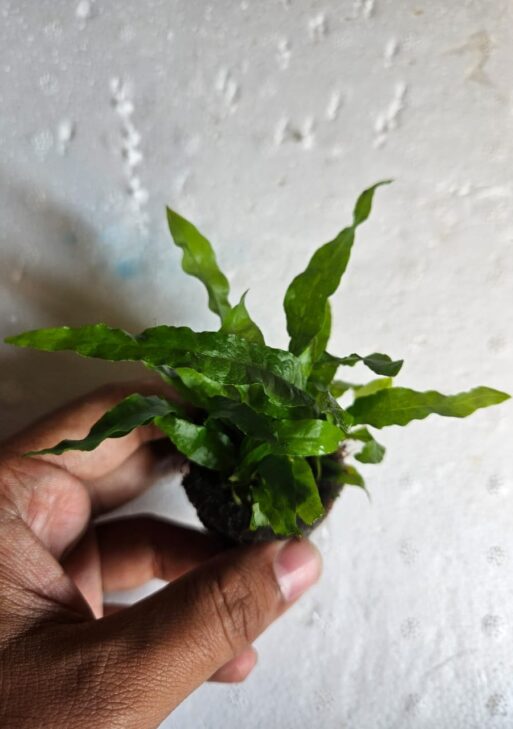
Anubias Nana Gold is built on the standard nana body plan, not the Petite one, so expect the same growth habit and roughly the same leaf size as regular Nana. The difference shows up in colour: new leaves emerge a bright, almost lime-yellow shade with darker green mottling tracing the veins, then settle into a mustard-gold to olive tone as they harden off over a few weeks — a tone that never fully reverts to plain green. No two leaves variegate quite the same way, which is part of the appeal for aquascapers who want one standout specimen rather than a uniform bed of green. For the full picture on holding that colour long-term, see our Anubias Nana Gold care guide.
Care Requirements Are Identical
This is the part that trips people up least once they know it: all three tolerate low light, need no CO2, and must be tied or glued to wood or rock rather than planted in substrate — burying the rhizome is the one mistake that reliably kills any Anubias variety. Growth rate, temperature range and fertiliser needs are the same across Nana, Petite and Gold. That means your buying decision should be based entirely on the size of the space you are filling and whether you want a colour accent, not on which one is “easier.”
Side-by-Side Comparison
| Variety | Leaf Size | Height | Growth Speed | Colour | Price | Best For |
|---|---|---|---|---|---|---|
| Anubias Nana | ~4–6 cm | ~5–10 cm | Slow | Uniform dark green | ₹90–₹250 (S–XL) | Standard community tanks, foreground/midground coverage |
| Anubias Nana Petite | ~1–2 cm | ~3–6 cm | Slow | Uniform dark green | ₹90–₹250 (S–XL) | Nano tanks, detailed aquascapes, small hardscape |
| Anubias Nana Gold | ~4–6 cm | ~5–10 cm (as Nana) | Slow | Gold/olive with green mottling | ₹90–₹250 (S–XL) | Showpiece accent on a centrepiece wood or rock |
Which One Should You Pick?
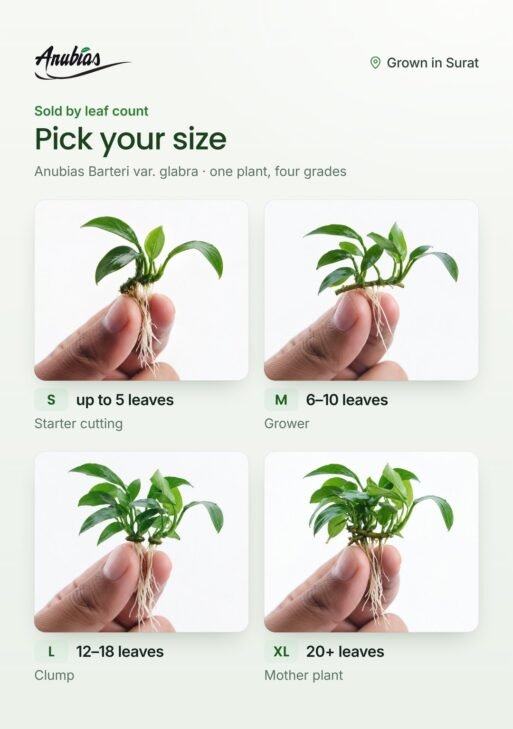
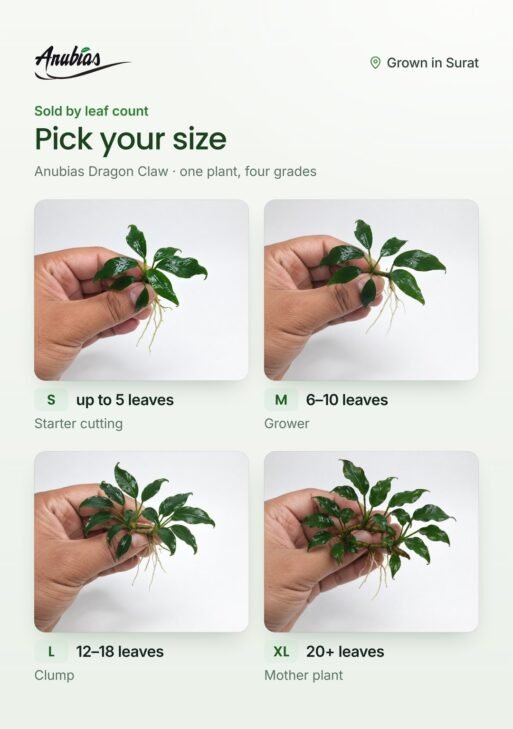
If your tank is under roughly 30 litres, or you are building a detailed nano aquascape where a full-size leaf would look out of place, Nana Petite is the right call — it keeps every plant in the scape in proportion. If you are working with a standard community tank and want reliable, fuller foreground or midground coverage on a normal piece of driftwood, go with regular Anubias Nana; it covers more visual area per plant and is the most widely available of the three. If you already have green Anubias elsewhere in the tank and want one piece of hardscape to stand out as a showpiece, Nana Gold earns its keep purely on looks, since the care is no harder than standard Nana. None of this is exclusive — because the three share identical care, a common aquascaping move is mounting all three at different heights on the same piece of driftwood for a layered, multi-tone effect. Once you have chosen a variety, the S, M, L and XL size guide explains the leaf count behind each grade, from starter cutting to mother plant.
Frequently Asked Questions
Can I plant any of these Anubias varieties in substrate like a normal rooted plant? No. All three grow from a rhizome that rots if buried — tie or glue it to driftwood or rock instead, keeping the rhizome itself exposed to the water.
Does Anubias Nana Gold need extra light to keep its gold colour? It holds its tone well under normal low-to-moderate planted-tank lighting. In very dim spots, new growth can trend a little closer to green, so avoid tucking it into the darkest corner of the tank if colour is the reason you bought it.
Is Nana Petite more difficult to keep alive than regular Nana? No — light, water and attachment requirements are identical. The only real difference between Petite and standard Nana is leaf size, so choose based on your tank’s scale rather than expected difficulty.
Is Anubias Nana Petite the same plant as Anubias Nana? Nearly. Nana Petite is a dwarf sport of Anubias barteri var. nana, the same variety as standard Anubias Nana, bred over generations for smaller leaves. Care and growth habit are the same; the difference is leaf size, roughly 1–2 cm on Petite against about 4–6 cm on standard Nana.
Does Anubias Nana Petite stay small? Yes. Its leaves stay roughly 1–2 cm and the plant usually reaches only about 3–6 cm tall, and like all Anubias it grows slowly, so it keeps its scale in nano tanks and on small driftwood. The S to XL grades differ by leaf count, not leaf size.
Grown in Surat (pre-order plants imported to order) · live-arrival guarantee with a 4-hour unboxing video · ₹99 shipping, free from ₹999