
Description
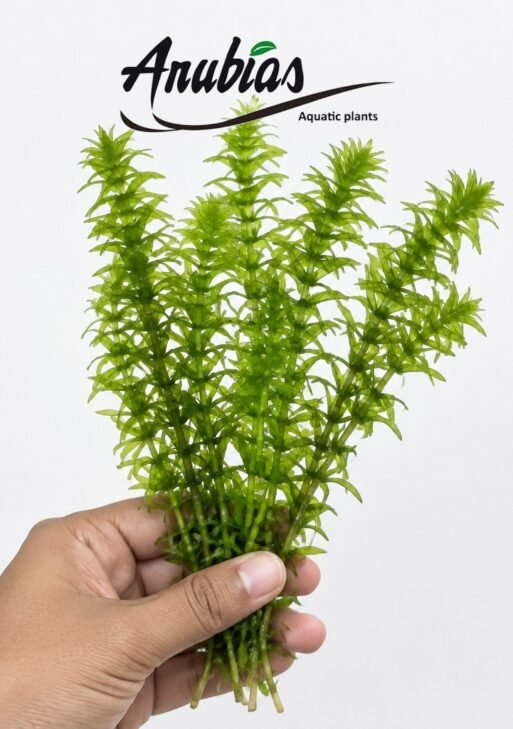
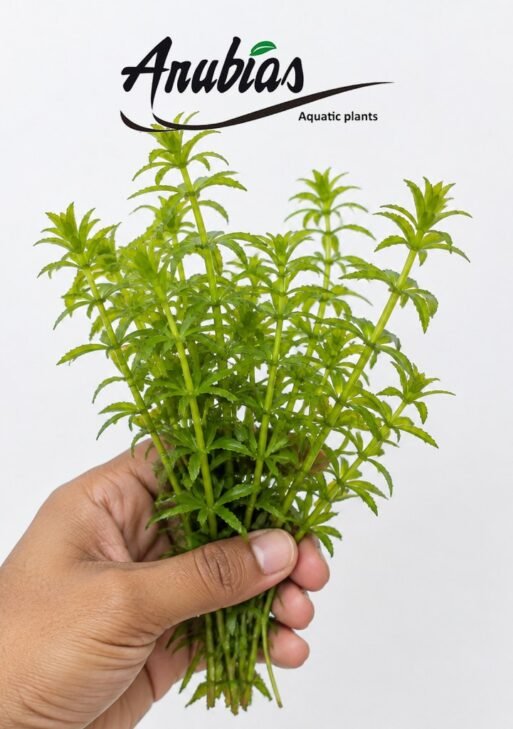
Hydrilla (Hydrilla verticillata) is a fast-growing submerged plant native to India and one of the easiest aquarium and pond plants in the hobby. Its slender stems carry whorls of small, slightly toothed green leaves and it grows happily either rooted in gravel or drifting free. Hydrilla suits beginners, goldfish keepers, breeders who need instant cover for fry, and anyone setting up a pond, cement tank or balcony tub who wants oxygen, shade and nitrate removal without any equipment at all.
Hydrilla at a glance
| Scientific name | Hydrilla verticillata |
|---|---|
| Family | Hydrocharitaceae |
| Origin | Native to India, Sri Lanka and much of tropical Asia and Australia; now spread to many other countries |
| Difficulty | Very easy |
| Light | Low to high |
| CO2 | Not required |
| Temperature | 18–32 °C |
| pH | 6.0–8.5 |
| Growth rate | Very fast |
| Height/size | Stems 30–100 cm or longer; leaves 1–2 cm, in whorls of 4–8 |
| Placement | Background, or floating |
| Propagation | Stem cuttings, side shoots, fragments; also turions and tubers |
How to plant hydrilla
Hydrilla is a stem plant that can also live as a free-floating mass. Rooted stems grow upright and tidy; floating stems grow faster and spread along the surface.
- Rinse the bunch in tank water, remove any band and discard mushy or yellow sections.
- Trim the bottom 1–2 cm off each stem with clean scissors so the fresh cut takes up water and roots sooner.
- Push each stem 3–5 cm into gravel or coarse sand, 3–4 cm apart. Fine white roots form from the buried nodes within one to three weeks.
- To float it, simply drop the stems in; they sit just below the surface and start growing at once.
- For a pond, tub or cement tank, weight a bunch with a stone and drop it in, or plant it in a small pot of garden soil capped with gravel.
Stems that fall over simply send up new vertical shoots.
Hydrilla care: light, CO2, fertiliser and water
Light. Hydrilla grows under less light than almost any other aquatic plant. It survives in a dim corner and grows quickly under an ordinary aquarium LED. In a pond or tub it prefers bright shade or morning sun; afternoon sun on a shallow container heats the water and encourages algae.
CO2. Not needed. Hydrilla takes carbon from bicarbonate in hard water, one reason it does so well in Indian tap water.
Fertiliser. Rooted hydrilla feeds from substrate and water; floating hydrilla from the water alone. In a tank with fish it rarely needs anything extra. If growth turns pale in a lightly stocked tank, dose a complete liquid fertiliser weekly. Root tabs help in plain gravel but are not essential.
Water. This is a native plant, so Indian conditions suit it. It tolerates hard, alkaline tap water, grows well from 18 to 32 °C and copes with summer heat better than hornwort or most imported stem plants. It is fine through monsoon power cuts because it needs neither filter flow nor CO2. Keep up weekly 25–30% water changes in tanks; in ponds, top up evaporation and remove surplus so decaying stems do not foul the water.
Growth, trimming and propagation
Hydrilla can grow 2–5 cm a day in a bright pond and several centimetres a week in a tank. Trim with scissors wherever you like; the stem below the cut branches, and the cut top can be replanted or floated. Thin the floating mass every week or two so it does not block light to plants underneath.
Propagation is effortless. Every fragment with a node grows into a new plant, and the plant also forms buds (turions) and tubers that resprout later. Because of this, hydrilla is an invasive weed in many countries and a problem in some Indian reservoirs. Keep it in closed tanks, ponds and containers only. Never tip surplus into a lake, river, canal or drain; dry it in the sun or bin it.
Where to use it in an aquascape
Hydrilla is a working plant rather than a feature plant, and it earns its place in these setups:
- Goldfish tanks of 3 ft (around 100–120 litres) and up. Goldfish graze it, but it outgrows the damage and keeps nitrate low.
- Guppy, molly, platy and betta tanks of 1.5–2 ft (around 40–60 litres), as a dense background or floating fry nursery.
- Ponds, cement tanks and balcony tubs, where it oxygenates, shades the water, shelters fish from birds and competes with green water.
- New and bare-bottom tanks, as a fast nutrient sponge while the filter matures.
- Low-tech community tanks, behind Anubias nana or Java fern, next to other stem plants, or under floating plants.
It is safe with shrimp, snails, tetras, barbs, rasboras, danios, gouramis, livebearers, goldfish, koi and turtles. Turtles and large goldfish eat it steadily; treat it as renewable food and let the surplus regrow.
Common problems and fixes
- Yellow or translucent stems after arrival. Transport stress. Trim the damaged parts and plant or float the green tops; new growth appears within a week.
- Bare lower stems. The top shades the bottom. Trim, replant the tops and thin the surface mat.
- Growing too fast to manage. Its nature. Trim weekly, keep fewer stems, or move some to a tub.
- Algae on older leaves. Stagnant corners and too much light. Improve circulation, shorten the photoperiod and trim the affected sections.
- Stems uprooting. No roots yet. Push them deeper, use a plant weight, or let them float until they root.
- Pond water cloudy after a trim. Decaying fragments. Net out loose pieces and do a partial water change.
What you receive
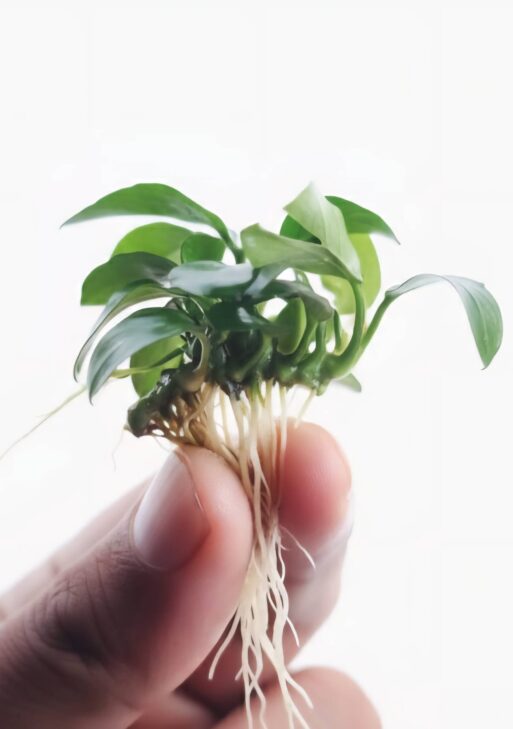
One healthy hydrilla portion of the size you select, Small or Standard, similar to the photo. Small is a starter bunch for a nano tank or small tub; Standard is a fuller bunch for a community tank, goldfish tank or pond. Each portion is checked before packing, packed moist and shipped across India from Surat. ₹99 shipping, free on orders of ₹999 or more.
Live-arrival guarantee: record one continuous unboxing video within 4 hours of delivery and we will refund or replace a plant that arrived damaged.
FAQ
Is hydrilla good for an aquarium?
Yes. It is one of the easiest aquarium plants, grows in low light without CO2, removes nitrate and gives fish and fry cover. The only rule is to trim it regularly.
Does hydrilla need CO2 or fertiliser?
No CO2 is required. In a tank with fish it usually needs no fertiliser either; dose a liquid fertiliser weekly only if growth turns pale.
Can hydrilla grow without substrate?
Yes. It floats freely and grows well without ever being planted. Planting in gravel just keeps it upright and tidy.
How fast does hydrilla grow?
Very fast: several centimetres a week in a tank and up to a few centimetres a day in a sunny pond. Expect to trim every one to two weeks.
Is hydrilla good for goldfish and ponds?
Yes. It handles cool and warm water, shades and oxygenates ponds, and outgrows goldfish grazing. Keep it only in closed ponds and containers.
Is hydrilla invasive in India?
Hydrilla is native to India, but it can choke open waters when it escapes. Never release surplus into lakes, rivers, canals or drains; dry it in the sun or bin it.
Hydrilla vs hornwort: which is better?
Both are fast oxygenators. Hydrilla can root, has softer flat leaves and tolerates Indian summer heat better; hornwort is rootless with stiffer needles and prefers cooler water. For a hot room or outdoor tub, hydrilla is the safer choice.
Can I buy hydrilla for a school photosynthesis experiment?
Yes. Hydrilla is the water plant used in the Class 10 photosynthesis experiment, where a sprig gives off oxygen bubbles under light. The Small pack gives you several healthy sprigs. Keep them in a jar of water near a window until the day of the practical, cut a fresh 5–8 cm tip for the test tube, and put it in bright light or sunlight to see bubbles. Leftover sprigs grow on happily in a fish tank, pond or bowl.
Not sure what fits your tank? Plan it with our free AI tank planner.




There are no reviews yet.