
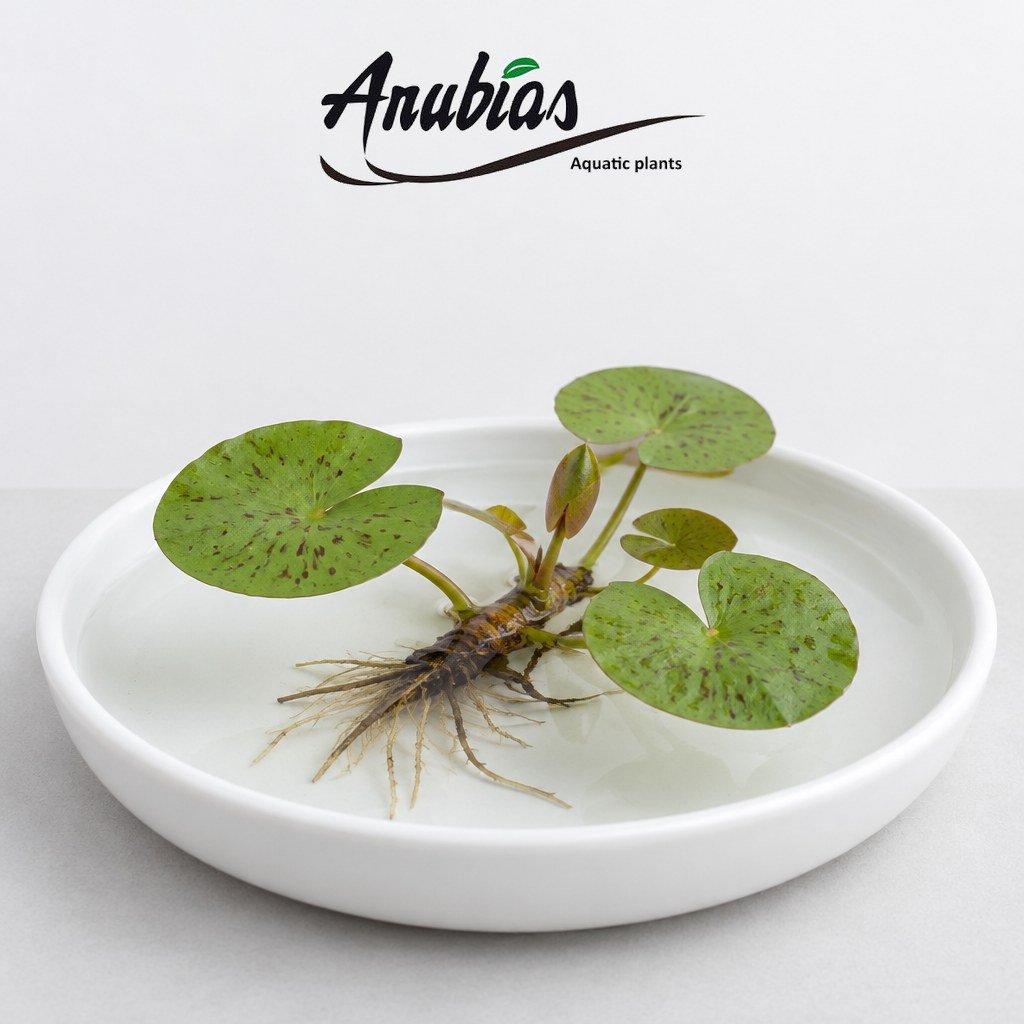
Description
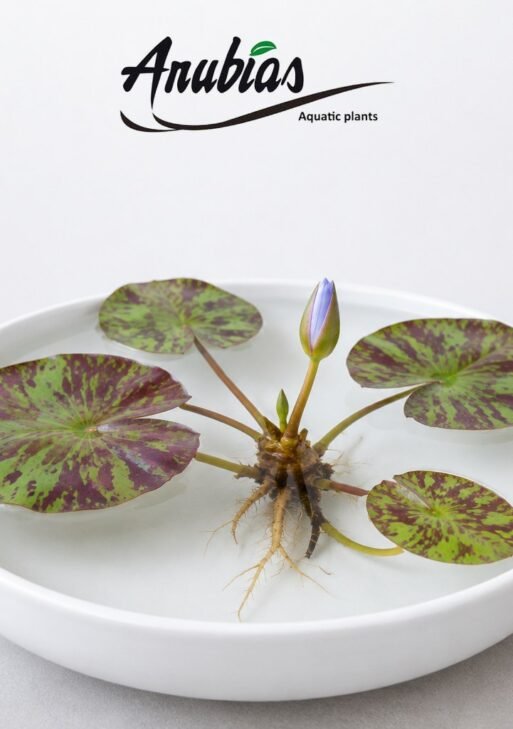
Nymphaea ‘Dauben’ (often written Daubenyana or ‘Dauben’) is a small, tropical, day-blooming water lily with pale lavender-blue flowers – and the one nymphaea that genuinely works in both a balcony bowl and a large aquarium. It is viviparous: tiny plantlets grow from the centre of mature pads, so one plant soon becomes several. It flowers in partial sun, tolerates small containers, and is widely considered the easiest water lily for beginners in warm climates like India.
Nymphaea ‘Dauben’ at a glance
| Scientific name | Nymphaea × daubenyana (N. micrantha × N. caerulea hybrid) |
|---|---|
| Family | Nymphaeaceae |
| Origin | Cultivated hybrid of African species, raised in England in the 19th century |
| Difficulty | Very easy |
| Light | Partial to full sun outdoors (4 hours is enough); medium–strong LED indoors |
| CO2 | Not needed |
| Temperature | 20–32 °C; tropical |
| pH | 6.5–8.0 |
| Growth rate | Fast |
| Height/size | Pads 8–15 cm; spread 40–80 cm; flowers 6–10 cm |
| Placement | Bowl, tub, small pond; background of a 3 ft+ aquarium |
| Propagation | Plantlets on the leaves (viviparous); tuber division |
How to plant Nymphaea ‘Dauben’
- Container. Because it stays small, a 30–45 cm bowl is enough outdoors. In a pond, use a 20–25 cm basket 15–30 cm below the surface.
- Soil. Heavy loam or clay topped with 2 cm of sand. No cocopeat or compost.
- Crown at soil level. Set the tuber upright with the crown just showing. Burying the crown causes rot.
- Water. 10 cm over the crown to start; 15–30 cm later. This water lily does not need deep water.
- Aquarium. Plant in nutrient-rich substrate with the crown exposed. Pads will rise to the surface; let a few float if you want flowers, or pinch them to keep the plant lower.
Nymphaea ‘Dauben’ care: light, CO2, fertiliser and water
Light. ‘Dauben’ flowers with as little as four hours of direct sun – the lowest requirement of any nymphaea we list – which makes it the right choice for a north- or east-facing balcony. Full sun gives more flowers. Blooms open mid-morning and close in the late afternoon, each lasting three to four days.
Water. Ordinary tap or borewell water. Hard water is fine. Top up in small amounts; a few guppies or a portion from our floating plants keep mosquitoes away.
Feeding. A single aquatic fertiliser tablet every four weeks is plenty for a bowl. In an aquarium, a root tab under the tuber every two months and the regular liquid dose for the tank.
Heat and power cuts. Summer water at 30–32 °C is no problem. In an aquarium the plant does not rely on CO2 or heavy filtration, so monsoon power cuts do not hurt it.
Winter. Stays active in most of India. Below about 15 °C in the north it slows; keep the tuber in wet soil and it restarts in spring.
Growth, trimming and propagation
Pads float within one to two weeks and the first buds often appear within a month in warm sun. Remove old pads and spent flowers at the base of the stalk.
The easiest propagation is the plantlet: when a mature pad develops a small plant with roots at its centre, cut the pad off, float it until the plantlet has four or five leaves, then press it into soil. Each plant produces plantlets all season. Side tubers can also be divided when repotting.
Where to use it in an aquascape
- Desk or balcony bowl (1–1.5 ft / 30–45 cm, 15–30 L). The only water lily that flowers in a container this small. Add a few guppies or a betta.
- Small pond. Several ‘Dauben’ make a floating carpet of pale blue flowers without taking over.
- Aquarium (3 ft+, 120 L+). A background lily whose floating pads give dappled shade for Anubias nana, Java fern and Cryptocoryne. Good with gouramis, bettas, tetras, rasboras and shrimp. Avoid goldfish and large cichlids.
Common problems and fixes
- Crown rot after planting. Crown buried or soil too rich. Replant at the surface in loam.
- Pads but no flowers. Usually a very new plant or no feeding; give it four weeks and a tablet.
- Plantlets taking over. Too many plantlets drain the mother plant. Cut off most pads with plantlets and keep only the ones you want.
- Yellow old pads. Natural; remove them weekly.
- Aphids on buds. Hose them off or dunk the pads for the fish.
- Algae on pads in a tank. Too much light for the nutrient level; shorten the photoperiod or add floating plants.
What you receive
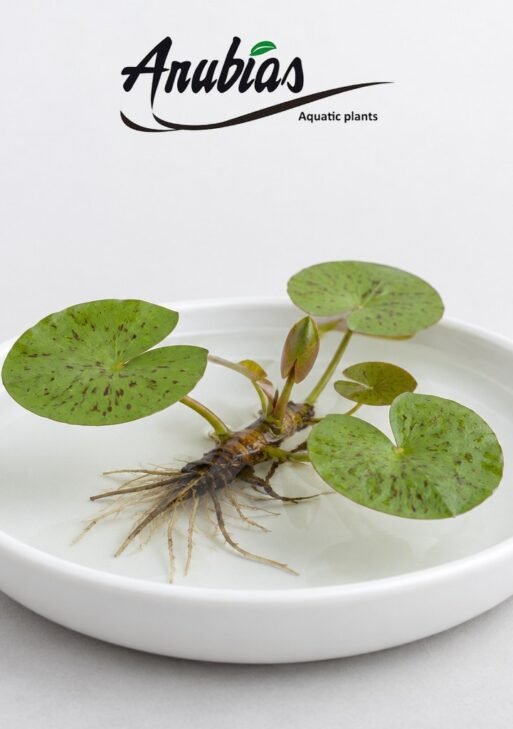
One healthy Nymphaea ‘Dauben’ plant in the size you select – Small or Standard – similar to the plant in the photo. Checked before packing, packed moist and shipped across India from Surat. Live-arrival guarantee: record one continuous unboxing video within 4 hours of delivery and, if the plant arrived damaged, we refund or replace it.
FAQ
Is Nymphaea ‘Dauben’ good for beginners?
Yes – it is the easiest water lily we sell. It flowers in partial sun, in a small bowl, and multiplies by itself.
Can Nymphaea ‘Dauben’ grow in an aquarium?
Yes, in a tank of 3 ft or more with medium to strong light. It will send pads to the surface and can even flower if the tank is open-topped and bright.
What does viviparous mean?
The plant grows small plantlets on its mature pads. Each plantlet can be cut off and potted to make a new water lily.
How much sun does it need?
Four hours of direct sun is enough to flower; six or more gives the most blooms.
Does it need a heater or CO2?
No. It is a tropical plant, so Indian room temperatures suit it, and it grows well without CO2.
Nymphaea ‘Dauben’ vs Nymphaea capensis?
‘Dauben’ is smaller, flowers with less sun and makes plantlets; capensis has bigger, showier flowers but needs full sun and a larger container.
Not sure what fits your tank? Plan it with our free AI tank planner.










There are no reviews yet.