
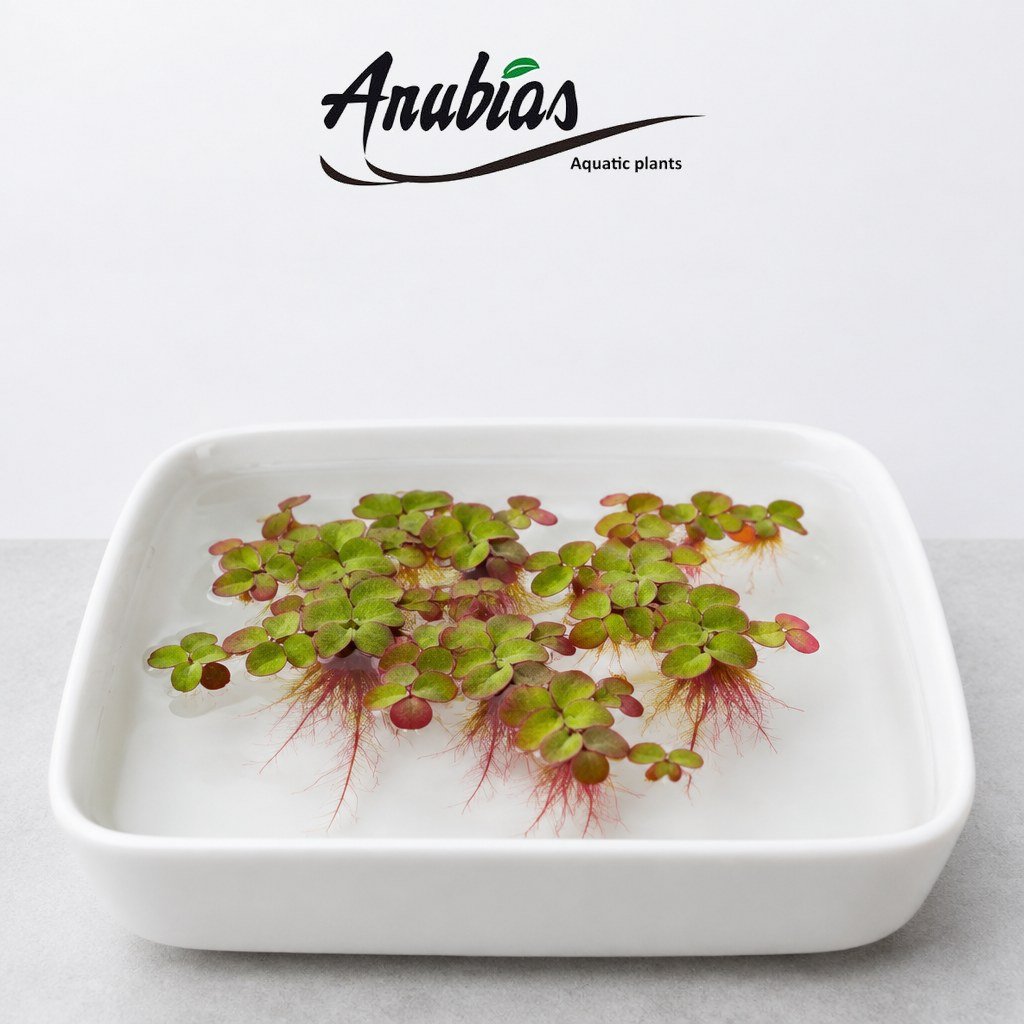
Description
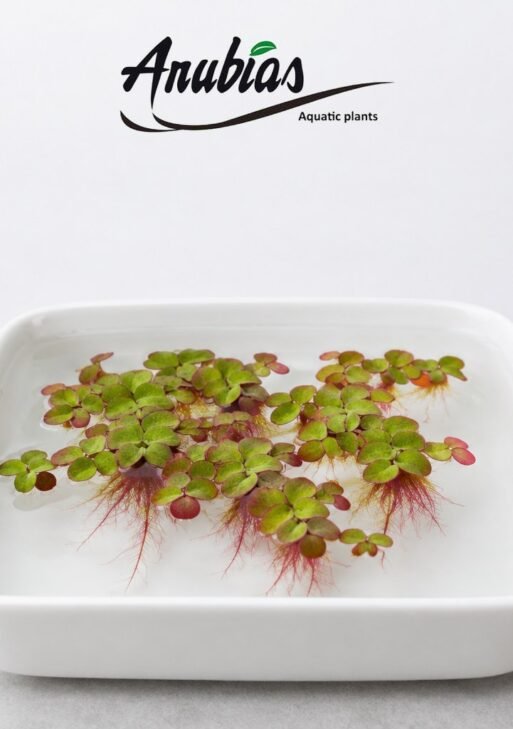
Red root floater (Phyllanthus fluitans) is a small floating plant from the Amazon basin with round, slightly cupped leaves of 1–2 cm and long, feathery roots that turn a striking deep red under strong light, with the leaves flushing red to match. It is the most colourful floating plant in the hobby and the one most often used to finish a nature-style or betta tank with a splash of red at the surface. It suits hobbyists with a bright tank, a calm surface and the patience to let the colour develop; it is a little more particular than Salvinia or azolla but still an easy plant once settled.
Phyllanthus fluitans is not a fern despite being sold alongside them; it belongs to the same family as the terrestrial Phyllanthus shrubs familiar in India. It grows without substrate or CO2 and helps control nitrate while shading the tank.
Red root floater at a glance
| Scientific name | Phyllanthus fluitans |
|---|---|
| Family | Phyllanthaceae |
| Origin | Amazon basin, South America |
| Difficulty | Easy to medium |
| Light | Medium to high; high light for red colour |
| CO2 | Not needed; it takes CO2 from the air |
| Temperature | 20–28 °C; tolerates short spells to 30 °C |
| pH | 6.0–7.5 |
| Growth rate | Moderate to fast |
| Height/size | Leaves 1–2 cm; roots 3–10 cm |
| Placement | Floating |
| Propagation | Side shoots; division |
How to plant red root floater
- Float the plants on the surface straight from the bag, keeping the upper leaf surface dry. Turn any upside-down plants over with a finger.
- Calm the surface. This is the single most important step: red root floater rots when water splashes onto its leaves. Aim the filter outlet downward, use a lily pipe or spray bar below the surface, and avoid hang-on-back filters that rain onto the surface.
- Corral the plants with a ring of airline tubing or a suction-cup floating-plant holder so they stay out of the current and away from the intake.
- Leave an air gap of a few centimetres under the lid. High humidity is fine; dripping condensation on the leaves is not.
- Expect the plants to look dull for a week or two while they settle; new growth then comes in with the colour appropriate to your light.
Red root floater care: light, CO2, fertiliser and water
Light
Colour depends on light. Under medium light of about 30 lumens per litre the plant is green with reddish roots; under high light of 50 lumens per litre or more the roots turn deep red and the leaves flush red to maroon. Because it sits directly under the light, most planted-tank LEDs are strong enough. Keep the lamp a few centimetres above the water to avoid heat damage.
CO2
None needed. Red root floater draws carbon dioxide from the air and grows well in low-tech tanks.
Fertiliser
Iron is the key nutrient for red colour; dose a liquid fertiliser with iron weekly, and slightly more often if the plant stays green under strong light. Nitrate at 5–15 ppm and some phosphate keep growth steady. In a very lean tank the leaves stay small and pale; in a very rich tank it grows fast and green rather than red.
Water and Indian conditions
Soft to moderately hard water of 4–12 dGH suits it best; it tolerates harder tap water but colours less intensely. Summer heat is the main Indian challenge: above 30 °C the leaves yellow and the plant can melt, especially under a closed lid where the air becomes hot and humid. Leave the lid open or ventilated, and use a surface fan in April–June. Monsoon power cuts do not harm it. It is hardier in winter than most people expect.
Growth, trimming and propagation
Growth is moderate to fast, with a portion doubling in two to four weeks under good light. Thin it every week or two by netting out older plants, keeping the younger, redder ones. Trim roots that grow longer than 10 cm with scissors if they look untidy or shade the plants below too heavily. Propagation is by the side shoots that form along the floating stems: separate them gently or let them break apart on their own. Remove any plant whose leaves have become waterlogged, because it will not recover and can rot others around it.
Where to use it in an aquascape
Red root floater works in nano tanks of 10–20 litres, where a few plants provide colour and cover for a betta, up to 3-foot tanks of 120–150 litres with a corralled patch in one corner. In a 2-foot, 60–70 litre tank a Small portion fills a corral within a month. Its red roots hanging into the water look best against the dark green of Anubias nana and Java fern on driftwood below.
Keep it out of the way of high-light carpeting plants, which need an open surface, and combine it with green Salvinia or azolla among our floating plants for contrast. Low-light Cryptocoryne appreciate its shade. It is ideal with bettas, gouramis, killifish, shrimp and fry; avoid goldfish and large fish that nibble floating leaves.
Common problems and fixes
- Leaves rotting or turning mushy: water on the leaves from filter splash or condensation. Calm the surface and ventilate the lid.
- Staying green under strong light: iron shortage or very rich nitrate. Dose iron and let nitrate fall to 5–15 ppm.
- Yellowing and melting in summer: heat above 30 °C. Open the lid, run a surface fan and shorten the photoperiod.
- Plants shrinking over weeks: not enough light or nutrients. Increase light and dose a complete fertiliser.
- Getting pushed into the filter intake: use a corral or move the plants to the calmest corner.
What you receive
One healthy portion of Phyllanthus fluitans (Red Root Floater) in the size you select (Small or Standard), similar to the photo. Each portion is checked before packing, packed moist and shipped across India from Surat. ₹99 shipping, free on orders of ₹999 or more. Live-arrival guarantee: record one continuous unboxing video within 4 hours of delivery, and if the plant has arrived damaged we refund or replace it.
FAQ
Does red root floater need CO2?
No. It floats and takes CO2 from the air, so it grows well in low-tech tanks without injection.
Is red root floater good for beginners?
Yes, as long as you keep the surface calm and the tank below 30 °C. It is less forgiving of splashing than Salvinia but otherwise easy.
Why is my red root floater not turning red?
Light is too low or iron is short. Give it strong light directly above and dose an iron-rich fertiliser; new leaves colour within a couple of weeks.
How fast does red root floater grow?
Moderate to fast: a portion doubles in two to four weeks under good light and needs thinning every week or two.
Red root floater vs Salvinia natans: which should I choose?
Red root floater gives red colour but needs a calm surface and strong light; Salvinia is green, hardier and faster. Many hobbyists keep both.
Can red root floater survive Indian summer heat?
Up to about 30 °C it is fine; above that it yellows and melts. Open the lid for ventilation and use a surface fan during April to June.
Not sure what fits your tank? Plan it with our free AI tank planner.










There are no reviews yet.