
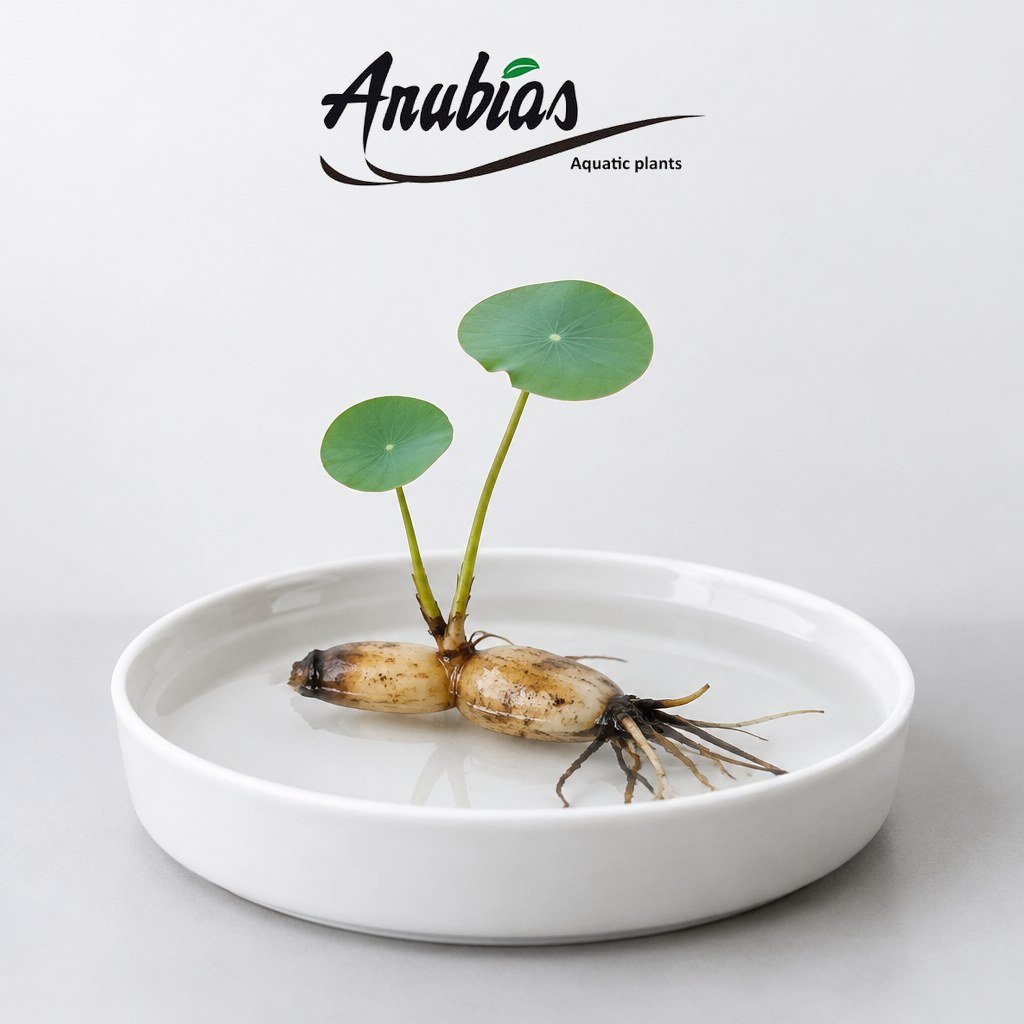
Description
The White Lotus is the white-flowered form of Nelumbo nucifera, the same sacred lotus plant seen in temple tanks and village ponds across India, with pure white petals instead of pink. Like all lotus it is a pond, tub and bowl plant for the open air – not an aquarium plant. It suits anyone with a sunny balcony, terrace or garden who wants large, fragrant white flowers through summer and the monsoon.
White Lotus (Nelumbo nucifera) at a glance
| Scientific name | Nelumbo nucifera (white-flowered form) |
|---|---|
| Family | Nelumbonaceae |
| Origin | South and South-east Asia, including India; also China, Japan and northern Australia |
| Difficulty | Easy to medium – needs full sun and a wide container |
| Light | Full sun, 6 hours or more of direct sunlight daily |
| CO2 | Not applicable – outdoor tub or pond culture |
| Temperature | 24–35 °C for active growth; rests below 15–18 °C |
| pH | 6.5–8.0; tolerates hard water |
| Growth rate | Fast in warm weather |
| Height/size | Leaves 30–90 cm above the surface; flowers 15–25 cm across |
| Placement | Tub, drum, bowl or pond – outdoors in full sun |
| Propagation | Rhizome (tuber) division in spring; seed |
How to plant White Lotus (Nelumbo nucifera)
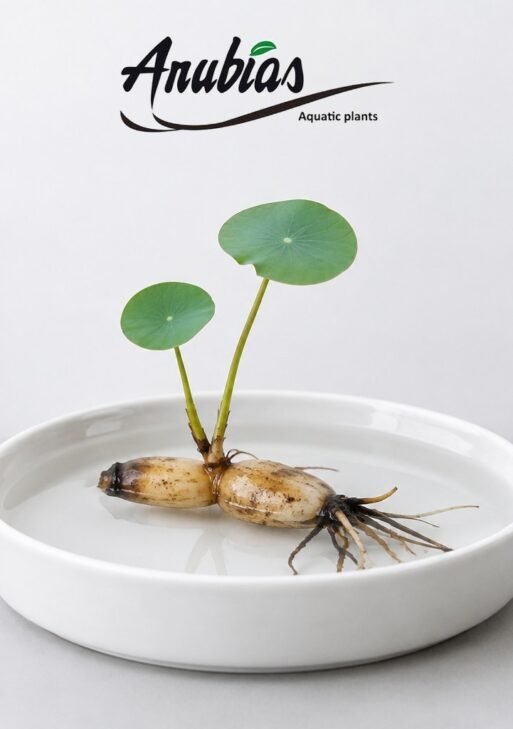
The plant grows from a jointed tuber with a fragile growing tip; a broken tip means that section will not sprout.
- Pick a wide, shallow container. 45–60 cm wide and 25–35 cm deep is a good balcony size; a half-drum or 90 cm cement bowl gives a much larger plant. Width controls leaf and flower size.
- Use heavy soil. Put 12–15 cm of clay loam or ordinary garden soil in the bottom. Skip cocopeat and potting mixes – they float and foul the water. A handful of well-rotted cow dung may go in the lowest layer.
- Set the tuber horizontally. Half-bury the body with the growing tip pointing up and clear of the mud. Weigh it down with a pebble until roots anchor it.
- Fill gently. Begin with 5–8 cm of water above the soil; raise to 15–25 cm as standing leaves develop.
- Full sun from day one. Floating leaves appear first, then aerial leaves on stiff stalks. Hold off fertiliser until aerial leaves show.
A rooted plant can be transferred with its soil intact at the same depth.
White Lotus care: light, CO2, fertiliser and water
Sun. White lotus is as sun-hungry as the pink form. Six hours of direct sun is the minimum for flowering; a fully open terrace is ideal. In peak summer the plant is perfectly happy at 40 °C or more provided the tub never runs dry – top up daily in May and June.
Water quality. Municipal tap water, borewell water and rainwater all suit the lotus plant. There is no need for RO water or pH adjustment. Top up in small amounts rather than replacing the whole volume, which restarts green-water algae.
Feeding. Once aerial leaves are up, push one aquatic fertiliser tablet deep into the soil away from the tuber every three to four weeks. A hungry lotus shows pale, small leaves; an overfed one turns the water green. Stop feeding in winter.
Monsoon and winter. Keep the tub where it can overflow safely and remove torn leaves. Guppies or a portion of azolla from our floating plants keep mosquitoes down. In central and southern India the plant simply slows in winter; in the north it dies back and the tuber sprouts again in late February – never let the soil dry out while dormant.
Growth, trimming and propagation
Expect floating leaves within two to three weeks in warm weather, aerial leaves by week four to six, and the first buds in the second or third month. Each white flower opens for three mornings before the petals drop and the seed pod forms.
Remove spent flowers and yellowed leaves by cutting the stalk above the water line. Cutting below the surface lets water into the hollow stem and can rot the rhizome.
Divide in early spring when the first new tips show. Lift, rinse off the mud, and cut the rhizome into pieces with at least one intact growing tip and two joints each. Replant immediately in fresh loam. A single established tub typically yields three to six divisions a year.
Where to use it in an aquascape
White lotus does not belong in an aquarium. Its leaves must stand in air and its roots need deep soil and direct sun. Where it shines:
- Balcony tub – one plant in a 60 cm tub with a few guppies and a floating plant gives a self-contained water garden.
- Garden pond – grow it in a submerged basket or on a mud shelf 15–30 cm deep to stop the rhizome spreading across the entire pond.
- Terrace water garden – pair with tropical water lilies (Nymphaea capensis, Nymphaea pubescens) in separate tubs: lotus for height, lilies for surface cover and a second flower colour.
For an indoor planted tank, look at Nymphaea sp. ‘Leopard’ or Nuphar japonica in our range – both grow fully submerged.
Common problems and fixes
- No flowers. Too little sun or a tub that is too small or too deep. Move to full sun, keep water 15–25 cm deep, and repot into a wider container next spring.
- Only floating leaves. Normal in the first month. If no standing leaves appear by week eight, reduce water depth and check sunlight.
- Pale, small leaves. Underfed – add a fertiliser tablet. Yellowing of old leaves in autumn is natural.
- Aphids or leaf miners. Hose them off or wipe leaves; avoid pesticides if fish share the tub.
- Soft, foul-smelling tuber. Rot from a damaged tip or organic soil. Replant any firm section with a live tip in clean loam.
What you receive
One healthy White Lotus (Nelumbo nucifera) plant in the size you select – Small or Standard – similar to the plant in the photo. Each plant is checked before packing, packed moist and shipped across India from Surat. Our live-arrival guarantee applies: record one continuous unboxing video within 4 hours of delivery and, if the plant arrived damaged, we refund or replace it.
FAQ
Is white lotus an aquarium plant?
No. Nelumbo nucifera needs its leaves in open air and direct sunlight. Keep it in a tub, bowl or pond outdoors; for an aquarium choose a submerged lily such as Nymphaea sp. ‘Leopard’.
How deep should the water be over a lotus tuber?
Start with 5–8 cm over the soil and raise it to 15–25 cm once standing leaves appear. Deeper water slows growth and delays flowering.
Can I grow lotus on a balcony in a pot?
Yes, if the balcony gets at least six hours of direct sun. Use a wide container of 45–60 cm or more; tall narrow pots do not work.
When should I fertilise a lotus plant?
Only after aerial (standing) leaves appear, then every three to four weeks through the growing season with a fertiliser tablet pushed deep into the soil away from the tuber.
How is white lotus different from pink lotus?
Only in flower colour. Both are Nelumbo nucifera and have identical sun, soil, container and feeding needs.
Not sure what fits your tank? Plan it with our free AI tank planner.











There are no reviews yet.