
Description
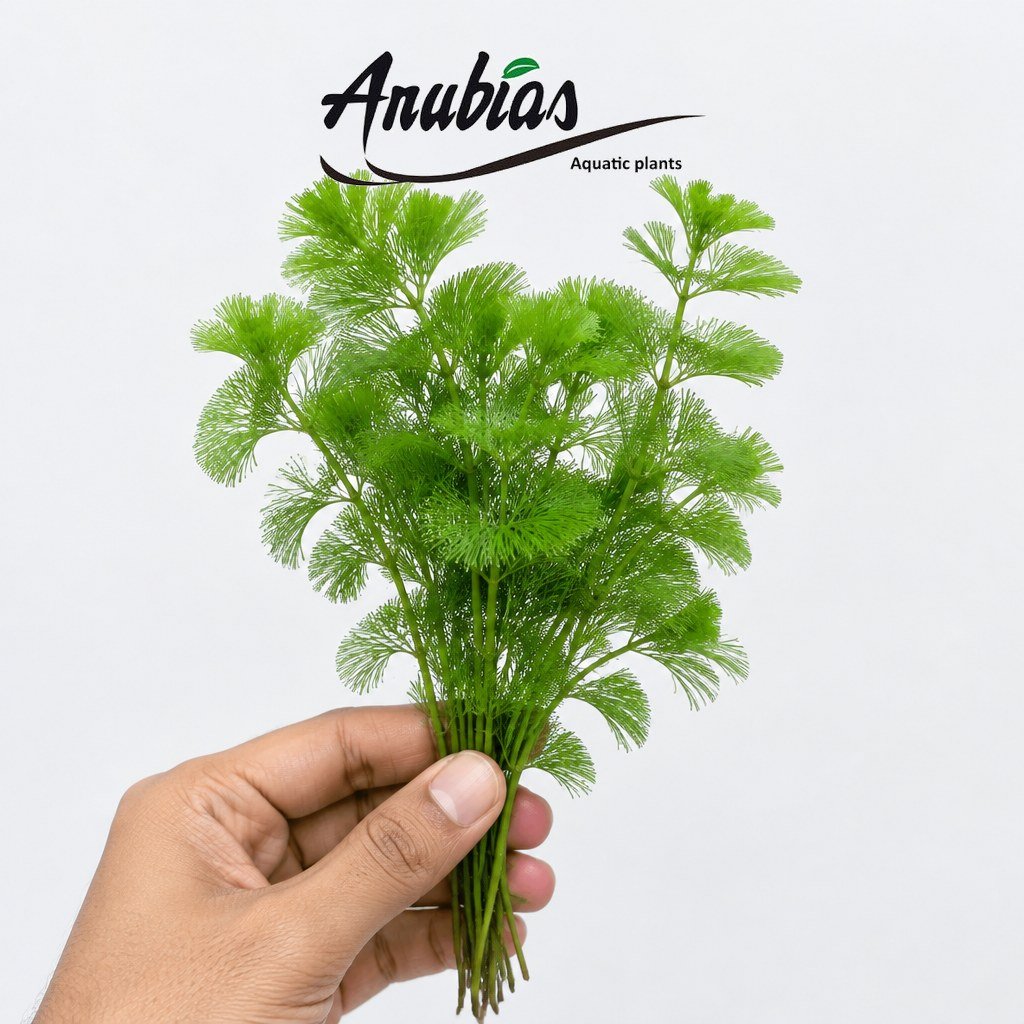
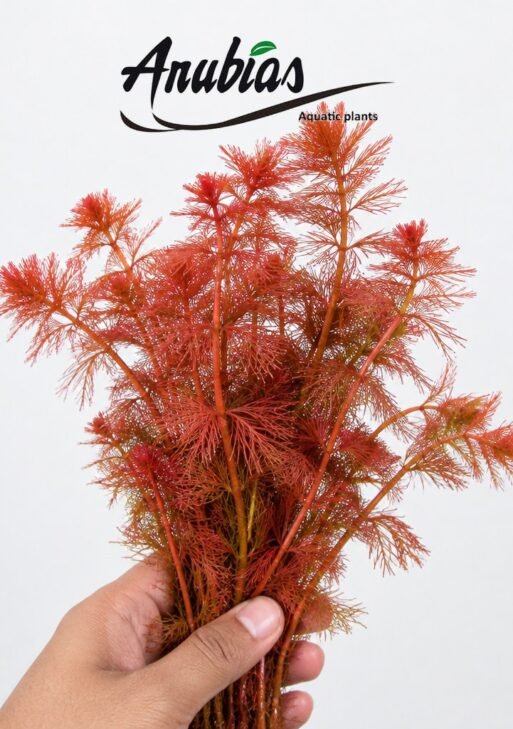
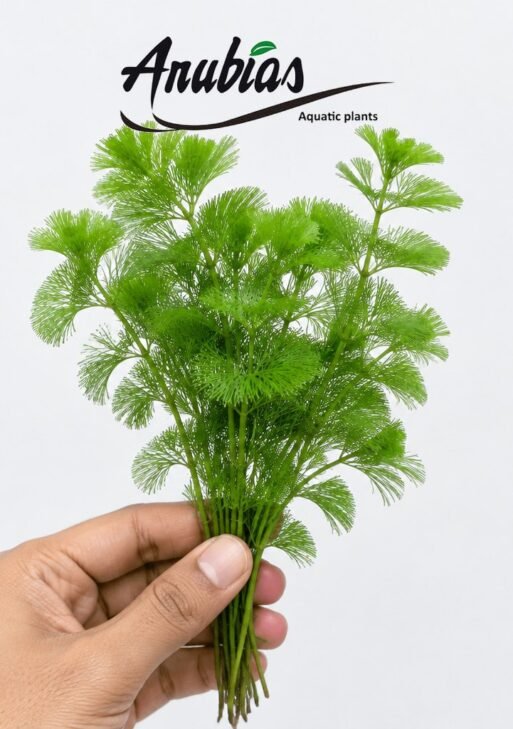
Cabomba ‘Belem’ is a fine-leaved stem plant – a cabomba from the Belém region of the Brazilian Amazon – whose fan-shaped whorls of thread-like leaves take on purple-red tones under strong light. It is closely related to the red cabomba (Cabomba furcata) and shares its needs: soft water, bright light and CO2. Unlike the hardy green cabomba sold in every fish shop, ‘Belem’ is a plant for the high-tech aquascaper who wants a feathery, coloured background stem.
Cabomba ‘Belem’ at a glance
| Scientific name | Cabomba sp. ‘Belem’ (Cabomba furcata group) |
|---|---|
| Family | Cabombaceae |
| Origin | Pará state, northern Brazil |
| Difficulty | Difficult |
| Light | High |
| CO2 | Required, 25–30 ppm |
| Temperature | 22–28 °C |
| pH | 5.5–6.8 |
| Growth rate | Fast under good conditions |
| Height/size | 30–60 cm; whorls 4–6 cm across |
| Placement | Background |
| Propagation | Stem cuttings |
How to plant Cabomba ‘Belem’
- Handle gently. Cabomba stems are brittle; hold them by the lower stem, not the leaves.
- Strip the base. Remove whorls from the bottom 3–4 cm.
- Plant singly, 3–4 cm apart. Push each stem 4–5 cm into the substrate with tweezers, deep enough to hold – cabomba floats free easily until rooted.
- Soft substrate. Aquarium soil is best; fine gravel with root tabs is acceptable. Avoid coarse gravel.
- Good flow, strong light. Place it in the background under the brightest part of the fixture with gentle current so debris does not settle in the whorls.
Cabomba ‘Belem’ care: light, CO2, fertiliser and water
Light. High – 1 W per litre of LED or more. In weaker light the whorls space out, the colour fades to green and the lower stem sheds leaves.
CO2. Essential. Cabomba ‘Belem’ melts within weeks in a tank without CO2. Aim for 25–30 ppm, stable through the photoperiod.
Fertiliser. A complete liquid fertiliser dosed daily in small amounts. Keep nitrate at 10–20 ppm, phosphate 1–2 ppm, and dose iron for the purple-red tones. Cabomba feeds largely from the water column, so column dosing matters more than root tabs.
Water. Soft and slightly acidic: GH 2–6, KH 0–3, pH 5.5–6.8. Indian tap and borewell water is usually far too hard; use RO or rainwater remineralised lightly. The plant also prefers cooler water and suffers above 28 °C, so a surface fan in summer is important. Monsoon power cuts of a few hours are survived; repeated long outages that stop CO2 cause melt.
Growth, trimming and propagation
In good conditions cabomba grows 3–5 cm a week and reaches the surface within a month. Trim by cutting stems 10–15 cm below the top and replanting the tops; discard the leggy lower sections unless they are leafy, as cabomba bases rarely bush out well. Replace the group with fresh tops every few months for the tidiest look.
Propagation is by cuttings: any 10 cm top with three or more whorls roots within two weeks when planted in soil. Keep cuttings in the same tank water while you work – even a few minutes in hard tap water or dry air damages the fine leaves. Plant the new tops immediately rather than floating them; floating cabomba grows weak and pale.
Where to use it in an aquascape
- 2 ft (60 cm, 60–80 L) high-tech: a background group of seven to ten stems behind a carpet from our carpeting plants range.
- 3–4 ft (90–120 cm, 150–300 L) Dutch style: a purple-red cabomba “street” contrasting with green stem plants and broad-leaved Cryptocoryne in front.
- South American soft-water tanks: with tetras, Apistogramma, otocinclus and Caridina shrimp. Avoid livebearers, goldfish and any fish that nips fine leaves.
Common problems and fixes
- Melting, leaves falling off. No CO2, hard water or heat. Fix the water and CO2 before replanting fresh tops.
- Green instead of purple-red. Light too weak or iron too low; raise both.
- Stems floating free. Planted too shallow or current too strong. Plant deeper and soften the flow.
- Debris in the whorls. Poor circulation; adjust flow so water moves across the group.
- Leggy lower stems. Natural with age; replant tops and discard bases.
- Melting after arrival. Shock from water changes; match soft, cool, CO2-rich conditions before planting.
What you receive
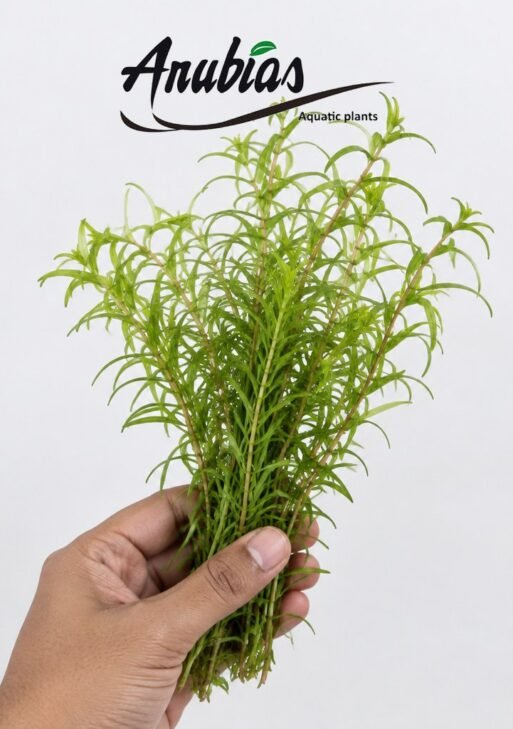
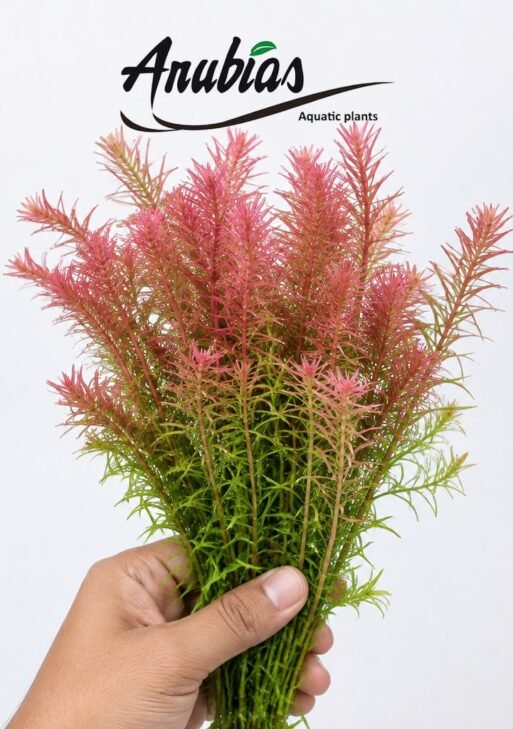
One healthy portion of Cabomba ‘Belem’ in the size you select – Small or Standard – similar to the plant in the photo. Checked before packing, packed moist and shipped across India from Surat. Live-arrival guarantee: record one continuous unboxing video within 4 hours of delivery and, if the plant arrived damaged, we refund or replace it.
FAQ
Does Cabomba ‘Belem’ need CO2?
Yes. Without CO2 it melts within weeks. This is not the easy green cabomba.
Is cabomba good for beginners?
The common green cabomba is; ‘Belem’ is not. It needs soft water, high light and stable CO2, so it suits experienced high-tech keepers.
Can cabomba grow in Indian tap water?
‘Belem’ cannot in most cities – the water is too hard. Use RO or rainwater remineralised to GH 2–6.
How fast does cabomba grow?
Fast under good conditions – 3–5 cm a week – so plan to trim and replant tops every few weeks.
Why is my cabomba green and not red?
Colour depends on light intensity and iron. Raise the light to 1 W per litre or more and dose iron daily.
Cabomba ‘Belem’ vs Cabomba furcata?
They are closely related and need the same care. ‘Belem’ is the Belém-region form with purple-red tones; furcata is the classic red cabomba with a stronger pink-red colour.
Not sure what fits your tank? Plan it with our free AI tank planner.












There are no reviews yet.