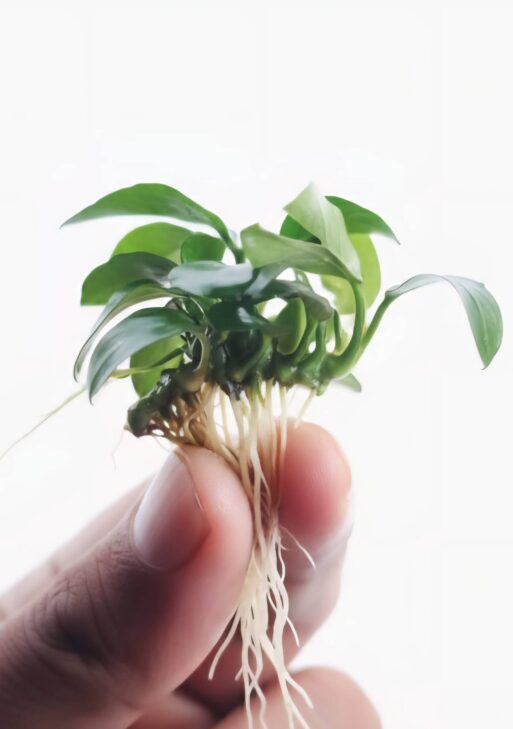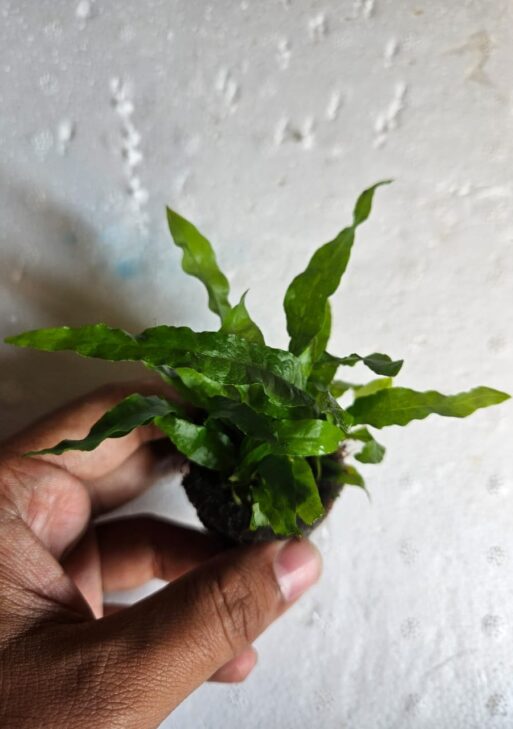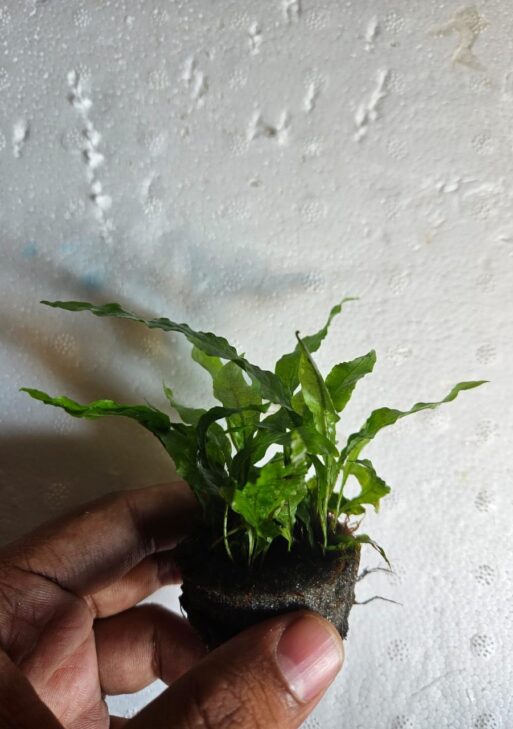

Vallisneria and Dwarf Sagittaria both have grass-like leaves and spread by runners, so they are often confused. In the tank they do opposite jobs: Vallisneria makes a tall background curtain, while Dwarf Sagittaria forms a low foreground lawn. Here is how to choose.
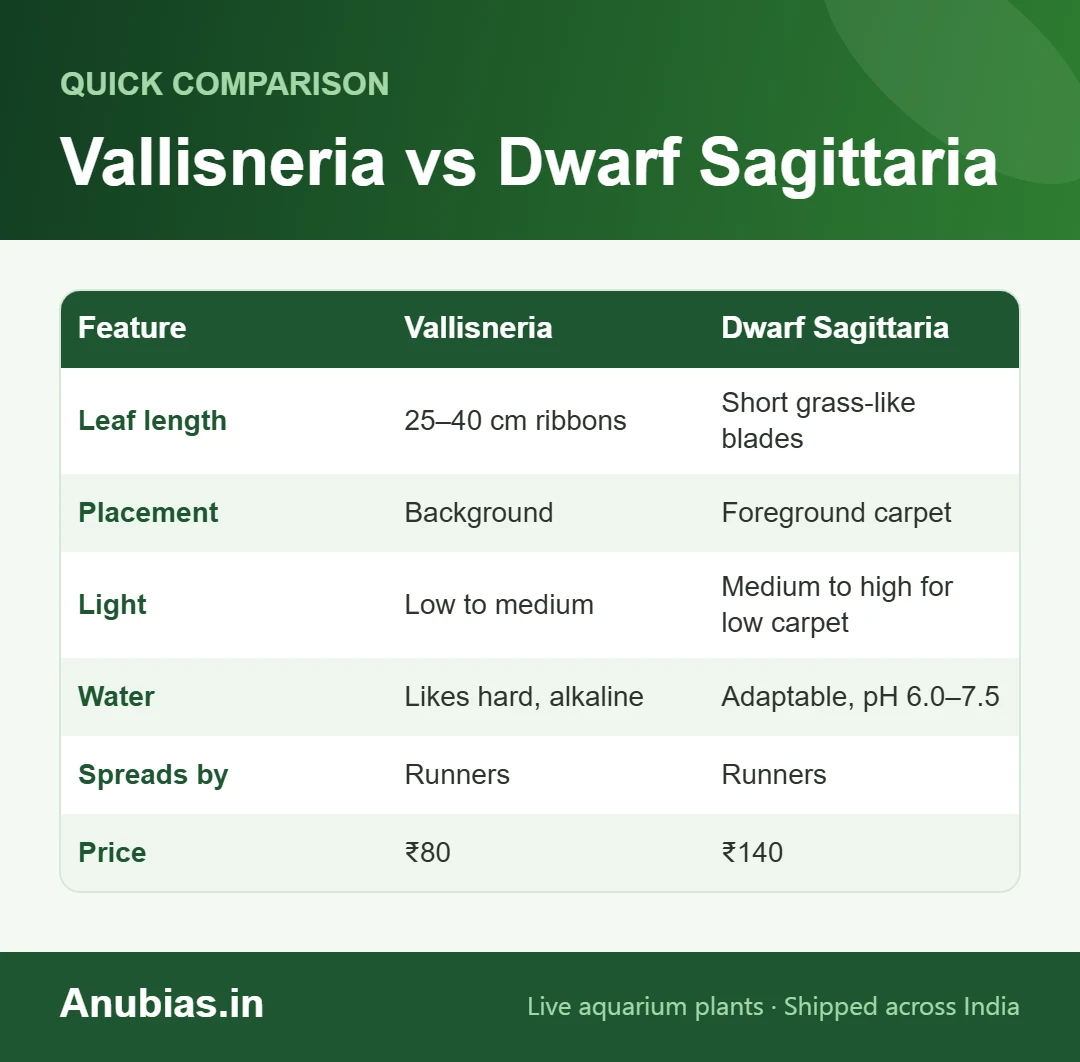
Quick answer: Choose Vallisneria for tall ribbon-like leaves (about 25–40 cm) at the back of the tank; it grows in low to medium light, prefers hard, alkaline water common in India and costs ₹80 on Anubias.in. Choose Dwarf Sagittaria for a short foreground carpet; it needs medium to high light to stay low, adapts to pH about 6.0–7.5 and costs ₹140. Both spread by runners and need no CO2.
Key differences
- Size and placement: Vallisneria is a background plant; Dwarf Sagittaria is a foreground carpet.
- Light: Vallisneria is fine in low light; Sagittaria grows taller and looser in low light.
- Water: Vallisneria thrives in hard water and may melt in very soft, acidic water; Sagittaria is adaptable.
- Maintenance: Vallisneria needs runners thinned; Sagittaria needs occasional trimming to stay short.
Using both
A simple, natural low-tech layout: Vallisneria along the back glass, Anubias and Crypts in the middle, and Dwarf Sagittaria spreading across the front. All three need no CO2 and suit Indian tap water.
Picking one for your tank size
Tank height decides this more than anything else. In a tank under 30 cm tall, Vallisneria leaves reach the surface within weeks and then lie along it in a mat, shading everything below. In those tanks Dwarf Sagittaria is the sensible pick because it stays where you put it.
From about 45 cm of height upwards, Vallisneria finally looks like what people imagine: a moving green curtain along the back wall. Dwarf Sagittaria still works in the same tank, but only in the front third and only if light actually reaches the substrate through the Vallisneria above it.
Both spread by runners, so neither is a one-plant purchase. A single pot of either will look sparse for two months and then start filling in. If you want coverage sooner, buy enough to plant in a broken line rather than one clump, and let the runners close the gaps.
Mistakes people make with runner plants
The most common one is burying the crown. Both plants grow from a short crown where leaf meets root, and pushing that under the substrate causes rot within a fortnight. Plant roots down, crown just level with the surface, and accept that a couple of plants will float free in the first days.
The second is trimming Vallisneria across the top with scissors. Cut ends brown off and keep browning down the leaf. Instead, pull whole old leaves out from the base, which also thins the stand and lets light back in.
The third is impatience with runners. New runners often appear a fair distance from the parent, sometimes right in the middle of your foreground. Let them root for a few weeks before you move them, and cut the connecting runner rather than tugging, which drags the parent loose.
The last is nutrients. Both are heavy root feeders, and in plain inert gravel they will slowly shrink and go pale rather than die outright, which makes the problem easy to miss until half the stand is thin.
Plants in this guide
Grown in Surat · graded by leaf count and photographed before dispatch · live-arrival guarantee on every order · ₹99 shipping, free from ₹2,000

Frequently asked questions
Will Dwarf Sagittaria grow tall like Vallisneria?
In low light it grows taller than usual, but it stays far shorter than Vallisneria.
Which is easier for beginners?
Both are easy. Vallisneria is slightly more forgiving in low light.
Do they need root tabs?
Both benefit from root tabs in plain gravel since they feed through their roots.
Buy Vallisneria or Dwarf Sagittaria on Anubias.in.
How long before Vallisneria starts sending out runners?
Expect the first runner around three to six weeks after planting, once the plant has replaced the roots it lost in transit. Growth is much faster in warm water, so a summer tank at 28 to 30 degrees will often run ahead of a winter one. If nothing has appeared after two months, the usual culprits are a buried crown or an inert substrate with no root tabs.
Can Dwarf Sagittaria grow in plain gravel?
Yes, but it will stay thin and spread slowly unless you feed the roots. Push a root tab under each small group every couple of months, or use a thin layer of aquarium soil capped with gravel if you are setting the tank up fresh. Coarse gravel is also harder to plant into, so smaller grain sizes hold the plantlets better.
Do these plants melt when first planted?
Vallisneria often does, losing its oldest leaves in the first two weeks as it adapts to your water. Leave the plant alone, remove only the leaves that have gone soft and translucent, and new growth should follow from the crown. Dwarf Sagittaria usually transitions more quietly, though it may drop a few outer leaves.