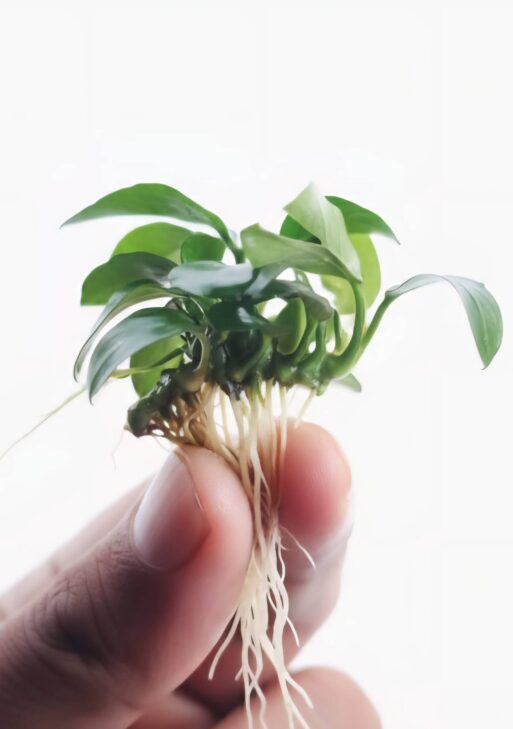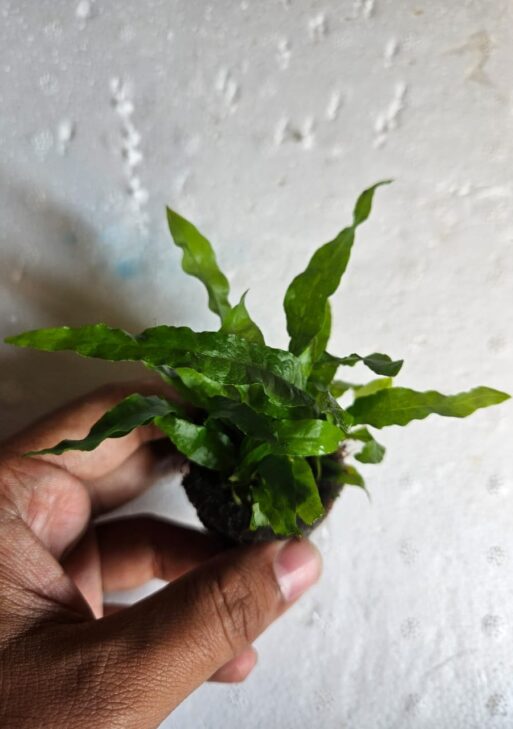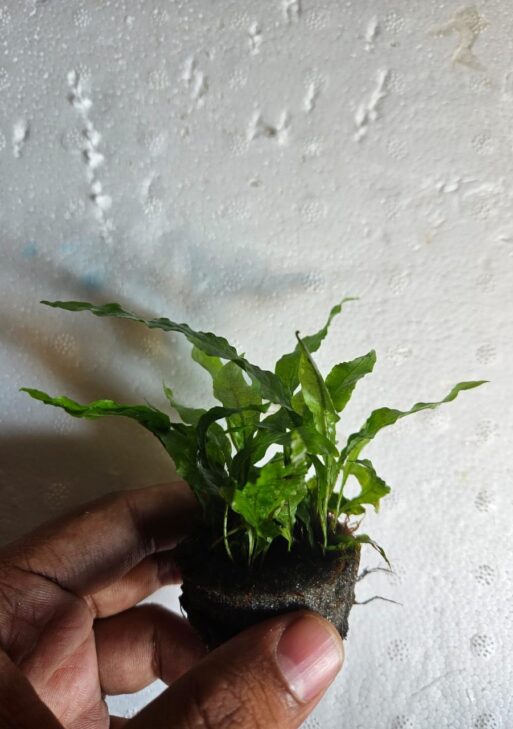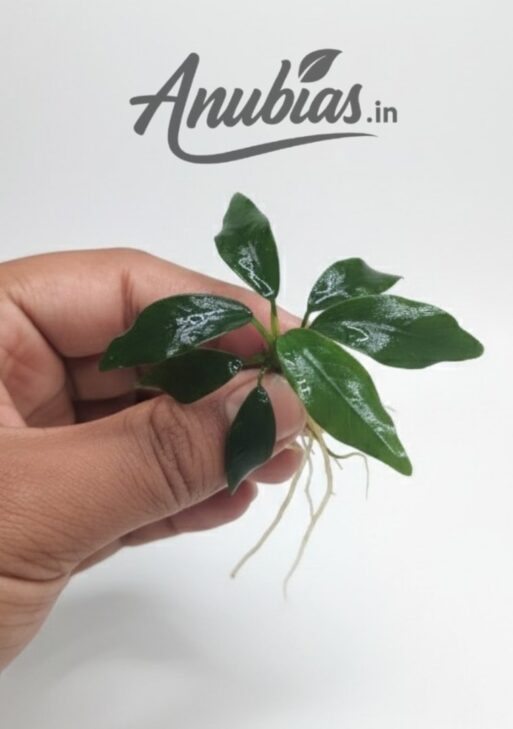

Goldfish tanks need background plants that cope with cooler water and constant nibbling. Egeria densa (Anacharis), Cabomba and Vallisneria are three affordable options, but they behave very differently with goldfish. Here is how they compare.
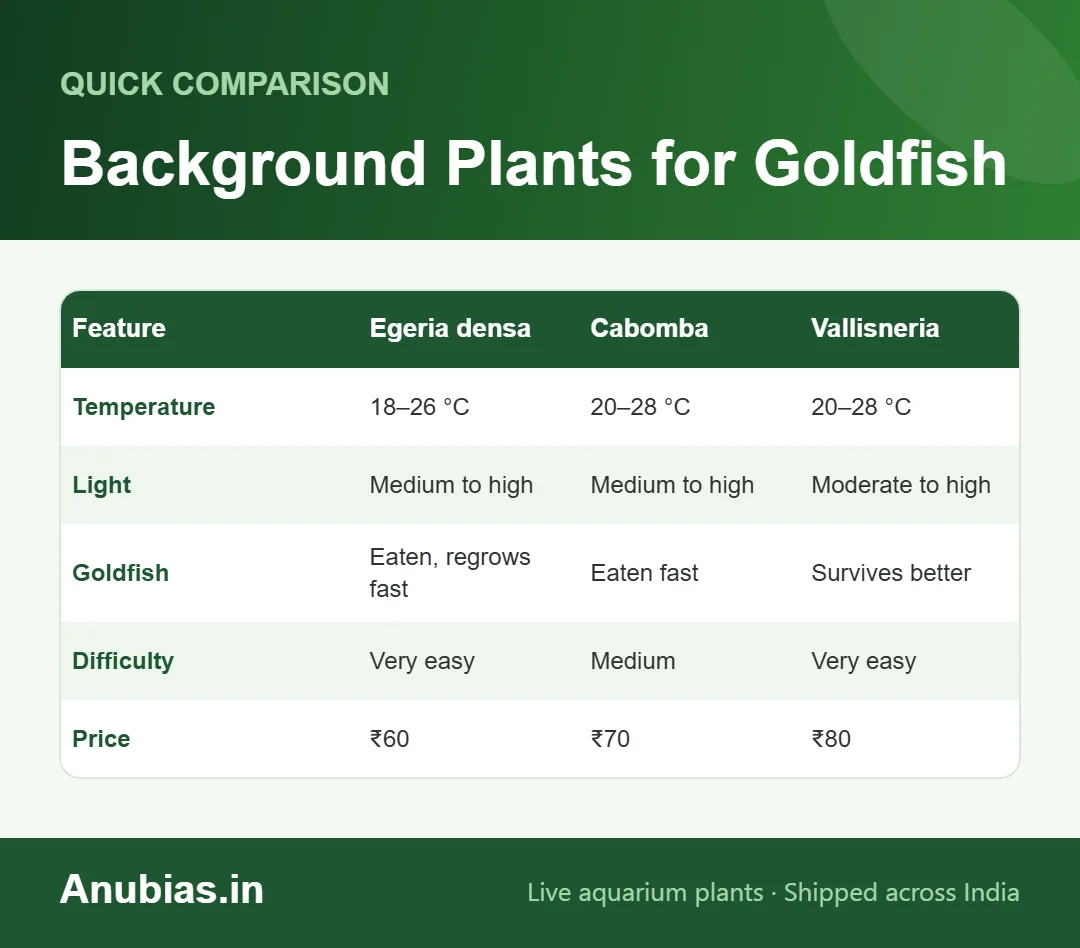
Quick answer: For goldfish tanks, Vallisneria usually survives best because it grows fast and is less palatable, and it likes the harder water common in India. Egeria densa (Anacharis) handles cool water (about 18–26 °C) and regrows quickly, so it works as a living snack that replaces itself. Cabomba is the weakest choice: goldfish eat its soft leaves and it needs strong light to avoid shedding.
Egeria densa (Anacharis)
A very easy, fast-growing oxygenator that tolerates cooler, unheated tanks, making it a traditional goldfish plant. Goldfish eat it, but it grows fast enough in medium to high light to keep up. Plant it or leave it floating. See the Egeria densa care guide.
Cabomba
Beautiful fine, fan-shaped leaves, but delicate: it needs strong light and sheds leaves in dim tanks, and goldfish shred it quickly. Better suited to tanks without large grazing fish. See the Cabomba care guide.
Vallisneria
Long ribbon leaves that grow fast and spread by runners. It prefers hard, alkaline water and tolerates low to medium light. Goldfish may nibble or uproot new plants, so protect them with stones until rooted. See the Vallisneria care guide.
Our recommendation
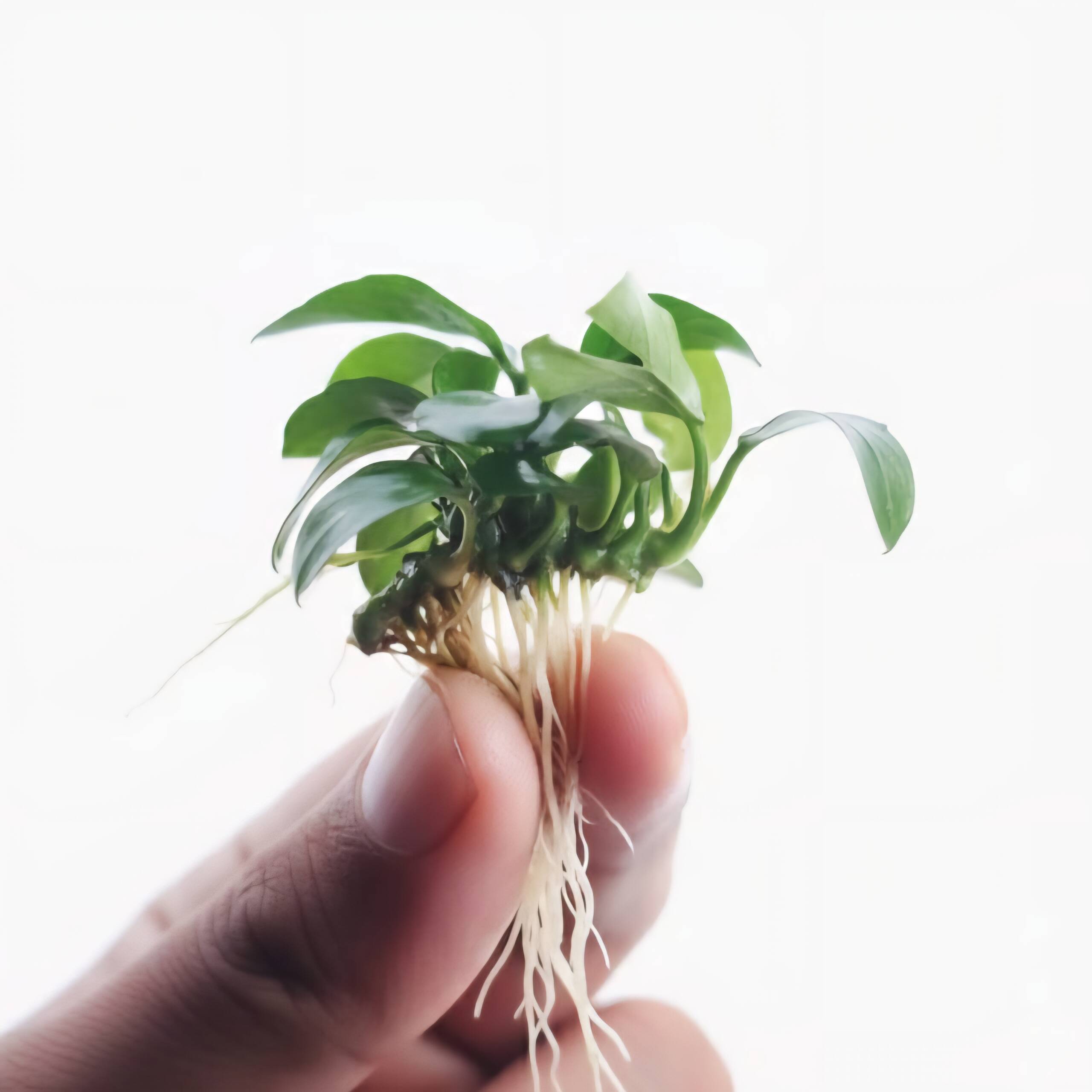
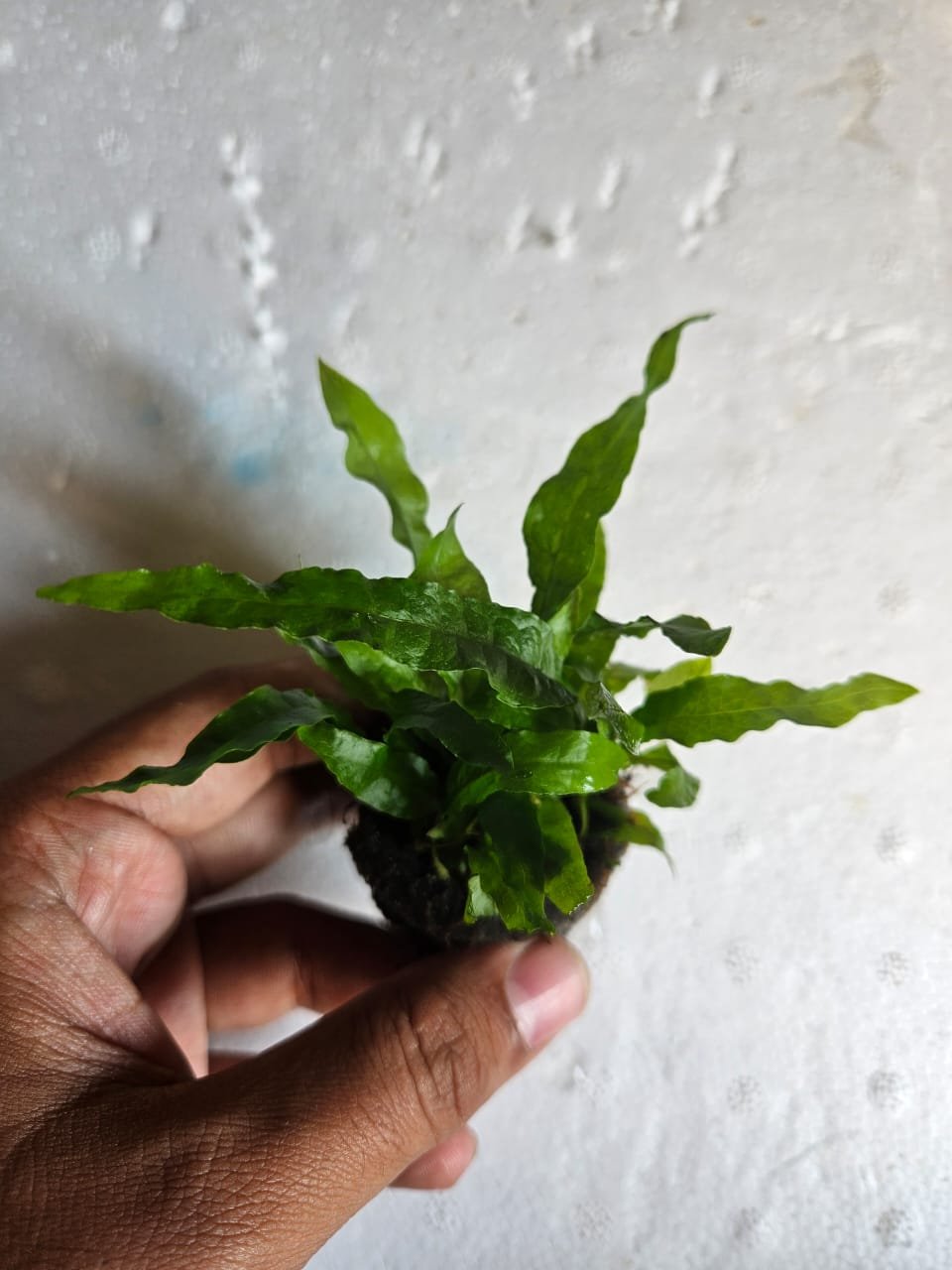
- Most durable: Vallisneria, with Anubias and Java fern tied to rocks.
- Cheapest snack plant: Egeria densa, replaced as needed.
- Avoid with goldfish: Cabomba.
More options: plants goldfish won’t destroy.
More fish and shrimp guides:
Stopping goldfish from uprooting new plants
Goldfish dig by habit, not by hunger, and a plant that has not rooted yet will be out of the substrate within a day. The first fortnight decides everything.
- Plant into a deeper substrate bed than you would for a community tank, ideally five centimetres or more, so roots have something to grip.
- Ring each new plant with a few smooth pebbles pressed into the substrate around the crown, and remove them once roots have taken hold.
- Use larger, better-developed plants rather than small ones, since a bigger root mass anchors faster.
- Feed the goldfish just before you plant, so they are less inclined to investigate immediately.
- Check daily for the first week and replant anything floating before it decays.
An alternative that sidesteps the issue entirely is to grow the plants attached to hardscape or floating rather than rooted, which suits the faster oxygenating species well.
Plant care in a goldfish tank
Goldfish tanks are a difficult environment for plants for reasons beyond grazing. The fish are messy, they produce a lot of waste, and the resulting nutrient load favours algae over plants unless you stay on top of water changes.
Temperature cuts the other way in India. Goldfish prefer cooler water, and most tanks here run warm for months at a time, which stresses both the fish and the cooler-water plants they are usually kept with. Keeping the tank out of direct sun, running a surface fan and holding a lower stocking density all help more than any equipment purchase.
Plan on replacing plants periodically rather than expecting a permanent aquascape. Even the toughest species get shredded eventually, and the fastest growers are best treated as a renewable crop you top up every few months.
Light is the last piece. Goldfish do not need much of it, and long, bright photoperiods over a heavily fed tank reliably produce green water and algae on the glass. Six to eight hours is plenty.
Plants in this guide
Grown in Surat · graded by leaf count and photographed before dispatch · live-arrival guarantee on every order · ₹99 shipping, free from ₹2,000

Frequently asked questions
Do goldfish need live plants?
Not strictly, but plants absorb nitrate from goldfish waste and provide natural grazing.
Can Anacharis grow floating in a goldfish tank?
Yes. Floating stems grow well and are easy to thin out.
Which is best for an outdoor goldfish tub?
Egeria densa and Vallisneria both suit tubs; add floating plants for shade.
Buy Egeria densa, Vallisneria or Cabomba on Anubias.in.
Are there plants goldfish will not eat?
Tough, leathery epiphytes are the closest thing to goldfish-proof, because the leaves are too firm to be worth grazing and the plants can be fixed to wood or rock out of digging range. Soft, fine-leaved plants are eaten fastest. Nothing is completely safe with a determined goldfish, so combine tough species with a fast-growing one the fish are welcome to eat.
Do I need root tabs in a goldfish tank?
Usually less than in a lightly stocked tank, because goldfish waste supplies plenty of nutrients through the water and substrate. Rooted ribbon-leaved plants still benefit from a tab in plain inert gravel, particularly when growth slows or leaves pale. Go lightly, since excess nutrients in an already rich tank end up as algae.
Can I keep plants in an unheated goldfish tank in winter?
Yes, and cooler-water species handle an unheated Indian winter comfortably in most parts of the country. Growth slows noticeably below about 20 degrees, so expect less trimming and less spread until spring. Avoid tropical-only species in an unheated tank, as they will simply stall or melt.