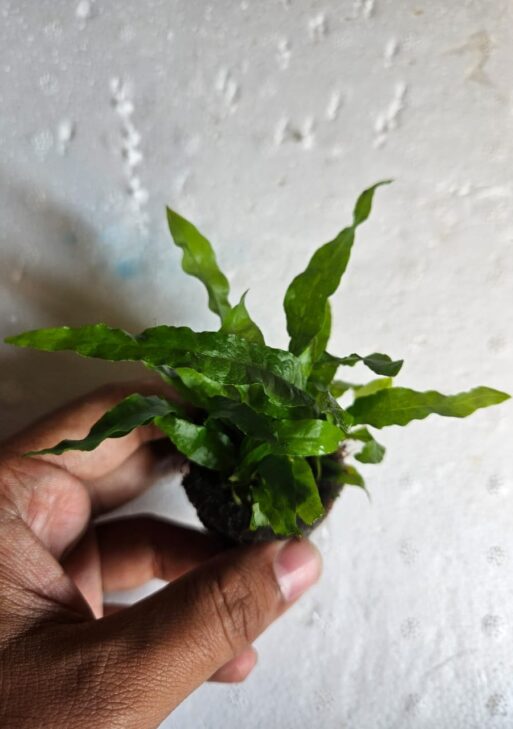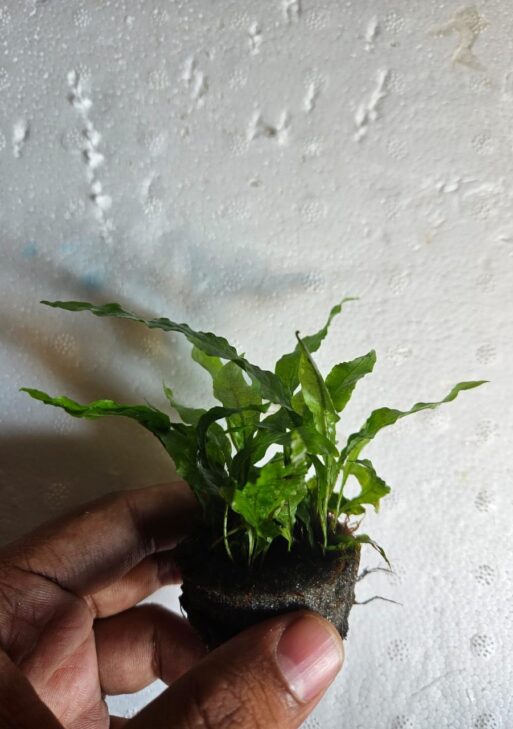


Dwarf hairgrass can form a lush green meadow, but browning blades are a common frustration, especially in new tanks. Some browning is simply the plant switching to underwater growth; persistent browning points to light, planting, nutrients or heat.
Quick answer: Dwarf hairgrass often browns right after planting as emersed blades are replaced by submerged ones; trim them and new growth follows. Ongoing browning usually means light is too weak, clumps were planted too large (the centre dies), nutrients are low, the water is too warm (it prefers about 15–26 °C) or debris is smothering the carpet. Plant small tufts 2–4 cm apart, give strong light, fertilise, keep the tank cool and trim regularly.
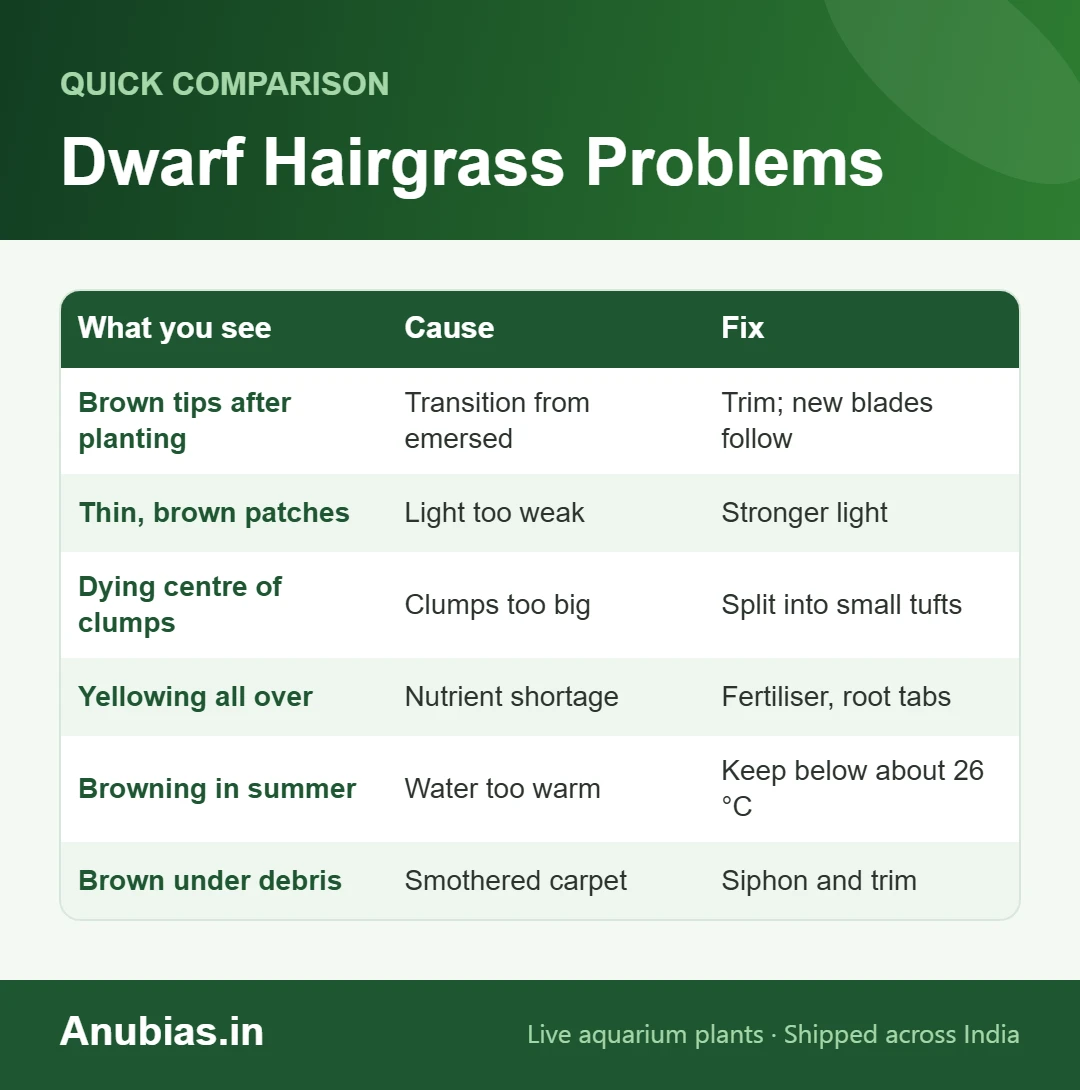
Common causes of brown hairgrass
- Transition melt: nursery blades die back as submerged blades grow.
- Low light: hairgrass needs strong light to stay dense and green.
- Oversized clumps: thick clumps shade their own centres, which turn brown.
- Nutrients: inert gravel without root tabs starves the carpet.
- Heat: warm Indian summers above its preferred range slow growth and cause browning.
- Smothering: debris and algae settle into dense carpets.
How to fix it
- Trim brown blades down to the base.
- Replant large clumps as small tufts of 5–10 blades, 2–4 cm apart.
- Increase light intensity; add CO2 if possible for faster spread.
- Use nutrient-rich substrate or root tabs, plus liquid fertiliser.
- Keep water cooler in summer with a fan and shaded placement.
- Siphon debris from the carpet during water changes.
Full care: Dwarf hairgrass care guide.
More carpet plant guides:
- Monte Carlo vs Dwarf Hairgrass
- Best Foreground Aquarium Plants (With and Without CO2)
- Staurogyne Repens Yellow Leaves or Not Spreading? Causes and Fixes
- Monte Carlo Melting or Not Carpeting? Causes and Fixes (With and Without CO2)
- Hydrocotyle Tripartita Japan Care Guide
- Staurogyne Repens Care Guide
- Monte Carlo Plant Care Guide
- Carpeting Plants Guide
Rescue it or start again?
There is a point where replanting beats nursing, and knowing which side you are on saves weeks.
Rescue it if you can see any new, bright green blades coming up from the runners, even a few. Green runners mean the plant is alive and adapting, and clearing the brown material plus fixing light or nutrients will get you a carpet in time.
Start again if the runners themselves are brown and pull up with no resistance, or if the whole patch lifts as a mat when you touch it. At that stage the roots have failed, and the tissue left behind will only decay and feed algae.
There is also a middle case worth naming: the patch is half alive, with green at the edges and a dead brown centre. Here the right move is to lift the whole thing, cut away the dead core, and replant the healthy edge material as fresh small tufts. You will lose coverage for a month and gain a carpet that actually spreads.
Before restarting, be honest about whether the tank has changed. Replanting into the same weak light and the same plain gravel gives the same result.
Planting technique that prevents most browning
Most hairgrass problems are created in the first ten minutes.
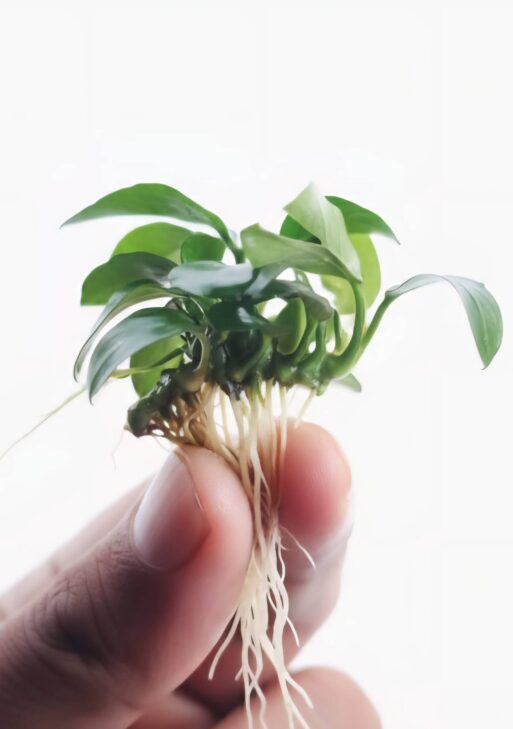
- Rinse the pot and peel the rock wool away from the roots under running water, teasing rather than pulling.
- Trim the roots back to about a centimetre. Short roots go in cleanly and regrow quickly.
- Trim the blades down to roughly 3 to 4 centimetres before planting, so the plant is not trying to support tall old growth while it establishes.
- Split the pot into many small tufts of just a few blades each, not four or five big handfuls.
- Push each tuft in at a slight angle using tweezers, deep enough to hold but shallow enough that the crown is not buried.
- Fill the tank slowly over a plate or bag so you do not blast the new tufts out.
Expect the original emersed blades to brown regardless. What you are planting is the runner system, not the leaves you can see.
Plants in this guide

Frequently asked questions
Will brown dwarf hairgrass turn green again?
Brown blades will not recover, but healthy runners produce new green blades once the cause is fixed.
Can dwarf hairgrass grow without CO2?
It can survive with strong light and good nutrients, but spreads slowly. For low-tech tanks, Dwarf Sagittaria is easier.
How short should I trim hairgrass?
Trimming to a few centimetres keeps the carpet dense and helps light reach the base.
Buy Dwarf Hairgrass or see all carpeting plants.
Want a carpet without CO2? See the easiest carpet plants compared.
How long does dwarf hairgrass take to carpet?
With good light and injected carbon dioxide, expect six to ten weeks from small tufts to a joined carpet. Without carbon dioxide it can take three to five months and may never become truly dense. Planting more tufts closer together at the start is the single biggest thing you can do to shorten the wait.
Does the dry start method work in Indian conditions?
It works well, with one caution about heat. Keeping the substrate wet and the tank covered with cling film grows hairgrass quickly because carbon dioxide is freely available from the air. In summer, keep the tank out of direct sun and open the cover briefly each day, because a sealed tank in a hot room cooks the plants and grows mould.
Do I need to remove the rock wool before planting?
Yes, always remove it. Rock wool left around the roots holds fertiliser residue, keeps the tuft as one dense clump that shades itself, and stops roots from reaching your substrate. Rinse it away gently under a tap and accept that you will lose a few blades doing it.