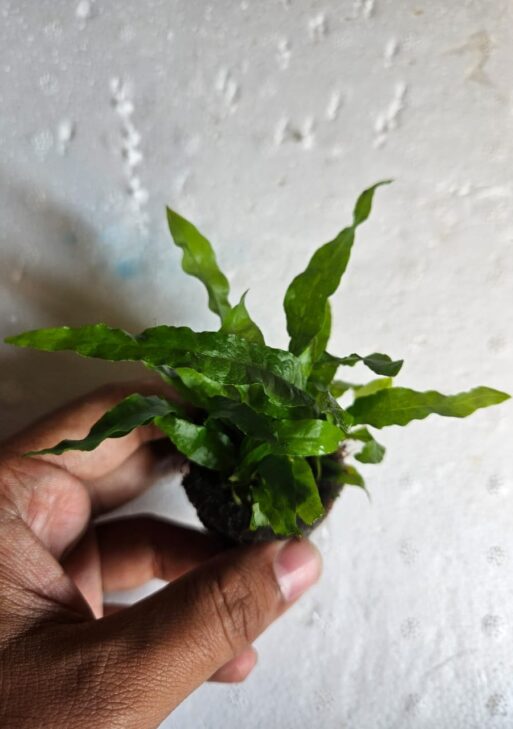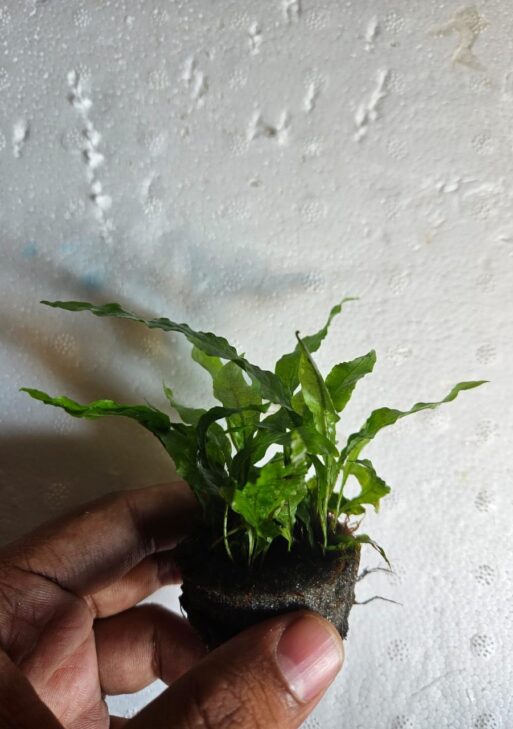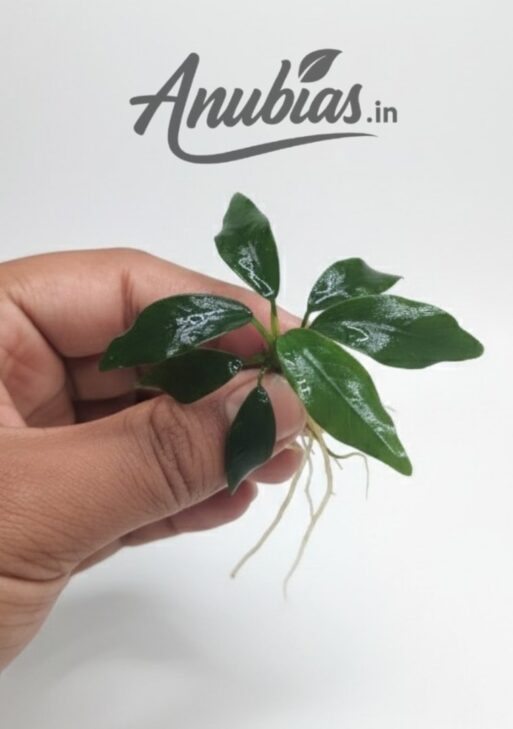

“Can I just push my Anubias into the gravel?” is one of the most common beginner questions, and the answer matters: planting it the wrong way is the main reason Anubias and Java fern die. Here is what a rhizome is, what happens when you bury it, and how to plant these plants correctly.
Quick answer: No, you should not bury the rhizome of Anubias, Java fern or Bucephalandra. The rhizome is the thick horizontal stem that leaves grow from; buried in gravel or soil it gets too little oxygen and rots. Instead tie or glue it to wood or rock, or rest it on top of the substrate. The roots can grow into the substrate, but the rhizome itself must stay exposed.
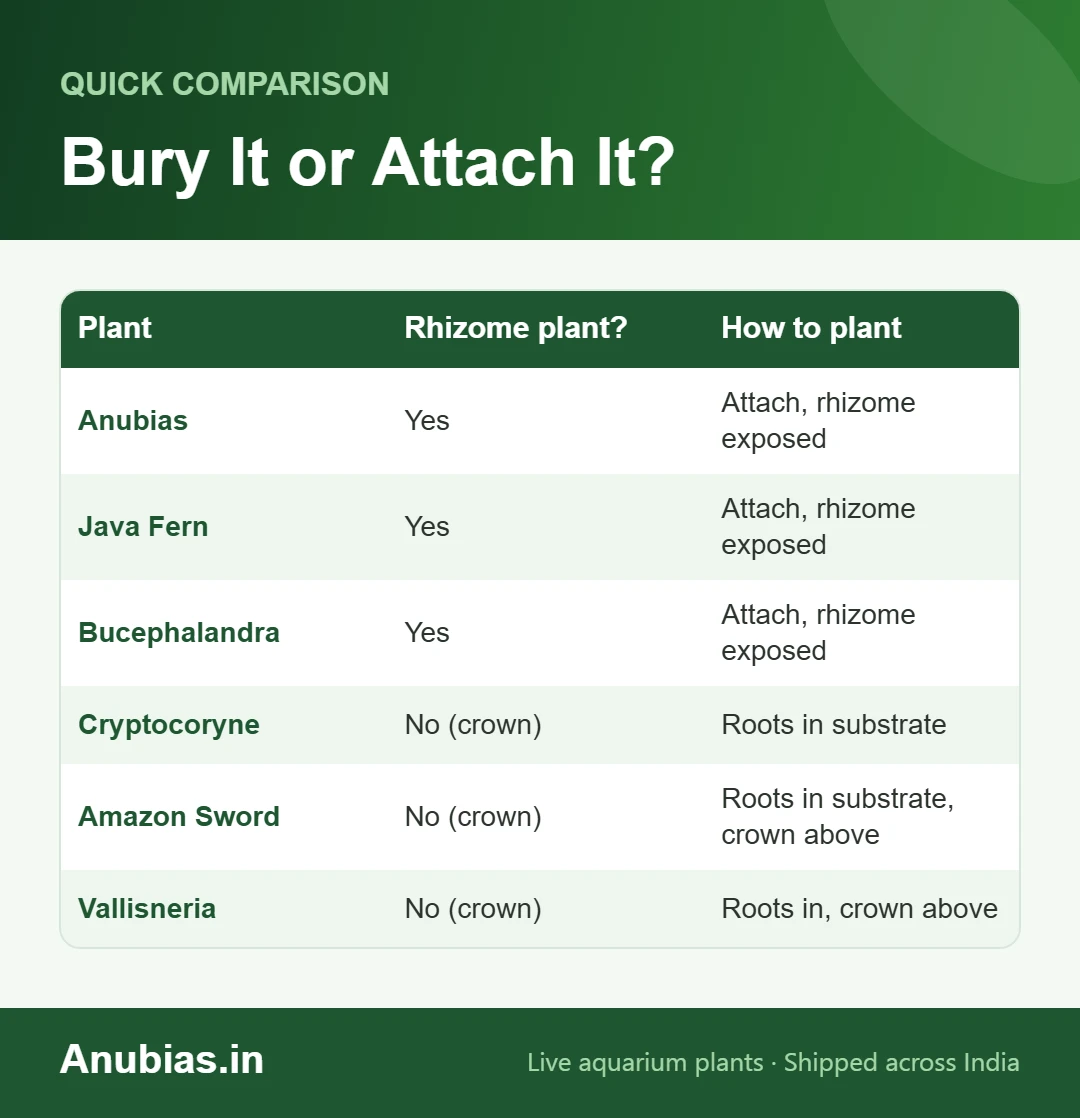
What is a rhizome?
A rhizome is a thick, horizontal stem that stores energy and produces leaves and roots. On Anubias it looks like a green or brown “branch” at the base of the leaf stems. Java fern and Bucephalandra have similar, thinner rhizomes. Rooted plants such as Cryptocoryne, Amazon swords and Vallisneria instead have a crown, which sits just above the substrate with roots below.
What happens if you bury the rhizome?
- Oxygen cannot reach it and waste collects around it.
- It turns soft, brown and smelly within weeks.
- Leaves yellow, melt and fall off from the base.
- Eventually the whole plant can die. See Anubias rhizome rot.
How to plant rhizome plants correctly
- Tie it: cotton thread or fishing line around the rhizome onto wood or rock.
- Glue it: a small dab of aquarium-safe gel superglue on the hardscape.
- Wedge it: between two rocks without crushing it.
- Rest it: on top of gravel, with only the roots pushed in, weighed down by a small stone near (not on) the rhizome.
Step-by-step photos and tips: how to attach Anubias to driftwood or rock.
Choosing between thread, glue and wedging
All three attachment methods work, but they suit different situations. Pick by what you are attaching to and how likely you are to move it later.
- Cotton thread suits porous wood and rough stone, and is the best choice for a first attempt because it forgives mistakes. You can untie and reposition freely, and the thread rots away on its own.
- Gel superglue suits smooth stone, slate and small pieces you can lift out and dry. It is the fastest method and gives an invisible result, but the bond is permanent and pulling the plant off later takes a chunk of rhizome with it.
- Wedging suits heavy rock layouts and anyone who expects to rescape. Nothing is bonded, so you can lift and rearrange at will, but fish that dig will undo your work.
A practical middle path for larger Anubias: glue one end of the rhizome and tie the other with thread. The glue holds it immediately while the thread stops the leaf mass from levering the glued point loose in the flow.
Whichever method you use, attach the rhizome along its length rather than at a single point, and avoid gluing over the growth tip at the front end.
What healthy settling in looks like
After attaching, people worry too early. Here is the sequence to expect on a rhizome plant.
In the first two weeks, nothing visible happens. The plant may drop an older leaf, especially if it has just been shipped. This is not a failure.
Between two and six weeks, fine white roots appear along the underside of the rhizome and start reaching towards the surface they are touching. White roots are the clearest sign that the plant is happy where it is.
From roughly four to eight weeks, a new leaf unfurls from the growing tip, usually smaller and paler than the rest before it hardens off. Anubias typically produces a new leaf every three to six weeks in a low-tech tank, and Bucephalandra is slower still, so patience is genuinely part of the method.
Warning signs run the other way: a rhizome going soft or translucent, or leaves dropping from the base upwards with no new growth at all after two months.
Plants in this guide
Grown in Surat · graded by leaf count and photographed before dispatch · live-arrival guarantee on every order · ₹99 shipping, free from ₹2,000
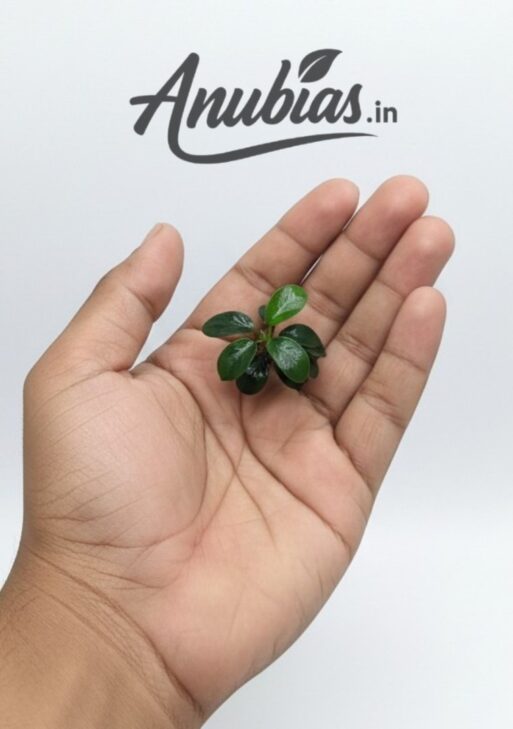
Price range: ₹ 90 through ₹ 250
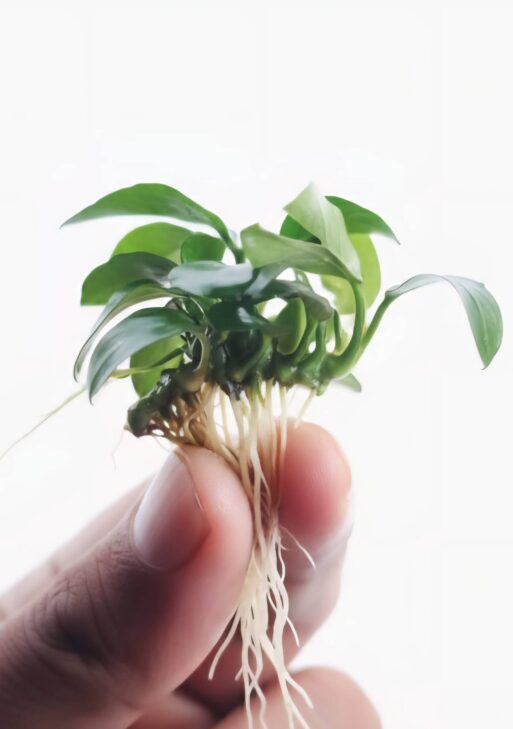
Price range: ₹ 90 through ₹ 250
Price range: ₹ 90 through ₹ 250
₹ 250
Frequently asked questions
Can I bury just the roots of Anubias?
Yes. Roots can go into gravel or soil as long as the rhizome stays uncovered.
I already buried my Anubias. What should I do?
Lift it gently, check the rhizome for soft sections, trim any rot, and re-attach it above the substrate.
Do Cryptocoryne have rhizomes I should not bury?
Crypts are rooted plants: bury the roots but keep the crown, where the leaves meet the roots, just above the substrate.
Shop easy rhizome plants: Anubias, Java fern and Bucephalandra.
How long before the plant grips the wood by itself?
Around two to three months for Anubias and Java fern, and longer for Bucephalandra. The roots need to grow out, find the surface and thicken before they hold any weight. Leave thread in place until it rots off naturally rather than cutting it at a set date.
Can I split a rhizome, and how?
Yes, splitting is how these plants are propagated and it is straightforward. Use clean scissors or a blade and cut between leaf nodes so each piece keeps at least three or four leaves and its own roots. Cutting smaller than that leaves a piece with too little stored energy to push new growth.
Should I remove the plastic pot and rock wool from a potted Anubias?
Yes, take both off before attaching. Rock wool trapped against a rhizome holds debris and keeps it wet without oxygen, which causes exactly the rot you are trying to avoid. Tease it away gently under running water, trim any damaged roots, and then attach as normal.