
Rhizome rot is the one problem that can actually kill an Anubias. The thick horizontal stem, called the rhizome, stores the plant’s energy and grows every leaf, so when it turns soft and brown the whole plant is at risk. The good news is that rot caught early is usually fixable. Here is how to spot it, save the plant and stop it happening again.
Quick answer: Anubias rhizome rot shows as a soft, brown or black, often bad-smelling rhizome with leaves yellowing or falling off from the base. It is usually caused by burying the rhizome in gravel or soil, physical damage, or very poor water quality. To save the plant, cut away all soft tissue with clean scissors until only firm green rhizome remains, then tie or glue the healthy piece to wood or rock with the rhizome exposed.
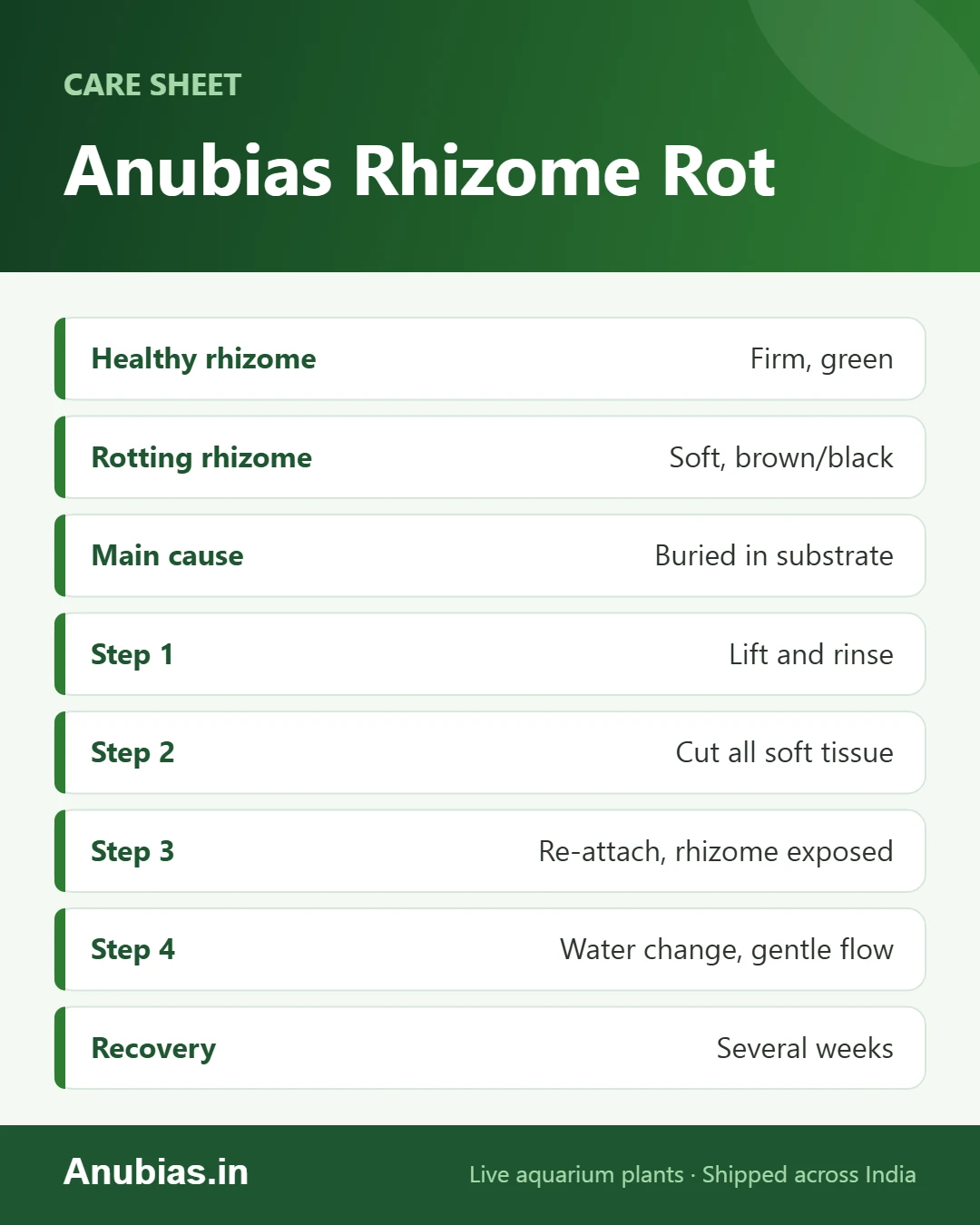
Signs of Anubias rhizome rot
| Sign | Healthy rhizome | Rotting rhizome |
|---|---|---|
| Colour | Green to light brown, firm | Dark brown or black patches |
| Texture | Hard, like a firm stem | Soft, mushy, collapses when pressed |
| Smell | None | Sour or rotten smell |
| Leaves | Attached firmly, stable colour | Yellowing, melting or falling off at the base |
| Roots | White to brown, gripping surfaces | Brown, slimy or dissolving |
What causes rhizome rot?
- Burying the rhizome: the most common cause. Gravel or soil cuts off oxygen and traps waste around the rhizome.
- Damage: crushed or torn rhizomes from shipping, tight ties or rough handling can start to rot.
- Poor water quality: decaying debris, overfeeding and skipped water changes stress the plant.
- Very low flow: stagnant spots let waste settle on the rhizome.
How to save an Anubias with rhizome rot
- Lift the plant out and rinse it in dechlorinated tank water.
- Find the rot: press gently along the rhizome to locate all soft sections.
- Cut it away: with clean, sharp scissors, trim back until only firm, green tissue remains. Remove leaves attached to the rotten part.
- Check the rest: if you now have several healthy pieces, each with leaves, treat them as separate plants.
- Re-attach correctly: tie or glue the healthy rhizome to wood or rock, fully exposed. See how to attach Anubias.
- Improve conditions: do a water change, remove debris and make sure gentle flow reaches the plant.
- Be patient: recovering plants may pause for several weeks before new leaves appear.
Can a rhizome with no leaves survive?
A firm, green piece of rhizome without leaves can sometimes sprout new growth, but it is slow and unreliable. Pieces with at least a few healthy leaves recover much better, because the leaves keep producing energy while the plant heals.
How to prevent rhizome rot
- Always keep the rhizome above the substrate, attached to hardscape.
- Use soft cotton thread or a dab of gel glue rather than tight ties that crush the rhizome.
- Keep the tank clean with weekly water changes and gentle flow.
- Inspect new plants on arrival and trim any damaged sections.
More Anubias troubleshooting:
Plants in this guide
Grown in Surat · graded by leaf count and photographed before dispatch · live-arrival guarantee on every order · ₹99 shipping, free from ₹2,000
Price range: ₹ 90 through ₹ 250
Price range: ₹ 90 through ₹ 250
Price range: ₹ 90 through ₹ 250

₹ 250
Frequently asked questions
Is rhizome rot contagious to other plants?
Not in the usual sense, but rotting tissue pollutes the water, which can stress other plants. Remove rot promptly.
Should I use hydrogen peroxide on rhizome rot?
It is rarely needed. Cutting away all soft tissue and re-attaching the healthy part in clean conditions is usually enough, and chemicals can harm shrimp and delicate plants.
Why did my Anubias rot even though it was on wood?
Check for crushing ties, trapped debris around the rhizome, or damage from shipping. Rhizomes wedged tightly into gaps where waste collects can also rot.
Browse healthy, firm-rhizome Anubias plants, shipped across India with a live-arrival guarantee, and use our Anubias leaf problem chart for other symptoms.
Not sure how deep to plant? Read can you bury Anubias or Java fern rhizome.
Seeing white fuzz? Read what white fuzz on plants or driftwood means.